Global Food & Flavor Industry Business Intelligence Report: May 31 – June 6, 2026
Strategic Growth, Industry Consolidation, Functional Nutrition, Sustainability, Agricultural Transformation, and Supply Chain Resilience Across North America, South America, Europe, Asia, Africa, and Oceania.
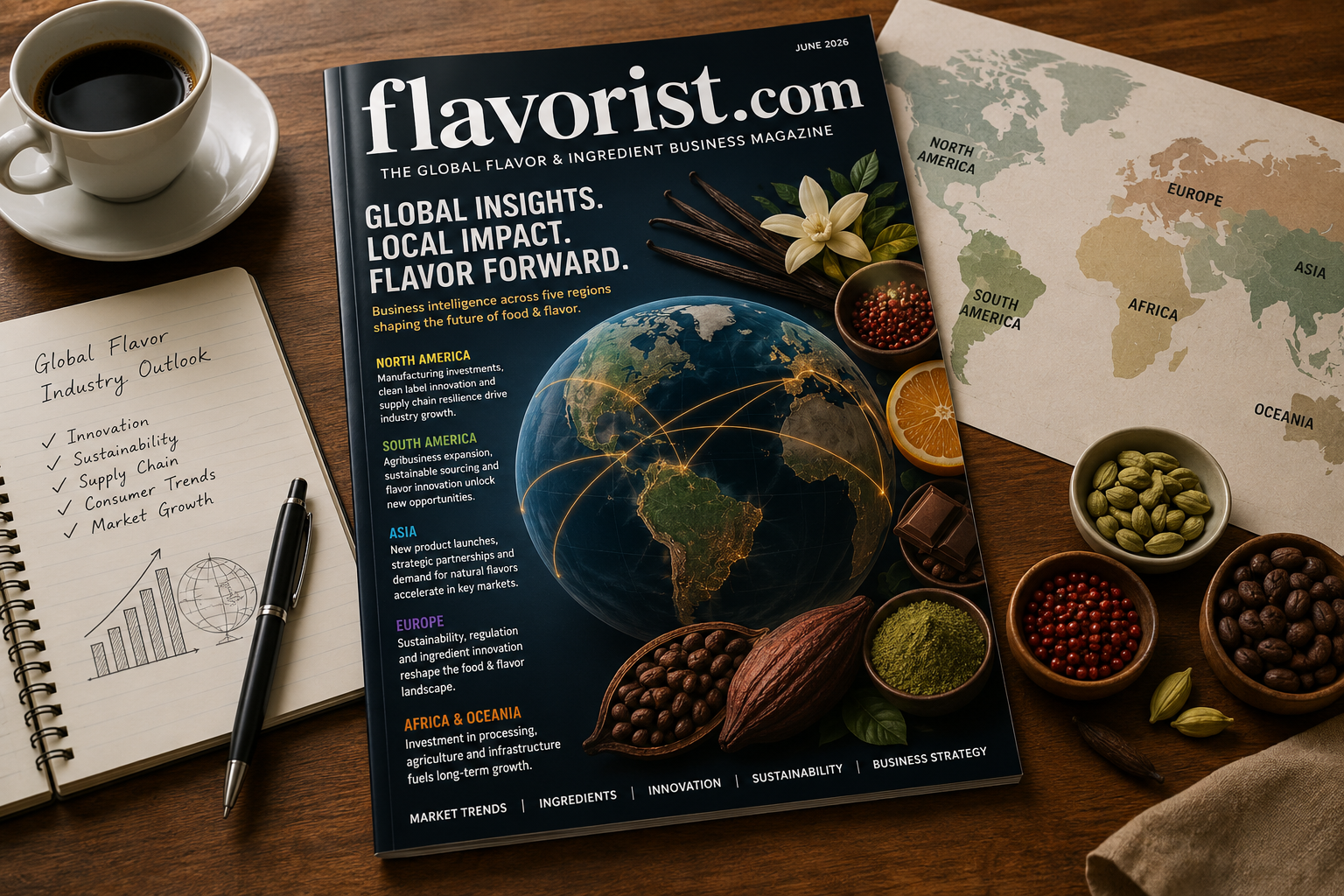
A comprehensive executive review of the week's most significant food, beverage, ingredient, flavor, agribusiness, manufacturing, investment, M&A, sustainability, regulatory, and consumer-market developments shaping the global food and flavor industry.
Major Themes Covered:
- Functional Nutrition and Wellness Expansion
- Food Industry Mergers, Acquisitions, and Strategic Investments
- Flavor Innovation and Product Development
- Sustainable Agriculture and Regenerative Farming
- Food Manufacturing Capacity Expansion
- Global Supply Chain and Commodity Market Trends
- Coffee, Cocoa, Dairy, Grain, and Agricultural Market Developments
- Trade Policy and International Market Access
- Inflation, Cost Management, and Reformulation Strategies
- Consumer Demand Shifts and Premiumization
- Food Technology and Processing Innovation
- Climate and Weather Risks Affecting Ingredient Supply
- Investment in Agrifood Infrastructure and Value-Added Processing
- Regional Growth Opportunities Across Six Continents
North America Food & Flavor Industry Business Intelligence Report: Major Corporate Moves, Innovation Investments, M&A Activity, and Market Developments (May 31 – June 6, 2026)
North America Food & Flavor Industry Business News Digest
May 31 – June 6, 2026
Below are the most significant business developments affecting the North American food, beverage, ingredient, and flavor industries during the week of May 31–June 6, 2026.
1. Kraft Heinz Doubles Down on Innovation Instead of Corporate Breakup
Source: Reuters
Link: Reuters – Kraft Heinz CEO expects innovation push to accelerate next year
Summary
One of the most important food industry stories of the week came from Kraft Heinz, whose new leadership team signaled a major strategic shift toward innovation and product development rather than corporate restructuring.
CEO Steve Cahillane stated that the company intends to significantly accelerate innovation efforts in 2027 after increasing investment throughout 2026. Earlier plans to separate Kraft Heinz into multiple businesses have effectively been paused, allowing management to redirect hundreds of millions of dollars into research, product development, consumer insights, and marketing. Reuters reported that approximately $600 million has been allocated toward growth initiatives. (Reuters)
The company is attempting to reverse years of market-share erosion caused by changing consumer preferences, stronger private-label competition, and increasing demand for healthier foods. Several new products launched this year reflect that strategy, including protein-enhanced meal solutions, sugar-reduced products, and functional beverage offerings designed to align with wellness trends. (Reuters)
For the flavor industry, Kraft Heinz's renewed innovation focus is particularly noteworthy because large-scale CPG innovation programs typically generate significant demand for flavor creation, flavor modulation technologies, sweetener optimization, taste masking systems, and ingredient reformulation projects. Suppliers of natural flavors, savory systems, botanical extracts, and functional ingredients are likely to benefit as the company expands its pipeline.
The company also reported substantial improvement in the percentage of products maintaining or gaining market share, suggesting that recent innovation investments may already be generating results. Analysts nevertheless note that execution remains critical as consumers continue seeking healthier, cleaner-label, and value-oriented products. (Reuters)
Industry Impact: Increased innovation spending by one of North America's largest food manufacturers is likely to stimulate new flavor-development projects and ingredient sourcing opportunities throughout the supply chain. (Reuters)
2. Nestlé Makes Strategic Growth Acquisition with Full Takeover of yfood
Source: Reuters
Link: Reuters – Nestlé buys out yfood Labs founders in first acquisition for new CEO
Summary
Nestlé announced the complete acquisition of yfood Labs, marking the first acquisition under newly appointed CEO Philipp Navratil and signaling continued investment in convenient nutrition products.
Nestlé previously held a 49% stake in the German smart-food company but will now acquire the remaining ownership. The transaction is expected to become effective in July 2026. Reuters reported that yfood generated approximately €150 million in sales during 2025 while maintaining strong double-digit growth. (Reuters)
The acquisition reflects a broader industry movement toward functional nutrition, meal replacement beverages, high-protein products, and convenience-focused wellness solutions. These categories continue to attract consumer spending despite broader economic uncertainty because they address modern lifestyle needs such as portability, nutrition optimization, and meal substitution.
For flavor suppliers, this acquisition highlights the growing importance of technologies that improve taste performance in nutritional beverages. Products in this category often face challenges involving protein off-notes, bitterness management, mouthfeel optimization, and flavor stability. As the sector grows, demand for sophisticated flavor systems designed specifically for high-protein and fortified products is expected to increase.
The deal also demonstrates Nestlé's willingness to pursue acquisitions in emerging growth categories despite ongoing macroeconomic pressures, including rising logistics costs and geopolitical uncertainties. Rather than relying solely on organic growth, the company is strengthening its portfolio through targeted purchases of rapidly growing brands.
The transaction underscores the continued attractiveness of functional foods and beverages as a strategic investment area. Many analysts view this segment as one of the most resilient and fastest-growing sectors within the broader food industry.
Industry Impact: Strong validation of the meal-replacement and functional nutrition category, creating opportunities for flavor houses specializing in protein beverages, nutritional systems, and wellness-oriented product development. (Reuters)
3. McCormick Advances Integration Planning for Major Unilever Foods Combination
Sources: SEC Filing, Industry Reports
Links:
Summary
The flavor, seasoning, and ingredient sector continued to focus on one of the largest transactions of 2026: the proposed combination of McCormick & Company and the foods business of Unilever.
During the week, McCormick executives provided additional details regarding integration planning, synergy targets, and long-term growth expectations. Management outlined plans aimed at achieving annual revenue growth of 3%–5% and operating margins of 23%–25% following completion of the transaction. The company also reiterated expectations of approximately $600 million in annual synergies. (Stock Titan)
The merger would create one of the world's largest flavor-focused food businesses, combining McCormick's expertise in spices, seasonings, condiments, and flavor solutions with major food brands including Hellmann's and Knorr. Combined annual revenue is expected to approach $20 billion. (NJBIZ)
For the flavor industry, the transaction is significant because it strengthens the strategic importance of flavor, taste, seasoning, and culinary solutions as central growth drivers rather than supporting functions. The enlarged organization would possess enormous purchasing power across herbs, spices, natural extracts, flavors, and ingredient technologies.
Industry observers expect the combined company to increase investment in flavor science, culinary innovation, seasoning technologies, clean-label reformulation, and global taste platforms. The deal also reflects a broader consolidation trend across food manufacturing, where scale is increasingly viewed as necessary to offset supply-chain pressures and support innovation.
Although regulatory approvals remain pending, the companies continue progressing toward a targeted closing in 2027. (Stock Titan)
Industry Impact: Potentially the most consequential flavor-sector transaction in years, creating a global powerhouse in seasonings, condiments, culinary solutions, and taste innovation. (Stock Titan)
4. McDonald's Launches FIFA World Cup Promotional Platform
Source: New York Post
Link: McDonald’s announces World Cup meals and Big Mac Sauce return
Summary
McDonald's unveiled a major promotional campaign tied to the upcoming FIFA World Cup, introducing themed meals, collectible merchandise, and the return of its highly popular Big Mac Sauce dip.
Beginning June 4, customers gained access to FIFA-themed meal bundles featuring collectible cups highlighting international soccer stars and other promotional items. The return of Big Mac Sauce as a standalone dipping option generated significant consumer interest, demonstrating the continuing commercial power of iconic flavor systems. (New York Post)
For flavor professionals, the story illustrates how signature sauces and proprietary flavor profiles continue to drive consumer engagement. In many cases, the flavor component itself becomes a brand asset capable of generating substantial traffic and media attention independent of the core food product.
The launch also supports McDonald's broader strategy to improve food quality, strengthen customer loyalty, and leverage global events to increase restaurant traffic. In an environment where consumers remain price-sensitive, limited-time flavor offerings continue to be among the most effective tools for driving incremental visits.
The success of such promotions is closely watched across the restaurant industry because it influences menu development strategies, flavor trends, and supplier demand. Flavor companies supplying sauces, seasonings, and taste technologies frequently see opportunities emerge when major chains prioritize flavor-led innovation.
Industry Impact: Reinforces the value of proprietary flavors and sauces as strategic assets capable of generating traffic, consumer excitement, and incremental sales. (New York Post)
5. Ultra-Processed Foods Face New Scrutiny from Public Health Research
Source: The Guardian / American Journal of Public Health
Link: Big tobacco used cigarette playbook to market ultra-processed foods
Summary
A major public-health discussion emerged this week following publication of research examining historical links between tobacco-industry marketing practices and the development of ultra-processed foods.
Researchers reported that tobacco companies that acquired major food businesses applied many of the same marketing and product-development strategies previously used in cigarettes. The research also renewed debate surrounding highly palatable food formulations and their relationship to consumer behavior. (The Guardian)
While not a direct business transaction, the publication is important because it may influence future food policy discussions, labeling requirements, ingredient reformulation efforts, and consumer purchasing behavior. Increased scrutiny of ultra-processed foods could accelerate demand for cleaner labels, shorter ingredient statements, natural flavor systems, and products perceived as healthier.
For flavor manufacturers, the evolving conversation presents both challenges and opportunities. Companies supplying artificial ingredients may face greater pressure, while providers of natural flavors, botanical extracts, fermentation-derived ingredients, and clean-label solutions could see increased demand.
The report also contributes to broader momentum behind nutrition-focused food innovation, an area already receiving significant investment from major manufacturers. Companies across North America are increasingly reformulating products to reduce sugar, sodium, and artificial additives while maintaining flavor performance.
Industry Impact: Growing pressure for cleaner labels and healthier formulations may accelerate demand for advanced natural flavor technologies and reformulation expertise. (The Guardian)
South America Food & Flavor Industry Business Intelligence Report: Biofuel Innovation, Coffee Export Growth, World Cup Demand, Trade Developments, and Strategic Investment Trends (May 31 – June 6, 2026)
South America Food & Flavor Industry Business News Digest
May 31 – June 6, 2026
The South American food, beverage, ingredient, and flavor sectors experienced a week shaped by biofuel diversification, major consumer demand trends, international trade developments, coffee exports, and investments connected to food and agricultural value chains. Below are the most significant business developments released during the period.
1. Brazil's Ethanol Industry Expands Beyond Sugarcane into New Feedstocks
Source: Reuters
Link: Reuters Coverage – Brazilian Ethanol Diversification
Summary
One of the most important business stories of the week involved Brazil's rapidly evolving ethanol sector. Historically dominated by sugarcane and, more recently, corn, the industry is now entering what market participants describe as a "third wave" of feedstock diversification. Companies are investing in ethanol production from wheat, barley, sweet potatoes, food-processing residues, soy molasses, and other agricultural by-products. (Reuters)
Among the most significant investments is a new facility being developed by Brazilian biofuels company Be8. The plant, located in Rio Grande do Sul, is expected to produce approximately 220 million liters of wheat-based ethanol annually when it begins operations. Large multinational energy companies and regional startups are also exploring alternative feedstocks to improve sustainability and expand production capacity. (Reuters)
For the food and flavor industry, this trend extends beyond fuel. Many ethanol processes generate valuable co-products that can be utilized in food, feed, fermentation, and ingredient applications. The expansion of wheat- and sweet-potato-based processing infrastructure creates new opportunities for agricultural producers and ingredient manufacturers while increasing demand for crop breeding, fermentation technologies, and flavor-masking solutions for value-added products. (Reuters)
Brazil's government is further supporting the sector through policies that increase ethanol blending requirements in gasoline. These measures are encouraging investment throughout the agricultural supply chain and creating additional markets for crops that historically had limited industrial demand. (Reuters)
Industry Impact: The diversification of Brazil's ethanol industry is generating new demand for agricultural commodities, fermentation technologies, food-processing co-products, and sustainable ingredient innovation throughout South America. (Reuters)
2. Brazilian Food and Beverage Companies Prepare for World Cup Consumption Surge
Source: Reuters
Link: Reuters Coverage – World Cup Consumption Impact in Brazil
Summary
Brazilian food and beverage companies spent the week positioning themselves for what could become one of the largest consumer spending events of the year: the 2026 FIFA World Cup.
Research published by Brazilian brokerage XP highlighted the expected commercial benefits for retailers, beverage manufacturers, and food processors as consumers gather to watch tournament matches. The report specifically identified food and beverage sectors as major beneficiaries of increased social consumption during the event. (Reuters)
Brazilian food giant BRF reported expectations that World Cup-related sales could rise by as much as 50% compared with the 2022 tournament. Management cited favorable scheduling for Brazil's group-stage matches, which are largely occurring on weekends and a Friday, encouraging social gatherings, barbecues, snack purchases, and beverage consumption. (Reuters)
The anticipated demand surge is expected to benefit multiple product categories, including meat products, savory snacks, sauces, seasonings, alcoholic beverages, soft drinks, and convenience foods. Flavor manufacturers supplying seasoning systems, snack flavors, meat marinades, and beverage ingredients could experience increased order volumes as manufacturers prepare promotional activities and inventory builds. (Reuters)
Historically, major sporting events have provided significant revenue opportunities for food companies across South America, and many firms have already launched marketing campaigns tied to national team participation and fan engagement. The World Cup remains one of the strongest seasonal demand drivers for the region's food industry.
Industry Impact: Increased demand for snacks, beverages, seasonings, sauces, and meat products could generate meaningful sales growth throughout the South American food and flavor supply chain. (Reuters)
3. Record Brazilian Coffee Exports Expected for 2026/27 Crop Year
Source: Reuters
Link: Reuters Coverage – Record Brazilian Coffee Exports Forecast
Summary
The global coffee industry received important news during the week as Brazilian commodity experts forecast record coffee exports for the upcoming 2026/27 crop year.
According to EISA, the Brazilian arm of commodity trading group ECOM, Brazil could export approximately 50 million bags of green coffee, surpassing the previous record of 46.3 million bags established in 2024. Production is expected to reach nearly 76 million bags if current growing conditions remain favorable. (Reuters)
Brazil remains the world's largest coffee producer and exporter, making the forecast highly significant for beverage manufacturers, flavor houses, coffee extract suppliers, and ingredient companies worldwide. Increased export availability could help replenish global inventories that have remained constrained following production challenges in several coffee-producing regions. (Reuters)
The forecast also highlights Brazil's continuing importance as a supplier of coffee ingredients used throughout the food and beverage industry. Beyond traditional coffee products, coffee extracts and flavor systems are increasingly used in dairy products, confectionery, baked goods, alcoholic beverages, and functional nutrition products. Strong production levels help stabilize ingredient availability and support innovation across multiple categories. (Reuters)
Industry participants remain cautious regarding weather risks associated with the developing El Niño pattern. While current market conditions support optimistic production expectations, excessive heat later in the growing season could influence flowering and future yields. (Reuters)
Industry Impact: Record coffee exports could improve ingredient availability, support beverage innovation, and stabilize supply chains for coffee-based flavor systems worldwide. (Reuters)
4. U.S.–Brazil Trade Developments Continue to Influence Food Markets
Source: Barron's
Link: Barron's – Proposed U.S. Tariffs on Brazil
Summary
Trade policy developments remained a major business topic during the week as the United States advanced plans for new tariffs affecting Brazil.
Although several key agricultural exports—including coffee and beef—were reported to be exempt from the proposed measures, the ongoing trade discussions have created uncertainty across various export-oriented industries. The proposal follows investigations into broader trade practices and could influence future negotiations between the two countries. (Barron's)
For South America's food industry, trade policy remains critically important because the United States represents a major destination for agricultural exports, processed foods, beverages, and ingredients. Any changes affecting logistics, tariffs, or regulatory requirements can alter competitive dynamics and investment decisions throughout the region. (Barron's)
The exemption of major food exports such as coffee and beef helped ease some immediate concerns among agricultural producers. However, analysts noted that continued uncertainty may influence long-term planning, capital investment, and export strategies among South American food manufacturers. (Barron's)
The situation is being closely monitored by exporters, ingredient suppliers, and multinational food companies with operations spanning both North and South America.
Industry Impact: Trade developments continue to influence investment planning and export strategies for South American food producers despite exemptions for several major agricultural commodities. (Barron's)
5. Brazil Deepens Financial Ties with China to Support Future Industrial Growth
Source: Reuters
Link: Reuters Coverage – Brazil Panda Bond Initiative
Summary
Brazil announced preparations for its first sovereign panda bond issuance, a move designed to strengthen financial and trade relationships with China and attract additional investment into strategic industries.
The announcement came ahead of a high-level Brazilian government visit to China later in June. By issuing debt denominated in Chinese yuan, Brazil seeks to diversify financing sources and strengthen economic cooperation with its largest trading partner. (Reuters)
Although not exclusively a food-sector story, the development is highly relevant because Chinese demand remains a primary driver of South American agricultural exports. Brazil is a leading supplier of soybeans, meat, coffee, sugar, and numerous agricultural commodities to China. Improved financial cooperation may support future investments in logistics, agricultural processing, sustainability initiatives, and export infrastructure. (Reuters)
Brazilian officials also highlighted sustainability financing programs and carbon-market initiatives aimed at attracting foreign investment. These programs could eventually benefit food manufacturers and ingredient suppliers pursuing sustainability objectives demanded by international customers. (Reuters)
For the food and flavor industry, enhanced trade and investment ties with China represent potential opportunities for export growth, ingredient production, and supply-chain development.
Industry Impact: Stronger Brazil–China financial cooperation may facilitate future investment in agriculture, food processing, export infrastructure, and sustainable ingredient production. (Reuters)
Asia Food & Flavor Industry Business Intelligence Report: Functional Nutrition Expansion, Beverage Growth, Sustainable Agriculture, International Market Development, and Inflationary Pressures (May 31 – June 6, 2026)
Asia Food & Flavor Industry Business News Digest
May 31 – June 6, 2026
The Asian food, beverage, ingredient, and flavor sectors saw significant activity during the week of May 31–June 6, 2026. Key developments centered on functional nutrition, food-security investments, international expansion, consumer demand shifts, and ingredient supply-chain growth. The following stories had the greatest relevance to the region's food and flavor industry. All summaries are based on news released or reported during the period.
1. Nestlé Acquires Remaining Stake in yfood to Strengthen Functional Nutrition Business
Source: Reuters
Article:
Reuters – Nestlé buys out yfood Labs founders in first acquisition for new CEO
Summary
One of the most significant food-industry transactions announced during the week was Nestlé's decision to acquire the remaining shares of German meal-replacement company yfood Labs. Nestlé had previously acquired a 49% stake in the company in 2023 and will now take full ownership. The transaction is expected to close in July 2026. yfood generated approximately €150 million in sales during 2025 and has maintained strong double-digit growth in the rapidly expanding functional nutrition category. (Reuters)
Although headquartered in Europe, the acquisition is highly relevant to Asia because the region represents one of the fastest-growing markets for meal replacements, ready-to-drink nutrition products, protein beverages, and convenience-focused wellness foods. Countries such as China, Japan, South Korea, Singapore, and Thailand continue to experience strong demand for products combining nutrition, convenience, and premium taste. (Reuters)
For flavor companies, the acquisition highlights the growing importance of flavor technologies designed for nutritional products. High-protein beverages frequently require bitterness masking, mouthfeel enhancement, dairy-note optimization, and flavor stabilization. As Asian consumers increasingly adopt wellness-oriented lifestyles, manufacturers are investing heavily in flavor systems capable of delivering indulgent taste while supporting nutritional claims. (Reuters)
Industry analysts view the acquisition as further evidence that multinational food companies are prioritizing functional nutrition and personalized wellness categories. Asian food manufacturers are expected to increase investment in similar segments, creating opportunities for ingredient suppliers, flavor houses, and biotechnology companies throughout the region. (Reuters)
Industry Impact: Accelerates demand for flavor technologies supporting high-protein, meal-replacement, and functional nutrition products across Asia. (Reuters)
2. China's Coconut Beverage Market Continues Rapid Expansion
Source: Asia Food & Beverages
Article:
Thai brand becomes China's top coconut water brand
Summary
China's coconut beverage market remained one of the most closely watched growth segments in Asia during the week, as industry reports highlighted the continued success of Thai coconut-water producer IF. The company has become China's leading coconut water brand, demonstrating the strength of demand for natural hydration beverages and tropical flavor profiles among Chinese consumers. (Asia Food Beverages)
The growth of coconut water reflects several broader consumer trends affecting the Asian beverage industry. Health-conscious consumers increasingly favor products perceived as natural, functional, and minimally processed. Coconut water also benefits from its association with electrolytes, hydration, and tropical lifestyles. These factors have allowed premium coconut beverages to achieve substantial growth despite broader economic uncertainty. (Asia Food Beverages)
For flavor manufacturers, the success of coconut water extends beyond the category itself. Coconut flavor profiles are increasingly appearing in dairy alternatives, protein beverages, desserts, confectionery, and alcoholic beverages. Demand for authentic coconut taste systems, natural extracts, and tropical flavor combinations has risen alongside category growth. (Asia Food Beverages)
The development also demonstrates China's continuing ability to influence global flavor trends. As one of the world's largest beverage markets, successful product categories in China frequently spread throughout Asia and eventually into North America and Europe. Suppliers of tropical fruit flavors, beverage ingredients, and natural flavor technologies are expected to benefit from this continued expansion. (Asia Food Beverages)
Industry Impact: Growing consumer interest in coconut-based beverages is driving demand for tropical flavor systems, natural extracts, and functional beverage innovation throughout Asia. (Asia Food Beverages)
3. Major Food Companies Expand Regenerative Agriculture Programs Across Asia
Source: Reuters
Article:
Global food and beverage giants join forces on regenerative agriculture
Summary
A coalition of forty major food and beverage companies announced expanded cooperation to accelerate regenerative agriculture initiatives, a development with major implications for Asia's agricultural supply chains. Participants include major food companies such as Nestlé, Mondelez, Diageo, and Carlsberg. (Reuters)
The initiative seeks to improve soil health, biodiversity, carbon management, and agricultural resilience while helping companies meet sustainability commitments. Many of the world's most important agricultural ingredients—including tea, coffee, cocoa, rice, spices, fruits, and botanicals—originate in Asia, making the region central to these efforts. (Reuters)
For the flavor industry, regenerative agriculture is becoming increasingly important because flavor quality is directly influenced by agricultural practices. Improvements in soil health and farming methods can affect crop composition, yield stability, aroma profiles, and ingredient quality. Flavor houses are increasingly incorporating sustainability metrics into sourcing decisions and customer communications. (Reuters)
Many multinational food companies now require suppliers to demonstrate progress toward environmental goals. Asian producers of spices, herbs, fruits, tea, coffee, and botanical ingredients may gain competitive advantages by participating in regenerative agriculture programs and sustainability certification initiatives. (Reuters)
The announcement reflects a broader industry shift from pilot projects toward commercial-scale implementation. Companies increasingly view sustainability as a supply-chain strategy rather than solely an environmental objective. (Reuters)
Industry Impact: Regenerative agriculture programs are reshaping sourcing strategies and creating new opportunities for sustainable flavor and ingredient suppliers across Asia. (Reuters)
4. SnowValley Expands International Food Industry Partnerships
Source: Reuters / Asian Corporate Newswire
Article:
SnowValley Secures New Partnerships Across Major Global Food Exhibitions in H1 2026
Summary
Chinese dairy and food ingredient company SnowValley announced that it secured multiple new international partnerships through participation in major food exhibitions during the first half of 2026. The company reported that its presence at global trade events generated new commercial opportunities and expanded international distribution relationships. (TradingView)
The announcement highlights the increasing globalization of Asian food manufacturers. Companies throughout China, Japan, South Korea, Thailand, Vietnam, and other Asian markets continue pursuing export growth as domestic competition intensifies. Food exhibitions remain among the most important platforms for building international customer relationships and showcasing new ingredients, flavors, and finished products. (TradingView)
For flavor suppliers, these developments create opportunities to support international product launches requiring localization, reformulation, and flavor adaptation. Products designed for Asian consumers often require modifications when entering European, North American, or Middle Eastern markets. Flavor houses increasingly play a strategic role in these transitions. (TradingView)
The expansion also reflects growing international interest in Asian dairy, protein, beverage, and specialty-food categories. As more Asian companies establish global footprints, demand for flavor innovation and ingredient differentiation is expected to increase. (TradingView)
Industry Impact: International expansion by Asian food companies is creating additional demand for flavor customization, ingredient innovation, and global product-development support. (TradingView)
5. Rising Food Inflation Pressures Japanese Food Manufacturers
Source: Reuters
Article:
Japan may face more price hikes for food, central bank says
Summary
Food manufacturers in Japan continued to face significant cost pressures during the week as the Bank of Japan warned that another round of food-price increases may occur during the summer. Rising energy costs and supply-chain expenses linked to geopolitical tensions were identified as key drivers. (Reuters)
Food companies throughout Japan have already implemented multiple rounds of price increases over the past several years. The latest warnings suggest that additional cost pass-through measures may be necessary if raw-material and energy expenses remain elevated. (Reuters)
For flavor companies, inflationary pressures create a complex business environment. Manufacturers often seek flavor reformulation strategies that maintain consumer acceptance while reducing overall formulation costs. This can include flavor optimization, ingredient substitution, sweetness enhancement, and flavor-modulation technologies. (Reuters)
The Japanese market is particularly important because consumers maintain high expectations regarding taste quality. As a result, food manufacturers often rely on advanced flavor systems to offset formulation changes required by economic conditions. Suppliers capable of delivering cost-effective flavor solutions are likely to benefit from ongoing inflationary pressures. (Reuters)
Despite the challenges, demand for premium and convenience-oriented food products remains relatively resilient, supporting continued investment in innovation across many categories. (Reuters)
Industry Impact: Inflation is increasing demand for flavor optimization, reformulation expertise, and cost-management solutions among Japanese food manufacturers. (Reuters)
Europe Food & Flavor Industry Business Intelligence Report: Functional Nutrition Expansion, Ingredient Sector Growth, Industry Consolidation, Sustainability Transformation, and Regulatory Modernization (May 31 – June 6, 2026)
Europe Food & Flavor Industry Business Intelligence Report
May 31 – June 6, 2026
The European food, beverage, ingredient, and flavor industries were shaped during the week by major M&A activity, functional nutrition expansion, strategic growth plans from ingredient leaders, sustainability initiatives, and regulatory developments affecting future product innovation.
1. Nestlé Acquires Full Ownership of yfood Labs
Source: Reuters
Hyperlink:
Reuters – Nestlé buys out yfood Labs founders in first acquisition for new CEO
Summary
One of the week's most significant European food-industry transactions was Nestlé's acquisition of the remaining ownership stake in German meal-replacement company yfood Labs. The Swiss food giant previously acquired a 49% share in 2023 and announced on June 3 that it would purchase the remaining shares from the founders, making yfood a wholly owned business. The transaction is expected to become effective in July 2026. (Reuters)
Munich-based yfood has become one of Europe's fastest-growing functional nutrition brands, offering ready-to-drink meals, powders, bars, and convenience nutrition products. The company generated approximately €150 million in sales during 2025 and reported strong double-digit growth. Its success reflects accelerating European demand for meal replacements, wellness products, protein-rich beverages, and convenient nutrition solutions. (Reuters)
For the flavor industry, the acquisition highlights the growing strategic importance of taste technologies in nutritional products. High-protein beverages and meal replacements frequently require sophisticated flavor systems to manage bitterness, protein off-notes, vitamin impacts, and texture challenges. Flavor houses supplying masking technologies, dairy notes, coffee flavors, chocolate systems, and functional beverage solutions are likely to benefit from continued growth in the category. (Reuters)
The acquisition also provides insight into Nestlé CEO Philipp Navratil's priorities. Since assuming leadership, he has emphasized focusing the company's portfolio on high-growth segments such as nutrition, coffee, pet care, and food innovation. Analysts view the transaction as evidence that functional nutrition remains one of Europe's most attractive growth categories despite economic uncertainty. (Reuters)
Industry Impact: Strengthens investment in functional nutrition and creates new opportunities for flavor companies serving protein beverages, meal replacements, and wellness-focused foods. (Reuters)
2. Barry Callebaut Unveils New Growth Strategy Focused on Profit Expansion
Source: Reuters
Hyperlink:
Reuters coverage via company update on Barry Callebaut strategy
Summary
Swiss chocolate and cocoa ingredients giant Barry Callebaut unveiled its first major strategic plan under CEO Hein Schumacher during the week, outlining ambitious profitability and operational improvement targets. The company expects recurring operating profit to increase by a mid- to high-single-digit percentage annually over the medium term. (Reuters)
The strategy arrives during a challenging period for the global cocoa market. Cocoa prices have experienced historic volatility over the past two years due to adverse weather conditions, disease pressures, and supply constraints in West Africa. Despite these challenges, Barry Callebaut plans to improve margins through operational efficiencies, portfolio optimization, and customer-focused innovation. (Reuters)
For Europe's flavor and food sectors, Barry Callebaut's strategy is important because the company serves as a major supplier of cocoa ingredients, chocolate systems, inclusions, fillings, and specialty ingredients to manufacturers throughout Europe. Continued investment in innovation is expected to support development of reduced-sugar chocolates, sustainable cocoa products, plant-based formulations, and premium confectionery concepts. (Reuters)
The company also emphasized sustainability, traceability, and responsible sourcing programs. These initiatives align with increasing European regulatory expectations and consumer demand for environmentally responsible products. Flavor and ingredient suppliers across Europe are facing similar pressures to demonstrate sustainability credentials throughout their supply chains. (Reuters)
The announcement suggests that despite commodity market volatility, ingredient manufacturers remain willing to invest in long-term growth and innovation.
Industry Impact: Reinforces continued investment in premium chocolate, cocoa ingredients, sustainability programs, and food innovation across Europe. (Reuters)
3. Unilever–McCormick Food Business Discussions Continue to Reshape Industry Expectations
Source: Reuters
Hyperlink:
Reuters – Unilever in talks to sell food business to McCormick
Summary
Although discussions began earlier in the year, developments surrounding potential negotiations between Unilever and McCormick remained one of the most closely watched stories across the European food industry during the week. Reuters previously reported that Unilever is evaluating the sale of its food business to McCormick as part of a broader portfolio transformation strategy. (Reuters)
The proposed transaction would involve iconic European food brands such as Knorr and Hellmann's. For Unilever, the move would represent a further shift toward higher-growth beauty, household, and personal-care categories. For McCormick, the acquisition would significantly expand its global position in seasonings, condiments, culinary products, and flavor solutions. (Reuters)
European food manufacturers are closely monitoring the situation because a transaction of this scale could reshape supplier relationships, purchasing structures, innovation pipelines, and competitive dynamics across numerous categories. The combined business would possess enormous influence within seasonings, sauces, flavor systems, herbs, spices, and culinary ingredients. (Reuters)
The discussions also highlight broader consolidation trends occurring throughout the food industry. Manufacturers increasingly seek scale advantages to offset inflationary pressures, strengthen innovation capabilities, and improve efficiency. Flavor suppliers could see opportunities emerge through expanded product-development programs and global flavor harmonization initiatives if the transaction proceeds. (Reuters)
While no final agreement has been announced, the possibility of one of the largest food-sector transactions in recent years continues to generate significant industry attention.
Industry Impact: Potentially transformative for Europe's seasoning, flavor, condiment, and culinary ingredient sectors. (Reuters)
4. European Food Industry Accelerates Regenerative Agriculture Adoption
Source: Reuters Events
Hyperlinks:
Transform Food & Agriculture Europe 2026
Reuters Events Europe Agriculture Conference
Summary
Food sustainability and agricultural resilience emerged as major business themes during the Reuters Events Transform Food & Agriculture Europe conference held in Amsterdam on June 2–3. Industry leaders from major food companies, ingredient suppliers, agricultural organizations, and retailers gathered to discuss strategies for improving supply-chain resilience amid climate challenges and evolving regulations. (Reuters Events)
Key discussions focused on regenerative agriculture, carbon reduction, biodiversity preservation, and supply-chain security. European food companies are increasingly integrating sustainability objectives into sourcing decisions as climate-related disruptions affect crop yields and ingredient availability. (Reuters Events)
For flavor manufacturers, these developments have direct implications. Many flavor raw materials—including citrus oils, herbs, spices, botanical extracts, vanilla, fruits, and tea ingredients—depend heavily on agricultural systems vulnerable to weather volatility. Improving agricultural resilience helps stabilize ingredient quality, availability, and pricing. (Reuters Events)
Industry leaders emphasized that sustainability is evolving from a compliance issue into a strategic business requirement. Companies increasingly view regenerative agriculture as a means of protecting long-term ingredient supplies while meeting customer expectations regarding environmental stewardship. (Reuters Events)
Many attendees reported accelerating investment in supplier partnerships, traceability systems, and sustainable sourcing initiatives that are expected to influence food and flavor supply chains for years to come. (Reuters Events)
Industry Impact: Sustainability initiatives are increasingly shaping ingredient sourcing, flavor raw-material availability, and long-term food innovation strategies across Europe. (Reuters Events)
5. Europe Advances Harmonized Food Labeling Framework
Source: Nutritional Outlook / Reuters
Hyperlink:
Europe to Harmonize Food Labeling Rules
Summary
European policymakers made progress during the week toward harmonizing food-labeling requirements across member states, a move that could significantly affect food manufacturers, ingredient suppliers, and flavor companies operating throughout the region. Negotiators representing the European Parliament and Council reportedly reached agreement on key elements of the proposal, with a parliamentary vote expected soon. (Nutritional Outlook)
The initiative aims to create a more consistent labeling framework that helps consumers make informed dietary decisions while reducing complexity for manufacturers operating across multiple European markets. Harmonized regulations could simplify compliance processes and improve efficiency for multinational food companies. (Nutritional Outlook)
For flavor manufacturers, labeling reforms are especially relevant because they influence ingredient declarations, flavor labeling terminology, health-related communications, and product reformulation strategies. Regulatory changes often trigger demand for reformulation projects as companies adjust products to meet new requirements or consumer expectations. (Nutritional Outlook)
The proposal also reflects broader European efforts to promote healthier eating patterns and improve consumer transparency. Companies are increasingly investing in cleaner-label products, reduced-sugar formulations, and natural flavor systems to align with evolving regulatory and consumer priorities. (Nutritional Outlook)
Although implementation details remain under discussion, the move is expected to have long-term implications for food innovation, product development, and ingredient sourcing throughout Europe.
Industry Impact: Harmonized labeling requirements could accelerate reformulation projects and increase demand for natural, consumer-friendly ingredient solutions. (Nutritional Outlook)
Africa Food & Flavor Industry Business Intelligence Report: Food Inflation, Agrifood Investment, Cocoa Sector Growth, Sustainable Agriculture, and Food Processing Expansion (May 31 – June 6, 2026)
Africa Food & Flavor Industry Business Intelligence Report
May 31 – June 6, 2026
The African food, beverage, ingredient, and flavor sectors experienced a week marked by inflationary pressures, major agricultural-finance initiatives, sustainability investments, cocoa-sector developments, and continued expansion of food-processing infrastructure. The following were among the most significant business stories released during May 31–June 6, 2026.
1. Tiger Brands Warns of Food Price Increases Amid Geopolitical and Supply-Chain Pressures
Source: Reuters
Hyperlink:
Reuters Article – South Africa's Tiger Brands warns of price hikes due to Iran war
Summary
One of the most important food-industry stories in Africa during the week came from South African food manufacturer Tiger Brands, which reported that geopolitical disruptions and rising logistics costs could force targeted price increases across parts of its product portfolio.
The company reported a modest increase in half-year earnings and revenue, but management warned that the effects of higher fuel costs, freight expenses, and broader economic uncertainty are expected to become more pronounced during the second half of 2026. The company indicated that transportation costs alone have risen substantially as it expands distribution into South Africa's informal retail channels. (Reuters)
Tiger Brands owns many of the most recognizable food brands in Southern Africa and is a major producer of packaged foods, snacks, cereals, condiments, and culinary products. The company has been investing heavily in route-to-market improvements and operational efficiencies to offset cost inflation while maintaining affordability for consumers. (Reuters)
For the flavor industry, the development highlights a broader trend occurring across Africa: food manufacturers are increasingly seeking flavor optimization technologies that allow products to maintain consumer appeal while controlling formulation costs. Flavor modulation, ingredient substitution, and cost-reduction reformulation projects are becoming more important as companies navigate inflationary pressures. Many manufacturers are also exploring local sourcing strategies to reduce exposure to global supply-chain volatility. (Reuters)
Tiger Brands also confirmed that it will retain its King Foods business after previously considering a divestiture, citing long-term growth opportunities. At the same time, it continues restructuring parts of its confectionery portfolio. (Reuters)
Industry Impact: Rising costs are increasing demand for reformulation expertise, flavor optimization technologies, and operational efficiencies throughout Africa's food manufacturing sector. (Reuters)
2. African Development Bank Expands Investment Platform to Support Agrifood Growth
Source: Reuters
Hyperlink:
Reuters Article – AfDB to become top shareholder in Africa guarantee platform
Summary
A major investment-development story affecting Africa's food industry emerged when the African Development Bank announced plans to become the largest shareholder in the African Trade and Investment Development Insurance platform (ATIDI).
The Bank will invest approximately $125 million, increasing its ownership stake from roughly 3% to 14%. The initiative is part of a broader strategy to reduce investment risk across African economies and attract institutional capital into sectors that require significant infrastructure and industrial investment. (Reuters)
Although the announcement extends beyond food specifically, it carries major implications for agriculture, food processing, ingredient manufacturing, cold-chain logistics, and export infrastructure. Access to financing remains one of the largest barriers to scaling food production and value-added processing across the continent. By providing guarantees and risk-mitigation mechanisms, ATIDI helps attract private investment into projects that might otherwise struggle to obtain funding. (Reuters)
For the food and flavor industry, expanded access to investment capital could support new processing facilities for cocoa, coffee, fruits, spices, grains, edible oils, and specialty ingredients. Africa continues to export large quantities of agricultural commodities in raw form, and many governments are seeking to increase domestic processing capacity to capture more value locally. (Reuters)
Industry analysts note that improved financing availability may accelerate development of food-manufacturing ecosystems, creating opportunities for ingredient suppliers, flavor houses, packaging companies, and equipment manufacturers operating throughout the continent. The platform aims to facilitate up to $10 billion annually in guarantees as it expands. (Reuters)
Industry Impact: Increased investment capacity could stimulate food-processing projects, ingredient manufacturing, and agrifood infrastructure development throughout Africa. (Reuters)
3. Ghana Highlights Investment Opportunities in Cocoa and Food Processing
Source: Reuters
Hyperlink:
Reuters Article – Ghana seeks investment-grade rating and investor confidence
Summary
During an investor conference in London, the government of Ghana emphasized its economic recovery strategy and efforts to attract foreign investment following recent debt restructuring.
President John Dramani Mahama and Finance Minister Cassiel Ato Forson outlined plans to restore Ghana's investment-grade credit rating within the next three years while encouraging international investors to participate in key sectors of the economy. (Reuters)
For the food industry, the announcement is particularly relevant because Ghana remains one of the world's most important cocoa-producing countries. Cocoa exports play a central role in the nation's economy, and policymakers continue to encourage greater local processing of cocoa beans into cocoa liquor, cocoa butter, cocoa powder, chocolate ingredients, and value-added food products. (Reuters)
Improved investor confidence could support expansion of food-processing infrastructure, export facilities, ingredient manufacturing, and agricultural technology projects. International food companies have increasingly sought opportunities to invest in African agricultural supply chains as global demand for sustainable sourcing and traceability continues to grow. (Reuters)
For flavor manufacturers, Ghana's cocoa sector remains strategically important because cocoa derivatives are widely used in confectionery, bakery, dairy, beverage, and flavor applications worldwide. Additional investment in processing capacity could strengthen regional supply chains and create new opportunities for ingredient innovation.
The country's efforts to improve macroeconomic stability are also being closely monitored by multinational food companies seeking long-term growth opportunities across Africa. (Reuters)
Industry Impact: Economic stabilization and investment attraction efforts could accelerate growth in cocoa processing, ingredient manufacturing, and value-added food production. (Reuters)
4. Regenerative Agriculture Programs Expand Across African Supply Chains
Source: Reuters Sustainable Business
Hyperlink:
Reuters Sustainable Business – Scaling regenerative agriculture globally
Summary
A major sustainability initiative affecting African agriculture gained attention during the week as food companies expanded efforts to scale regenerative agriculture programs across global supply chains, including numerous projects in Africa.
Major food companies such as Nestlé, PepsiCo, and McCain Foods are participating in programs designed to improve soil health, biodiversity, water management, and climate resilience while maintaining agricultural productivity. The framework is intended to support farmers in regions ranging from Uganda's coffee-growing areas to broader agricultural communities throughout Africa. (Reuters)
For Africa's food and flavor industries, regenerative agriculture is becoming increasingly important because many of the continent's key exports—including cocoa, coffee, tea, vanilla, fruits, herbs, spices, and botanical ingredients—depend directly on agricultural sustainability. Changes in soil quality and farming practices can influence crop yield, flavor characteristics, aroma development, and ingredient consistency. (Reuters)
The newly launched "Regenerating Together Programme" seeks to provide a practical framework that can be adapted to local conditions while reducing administrative complexity for farmers and food companies. Industry leaders hope that harmonized approaches will accelerate adoption and improve long-term resilience of agricultural supply chains. (Reuters)
Many multinational ingredient buyers are increasingly incorporating sustainability metrics into procurement decisions, creating incentives for African producers to adopt regenerative practices.
Industry Impact: Sustainability-focused sourcing is becoming a major competitive factor for African suppliers of food ingredients, flavors, botanicals, coffee, cocoa, and spices. (Reuters)
5. Food Processing and Value Addition Continue to Attract International Investment
Source: Brookings Institution
Hyperlink:
Brookings – Africa's agriculture sector is ripe for investment
Summary
Investment interest in Africa's agrifood sector continued to strengthen during the week as analysts highlighted the continent's rapidly expanding food market and increasing opportunities in food processing and value-added manufacturing.
According to recent assessments, Africa's food market could grow from approximately $280 billion to $1 trillion by 2030. Agrifood technology investment has also risen sharply, reflecting growing interest in modernizing agricultural production, food processing, logistics, and supply chains. (Brookings)
One of the most important themes emerging across Africa is the shift from exporting raw commodities toward developing domestic processing industries. Governments and investors increasingly view food processing as a strategic opportunity to create jobs, improve food security, and capture greater economic value from agricultural production. (Brookings)
For the flavor industry, expanding food manufacturing capacity creates opportunities for local production of beverages, snacks, dairy products, confectionery, bakery items, sauces, seasonings, and convenience foods. These categories typically require increasing quantities of flavors, seasonings, extracts, sweeteners, and specialty ingredients. (Brookings)
Investors are particularly interested in opportunities involving cocoa, coffee, cassava, tropical fruits, grains, edible oils, and plant proteins. Growth in these sectors could stimulate demand for ingredient innovation, flavor development, and food-technology solutions across the continent.
Industry Impact: Rising investment in food processing and agrifood technology is creating long-term growth opportunities for flavor suppliers, ingredient manufacturers, and food innovators throughout Africa. (Brookings)
Oceania Food & Flavor Industry Business Intelligence Report: Manufacturing Investment, Agribusiness Resilience, Climate Risks, Food Innovation, and Supply-Chain Challenges (May 31 – June 6, 2026)
Oceania Food & Flavor Industry Business Intelligence Report
May 31 – June 6, 2026
The Oceania food, beverage, ingredient, dairy, and flavor industries experienced a week shaped by major manufacturing investments, agribusiness market developments, supply-chain concerns, sustainability initiatives, and food-sector economic pressures. Australia and New Zealand remained the primary drivers of regional business activity.
1. Safcol Australia Breaks Ground on A$80 Million Food Manufacturing Facility
Source: Food Processing Australia
Hyperlink:
Food Processing Australia Coverage
Summary
One of the most significant food-manufacturing announcements in Oceania during the week came from Safcol Australia, which officially broke ground on a new purpose-built food manufacturing facility in Adelaide, South Australia. The project represents an investment of approximately A$80 million and is expected to double the company's production capacity once completed. (Food Processing)
The new facility reflects a broader trend of food manufacturers investing in domestic production capacity to improve supply-chain resilience, reduce operating costs, and support long-term growth. Australia has increasingly focused on strengthening local food-processing capabilities following years of supply-chain disruptions and rising logistics costs. (Food Processing)
For the food and flavor industry, expanded manufacturing capacity creates opportunities for ingredient suppliers, flavor houses, packaging companies, and processing-equipment providers. New production lines often require reformulation projects, flavor optimization, shelf-life studies, and product innovation initiatives. These developments can generate substantial business opportunities throughout the ingredient supply chain. (Food Processing)
The Adelaide investment also highlights continued confidence in Australia's food-manufacturing sector despite economic uncertainty and rising operating expenses. The country's food, beverage, and grocery industries remain among the largest manufacturing sectors in the Australian economy. (Foreign Agricultural Service)
Industry analysts expect similar investments to continue as manufacturers seek to improve efficiency, support exports, and respond to growing demand for premium food products throughout Asia-Pacific. The project is also expected to create employment opportunities and strengthen South Australia's role as a major food-production hub. (Food Processing)
Industry Impact: Major processing investments are strengthening Australia's manufacturing base and creating opportunities for flavor suppliers, ingredient manufacturers, and food-technology providers. (Food Processing)
2. New Zealand Agribusiness Maintains Strong Commodity Outlook Despite Global Uncertainty
Source: Rabobank
Hyperlink:
Rabobank June 2026 Agribusiness Report
Summary
New Zealand's agribusiness sector received encouraging news during the week as Rabobank released its June 2026 Agribusiness Monthly report, indicating that agricultural pricing remains relatively firm despite global geopolitical uncertainty and economic volatility. The report highlighted resilience across several key export categories that underpin the country's food industry. (Rabobank)
New Zealand's food sector relies heavily on dairy, meat, horticulture, and specialty agricultural exports. Strong commodity pricing provides stability for processors, exporters, ingredient manufacturers, and food companies throughout the supply chain. While international trade conditions remain uncertain, market fundamentals for many agricultural products remain supportive. (Rabobank)
For the flavor industry, strong agricultural performance is particularly important because New Zealand supplies numerous food ingredients used globally. Dairy ingredients, fruit concentrates, specialty extracts, honey products, and agricultural derivatives all benefit from a healthy farm sector. Stable commodity markets also support investment in value-added processing and food innovation. (Rabobank)
The report noted that uncertainty related to global conflicts, shipping disruptions, and economic conditions continues to create risk. Nevertheless, producers have generally entered the middle of 2026 in a stronger position than many analysts had anticipated earlier in the year. (Rabobank)
Food manufacturers are expected to continue investing in premium export-oriented products, particularly those targeting Asian markets where demand for high-quality dairy and food ingredients remains robust. (Rabobank)
Industry Impact: Stable agricultural markets support investment in food processing, ingredient innovation, dairy products, and premium export categories across New Zealand. (Rabobank)
3. El Niño Threatens Australian Wheat Production and Food Supply Chains
Source: Reuters
Hyperlink:
Reuters Report on El Niño and Crop Risks
Summary
A major business concern for Oceania's food sector emerged during the week as Reuters reported that an increasingly powerful El Niño weather pattern is beginning to affect agricultural production across the Asia-Pacific region, including Australia. Farmers, grain traders, and food manufacturers are closely monitoring rainfall conditions and crop development ahead of the next harvest season. (Reuters)
Australia is one of the world's largest wheat exporters, making weather-related production risks highly significant for both domestic and international food markets. Reuters reported that concerns over lower grain production have contributed to rising global wheat prices as traders evaluate potential supply disruptions. (Reuters)
For food manufacturers and flavor companies, grain-price volatility can affect ingredient costs, bakery products, snack foods, cereals, beverage ingredients, and animal feed markets. Rising raw-material costs often trigger reformulation projects and cost-management initiatives throughout the food supply chain. (Reuters)
The situation is being compounded by higher fertilizer and fuel costs linked to broader geopolitical disruptions. These factors increase production expenses even if weather conditions ultimately improve. Australian farmers have received some rainfall relief, but meteorologists continue to warn that El Niño could intensify during the second half of 2026. (Reuters)
Industry participants are particularly focused on wheat, barley, and oilseed production because these commodities influence multiple food categories. Supply shortages or significant price increases could affect manufacturers throughout Oceania and Asia. (Reuters)
Industry Impact: Weather-related agricultural risks are increasing uncertainty for grain-dependent food manufacturers and ingredient suppliers across Oceania. (Reuters)
4. Australian Food Manufacturing Sector Prepares for foodpro 2026 Innovation Showcase
Source: Australian Manufacturing
Hyperlink:
foodpro 2026 Industry Preview
Summary
Preparations accelerated during the week for foodpro 2026, Australia's largest food-processing and packaging trade exhibition, scheduled to take place in Melbourne in July. Organizers reported strong industry participation and growing interest from manufacturers, ingredient suppliers, technology providers, and processing-equipment companies. (Australian Manufacturing)
The event serves as a major platform for showcasing innovations in food processing, packaging, automation, sustainability, ingredient technologies, and flavor development. As Australia's only large-scale food-manufacturing exhibition dedicated specifically to processing and packaging, foodpro plays an important role in driving investment and business partnerships throughout Oceania's food sector. (Australian Manufacturing)
For flavor companies, the exhibition provides opportunities to present new flavor technologies, natural ingredient systems, taste-modulation solutions, and product-development capabilities. Growing consumer demand for healthier foods, clean labels, and sustainability continues to drive innovation throughout the industry. (Australian Manufacturing)
Manufacturers attending the event are expected to focus heavily on automation and productivity improvements. Rising labor costs and operational pressures have encouraged companies to invest in technologies that improve efficiency while maintaining product quality. (Australian Manufacturing)
Industry leaders expect the event to generate substantial commercial activity, including new equipment purchases, supplier relationships, and innovation partnerships that will influence food manufacturing throughout 2026 and beyond. (Australian Manufacturing)
Industry Impact: Innovation-focused investments continue to drive demand for advanced ingredient technologies, flavor systems, and food-manufacturing solutions. (Australian Manufacturing)
5. New Zealand Manufacturing Growth Slows as Costs and Supply-Chain Pressures Increase
Source: Reuters
Hyperlink:
Reuters Manufacturing Survey Report
Summary
New Zealand's manufacturing sector remained in expansion territory but slowed significantly according to data highlighted during the period. Reuters reported that the country's Performance of Manufacturing Index fell to a six-month low, reflecting increasing cost pressures and supply-chain challenges. (Reuters)
The slowdown is partly attributed to rising transportation costs, disruptions associated with Middle East tensions, and broader uncertainty affecting global trade flows. Manufacturers reported weaker production growth and more cautious business conditions compared with earlier months. (Reuters)
For food and beverage manufacturers, these conditions create challenges in sourcing ingredients, managing inventory, and controlling operating expenses. Many food companies continue to experience pressure from packaging costs, transportation expenses, and imported raw-material pricing. (Reuters)
Flavor suppliers and ingredient manufacturers often experience secondary effects from these conditions. Customers may seek cost-reduction projects, reformulation support, ingredient substitutions, and supply-chain optimization strategies to maintain profitability. At the same time, companies remain focused on launching innovative products that can command premium pricing. (Reuters)
Although growth has slowed, manufacturing activity remains positive overall. Industry participants remain cautiously optimistic that demand for premium food exports and specialty ingredients will continue supporting the sector through the remainder of the year. (Reuters)
Industry Impact: Slower manufacturing growth is increasing focus on operational efficiency, ingredient optimization, and supply-chain resilience throughout New Zealand's food industry. (Reuters)
###