North America Food & Flavor Regulatory Roundup: November 1–15, 2026
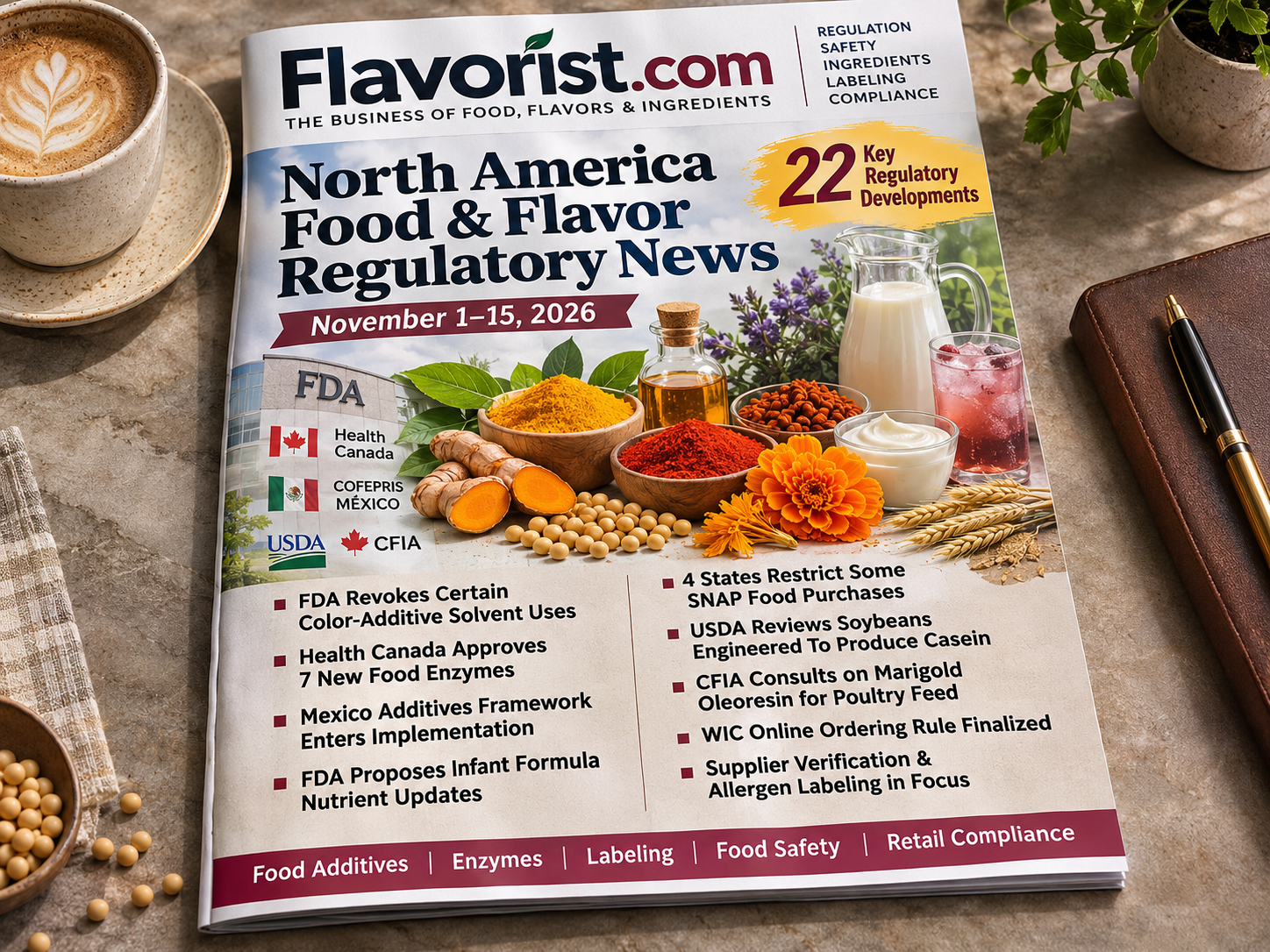
North America Food & Flavor Regulatory Roundup: November 1–15, 2026
Flavorist.com Regulatory Intelligence · United States, Canada and Mexico · Updated November 22, 2026
The FDA revoked authorizations for three solvents used to make annatto, paprika and turmeric colors, and Health Canada authorized seven new food enzymes in a single day. Mexico's new food-additive framework reached its implementation date, the FDA proposed the first major update to infant-formula nutrient rules since 1998, and four US states began restricting SNAP purchases of candy and sugary drinks.
This roundup covers 14 regulatory developments published or taking effect between November 1 and November 15, 2026, across the United States, Canada and Mexico. It includes final rules, proposals, petitions, consultations, program changes and enforcement actions affecting colors, enzymes, sweeteners, additives, labeling and food retail.
Final rules, proposals and petitions carry very different legal weight. Each story states which it is.
Contents
- United States: FDA, additives and labeling
- Canada
- Mexico
- United States: USDA, biotechnology and nutrition programs
- 8. USDA reviews soybeans engineered to produce dairy casein
- 9. Four states start restricting SNAP purchases of candy and sugary drinks
- 10. USDA gives retailers 90 more days to meet SNAP stocking standards
- 11. USDA reclassifies snack bars, jerky and other foods for SNAP stocking
- 12. USDA finalizes online ordering for WIC
- Food safety and enforcement
- What to watch
United States: FDA, additives and labeling
1. FDA revokes authorizations for solvents used to make natural colors
November 9 · United States · Final regulatory action · Colors
The FDA has taken two actions. The first revokes authorization for methylene chloride as a diluent in inks used to mark fruits and vegetables, following a petition under the Delaney Clause, which bars cancer-causing substances in color additives. The second revokes authorizations for methylene chloride, ethylene dichloride and trichloroethylene in making annatto extract, paprika oleoresin and turmeric oleoresin, after a separate petition showed industry had abandoned those uses. Both take effect January 11, 2027.
Annatto, paprika and turmeric colors themselves remain permitted.
Why it matters: Buyers of natural colors and botanical extracts should confirm with suppliers that their materials are made by authorized processes and update specifications before January.
Sources: FDA; FDA final orders
2. FDA proposes updated infant-formula nutrient requirements
November 2 · United States · Proposed rule · Infant formula
The FDA has proposed the first major update to infant-formula nutrient specifications since 1998. The proposal covers eight nutrients: it would change minimum or maximum levels for iodine, manganese, vitamin A and vitamin D, and keep current requirements for chloride, potassium, selenium and sodium. It would also update some units of measure, permitted nutrient sources and labeling. More proposals covering other nutrients will follow. Comments are due March 2, 2027.
Why it matters: Formula makers and suppliers of vitamin and mineral premixes should assess possible reformulation, test methods, stability data and label changes.
Sources: Federal Register; DLA Piper
3. Petition asks FDA to count tagatose as dietary fiber
Reported November 10 · United States · Citizen petition · Sweeteners and nutrition labeling
The Association of Food and Drug Officials (AFDO) has reported a citizen petition from Bonumose, Inc. asking the FDA to let D-tagatose, and possibly other non-digestible mono- and disaccharides with proven physiological benefits, count as dietary fiber. Tagatose is being developed as a sugar alternative for reduced-sugar foods and drinks. The petition's original filing date was not confirmed, and the FDA has not acted on it.
Why it matters: A fiber classification would change how tagatose appears on nutrition labels and how reduced-sugar products are positioned. Sweetener suppliers and flavor companies should follow the petition.
Source: AFDO
4. Petition seeks a labeling category for rapidly digestible carbohydrates
Reported November 10 · United States · Citizen petition · Nutrition labeling
A second petition reported by AFDO asks the FDA to set a validated definition and test method for rapidly digestible non-sugar carbohydrates, covering ingredients such as maltodextrins, resistant maltodextrins, resistant starches and modified starches. No labeling requirement has been adopted.
Why it matters: Any FDA action could change testing, ingredient declarations and claims for products using starches and maltodextrins, including energy foods.
Source: AFDO
Canada
5. Health Canada authorizes seven new food enzymes
November 10 · Canada · Final authorizations · Food enzymes
Health Canada made seven changes to its List of Permitted Food Enzymes on November 10, all effective that day. Each authorizes a specific enzyme from a specific production strain for named food categories, at levels consistent with Good Manufacturing Practice. An approval for one source organism does not cover other sources of the same enzyme.
| Enzyme | Production strain | Permitted uses |
|---|---|---|
| Acid prolyl endopeptidase | Aspergillus niger NZYM-MR | Beer; brewers' and distillers' mash; hydrolyzed animal, milk and vegetable proteins; plant-based dairy alternatives; some starch processing; yeast extracts |
| Glucoamylase | Aspergillus niger C6061-188-20 | Bakery; breakfast and infant cereals; some plant-based dairy alternatives; starch for dextrins, dextrose, glucose syrups and maltose |
| Protease | Fusarium venenatum WTY939-8-3 | Plant-based alternatives to dairy products, such as beverages and cheese-style products |
| Invertase | Trichoderma reesei AR-996 | Unstandardized fruit and vegetable products, including juice drinks |
| Cellulase | Trichoderma reesei AR-852 | Specified uses including bakery and brewing |
| Exo-inulinase | Trichoderma reesei AR-577 | Bread; white and whole wheat flour; unstandardized bakery products |
| Lipase | Trichoderma reesei AR-822 | Bread; white and whole wheat flour; unstandardized bakery products |
The glucoamylase approval extends Canadian permissions into plant-based applications not covered before, and the invertase approval extends that enzyme into fruit and vegetable products.
Why it matters: The acid prolyl endopeptidase and protease approvals give makers of protein hydrolysates, yeast extracts, savory systems and plant-based dairy new tools, but protein hydrolysis can change bitterness and mouthfeel. The others widen options in bakery, sweetener and juice processing. Each use must match the authorized strain and food category.
Source: Health Canada (linked in the table)
6. CFIA proposes liquid marigold oleoresin for poultry feed
November 6 · Canada · Proposed authorization · Feed ingredients and natural pigments
The Canadian Food Inspection Agency (CFIA) is consulting on adding liquid saponified marigold oleoresin, from Tagetes erecta flowers, to the Canadian Feed Ingredients Table, and on amending the existing entry for the dried form. Both are used in broiler and laying-hen feed to color skin, meat and egg yolks. The liquid form would need at least 15,000 mg/kg of total carotenoids and 12,500 mg/kg of lutein. CFIA reviewed animal and food safety, worker exposure, environmental effects and efficacy. Comments close December 7, 2026.
Why it matters: Natural pigment and oleoresin producers should review the proposed specifications, carriers and labeling for this growing use of botanical colorants.
Source: CFIA
Mexico
7. Mexico's new food-additive framework reaches implementation
November 2026 · Mexico · Implementation of an August regulation · Additives and processing aids
Mexico's new agreement on additives and processing aids in foods, beverages and dietary supplements, published August 21, 2026, reached its implementation date in November. It replaces the 2012 framework, amended in 2013 and 2016, and sets out permitted additives, uses and restrictions. Secondary sources disagree on whether it takes effect November 13 or November 17; companies should check the original publication's transitional provisions before deciding on compliance.
Why it matters: Flavor, color and sweetener suppliers, importers and multinational brands should review their Mexican portfolios against the new permissions and concentrations, noting differences from US and Canadian rules.
Sources: Creel; Santamarina + Steta; COFEPRIS
United States: USDA, biotechnology and nutrition programs
8. USDA reviews soybeans engineered to produce dairy casein
November 12 · United States · Public consultation · Biotechnology
USDA's Animal and Plant Health Inspection Service (APHIS) is consulting on a Mozza Foods petition for non-regulated status for genetically engineered soybean MF1786-1. The soybean produces bovine alpha S1, beta and kappa caseins and the FAM20C kinase enzyme, and has reduced levels of some native soybean storage proteins. APHIS has published a draft plant pest risk assessment, with comments open until January 11, 2027. This is not approval for commercialization or an FDA food-safety clearance.
Why it matters: Crop-grown casein could become a new source of the proteins that give cheese its texture and function. Alternative-dairy and ingredient developers should watch the review and any allergen and food-use approvals.
Sources: USDA APHIS; Federal Register
9. Four states start restricting SNAP purchases of candy and sugary drinks
November 1 · Montana, North Dakota, South Carolina, Virginia · Program restrictions · Beverages and confectionery
Four states began USDA-approved restrictions on what SNAP benefits can buy on November 1, according to USDA's waiver tracker, updated November 12. Montana restricts high-sugar beverages, energy drinks, candy and prepared desserts; North Dakota sweetened beverages, energy drinks and candy; South Carolina candy, energy drinks, soft drinks and sweetened beverages; and Virginia sweetened beverages.
Definitions vary. Montana treats drinks with more than 10 grams of sugar per eight fluid ounces as high-sugar and defines energy drinks by caffeine content combined with added stimulants. South Carolina defines soft drinks and sweetened beverages by carbonation, added sweeteners and whether they are ready to drink. USDA has told retailers that failing to apply the restrictions could cost them SNAP authorization. The products can still be bought with other payment.
Why it matters: Beverage and confectionery sales in these states' SNAP channels may shift. Lower-sugar reformulation can help, but eligibility depends on each state's exact definitions, not on marketing claims.
Sources: USDA SNAP waivers; Montana DPHHS; USDA South Carolina notice
10. USDA gives retailers 90 more days to meet SNAP stocking standards
November 13 · United States · Compliance extension · Food retail
USDA has granted a 90-day compliance extension, effective November 13, for its SNAP staple-food stocking standards, finalized in May 2026. Most participating stores must carry at least seven varieties in each of four staple categories (dairy, grains, proteins, and fruits or vegetables), three stocking units per variety, and perishables in at least three categories, with some exceptions.
Why it matters: Convenience stores and small grocers must reshape assortments, which affects shelf space for packaged foods. See story 11 for which products count.
Source: USDA
11. USDA reclassifies snack bars, jerky and other foods for SNAP stocking
November 4 · United States · Program guidance · Food retail
USDA's updated accessory-foods guidance says snack bars, jerky, shake powders and mixes, cheese dips, fruit spreads and butter no longer count toward a retailer's required staple-food inventory. They remain eligible for purchase with SNAP benefits unless a state restriction applies (story 9).
Why it matters: These products are not banned, but stores with limited shelf space may favor qualifying staples, reducing room for them.
Source: USDA
12. USDA finalizes online ordering for WIC
November 6 · United States · Final rule · Nutrition programs
USDA's final rule removes barriers to online ordering and internet transactions in the Special Supplemental Nutrition Program for Women, Infants, and Children (WIC) and updates food-delivery rules for electronic benefits. Some requirements phase in later; state agencies have until November 6, 2028, to meet rules on returned electronic benefits.
Why it matters: Makers of infant formula, cereal, dairy and other WIC-approved foods should prepare for online sales, product identification and approved-food-list systems.
Sources: Federal Register; USDA
Food safety and enforcement
13. USDA issues an alert over undeclared sesame and fish in meat products
November 6 · United States · Public health alert · Allergens
USDA's Food Safety and Inspection Service (FSIS) has issued a public health alert for frozen, not-ready-to-eat meat and poultry products that were misbranded and contained undeclared sesame and fish, including anchovy from Worcestershire sauce in a beef product.
Why it matters: Allergens often enter through sauces, seasonings and flavor components. Suppliers should keep allergen declarations and change notices current, and manufacturers should make sure supplier information reaches the finished label.
Sources: USDA FSIS; Oregon newsroom
14. FDA posts warning letters on supplier verification and plant hygiene
November 10 · United States · Enforcement · Imports and manufacturing
The FDA publicly posted several warning letters on November 10, issued earlier: to Mseafood Corporation and Peakopia Produce over the Foreign Supplier Verification Program (FSVP), to ABC Food Corp over manufacturing practices and insanitary conditions, and to Penn Herb Company over dietary-supplement manufacturing, packaging, labeling and storage.
Why it matters: Importers of ingredients, including flavor and botanical-extract companies, should make sure FSVP records, hazard analyses and corrective actions are up to date.
Source: AFDO
What to watch
| Date | Deadline or event | Story |
|---|---|---|
| November 13 or 17, 2026 | Mexico additive framework takes effect (date disputed) | 7 |
| December 7, 2026 | Comments close on CFIA marigold oleoresin | 6 |
| January 11, 2027 | FDA color-solvent revocations take effect; casein soybean comments close | 1, 8 |
| January 20, 2027 | Comments close on Health Canada's protein-quality testing, selenium and vitamin B6 proposals | — |
| January 27, 2027 | Comments close on Health Canada's proposed PFAS additive removals | — |
| About mid-February 2027 | 90-day SNAP stocking extension ends | 10 |
| March 2, 2027 | Comments close on FDA infant-formula nutrient proposal | 2 |
| November 6, 2028 | WIC returned-benefit requirements apply to states | 12 |
The three Health Canada consultations were opened before November and remain open; see DLA Piper's review and Health Canada's consultations.
- Natural colors face new scrutiny. The FDA solvent revocations and CFIA's marigold proposal show regulators looking at how botanical colorants are made and used.
- Canada is widening the enzyme toolbox. Seven approvals in one day expand options for protein processing, plant-based dairy, bakery and sweeteners.
- Mexico needs attention now. The new additive framework is in force or about to be, and the exact date must be confirmed.
- Nutrition programs are reshaping retail. State SNAP restrictions, new stocking standards and online WIC ordering will influence what small stores carry and how products sell.
- Sugar and carbohydrate labeling may change. The tagatose and carbohydrate petitions, alongside SNAP sugar thresholds, keep pressure on sugar reduction.