Oleoresins: What Every Certified Flavorist Should Know
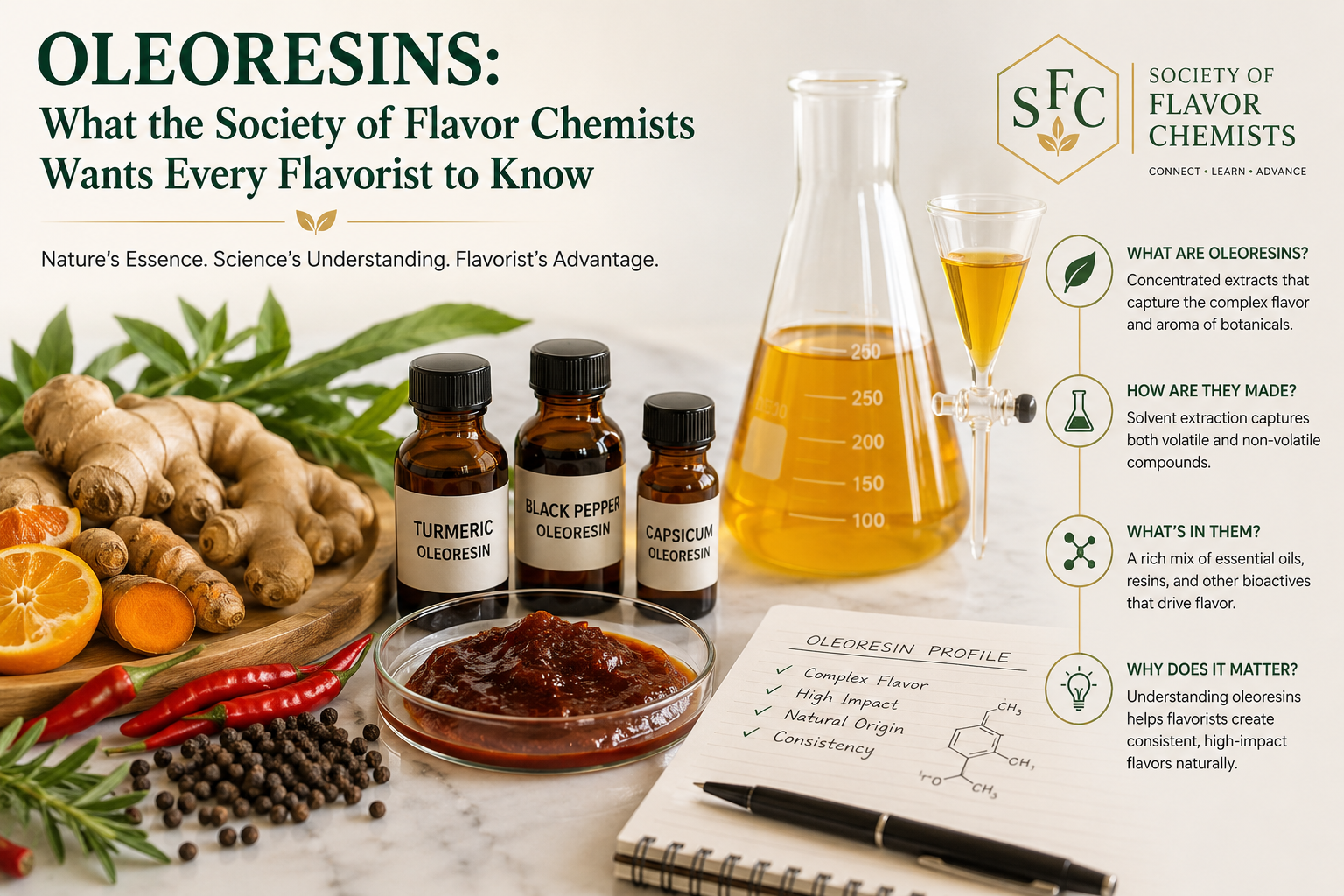
Oleoresins are a type of flavoring substance that the Society of Flavor Chemists expects certified flavorists to be able to explain in terms of their physical form, method of production, organoleptic characteristics, and solubility.
1. What oleoresins are
Oleoresins are concentrated extracts of spices, herbs, or botanicals containing both volatile aroma compounds and nonvolatile resinous/color/pungent fractions. They are usually made by solvent extraction of ground plant material followed by solvent removal; supercritical CO₂ extraction is also common. Spice oleoresins are valued because they give more batch consistency, lower microbial load, easier storage, and much lower use rates than raw spices. (JS International India)
2. Physical forms
| Form | Typical appearance | Solubility / handling | Flavorist use |
|---|---|---|---|
| Oil-soluble liquid oleoresin | Viscous amber, brown, red, green, or dark liquid/paste | Soluble/dispersible in fixed oils, fats, PG, triacetin, some alcohol systems; not truly water-soluble | Sauces, savory flavors, seasonings, marinades, oils, snacks |
| Water-dispersible oleoresin | Emulsified liquid | Dispersible in water via emulsifiers; may haze or ring if misused | Beverages, brines, soups, sauces |
| Encapsulated / spray-dried powder | Free-flowing powder on gum, starch, maltodextrin, silica, etc. | Disperses in dry blends; may release on hydration, heat, fat, or chewing | Dry seasonings, instant soups, snack dusts, bakery mixes |
| Standardized oleoresin | Adjusted to defined active level | Standardized by pungency, color value, volatile oil, piperine, curcumin, gingerols, etc. | Best for reproducible manufacturing |
| Deheated / decolorized fractions | Modified extract | Heat/color selectively reduced | Paprika without pungency, chili color without high heat, etc. |
Most oleoresins are naturally hydrophobic; water-soluble versions are normally emulsions, dispersions, or encapsulates rather than truly molecularly water-soluble. (Springer)
3. Production method
Typical process: raw material selection → cleaning/grinding → extraction with permitted solvent or CO₂ → filtration → solvent recovery → concentration → standardization → optional emulsification or encapsulation → QC.
Common extraction solvents include ethanol, acetone, isopropanol, methanol, hexane, ethyl acetate, and sometimes chlorinated solvents depending on jurisdiction and ingredient. U.S. FDA regulations set residue limits for several solvents in spice oleoresins, such as acetone, isopropyl alcohol, methanol, ethylene dichloride, and methylene chloride. (eCFR)
4. Major commercial oleoresins for flavorists
| Oleoresin | Physical / sensory profile | Solubility | Typical flavor applications | Starting dosage guide* |
|---|---|---|---|---|
| Black pepper | Dark green-brown to brown viscous liquid; woody, terpenic, peppery, pungent | Oil/fat soluble; powder versions available | Meat, soups, sauces, snacks, dressings | 5–50 ppm in finished food; 0.05–0.5% in flavor concentrate |
| White pepper | Pale brown; fermented, animalic, earthy, peppery | Oil soluble | Cream sauces, soups, meat, seafood | 2–30 ppm |
| Capsicum / chili | Orange-red to dark red viscous liquid; sharp heat, chili fruitiness | Oil soluble; water-dispersible versions common | Hot sauces, snacks, meats, seasonings | Dose by SHU/capsaicinoids; often 0.5–20 ppm extract depending heat |
| Paprika | Deep red oily liquid; sweet pepper, mild warmth, strong color | Oil soluble; emulsified/powder forms | Sausage, snacks, sauces, cheese, dressings | Color-driven; 10–500 ppm depending color value |
| Turmeric | Orange-brown paste/liquid; earthy, bitter, yellow-orange color | Oil soluble; water-dispersible versions available | Curry, sauces, snacks, beverages, color systems | 10–300 ppm; color-driven |
| Ginger | Dark brown viscous liquid; warm, pungent, citrusy, woody | Oil soluble; powders common | Ginger ale, bakery, sauces, meat, tea flavors | 5–100 ppm |
| Garlic | Brown viscous liquid; sulfurous, cooked/raw garlic | Oil soluble; encapsulated forms common | Savory, meat, snacks, sauces | 0.5–20 ppm; very potent |
| Onion | Brown liquid/paste; sulfurous, sweet cooked onion | Oil soluble | Savory bases, meat, soups, snacks | 1–30 ppm |
| Celery seed | Green-brown; celery, herbal, salty impression, phthalide-rich | Oil soluble | Pickles, soups, tomato, meat, bouillon | 1–30 ppm |
| Coriander | Yellow-brown; citrusy, floral, seed-spicy | Oil soluble | Sausage, curry, citrus modifiers, gin-style flavors | 2–50 ppm |
| Cumin | Brown; warm, sweaty, curry, aldehydic | Oil soluble | Curry, chili, meat, snacks | 1–30 ppm |
| Cardamom | Green-brown; cineolic, floral, sweet-spicy | Oil soluble | Chai, bakery, coffee, confectionery, curry | 2–40 ppm |
| Clove | Dark brown; eugenol, medicinal, sweet spice | Oil soluble | Bakery, cola, oral care, ham, spice blends | 1–25 ppm |
| Cinnamon / cassia | Brown; cinnamic, sweet, woody, hot | Oil soluble | Bakery, cola, gum, beverages, sauces | 2–50 ppm |
| Nutmeg / mace | Brown; warm, sweet, woody, fatty, slightly terpenic | Oil soluble | Bakery, dairy, meat, eggnog, sauces | 2–50 ppm |
| Allspice / pimento | Brown; clove-cinnamon-nutmeg-like | Oil soluble | Bakery, ketchup, meat, pickle, cola | 2–40 ppm |
| Fenugreek | Brown resinous paste; maple, curry, bitter, lactonic | Oil soluble | Curry, maple, savory, meat analogs | 1–30 ppm |
| Mustard | Brown/yellow; pungent, sulfurous, horseradish-like depending type | Oil/water-dispersible forms | Condiments, sauces, snacks, pickles | 5–100 ppm |
| Rosemary | Green-brown to dark; herbal, piney, antioxidant note | Oil soluble; extracts also used antioxidant | Meat, oils, snacks, sauces | 5–200 ppm; often functional |
| Sage | Green-brown; camphoraceous, savory, herbal | Oil soluble | Poultry, sausage, stuffing, sauces | 2–40 ppm |
| Thyme | Brown-green; phenolic, herbal, medicinal | Oil soluble | Meat, Mediterranean, soups, sauces | 1–30 ppm |
| Oregano / marjoram | Brown-green; phenolic, pizza-herbal | Oil soluble | Pizza, tomato, meat, sauces | 1–40 ppm |
| Basil | Green-brown; sweet herbal, anise/clove notes | Oil soluble | Tomato, pesto, Mediterranean flavors | 2–50 ppm |
| Bay | Green-brown; cineolic, herbal, woody | Oil soluble | Soups, meat, sauces, pickles | 1–20 ppm |
| Parsley | Green-brown; leafy, green, mild herb | Oil soluble/powder | Soups, sauces, dressings | 5–80 ppm |
| Vanilla oleoresin | Dark brown viscous/resinous; vanilla, balsamic, woody | Alcohol/PG/fat dispersible; poor in water unless formulated | Bakery, dairy, confectionery, beverages | 20–500 ppm depending strength |
| Coffee oleoresin/extract | Dark viscous; roasted, bitter, coffee | PG/alcohol/fat systems; emulsions for water | Coffee, chocolate, dairy, bakery | 20–500 ppm |
| Cocoa oleoresin/extract | Dark brown; cocoa, roasted, bitter | Fat/PG/alcohol dispersible | Chocolate, dairy, bakery | 20–500 ppm |
| Hop extract/oleoresin | Green-brown resin; bitter, floral, herbal, terpene | Ethanol/PG; beer-process soluble via kettle/emulsion | Beer, malt beverages, hop flavors | Bitterness-driven; ppm to mg/L iso-alpha acids |
*Dosages are starting ranges, not legal or sensory limits. Final use depends on active strength, carrier, food matrix, heat process, target intensity, and local regulation.
5. Applications by product type
| Product | Best oleoresin forms | Flavorist notes |
|---|---|---|
| Snack seasonings | Encapsulated powders, oil-soluble liquids preblended into seasoning oil | Watch dust color, staining, heat bloom, and oxidation |
| Sauces / dressings | Oil-soluble or water-dispersible | Pre-dilute; add after high heat when possible |
| Meat / poultry / seafood | Oil-soluble, encapsulated, emulsified | Strong performance in fat; check cured-meat interactions |
| Soups / bouillons | Powder or emulsified | Encapsulation improves dry blending and shelf life |
| Beverages | Water-dispersible/emulsified, alcohol/PG tinctures | Check ring formation, haze, sediment, cap staining |
| Bakery | Oil-soluble or encapsulated | Heat losses: top notes fade; resinous notes persist |
| Dairy / cheese | Oil-soluble | Fat carries spice notes well; avoid overdosing phenolics |
| Confectionery / gum | Oil-soluble, encapsulated | Clove, cinnamon, ginger, vanilla, capsicum need careful heat control |
6. Labeling and regulatory essentials
United States
FDA’s definition of natural flavor explicitly includes “essential oil, oleoresin, essence or extractive…” when derived from listed natural sources and used mainly for flavor rather than nutrition. (Legal Information Institute)
For finished foods, flavors may be declared as “natural flavor,” “flavor,” “spice,” “spice extractive,” or more specific terms depending on composition and use. Characterizing flavor claims must follow 21 CFR 101.22 rules; for example, whether the named characterizing ingredient is present, absent, or only simulated affects front-label wording. (eCFR)
Paprika oleoresin is also recognized as a color/flavor substance; FDA lists paprika oleoresin as a color or coloring adjunct and flavoring agent/adjuvant. (FDA HFP App External)
European Union
EU flavorings are governed mainly by Regulation (EC) No. 1334/2008, which covers definitions, permitted flavorings, and B2B/B2C labeling of flavorings. (Food Safety)
EU labeling of flavorings in finished food also interacts with Regulation (EU) No. 1169/2011. “Natural” claims are more restrictive: a “natural [source] flavouring” generally requires the flavoring component to come predominantly from the named source, while “natural flavouring” may be broader. (FoodDrinkEurope)
Global / industry practice
IOFI treats oleoresins and other botanical extractives as natural complex substances/natural flavoring complexes when derived from appropriate natural source materials. (Erratic Warthog)
7. What flavorists must check before use
Always request the supplier TDS, SDS, allergen statement, natural-status statement, residual solvent statement, GMO statement, kosher/halal if needed, country-of-origin, pesticide/heavy-metal data, and regulatory status for the target market.
Key technical checks:
- Standardization basis: SHU, capsaicinoids, piperine, curcumin, color value, volatile oil, eugenol, gingerols, etc.
- Carrier: vegetable oil, MCT, PG, ethanol, polysorbate, gum acacia, maltodextrin, starch, silica.
- Solubility: oil-soluble does not mean beverage-soluble.
- Color contribution: paprika, turmeric, capsicum, rosemary, and vanilla can affect finished-product color.
- Pungency carryover: heat-active materials bloom during eating and can intensify over shelf life.
- Oxidation: pepper, ginger, paprika, and herb oleoresins need oxygen/light/heat protection.
- Processing losses: volatile top notes can flash off; resinous bitterness/pungency remains.
- Legal function: flavor, color, antioxidant, or preservative positioning may change labeling and regulatory review.
8. Practical dosing method
Start with a 10% dilution of viscous oleoresin in a compatible carrier. Dose into the finished matrix, not just water, because fat, salt, acid, sugar, protein, and heat change perception.
A simple trial ladder:
| Intensity target | Finished-food trial range |
|---|---|
| Background nuance | 0.5–5 ppm active oleoresin |
| Recognizable spice note | 5–50 ppm |
| Dominant seasoning note | 50–200 ppm |
| Color / heat / functional use | Supplier-standardized dosing only |
For pungent oleoresins, dose by active chemistry rather than weight. For color oleoresins, dose by color value and target shade. For encapsulated powders, account for actual oleoresin load, usually far below 100%.
9. Training rule of thumb
Use oleoresins when you need impact, reproducibility, low microbial risk, and compact dosing. Use ground spice when you need visual particulates, culinary authenticity, or label-friendly kitchen perception. Use essential oils when you need top-note aroma without resin, color, or bitterness.
Log in to view more.