Onion as a Natural Flavoring: A Comprehensive Technical Guide
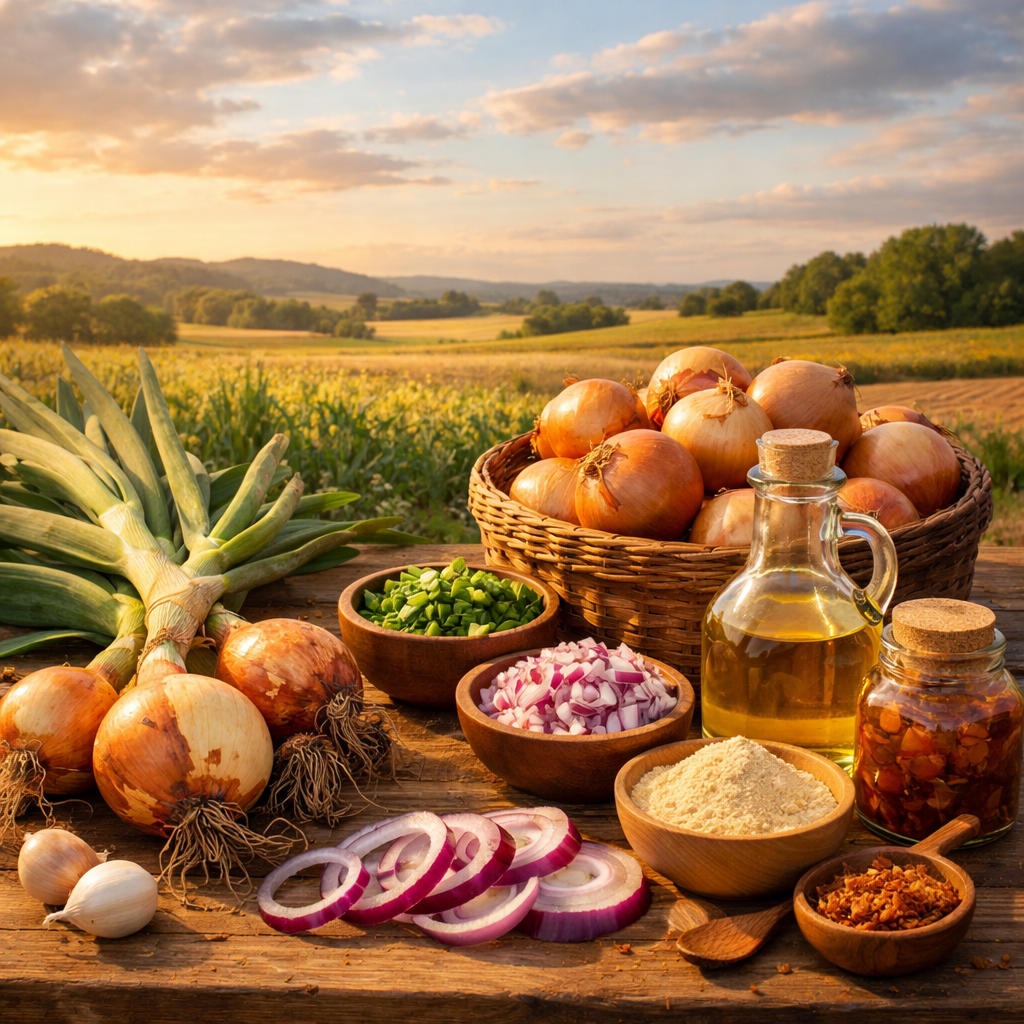
The Society of Flavor Chemists requires certified flavorists to be able to identify the plant part used, derivatives, organoleptic characteristics, and major chemical component(s) characterizing the aroma and flavor of the 80 natural flavorings listed on its syllabus for the qualification test and interview. Onion is included among these essential items.
Introduction
Onion (Allium cepa L.) is one of the most widely used and essential flavoring ingredients in the world. A member of the Amaryllidaceae family (formerly Liliaceae), which also includes garlic, leek, shallot, and chive, onion has been cultivated for over 5,000 years and was prized by ancient Egyptians, Greeks, Romans, and Chinese for its culinary and medicinal properties. Its pungent, sulfurous, and sweet-savory character is irreplaceable in countless cuisines across the globe.
For flavorists, onion presents a fascinating complexity. Like garlic, raw onion has no aroma until its cells are disrupted. The enzyme alliinase converts the non-volatile precursors (S-alk(en)yl-L-cysteine sulfoxides) into a range of sulfur compounds that create the characteristic sharp, pungent, and lacrimatory (tear-producing) aroma. Upon cooking, these compounds transform into a complex mixture of sulfur-containing compounds, thiophenes, and pyrazines that create the sweet, savory, caramelized character associated with cooked onion .
Onion is available in numerous forms for flavorists: essential oil, oleoresin, extracts, powders, and purees. Each form captures a different aspect of onion's flavor profile, from fresh and pungent to sweet and caramelized.
Plant Parts Used
The bulb is the plant part used for flavoring purposes. The following characteristics are notable:
- Source Plant: Allium cepa L., a member of the Amaryllidaceae family (onion, garlic, leek, shallot family).
- Bulb Description: A tunicated bulb composed of concentric layers of fleshy leaves (scales) enclosed in a papery outer skin (tunic). The bulb can be white, yellow, red, or purple depending on the variety.
- Varieties: Common commercial varieties include:
- Yellow Onion: The most common; balanced flavor, sweet when cooked.
- White Onion: Milder, crisper, used in Mexican cuisine.
- Red Onion: Milder, sweeter, often used raw.
- Sweet Onion (e.g., Vidalia, Walla Walla): Higher sugar content, milder pungency.
- Shallot (Allium cepa var. aggregatum): Smaller, milder, more delicate flavor.
- Harvesting: Onions are typically planted in spring and harvested in late summer when the tops begin to yellow and fall over. The bulbs are cured (dried) for 2–4 weeks to develop flavor and extend shelf life.
- Essential Oil Content: Fresh onion yields 0.005–0.01% essential oil; dried onion yields 0.05–0.2%.
The essential oil is obtained by steam distillation of crushed fresh onion or dried onion flakes. Onion extracts and oleoresins are obtained by solvent extraction.
The Chemistry of Onion Flavor
Onion's flavor is unique in that it is created by an enzymatic reaction that occurs when the plant tissue is damaged. This process is critical to understanding onion's flavor profile and how to work with it.
Raw Onion (Intact):
- Contains non-volatile, odorless S-alk(en)yl-L-cysteine sulfoxides (primarily 1-propenyl-L-cysteine sulfoxide, also known as isoalliin)
- Contains the enzyme alliinase in separate cellular compartments
When Onion is Crushed/Cut:
- Alliinase is released and acts upon the sulfoxides
- A complex cascade of reactions produces thiosulfinates, including propanethial S-oxide (the lacrimatory factor)
- Propanethial S-oxide is volatile and causes tearing
- Other thiosulfinates contribute to the fresh, pungent onion aroma
Upon Cooking or Aging:
- Thiosulfinates decompose into a complex mixture of sulfur compounds:
- Disulfides and trisulfides: Contribute pungent, oniony, roasted notes
- Thiophenes: Contribute cooked onion, savory notes
- Pyrazines: Formed during high-heat cooking; contribute nutty, roasted notes
- The lacrimatory factor (propanethial S-oxide) is destroyed by heat
- Cooked onion develops sweet, savory, caramelized character
Derivatives
Onion is commercially available in numerous forms. The following details include technical specifications important for procurement and formulation.
Onion Essential Oil
Production Method: Steam distillation of crushed fresh onion or dried onion flakes.
Description: Pale yellow to amber-yellow to reddish-brown mobile liquid with an intensely pungent, sulfurous, oniony aroma. The oil has a cooked/roasted onion character rather than fresh onion character.
Technical Notes: Yield is very low (0.005–0.01% from fresh onion). The oil contains the volatile sulfur compounds but lacks the lacrimatory factor. Storage in a cool, dry place away from light is critical.
Onion Oleoresin
Production Method: Solvent extraction of fresh or dried onion, followed by solvent removal.
Description: Dark amber to brown viscous liquid or semi-solid with a complex, full-bodied onion aroma. Contains both volatile and non-volatile components, capturing more of the fresh onion character than essential oil.
Technical Notes: Provides a more complete flavor profile than essential oil alone.
Onion Extract (Water or Alcohol)
Production Method: Water or alcohol extraction of fresh or dried onion.
Description: Liquid extract with characteristic onion aroma. Water extracts capture the water-soluble precursors; alcohol extracts capture more of the volatile compounds.
Onion Powder (Dehydrated)
Production Method: Dehydration and milling of fresh onion.
Description: Off-white to light brown powder with a characteristic oniony aroma. Available in various granulations.
Technical Notes: The most common form for dry mixes and seasonings. Contains both volatile and non-volatile components.
Roasted Onion Powder
Production Method: Roasting of onion followed by dehydration and milling.
Description: Dark brown powder with a sweet, caramelized, roasted onion aroma.
Onion Juice Concentrate
Production Method: Juice extraction from fresh onion, followed by concentration.
Description: Pale yellow to amber viscous liquid with characteristic onion flavor.
Organoleptic Characteristics
Aroma Profile (Fresh Raw Onion)
When fresh onion is crushed, it reveals an intensely pungent, sharp, and penetrating aroma:
- Primary Note: Pungent, sharp, sulfurous, penetrating
- Lacrimatory Factor: Sharp, eye-irritating, volatile
- Sulfurous: Cabbage-like, garlic-like, leek-like
- Pungent: Sharp, biting, nasal-irritating
- Green: Slightly grassy, vegetal
- Sweet: Subtle, underlying sweetness
Aroma Profile (Cooked/Sautéed Onion)
When onion is cooked, the aroma transforms into a sweet, savory, and rich profile:
- Primary Note: Sweet, savory, caramelized, rich
- Caramelized: Sweet, brown sugar-like, roasted
- Savory: Umami, brothy, rich
- Sulfurous: Mellowed, less sharp
- Nutty: Toasted, roasted notes
- Sweet: Pronounced, pleasant sweetness
Aroma Profile (Onion Essential Oil)
Onion essential oil has a profile closer to cooked/roasted onion:
- Primary Note: Pungent, sulfurous, oniony, cooked
- Disulfides/Trisulfides: Pungent, oniony, roasted
- Thiophenes: Savory, cooked onion
- Sweet: Subtle, caramel-like undertones
- Sulfurous: Characteristic onion note
Taste Characteristics
At typical usage levels, onion provides:
- Savory: Rich, umami, brothy depth
- Sweet: Mellow, caramelized (cooked)
- Pungent: Sharp, biting (fresh)
- Sulfurous: Distinctive oniony note
- Bitter: Slight, pleasant bitterness
- Spicy: Warm, peppery (in higher concentrations)
The Key to Onion's Unique Flavor
Onion's flavor is unique in that it is created by an enzymatic reaction upon cell disruption, similar to garlic:
Fresh/Raw Onion:
- Propanethial S-oxide (Thiopropanal S-oxide): A volatile thiosulfinate that is the lacrimatory factor (tear-inducing). Provides sharp, pungent, penetrating aroma.
- Other Thiosulfinates: Contribute to the fresh, pungent onion character.
Cooked Onion:
- Disulfides (e.g., dipropyl disulfide, methyl propyl disulfide): Contribute pungent, oniony, roasted notes
- Trisulfides: Contribute intense sulfurous notes
- Thiophenes: Contribute savory, cooked onion notes
- Pyrazines: Formed during high-heat cooking; contribute nutty, roasted notes
Major Chemical Components
Key Aroma Compounds (Fresh Raw Onion)
| Component | Typical Concentration | Organoleptic Contribution | CAS No. |
|---|---|---|---|
| Propanethial S-oxide | Trace | Sharp, pungent, lacrimatory (tear-inducing) | 6733-09-1 |
| Propyl Thiosulfinates | Trace | Fresh, pungent, oniony | Various |
Key Aroma Compounds (Cooked Onion / Onion Oil)
| Component | Typical Percentage (in oil) | Organoleptic Contribution | CAS No. |
|---|---|---|---|
| Dipropyl Disulfide | 20–40% | Pungent, oniony, roasted | 629-19-6 |
| Methyl Propyl Disulfide | 10–20% | Sulfurous, oniony, garlic-like | 2179-58-0 |
| Dipropyl Trisulfide | 5–15% | Intense sulfurous, oniony | 6028-61-1 |
| Propyl Allyl Disulfide | 5–15% | Sulfurous, oniony | 2179-59-1 |
| Thiophenes | 1–5% | Savory, cooked onion | Various |
| Pyrazines | trace | Nutty, roasted | Various |
Comparison: Onion vs. Garlic vs. Shallot
| Characteristic | Onion | Garlic | Shallot |
|---|---|---|---|
| Family | Amaryllidaceae | Amaryllidaceae | Amaryllidaceae |
| Primary Sulfur Precursors | 1-Propenyl-L-cysteine sulfoxide (isoalliin) | Alliin | Similar to onion |
| Primary Fresh Compounds | Propanethial S-oxide, thiosulfinates | Allicin, thiosulfinates | Similar to onion |
| Primary Cooked Compounds | Dipropyl disulfide, dipropyl trisulfide | Diallyl disulfide, diallyl trisulfide | Similar to onion |
| Fresh Aroma | Sharp, pungent, lacrimatory | Pungent, sharp, garlicky | Mild, sweet, onion-like |
| Cooked Aroma | Sweet, caramelized, savory | Sweet, mellow, savory | Sweet, delicate |
Applications in Flavoring
Regulatory Status
Onion and its derivatives are approved as natural flavoring substances:
- United States: Onion is generally recognized as safe (GRAS). Onion oil is listed under 21 CFR §182.20 as a natural flavoring substance (FEMA No. 2817 for onion oil; FEMA No. 2818 for onion extract; FEMA No. 2819 for onion powder).
- European Union: Permitted for use in food flavorings under Regulation (EC) No 1334/2008.
- China: Approved food flavor under GB 2760.
Typical Usage Levels (mg/kg or %)
The following usage levels are based on FEMA GRAS determinations and industry standards:
| Application | Onion Oil (mg/kg) | Onion Powder (%) | Onion Oleoresin (mg/kg) |
|---|---|---|---|
| Non-alcoholic beverages | 0.5–5 | N/A | 1–10 |
| Alcoholic beverages | 1–10 | N/A | 2–20 |
| Baked goods | 1–15 | 0.1–1.0 | 5–50 |
| Hard candy | 1–20 | N/A | 5–100 |
| Frozen dairy | 0.5–5 | 0.05–0.5 | 1–10 |
| Gelatins and puddings | 0.5–5 | 0.05–0.5 | 1–10 |
| Soft candy | 1–15 | N/A | 5–50 |
| Meat products | 10–200 | 0.1–3.0 | 20–500 |
| Sauces and marinades | 10–200 | 0.1–3.0 | 20–500 |
| Soups and stews | 10–200 | 0.1–3.0 | 20–500 |
| Seasonings | 20–300 | 1–10 | 50–1,000 |
Note: These ranges represent typical industry usage. Onion oil is potent; use at low levels.
Usage & Dosage Best Practices
Flavorists should observe the following guidelines when working with onion:
Select the Correct Form:
- Onion Oil: Use for cooked/roasted onion character. More stable but lacks fresh onion notes.
- Onion Oleoresin: Use for a more complete, balanced onion profile. Contains both volatile and non-volatile components.
- Onion Powder: Use for dry mixes and seasonings. Provides both flavor and body.
- Fresh Onion Extract: Use when a fresh, pungent onion character is desired; note stability limitations.
- Roasted Onion Powder: Use for sweet, caramelized onion character.
Start Low, Titrate: Onion oil is potent. Begin at the lower end of typical usage ranges and adjust upward.
Pre-Dilution: Pre-dilute onion oil in ethanol or propylene glycol for easier handling and more even dispersion.
Heat Stability: Onion oil is relatively heat-stable but can lose volatile components during high-temperature processing. For baked goods, higher usage levels may be required.
Flavor Synergies: Onion pairs exceptionally well with:
- Alliums: Garlic, leek, shallot, chive (synergistic)
- Herbs: Parsley, thyme, rosemary, oregano, bay, sage
- Spices: Black pepper, paprika, cumin, coriander, chili, turmeric
- Savory: Butter, olive oil, beef, chicken, pork, mushrooms
- Acids: Vinegar, lemon, wine
- Vegetables: Tomato, potato, carrot, celery, bell pepper
Flavor Applications: Onion serves as a primary flavor or modifier in:
- Savory dishes: Soups, stews, sauces, marinades, stir-fries
- Meat products: Burgers, sausages, meatloaf, roasts
- Dips and spreads: Onion dip, cream cheese spreads
- Bread and baked goods: Onion bread, onion rings, crackers
- Seasonings: Onion salt, onion powder, spice blends
- Condiments: Ketchup, barbecue sauce, relish
Example Formula: French Onion Soup Flavor
The following formula demonstrates the use of onion oil and roasted onion powder to create a French onion soup flavor system.
French Onion Soup Flavor Concentrate (Oil-Based)
| Component | Percentage (%) | Function | Technical Note |
|---|---|---|---|
| Onion oil | 30.0 | Primary onion note | Provides cooked onion character |
| Roasted onion powder (on carrier) | 20.0 | Sweet, caramelized note | Adds depth |
| Beef flavor (natural) | 20.0 | Savory base | Adds umami |
| Butter flavor | 10.0 | Rich, creamy note | Adds richness |
| Garlic oil | 5.0 | Savory note | Adds complexity |
| Thyme oil | 5.0 | Herbal note | Adds Mediterranean character |
| Black pepper oil | 5.0 | Spicy warmth | Adds depth |
| Sherry wine flavor | 5.0 | Wine note | Adds complexity |
| Total | 100.0 |
Usage Instructions: Use at 0.1–0.5% in finished soups, broths, or sauces.
Alternative: Onion Dip Flavor Concentrate
| Component | Percentage (%) | Function |
|---|---|---|
| Onion oil | 40.0 | Primary onion note |
| Sour cream flavor | 25.0 | Dairy base |
| Garlic oil | 10.0 | Savory depth |
| Chive oil | 10.0 | Delicate onion note |
| Parsley oil | 5.0 | Fresh, green note |
| Black pepper oil | 5.0 | Spicy warmth |
| Vegetable oil | 5.0 | Carrier |
| Total | 100.0 |
Usage Instructions: Use at 0.1–0.5% in finished dip formulations.
Alternative: Onion Oil Pre-Dilution for Lab Use
| Component | Percentage (%) | Function |
|---|---|---|
| Ethanol (190 proof) or propylene glycol | 90.0 | Solvent |
| Onion oil | 10.0 | Active ingredient |
Method: Mix thoroughly. Store in amber glass bottles in a cool place. Use 0.1–1.0% in flavor formulations for easy handling.
Shelf Stability & Storage
Understanding the stability of onion ingredients is critical for maintaining flavor quality.
Onion Oil
Storage Recommendation: Store in a full, airtight container in a cool, dry place away from light. Refrigeration is strongly recommended for long-term storage.
Stability Notes: Onion oil contains reactive sulfur compounds (disulfides, trisulfides) that are susceptible to oxidation and polymerization. Over time, the oil may darken and develop off-notes. Shelf life is typically 12–24 months when properly stored.
Onion Oleoresin
Storage Recommendation: Store in airtight containers in a cool, dry place away from light. Refrigeration is recommended.
Stability Notes: Oleoresins are more stable than essential oil due to the presence of natural antioxidants. Shelf life is typically 18–24 months.
Onion Powder
Storage Recommendation: Store in airtight containers in a cool, dry place away from light. The powder is hygroscopic.
Stability Notes: Onion powder loses volatile aromatics over time. Shelf life is typically 12–18 months.
Stability in Finished Products
- Heat stability: Sulfur compounds are relatively heat-stable but can volatilize during high-temperature processing.
- pH stability: Stable across typical food pH range.
- Oxidation: Highly susceptible to oxidation; use antioxidants for long-shelf-life products.
- Light sensitivity: Protect from light.
Safety Considerations
General Safety
Onion and its derivatives are generally recognized as safe (GRAS) for use as flavorings at approved levels (FEMA 2817, 2818, 2819).
Important Considerations
- Skin Irritation: Onion oil can cause skin irritation in concentrated form. Sulfur compounds are known irritants.
- Mucous Membrane Irritation: Can cause irritation to eyes and mucous membranes (the lacrimatory factor is well-known).
- Allergies: Onion is a known allergen in sensitive individuals.
- Pregnancy: Safe in food amounts; concentrated essential oil should be used with caution during pregnancy.
- Gastrointestinal: High concentrations can cause gastrointestinal distress.
- Blood Thinning: Onion has mild anticoagulant properties; individuals taking blood-thinning medications should consult a physician.
Maximum Usage Levels (IFRA)
For fragrance applications, onion oil is subject to IFRA restrictions. Flavorists developing products for topical applications should consult current IFRA standards.
Skin Safety
- Essential oil: May cause irritation; dilute properly for topical applications.
- Protective measures: Wear suitable gloves and eye protection when handling concentrated onion oil.
Quality Control & Sourcing
Flavorists should implement the following quality checks when sourcing onion ingredients.
Essential Requirements for Certificates of Analysis (COA)
For Onion Oil:
- Botanical identity: Allium cepa L.
- Origin: USA, Europe, India, China, etc.
- Dipropyl disulfide content: 20–40% (GC analysis)
- Methyl propyl disulfide content: 10–20%
- Physical properties: Specific gravity (1.040–1.090), refractive index (1.550–1.580)
For Onion Powder:
- Botanical identity: Allium cepa
- Moisture: <6%
- Microbiological: Free from pathogens
Common Adulteration Risks
- Onion oil: Dilution with synthetic sulfur compounds; extension with garlic oil; use of lower-grade oil
- Onion powder: Adulteration with other flours, starches, or fillers; use of aged or low-quality onion
Sourcing Considerations
| Origin | Characteristics |
|---|---|
| USA | High-quality; sweet, mild varieties (Vidalia, Walla Walla) |
| Europe | High-quality; balanced flavor |
| India | Large producer; pungent varieties |
| China | Large producer; commercial grades |
Traditional and Culinary Applications
Traditional Uses
- Global: Essential in soups, stews, sauces, and countless savory dishes
- French: French onion soup, caramelized onions
- Indian: Used as a base in curries, masalas, and stir-fries
- Mediterranean: Used in sofrito, marinades, and sauces
- Middle Eastern: Used in kebabs, stews, and rice dishes
- Latin American: Used in sofrito, adobo, and salsas
Culinary Pairings
Onion pairs well with:
- Alliums: Garlic, leek, shallot, chive
- Herbs: Parsley, thyme, rosemary, oregano, sage, bay
- Spices: Black pepper, paprika, cumin, coriander, chili, turmeric
- Proteins: Beef, chicken, pork, lamb, fish
- Vegetables: Tomato, potato, carrot, celery, mushroom
- Fats: Butter, olive oil, bacon fat
Summary
Onion (Allium cepa) is one of the most important and versatile natural flavorings. Its unique flavor is created by an enzymatic reaction: upon cell disruption, the precursor 1-propenyl-L-cysteine sulfoxide is converted to propanethial S-oxide (the lacrimatory factor) and other thiosulfinates, providing the sharp, pungent character of raw onion. Upon cooking, these compounds transform into a complex mixture of disulfides, trisulfides, and thiophenes that provide the sweet, savory, caramelized character of cooked onion.
Key characteristics:
- Raw onion: Pungent, sharp, lacrimatory; propanethial S-oxide
- Cooked onion: Sweet, savory, caramelized; disulfides, trisulfides, thiophenes
- Typical usage: Onion oil 0.5–300 mg/kg; onion powder 0.05–10%
- Primary applications: Soups, stews, sauces, meat products, seasonings
Critical considerations for flavorists:
- Distinguish raw from cooked: Essential oil provides cooked/roasted character; fresh character requires enzymatic activity.
- Select the correct form: Oil, oleoresin, powder, and fresh extracts have different profiles.
- Potency: Onion oil is potent; use at low levels.
- Flavor synergies: Pairs with garlic, herbs, spices, and meats.
- Stability: Sulfur compounds are reactive; store properly.
- Safety: Concentrated oil can cause skin and eye irritation.
References and Further Reading
The information presented in this guide is synthesized from:
- Regulatory documents from FDA, FEMA (Nos. 2817, 2818, 2819), and international food safety authorities.
- Published scientific literature on Allium cepa.
- Standard textbooks on natural flavoring materials.
- Industry technical data from major suppliers.
- Traditional culinary knowledge documented in public domain sources.
Key References:
- FEMA Flavor Ingredient Library: Onion Oil (FEMA 2817), Onion Extract (FEMA 2818), Onion Powder (FEMA 2819)
- Journal of Agricultural and Food Chemistry: Onion volatile compounds
- TGSC Information System: Onion Oil
Disclaimer: This article is for educational and training purposes only. When using onion in commercial products, always verify current regulatory status in your jurisdiction, conduct appropriate safety assessments, and source ingredients from reputable suppliers who can provide documentation of botanical identity, origin, and quality. Onion oil is potent; use at appropriate levels and handle with care. The formulas and usage levels provided are illustrative examples and may require adjustment based on specific product requirements and regulatory compliance.
###