Peppermint as a Natural Flavoring: A Comprehensive Technical Guide
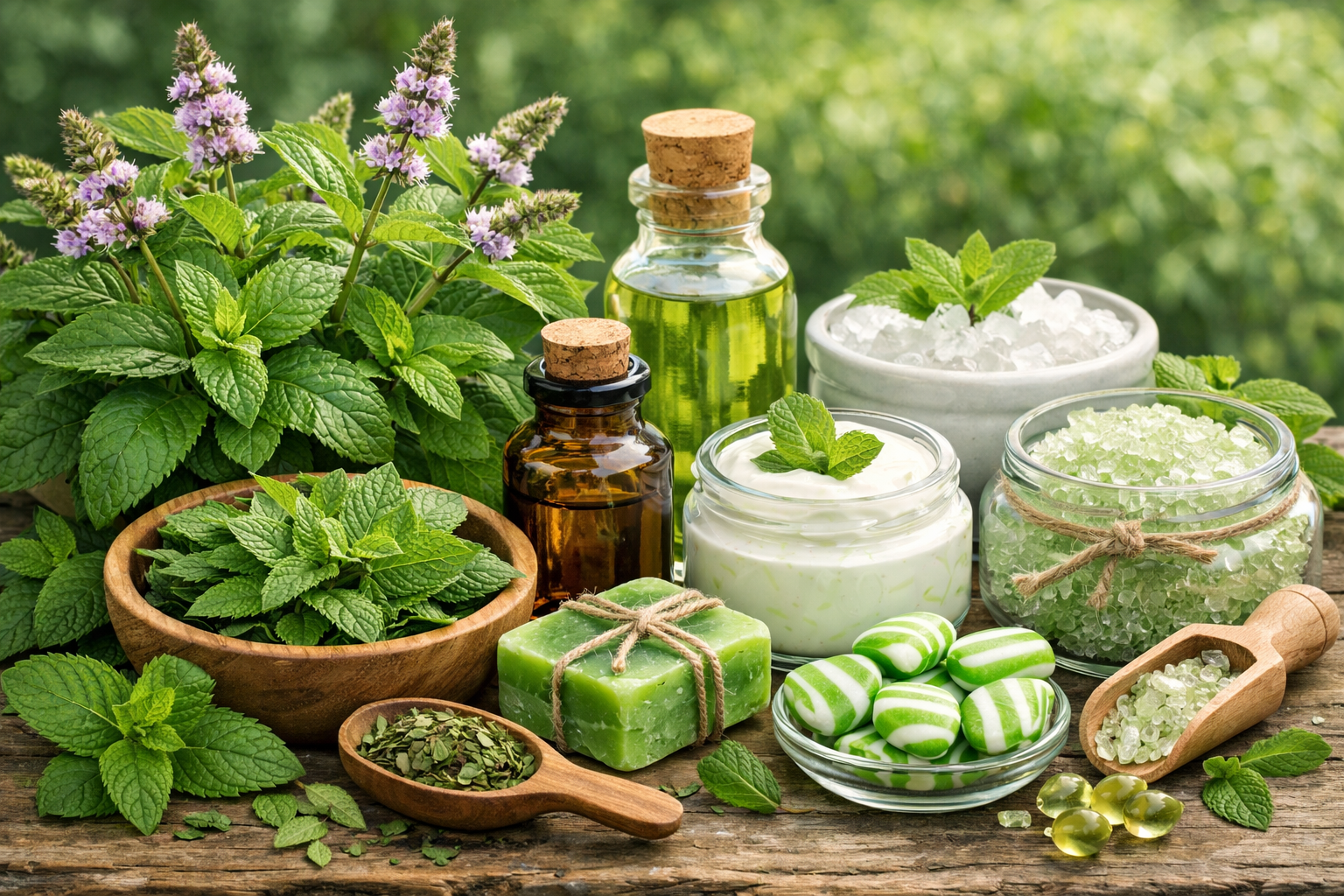
The Society of Flavor Chemists requires certified flavorists to be able to identify the plant part used, derivatives, organoleptic characteristics, and major chemical component(s) characterizing the aroma and flavor of the 80 natural flavorings listed on its syllabus for the qualification test and interview. Peppermint is included among these essential items.
Introduction
Peppermint (Mentha × piperita L.) is one of the most widely used and beloved natural flavorings in the world. A member of the Lamiaceae (mint) family, peppermint is a natural hybrid of watermint (Mentha aquatica) and spearmint (Mentha spicata). Originating in Europe, it has been cultivated for centuries and is now grown extensively in the United States, India, China, and other regions. Its refreshing, cooling, and sweet-minty character is indispensable in confectionery, oral care, beverages, and pharmaceutical applications.
For flavorists, peppermint offers a uniquely complex and balanced profile—cooling, sweet, minty, and slightly camphoraceous—with a smooth, rounded character that distinguishes it from other mints. Unlike cornmint (Mentha arvensis), which is bold and menthol-forward, or spearmint, which is sweeter and less cooling, peppermint strikes a balance between cooling potency and flavor complexity. The key to its character lies in the interplay of menthol (cooling) and menthone (fresh, camphoraceous), along with menthyl acetate and other esters that contribute sweetness and roundness .
Peppermint oil is obtained by steam distillation of the fresh or partially dried leaves and flowering tops. The oil is available in several grades and rectifications, and it is one of the most important natural flavoring materials in the industry.
Plant Parts Used
The leaves and flowering tops are the plant parts used for flavoring purposes. The following characteristics are notable:
- Source Plant: Mentha × piperita L., a sterile hybrid of M. aquatica and M. spicata.
- Plant Description: A perennial herb with square stems, dark green to purple-tinged leaves, and whorls of purple flowers. The plant spreads via rhizomes and is cultivated in temperate regions worldwide.
- Leaf Description: Leaves are ovate to lanceolate, serrated, and highly aromatic. The essential oil is concentrated in glandular trichomes on the leaf surface.
- Harvesting: Peppermint is typically harvested in mid to late summer when the oil content is at its peak. The plants are cut, partially dried in the field, and then steam-distilled.
- Essential Oil Content: Fresh leaves yield 0.3–1.5% essential oil; dried leaves yield 1–3%.
The essential oil is obtained by steam distillation of the fresh or partially dried leaves and flowering tops. The oil is often rectified (redistilled) or dementholized for specific applications.
Derivatives
Peppermint is commercially available in several forms. The following details include technical specifications important for procurement and formulation.
Peppermint Essential Oil (Crude)
Production Method: Steam distillation of fresh or partially dried leaves and flowering tops of Mentha × piperita.
Description: Colorless to pale yellow to pale green mobile liquid with a characteristic fresh, sweet, minty, cooling, and complex aroma. The oil has a smooth, balanced character.
Technical Notes: Yield is typically 0.3–1.5% from fresh leaves. The oil is composed primarily of menthol (30–50%), menthone (15–30%), menthyl acetate (3–10%), and 1,8-cineole (2–5%). Storage in a cool, dry place away from light is recommended.
Dementholized Peppermint Oil
Production Method: Partial crystallization of peppermint oil to remove a portion of the menthol. The remaining oil has a lower menthol content and higher menthone and menthyl acetate levels.
Description: Pale yellow to amber mobile liquid with a less cooling, more herbal character than the crude oil.
Peppermint Oil (Rectified)
Production Method: Redistillation or fractional distillation of crude peppermint oil to remove terpenes and light fractions, concentrating the oxygenated components.
Description: Colorless to pale yellow liquid with a cleaner, more focused mint character.
Natural Menthol Crystals
Production Method: Crystallization of menthol from peppermint or cornmint oil. Peppermint-derived menthol is identical to cornmint-derived menthol.
Description: Colorless, translucent, needle-like crystals with an intensely cooling, minty, penetrating aroma. Melting point: 42–44°C (107–111°F).
Peppermint CO₂ Extract
Production Method: Supercritical carbon dioxide extraction of fresh peppermint leaves.
Description: Dark green viscous liquid with a richer, more complete profile than the essential oil, capturing heavier, less volatile components.
Organoleptic Characteristics
Aroma Profile (Peppermint Oil)
When evaluated, peppermint oil reveals a fresh, sweet, and complex aromatic profile:
- Primary Note: Fresh, sweet, minty, cooling
- Menthol Character: Intense cooling, penetrating, minty—the signature note
- Menthone Character: Fresh, camphoraceous, cooling, slightly bitter
- Menthyl Acetate: Sweet, fruity, minty—adds sweetness and roundness
- Herbaceous: Slightly green, tea-like undertones
- Camphoraceous: Fresh, medicinal top notes
- Sweet: Pleasant, candy-like sweetness
- Cooling: Pronounced, lingering cooling sensation
The overall aroma is often described as "fresh, sweet, and intensely cooling with a smooth, balanced, and complex minty character."
Taste Characteristics
At typical usage levels, peppermint provides:
- Cooling: Intense, penetrating, long-lasting cooling sensation
- Sweet: Pleasant, rounded sweetness
- Minty: Clean, characteristic peppermint flavor
- Camphoraceous: Slight, fresh, medicinal top notes
- Bitter: Very subtle, pleasant bitterness
- Smooth: Balanced, less sharp than cornmint
The Key to Peppermint's Unique Flavor
Peppermint's characteristic fresh, sweet, cooling flavor comes from a balanced combination of menthol, menthone, and menthyl acetate:
Primary Components:
- Menthol (30–50%): A cyclic monoterpene alcohol that provides intense cooling, penetrating, minty notes—the primary cooling compound
- Menthone (15–30%): A cyclic monoterpene ketone that contributes fresh, camphoraceous, cooling, and slightly bitter notes
- Menthyl Acetate (3–10%): An ester that contributes sweet, minty, fruity notes—adds sweetness and roundness
- 1,8-Cineole (Eucalyptol) (2–5%): A cyclic ether that contributes fresh, camphoraceous, eucalyptus-like notes
Supporting Components:
- Isomenthone (1–5%): Contributes camphoraceous, minty notes
- Limonene (1–3%): Contributes fresh, citrus notes
- β-Caryophyllene (1–3%): Contributes woody, spicy notes
- Pulegone (trace–1%): Contributes minty, slightly pungent notes
The balance of menthol (cooling) with menthone (fresh, camphoraceous) and menthyl acetate (sweet, fruity) creates the characteristic smooth, rounded, and complex peppermint profile that distinguishes it from the sharper, more menthol-forward cornmint .
Major Chemical Components
Key Aroma Compounds (Peppermint Oil)
| Component | Typical Percentage | Organoleptic Contribution | CAS No. |
|---|---|---|---|
| Menthol | 30–50% | Intense cooling, penetrating, minty | 1490-04-6 |
| Menthone | 15–30% | Fresh, camphoraceous, cooling, slightly bitter | 10458-14-7 |
| Menthyl Acetate | 3–10% | Sweet, minty, fruity | 89-48-5 |
| 1,8-Cineole | 2–5% | Fresh, camphoraceous, eucalyptus-like | 470-82-6 |
| Isomenthone | 1–5% | Camphoraceous, minty | 491-07-6 |
| Limonene | 1–3% | Fresh, citrus | 138-86-3 |
| β-Caryophyllene | 1–3% | Woody, spicy | 87-44-5 |
| Pulegone | trace–1% | Minty, pungent | 89-82-7 |
Comparison: Peppermint vs. Cornmint vs. Spearmint
| Characteristic | Peppermint (M. × piperita) | Cornmint (M. arvensis) | Spearmint (M. spicata) |
|---|---|---|---|
| Menthol | 30–50% | 70–85% | <1% |
| Menthone | 15–30% | 5–15% | 1–5% |
| Menthyl Acetate | 3–10% | trace–1% | <1% |
| Carvone | trace | trace | 50–70% |
| Aroma Profile | Fresh, sweet, cooling, balanced | Strong, sharp, cooling, camphoraceous | Sweet, mild, minty, less cooling |
| Flavor Character | Smooth, complex, rounded | Bold, intense, menthol-forward | Sweet, mild, refreshing |
| Cooling Intensity | High | Very high | Low |
Applications in Flavoring
Regulatory Status
Peppermint oil is approved as a natural flavoring substance:
- United States: Peppermint is generally recognized as safe (GRAS). Peppermint oil is listed under 21 CFR §182.20 as a natural flavoring substance (FEMA No. 2848 for peppermint oil; FEMA No. 2849 for peppermint).
- European Union: Permitted for use in food flavorings under Regulation (EC) No 1334/2008.
- China: Approved food flavor under GB 2760.
Typical Usage Levels (mg/kg)
The following usage levels are based on FEMA GRAS determinations and industry standards:
| Application | Peppermint Oil (mg/kg) | Menthol (mg/kg) |
|---|---|---|
| Non-alcoholic beverages | 20–150 | 10–100 |
| Alcoholic beverages | 30–200 | 20–150 |
| Baked goods | 30–200 | 20–150 |
| Hard candy | 100–500 | 100–500 |
| Frozen dairy | 20–100 | 10–80 |
| Gelatins and puddings | 20–100 | 10–80 |
| Soft candy | 30–150 | 20–120 |
| Chewing gum | 100–500 | 100–500 |
| Toothpaste/dental | 100–1,000 | 100–1,000 |
| Mouthwash | 50–300 | 50–300 |
Note: These ranges represent typical industry usage. Peppermint oil is used at higher levels in oral care products due to its functional (cooling) properties.
Usage & Dosage Best Practices
Flavorists should observe the following guidelines when working with peppermint:
Select the Correct Form:
- Peppermint Oil (Crude): Use for authentic, balanced peppermint character. Preferred for premium applications.
- Dementholized Peppermint Oil: Use for a less cooling, more herbal character.
- Natural Menthol Crystals: Use when intense cooling is the primary goal, or when precise control of menthol level is required.
Menthol Crystallization: Menthol crystallizes at room temperature (melting point 42–44°C). When using peppermint oil or menthol in formulations, warm gently (to 45–50°C) to liquefy if crystallization has occurred. This is normal and does not indicate degradation.
Pre-Dilution: Pre-dilute in ethanol or propylene glycol for easier handling and more even dispersion.
Cooling Effect: Menthol provides a true cooling sensation (activation of TRPM8 receptors), not just a flavor. This functional property is valuable in oral care, confectionery, and some beverage applications.
Flavor Synergies: Peppermint pairs exceptionally well with:
- Chocolate: The classic pairing; adds freshness and complexity
- Vanilla: Smooths and rounds mint character
- Fruits: Berry, cherry, citrus, apple (in fruit-mint blends)
- Wintergreen (methyl salicylate): Classic pairing in oral care
- Spearmint: Adds sweetness and complexity
- Cornmint: Adds intensity and cooling
- Eucalyptus: Adds camphoraceous depth
- Spices: Cinnamon, cardamom, ginger
Flavor Applications: Peppermint serves as a primary flavor or modifier in:
- Confectionery: Chewing gum, hard candy, mints, chocolates, candy canes
- Oral care: Toothpaste, mouthwash, dental floss, breath fresheners
- Beverages: Mint tea, mint juleps, mojitos, flavored waters, liqueurs
- Dairy: Mint ice cream, mint yogurt, mint chocolate chip ice cream
- Pharmaceutical: Cough drops, throat lozenges, digestive aids
- Baked goods: Mint cookies, mint cakes, chocolate mint desserts
Example Formula: Mint Chocolate Chip Ice Cream Flavor
The following formula demonstrates the use of peppermint oil in a classic mint chocolate chip ice cream flavor system.
Mint Chocolate Chip Ice Cream Flavor Concentrate
| Component | Percentage (%) | Function | Technical Note |
|---|---|---|---|
| Peppermint oil | 40.0 | Primary mint | Smooth, cooling, balanced mint character |
| Spearmint oil | 15.0 | Sweetening | Adds sweetness and complexity |
| Vanillin (natural) | 15.0 | Sweet rounding | Adds creaminess |
| Cream flavor | 15.0 | Dairy base | Adds richness |
| Chocolate flavor | 10.0 | Chocolate note | For chocolate chips |
| Ethanol | 5.0 | Solvent | Food grade |
| Total | 100.0 |
Usage Instructions: Use at 0.1–0.3% in finished ice cream base. For chocolate chip effect, add chocolate pieces or chocolate flavor.
Alternative: Candy Cane Flavor Concentrate
| Component | Percentage (%) | Function |
|---|---|---|
| Peppermint oil | 50.0 | Primary mint |
| Natural menthol crystals | 20.0 | Intense cooling |
| Vanillin (natural) | 15.0 | Sweet rounding |
| Wintergreen oil | 10.0 | Sweet, minty note |
| Ethanol | 5.0 | Solvent |
| Total | 100.0 |
Usage Instructions: Use at 0.2–0.5% in hard candy or confectionery formulations.
Alternative: Peppermint Oil Pre-Dilution for Lab Use
| Component | Percentage (%) | Function |
|---|---|---|
| Ethanol (190 proof) | 90.0 | Solvent |
| Peppermint oil | 10.0 | Active ingredient |
Method: Mix thoroughly. Store in amber glass bottles in a cool place. Use 0.1–1.0% in flavor formulations for easy handling.
Shelf Stability & Storage
Understanding the stability of peppermint oil is critical for maintaining flavor quality.
Peppermint Essential Oil
Storage Recommendation: Store in a full, airtight container in a cool, dry place away from light. Avoid temperatures below 20°C to prevent crystallization (crystallization is reversible and does not indicate degradation). Refrigeration may cause crystallization but is acceptable for long-term storage.
Stability Notes: Peppermint oil is relatively stable due to the antioxidant properties of menthol. However, it is susceptible to oxidation over time, which can produce off-notes (menthol can oxidize to menthone and other products). Menthyl acetate may hydrolyze in the presence of moisture. Shelf life is typically 24–48 months when properly stored.
Natural Menthol Crystals
Storage Recommendation: Store in airtight containers in a cool, dry place away from light. Menthol is volatile and will sublime (evaporate) over time.
Stability Notes: Menthol is relatively stable but will sublime at room temperature. Store in well-sealed containers. Shelf life is typically 36–60 months.
Stability in Finished Products
- Heat stability: Menthol is relatively heat-stable but volatile. It can be lost during high-temperature processing.
- pH stability: Stable across typical food pH range.
- Oxidation: Menthol is a mild antioxidant; stable in most applications.
- Crystallization: In products with high menthol content, crystallization may occur at low temperatures. This is normal and reversible upon warming.
Safety Considerations
General Safety
Peppermint oil and menthol are generally recognized as safe (GRAS) for use as flavorings at approved levels (FEMA 2848, 2849, 2665). However, they have some safety considerations.
Important Considerations
- Skin Irritation: Menthol and peppermint oil can cause skin irritation, particularly on sensitive areas (mucous membranes, broken skin). Dilute properly for topical applications.
- Mucous Membrane Irritation: Menthol can cause a burning sensation on mucous membranes; this is the basis for its use in oral care but requires careful dosage.
- Infants and Children: Menthol should be used with caution in products intended for young children; high concentrations can cause respiratory depression.
- Pregnancy: Safe in food amounts; concentrated essential oil should be used with caution during pregnancy.
- Allergies: May cause allergic reactions in sensitive individuals.
Maximum Usage Levels (IFRA)
For fragrance applications, peppermint oil and menthol are subject to IFRA restrictions. Flavorists developing products for topical applications should consult current IFRA standards.
Skin Safety
- Essential oil: May cause irritation; dilute properly for topical applications.
- Protective measures: Wear suitable gloves when handling concentrated essential oil.
Quality Control & Sourcing
Flavorists should implement the following quality checks when sourcing peppermint oil.
Essential Requirements for Certificates of Analysis (COA)
For Peppermint Oil:
- Botanical identity: Mentha × piperita L.
- Origin: USA (Pacific Northwest, Midwest), India, China, Europe
- Menthol content: 30–50% (GC analysis)
- Menthone content: 15–30%
- Menthyl acetate content: 3–10%
- Physical properties: Specific gravity (0.900–0.920), refractive index (1.460–1.470), optical rotation (-15° to -30°)
For Natural Menthol Crystals:
- Purity: >99% menthol (GC)
- Melting point: 42–44°C
- Origin: Natural (from peppermint or cornmint)
- Optical rotation: -45° to -52° (for natural menthol)
Common Adulteration Risks
- Peppermint oil: Dilution with cornmint oil (higher menthol, different profile); addition of synthetic menthol or menthone; extension with other mint oils
- Menthol: Adulteration with synthetic menthol (racemic); mislabeling of natural origin
Sourcing Considerations
| Origin | Characteristics |
|---|---|
| USA (Pacific Northwest) | High quality; balanced, sweet, smooth profile |
| USA (Midwest) | Good quality; well-balanced |
| India | Large producer; good quality |
| China | Large producer; variable quality |
| Europe | Traditional origin; high quality |
Traditional and Culinary Applications
Traditional Uses
- Confectionery: Candy canes, peppermint patties, chocolate mints, hard candy
- Beverages: Peppermint tea, mint juleps, mojitos, liqueurs (crème de menthe)
- Oral care: Toothpaste, mouthwash, breath mints
- Pharmaceutical: Cough drops, throat lozenges, digestive aids, chest rubs
- Aromatherapy: Used for its invigorating, clarifying properties
Culinary Pairings
Peppermint pairs well with:
- Chocolate: Dark chocolate, milk chocolate, white chocolate
- Vanilla: Creamy, sweet applications
- Fruits: Berry, cherry, citrus, apple, pear
- Herbs: Spearmint, basil, rosemary
- Spices: Cinnamon, cardamom, ginger
- Dairy: Ice cream, yogurt, cream
- Beverages: Tea, coffee, hot chocolate, spirits
Sustainability and Sourcing
Cultivation Practices
Peppermint is cultivated in temperate regions worldwide:
- USA (Pacific Northwest): Major producer; high-quality oil; well-established industry.
- USA (Midwest): Significant production; good quality.
- India: Large producer; growing production.
- China: Major producer; variable quality.
- Europe: Traditional production; high-quality.
Quality Considerations
When sourcing peppermint oil, consider:
- Origin: US Pacific Northwest peppermint is traditionally considered the highest quality.
- Menthol content: 30–50% indicates good-quality oil.
- Menthyl acetate content: 3–10% contributes to sweetness and roundness.
- Certifications: Organic, non-GMO, fair trade.
Summary
Peppermint (Mentha × piperita) is one of the most important and beloved natural flavorings, prized for its fresh, sweet, cooling, and balanced character. Its essential oil is composed of menthol (30–50%) , menthone (15–30%) , menthyl acetate (3–10%) , and 1,8-cineole (2–5%) , creating a smooth, rounded profile that distinguishes it from cornmint (sharp, menthol-forward) and spearmint (sweet, mild). Peppermint is indispensable in confectionery, oral care, beverages, and pharmaceutical applications.
Key characteristics:
- Primary components: Menthol (30–50%), menthone (15–30%), menthyl acetate (3–10%)
- Aroma profile: Fresh, sweet, cooling, minty, smooth, complex
- Typical usage: Oil 20–500 mg/kg; menthol 10–500 mg/kg
- Primary applications: Confectionery, oral care, beverages, pharmaceuticals
Critical considerations for flavorists:
- Balanced character: Peppermint offers a smooth, rounded profile—less sharp than cornmint, more cooling than spearmint.
- Menthol crystallization: Normal; warm gently to liquefy.
- Cooling effect: Menthol provides true physiological cooling (TRPM8 activation).
- Flavor synergies: Pairs with chocolate, vanilla, and fruit.
- Stability: Relatively stable; store properly.
- Sourcing: US Pacific Northwest peppermint is traditionally considered the highest quality.
References and Further Reading
The information presented in this guide is synthesized from:
- Regulatory documents from FDA, FEMA (Nos. 2848, 2849), and international food safety authorities.
- Published scientific literature on Mentha × piperita.
- Standard textbooks on natural flavoring materials.
- Industry technical data from major suppliers.
- Traditional knowledge documented in public domain sources.
Key References:
- FEMA Flavor Ingredient Library: Peppermint Oil (FEMA 2848), Peppermint (FEMA 2849)
- USP Food Chemicals Codex (FCC) monographs
- Journal of Essential Oil Research: Peppermint oil composition studies
- TGSC Information System: Peppermint Oil
Disclaimer: This article is for educational and training purposes only. When using peppermint in commercial products, always verify current regulatory status in your jurisdiction, conduct appropriate safety assessments, and source ingredients from reputable suppliers who can provide documentation of botanical identity, origin, and quality. The formulas and usage levels provided are illustrative examples and may require adjustment based on specific product requirements and regulatory compliance.
###