Reduction Reactions in Flavor Chemistry: Mechanisms, Control Strategies, and Their Impact on Flavor Development, Aging, and Shelf-Life Across Applications
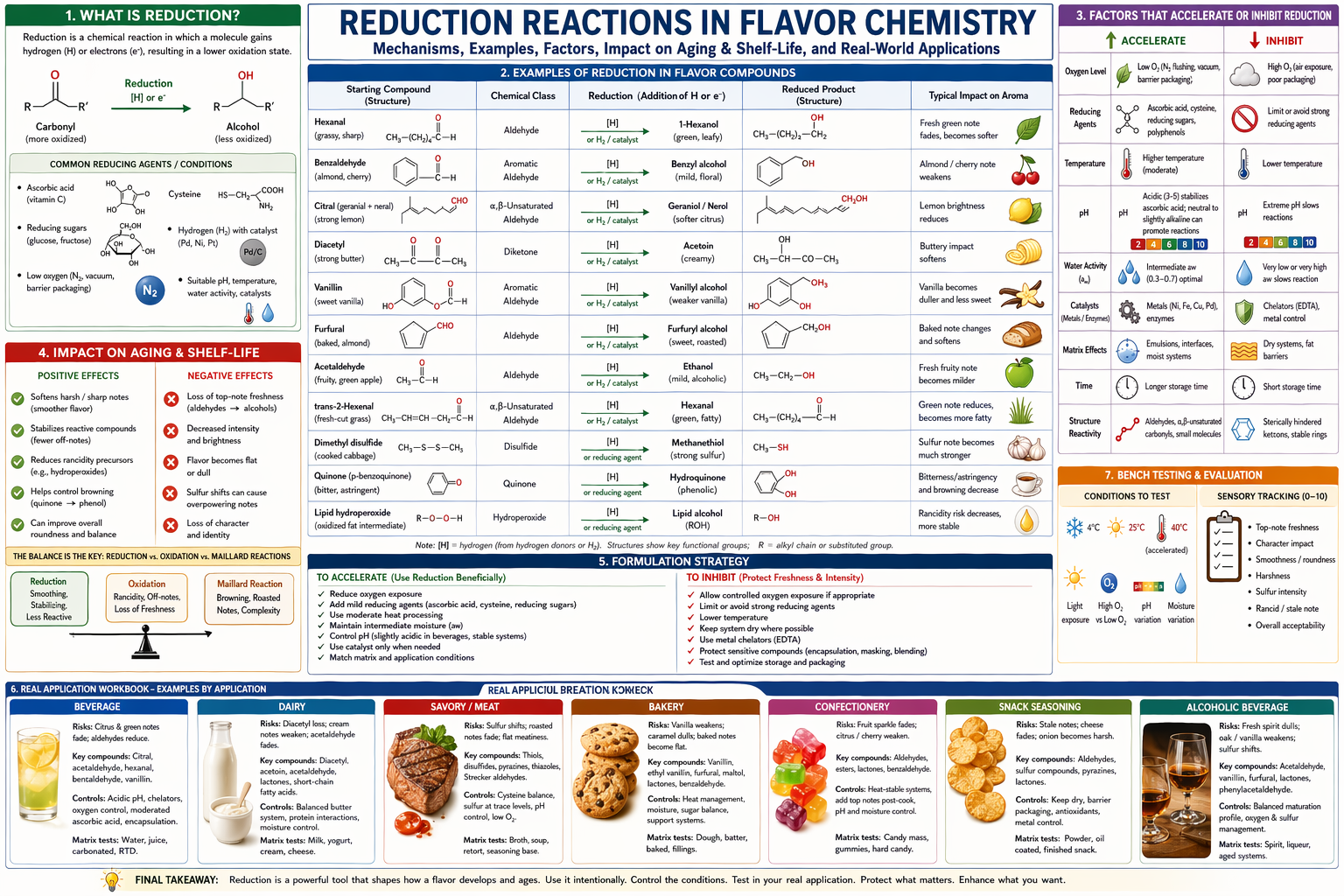
Reduction is one of a couple dozen reactions/processes that the Society of Flavor Chemists requires certified flavorists to understand and consider when formulating flavors.
Reduction Reactions in Flavor Chemistry
(Chemical groups involved + conditions required — detailed for flavorist training)
1) What “Reduction” Means in Flavor Systems
In flavor chemistry, reduction refers to reactions where a compound gains electrons or hydrogen, typically resulting in:
- Conversion of reactive, sharp, or unstable compounds → softer, more stable ones
- Decrease in oxidation state
- Often a loss of harshness (e.g., aldehydes → alcohols)
Think of reduction as a way to:
- “Calm down” aggressive notes
- Improve roundness and stability
- Sometimes reduce reactivity during storage
Log in to read. The post is for educaitonal and training purposes only.