Research Chefs Association (RCA): What Flavorists Need to Know
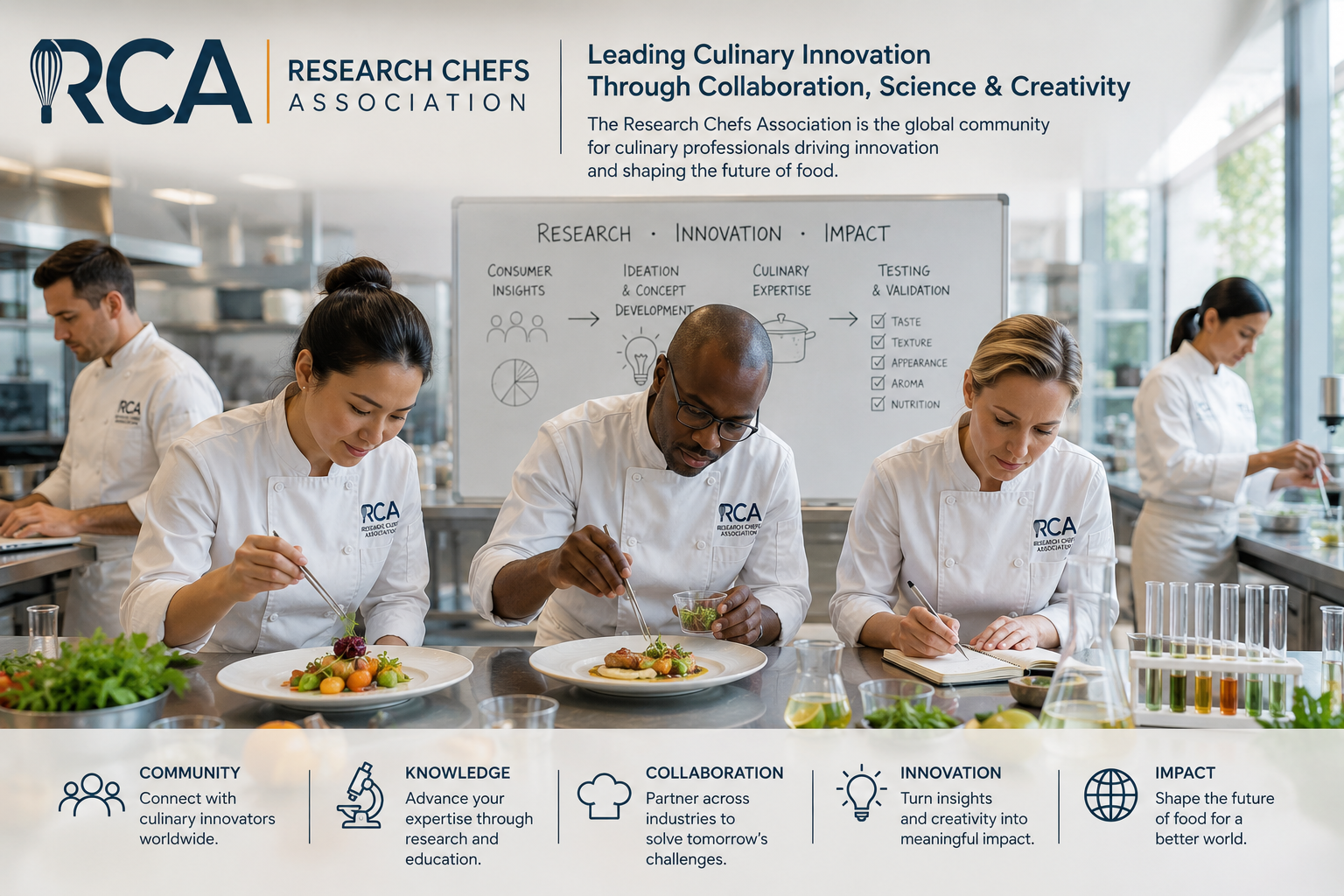
1. What is the Research Chefs Association?
The Research Chefs Association is the leading professional community for food research and development. Its members are the pioneers of the discipline of Culinology® — the blending of culinary arts and the science of food. It was founded in 1996 by a group of research chefs dedicated to overcoming challenges facing food product development professionals. The RCA is headquartered in Chicago, Illinois, and has over 2,000 members, including research chefs, food scientists, product developers, ingredient suppliers, flavorists, and food manufacturers. Culinology + 2
Its stated mission is cultivating collaborations between chefs and food science professionals to increase innovation, quality, and speed-to-market. LinkedIn The association provides education, networking, professional certification, and industry resources to improve innovation in food product development.
Mission
To advance the profession of Culinology by blending culinary arts with food science to create better food products.
Who Belongs to It
Membership is broader than just chefs. It includes chefs and food scientists working in food manufacturing, chain restaurants, hotels, ingredient supply houses, consulting and academia, as well as professionals in R&D, sales, marketing, manufacturing, distribution, and the media. Notably, the RCA explicitly lists food scientists, technologists, research specialists, chemists, consultants, and flavorists among its member categories — so flavorists are a recognized part of this community, not outsiders to it. AmazonCulinology
Certification
The RCA runs two professional certification programs: Certified Research Chef™ (CRC) and Certified Culinary Scientist™ (CCS). The CRC is for culinary professionals who add food science competency; the CCS is for science-side professionals (a category that can include flavorists and food technologists) who add culinary competency. These are the food industry's benchmark credentials for product development professionals — the people who will be your clients and collaborators. Culinology
2. What is Culinology®?
The core idea behind the RCA is captured in its trademarked term Culinology®: a discipline that focuses on translating culinary creativity into scalable, commercially viable food products, playing a critical role in product development for restaurants, retail brands, consumer packaged goods companies, and foodservice operators. In simple terms: a chef knows how to make something delicious in a kitchen; a food scientist knows how to make it stable, safe, and manufacturable at scale. The RCA exists at that intersection — exactly where flavorists also work. Alsett
Culinology® combines:
- Culinary Arts (chef expertise)
- Food Science
- Food Engineering
- Nutrition
- Consumer Science
- Food Manufacturing
The goal is to translate restaurant-quality food into commercially manufactured products while maintaining taste, quality, safety, and cost effectiveness.
For flavorists, Culinology represents the bridge between:
- How chefs create flavor
- How flavorists reproduce those flavors for industrial manufacturing
3. Why RCA Matters to Flavorists
Many people assume flavors are developed only by chemists. In reality, successful flavor development requires understanding:
- Culinary techniques
- Ingredient interactions
- Processing effects
- Consumer expectations
Research chefs are often the first people to define what a new food product should taste like.
Flavorists work closely with research chefs to convert culinary concepts into scalable flavor systems.
Example:
A research chef develops:
Slow-roasted garlic butter chicken with herbs
The flavorist must recreate:
- roasted chicken notes
- butter richness
- roasted garlic aroma
- browned skin
- herb freshness
- pan drippings
- roasted vegetables
- slight caramelization
—all in a stable flavor suitable for manufacturing.
4. How RCA Connects to the Flavor Industry
This is the part most relevant to your training:
Research chefs are the flavorist's key customers and collaborators. When a flavor house develops a flavor, it's typically a research chef or culinary scientist at a food company who specifies the "gold standard" — the authentic culinary reference the flavor must match. Flavorists translate that culinary target into a stable, scalable flavor system. The RCA is where that gold-standard culture lives.
Flavor houses use the RCA to stay culinarily relevant. Major flavor companies employ their own research chefs and maintain RCA membership so their flavor creation stays anchored in real cuisine rather than only in chemistry. Exhibiting at the Culinology Expo lets flavor companies demonstrate applications — at a recent conference, exhibitors served samples like an Asian-inspired hot dog with Szechuan cabbage slaw and chili crisp flavor-infused scallions, a bacon jam cheesy éclair, and cheeseburger-flavored cotton candy. Food Business News
It's a source of flavor trend intelligence. RCA programming regularly covers sensory science, regional cuisine, mixology, flavor development, and pungent ingredients, and recent conference content has explored taste-science topics directly relevant to flavorists, such as umami and kokumi, including techniques like fat washing to infuse layers of complex flavors and create softer mouthfeel. New HopeFood Business News
It reflects where flavor work is heading. Current industry pressures discussed through the RCA — clean-label demand, plant-based innovation, global flavors, sustainability, and reformulation to reduce sodium, sugar, or artificial additives while maintaining taste and texture — are precisely the challenges that land on a flavorist's bench. Alsett
The flavor industry relies heavily on culinary trends.
Research chefs often identify emerging food trends before they become mainstream.
Examples include:
- Korean BBQ
- Nashville Hot Chicken
- Black Garlic
- Truffle
- Yuzu
- Gochujang
- Chili Crisp
- Umami-rich mushroom profiles
- Fermented flavors
- Global street foods
Flavor companies monitor RCA conferences because research chefs often introduce the next generation of food concepts.
This helps flavor houses create flavors before manufacturers request them.
5. Typical Collaboration Between Research Chef and Flavorist
| Research Chef | Flavorist |
|---|---|
| Creates authentic recipe | Recreates flavor chemically |
| Understands cooking | Understands aroma chemistry |
| Develops prototype | Develops flavor system |
| Focuses on eating experience | Focuses on flavor performance |
| Uses fresh ingredients | Uses flavor ingredients |
Together they produce successful commercial foods.
6. Industries Represented in RCA
Research chefs work in:
- Flavor companies
- Ingredient suppliers
- Snack manufacturers
- Beverage companies
- Meat processors
- Dairy companies
- Bakery companies
- Restaurant chains
- Quick Service Restaurants (QSR)
- Frozen food companies
- Plant-based foods
- Pet food
- Foodservice suppliers
Many flavor houses employ research chefs alongside flavorists.
7. RCA Annual Conference
The Annual Conference & Culinology Expo.
This is the RCA's flagship in-person event where research chefs, food scientists, and other food-industry professionals learn, network, and collaborate. It typically includes educational sessions, keynote presentations, certification programming, and an exhibition floor featuring ingredient suppliers, equipment manufacturers, and service providers. Flavor houses are prominent exhibitors — for example, Bell Flavors & Fragrances received the RCA 2024 Product Innovation Showcase Award. For a flavorist, this expo is one of the best venues to present flavor systems directly to the people who formulate finished products. Culinology + 2
The RCA Annual Conference is one of the most important food innovation events in North America.
Attendees include:
- Research chefs
- Flavorists
- Food scientists
- Ingredient manufacturers
- Equipment suppliers
- Culinary experts
- Product developers
- Marketing professionals
Key activities include:
- Culinary demonstrations
- Ingredient showcases
- Flavor trend presentations
- Consumer research
- Technical seminars
- Product innovation competitions
- Networking events
Flavor companies frequently use the conference to:
- launch new flavors
- present ingredient technologies
- identify customer needs
- discover culinary trends
8. Why Flavor Companies Participate
Major flavor companies attend RCA because customers are there.
Typical exhibitors include companies specializing in:
- Flavors
- Seasonings
- Savory ingredients
- Natural extracts
- Yeast extracts
- Smoke flavors
- Reaction flavors
- Dairy ingredients
- Protein ingredients
- Hydrocolloids
- Sweeteners
Research chefs often influence purchasing decisions during new product development.
9. What Flavorists Learn from RCA
A flavorist gains valuable knowledge in:
Culinary Techniques
- roasting
- grilling
- smoking
- sautéing
- frying
- braising
- caramelization
- fermentation
These processes create flavor precursors that guide flavor design.
Menu Trends
Research chefs predict:
- upcoming cuisines
- consumer preferences
- restaurant trends
- premium flavors
- comfort foods
- healthier alternatives
These trends influence future flavor creation.
Ingredient Functionality
Understanding how ingredients contribute:
- aroma
- taste
- mouthfeel
- texture
- appearance
helps flavorists design more authentic flavor systems.
10. Importance of Culinary Language
Research chefs describe foods using culinary terminology.
Examples:
Instead of saying:
Chicken flavor
They may specify:
- Rotisserie Chicken
- Herb-Roasted Chicken
- Charbroiled Chicken
- Fried Chicken
- Smoked Chicken
- Butter-Roasted Chicken
- Lemon Pepper Chicken
Each requires a distinct flavor profile.
Flavorists must understand these culinary distinctions.
11. Culinary Techniques That Affect Flavor
Research chefs emphasize cooking methods because they generate unique flavor compounds.
| Technique | Flavor Characteristics |
|---|---|
| Roasting | Browned, caramelized, nutty |
| Grilling | Charred, smoky |
| Smoking | Wood smoke, phenolic |
| Frying | Fat-rich, toasted |
| Braising | Rich, savory, developed |
| Fermentation | Tangy, umami, complex |
| Baking | Toasted, sweet, browned |
| Searing | Maillard, roasted meat |
Understanding these effects is essential for designing realistic flavors.
12. RCA and Consumer Trends
Research chefs closely monitor consumer preferences, such as:
- Clean label
- Natural ingredients
- Plant-based foods
- Global cuisines
- High-protein products
- Reduced sodium
- Sugar reduction
- Functional foods
- Sustainable ingredients
Flavorists use these insights to develop flavors that meet market demand.
13. Skills Flavorists Can Gain Through RCA
Participation in RCA activities can help flavorists develop:
- Culinary vocabulary
- Sensory evaluation skills
- Food pairing knowledge
- Menu trend awareness
- Product development insight
- Cross-functional collaboration
- Consumer-oriented thinking
- Understanding of manufacturing constraints
14. Benefits of RCA Membership for Flavorists
Membership offers:
- Access to educational webinars
- Technical publications
- Networking with chefs and food scientists
- Professional development opportunities
- Trend reports
- Annual conference participation
- Exposure to emerging ingredients
- Collaboration with food manufacturers
15. Key Takeaways for Flavorists
- RCA is the leading professional association connecting culinary arts with food science through Culinology®.
- Research chefs translate culinary concepts into products suitable for commercial manufacturing.
- Flavorists work closely with research chefs to reproduce authentic culinary experiences in scalable flavor systems.
- RCA provides valuable insights into food trends, cooking techniques, ingredient functionality, and consumer preferences that directly influence flavor innovation.
- Understanding culinary terminology and cooking methods is essential for creating realistic and commercially successful flavors.
- Active engagement with RCA resources and events helps flavorists stay ahead of market trends, strengthen collaboration with product developers, and improve the quality and relevance of new flavor creations.
###