Roasting-Specific Flavor Compounds in Common Roasted Foods
Roasting-Specific Flavor Compounds in Common Roasted Foods
Roasting generates unique flavor compounds through dry-heat convection (oven roasting) or radiant heat (spit roasting) at moderate to high temperatures (150-250°C). Key chemical pathways include Maillard reactions, caramelization of sugars, lipid pyrolysis, and Strecker degradation. Roasting-specific compounds often include heterocyclic compounds with specific substitution patterns, thermal degradation products of structural polymers (lignin, cellulose), and unique intramolecular condensations.
Key Chemical Pathways in Roasting vs. Other Cooking Methods:
- Dry environment → limited water activity → enhanced Maillard reaction over hydrolysis
- Extended cooking time → development of deeper, more complex flavors via sequential reactions
- Surface dehydration → crust formation with unique volatile profiles
- Uniform heat distribution → consistent reaction progression throughout food matrix
- No direct flame contact → absence of smoke phenolics (unless smoke is intentionally added)
1. ROASTED COFFEE BEANS
Roasting-specific compounds:
- 2-Furfurylthiol – coffee-like, roasty (critical impact compound)
- Strecker aldehydes (3-methylbutanal, 2-methylbutanal) – malty, chocolate notes
- Alkylpyrazines (2,3,5-trimethylpyrazine, 2-ethyl-3,5-dimethylpyrazine) – earthy, roasted
- Guaiacol and 4-vinylguaiacol – spicy, smoky (from phenolic acid decarboxylation)
- 5-Methylfurfural – caramel-like
- N-Methylpyrrole and N-furfurylpyrrole – nutty, roasted
- 2,3-Butanedione (diacetyl) – buttery (from sugar degradation)
- Quinones and melanoidins – color and background flavor
Key References:
- Flament, I. (2002). Coffee Flavor Chemistry. John Wiley & Sons.
→ Comprehensive text on coffee roasting chemistry, identifying >800 volatile compounds. - Tressl, R., & Silwar, R. (1981). Investigation of sulfur-containing components in roasted coffee. Journal of Agricultural and Food Chemistry, 29(5), 1078-1082.
→ Identifies 2-furfurylthiol as key roasted coffee aroma compound. - Czerny, M., Mayer, F., & Grosch, W. (1999). Sensory study on the character impact odorants of roasted Arabica coffee. Journal of Agricultural and Food Chemistry, 47(2), 695-699.
→ Uses aroma extract dilution analysis to identify most potent odorants.
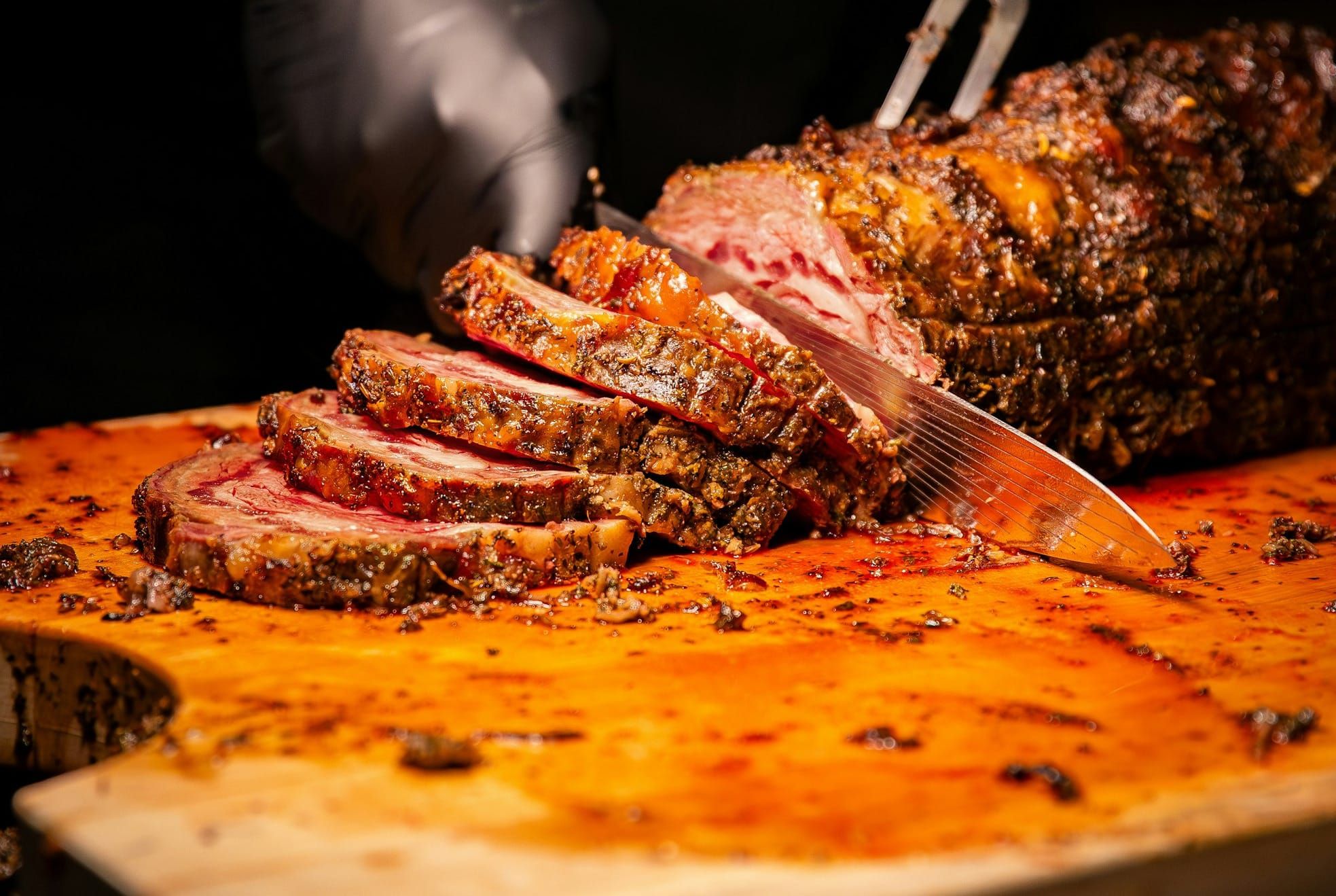
2. ROASTED MEATS (Beef, Pork, Lamb)
Roasting-specific compounds:
- 2-Acetyl-1-pyrroline – roasted, popcorn-like (higher concentration vs. boiling/steaming)
- 2-Methyl-3-furanthiol and bis(2-methyl-3-furyl) disulfide – meaty, broth-like (different ratios than in grilled meat)
- Methylglyoxal and glyoxal – reactive α-dicarbonyls from sugars that form advanced Maillard products
- 4-Hydroxy-2,5-dimethyl-3(2H)-furanone (HDMF, furaneol) – caramel-like (from ribose in meat)
- Alkylpyrazines with longer alkyl chains (2,5-diethyl-3-methylpyrazine) – earthy, roasted
- 2-Formyl-5-methylthiophene – sulfurous, roasted note
Key References:
- Mottram, D. S. (1985). The effect of cooking conditions on the formation of volatile heterocyclic compounds in pork. Journal of the Science of Food and Agriculture, 36(5), 377-382.
→ Direct comparison of roasting, grilling, and frying of pork. - MacLeod, G., & Coppock, B. M. (1977). A comparison of the chemical composition of boiled and roasted aromas of heated beef. Journal of Agricultural and Food Chemistry, 25(1), 113-117.
→ Classic study contrasting boiled vs. roasted beef aromas. - Cerny, C., & Davidek, T. (2003). Formation of aroma compounds from ribose and cysteine during the Maillard reaction. Journal of Agricultural and Food Chemistry, 51(9), 2714-2721.
→ Model system showing 2-methyl-3-furanthiol formation pathways relevant to meat roasting.
3. ROASTED NUTS (Almonds, Peanuts, Hazelnuts)
Roasting-specific compounds:
- Pyrazines (methylpyrazine, 2,5-dimethylpyrazine, 2,3,5-trimethylpyrazine) – nutty, roasted
- 5-Methyl-2-hepten-4-one (filbertone) – hazelnut character impact compound
- Benzaldehyde – almond-like (from amygdalin degradation in almonds)
- 2-Acetyl-1-pyrroline – popcorn-like, roasted
- 2-Methoxy-4-vinylphenol – spicy (from ferulic acid in peanut skins)
- N-methylpyrrole-2-carboxaldehyde – nutty, roasted
- 2,4-Decadienal – fried, fatty (from lipid oxidation, but different profile than frying)
Key References:
- Sanders, T. H., Vercellotti, J. R., & Crippen, K. L. (1989). Effect of maturity on roast color and descriptive flavor of peanuts. Journal of Food Science, 54(2), 475-477.
→ Examines roasting chemistry in peanuts. - Blank, I., Sen, A., & Grosch, W. (1992). Potent odorants of the roasted powder and brew of Arabica coffee. Zeitschrift für Lebensmittel-Untersuchung und Forschung, 195(3), 239-245.
→ Though coffee-focused, methodology applies to nut roasting. - Clark, R. G., & Nursten, H. E. (1976). Volatile flavor components of roasted peanuts: Basic fraction. Journal of Agricultural and Food Chemistry, 24(5), 989-991.
→ Early identification of pyrazines in roasted peanuts.
4. ROASTED VEGETABLES (Root Vegetables, Garlic, Onions)
Roasting-specific compounds:
- Methional (3-methylthiopropanal) – baked potato (different concentration than frying)
- 2-Acetyl-1-pyrroline – in roasted carrots, potatoes
- Dimethyl trisulfide – in roasted garlic, onions (from allicin degradation)
- 2,3-Butanedione (diacetyl) – buttery (from sugar degradation in root vegetables)
- 4-Hydroxy-2,5-dimethyl-3(2H)-furanone (HDMF) – in roasted beets, carrots
- Alkylpyrazines – in roasted bell peppers, tomatoes
- β-Damascenone – fruity, baked apple note in roasted onions
Key References:
- Buttery, R. G., & Ling, L. C. (1994). Importance of 2-aminoacetophenone to the flavor of masa corn flour and corn tortillas. Journal of Agricultural and Food Chemistry, 42(1), 1-2.
→ Includes roasted corn chemistry relevant to vegetables. - Yu, T. H., Wu, C. M., & Liou, Y. C. (1989). Effects of pH on the formation of flavor compounds of disrupted garlic. Journal of Agricultural and Food Chemistry, 37(3), 730-734.
→ Examines thermal degradation of garlic compounds during roasting.
5. ROASTED CACAO BEANS / CHOCOLATE
Roasting-specific compounds:
- 2-Methyl-5-propylpyrazine – earthy, chocolate
- 2-Phenylethyl acetate and 2-phenylethanol – floral, honey
- Tetramethylpyrazine – nutty, roasted
- 5-Methyl-2-phenyl-2-hexenal – chocolate-like
- Alkylpyrazines with ethyl groups (2-ethyl-3,5-dimethylpyrazine) – specific to well-roasted cacao
- Furanones (cyclotene, maltol) – caramel-like
- Acetylpyrazine – popcorn-like
Key References:
- Ziegleder, G. (1991). Composition of flavor extracts of raw and roasted cocoas. Zeitschrift für Lebensmittel-Untersuchung und Forschung, 192(6), 521-525.
→ Direct comparison of raw vs. roasted cacao flavor chemistry. - Bonvehí, J. S. (2005). Investigation of aromatic compounds in roasted cocoa powder. European Food Research and Technology, 221(1-2), 19-29.
→ Comprehensive analysis of roasted cacao volatiles. - Jinap, S., & Dimick, P. S. (1990). Acidic characteristics of fermented and dried cocoa beans from different countries of origin. Journal of Food Science, 55(2), 547-550.
→ Discusses how acidity affects roasting chemistry in cacao.
6. ROASTED GRAINS / MALT (Barley, Wheat)
Roasting-specific compounds:
- 2-Acetyl-1-pyrroline – crusty, bread-like
- 2-Acetylpyridine – popcorn-like
- Norfuraneol (4-hydroxy-5-methyl-3(2H)-furanone) – caramel-like
- Maltol (3-hydroxy-2-methyl-4H-pyran-4-one) – sweet, caramel
- Isomaltol – similar to maltol
- Cyclotene (2-hydroxy-3-methyl-2-cyclopenten-1-one) – maple-like
- Alkylpyrazines (2,5-dimethylpyrazine, 2,3,5-trimethylpyrazine)
Key References:
- Tressl, R., Bahri, D., & Silwar, R. (1981). Formation of flavor compounds from proline and hydroxyproline with glucose and maltose and their importance to food flavor. In The Quality of Foods and Beverages (pp. 267-283). Academic Press.
→ Examines proline-specific Maillard reactions important in grain roasting. - Coghe, S., Gheeraert, B., Michiels, A., & Delvaux, F. R. (2006). Development of Maillard reaction related characteristics during malt roasting. Journal of the Institute of Brewing, 112(2), 148-156.
→ Details color and flavor development during malt roasting.
7. ROASTED SPICES (Cumin, Coriander, Mustard)
Roasting-specific compounds:
- Pyrazines with specific substitution patterns (2-ethyl-3-methylpyrazine in roasted cumin)
- Thiazoles (2-acetylthiazole, 2-propionylthiazole) – nutty, roasted
- Furanones – from sugar caramelization in spice seeds
- Aldehydes from lipid oxidation (nonanal, decanal) – different profile than raw spices
- Dimethyl sulfide – in roasted mustard seeds
Key References:
- Blank, I., Sen, A., & Grosch, W. (1992). Sensory study on the character-impact odorants of roasted sesame seed oil. Journal of Agricultural and Food Chemistry, 40(10), 1877-1880.
→ Methodology applicable to roasted spices. - Masanetz, C., & Grosch, W. (1998). Key odorants of parsley leaves (Petroselinum crispum [Mill.] Nym. ssp. crispum) by aroma extract dilution analysis. Journal of Agricultural and Food Chemistry, 46(12), 5216-5221.
→ Though parsley-focused, approach applies to roasted spices.
8. ROASTED COFFEE vs. ROASTED CACAO COMPARISON
Distinctive compounds:
- Coffee: Higher levels of sulfur compounds (2-furfurylthiol), alkylpyrazines with methyl groups, phenolic compounds from chlorogenic acid degradation
- Cacao: Higher levels of phenylalanine-derived compounds (phenylethyl acetate), ethyl-substituted pyrazines, ester compounds
ANALYTICAL & MECHANISTIC REFERENCES
- Nursten, H. E. (2005). The Maillard Reaction: Chemistry, Biochemistry and Implications. Royal Society of Chemistry.
→ Comprehensive reference on Maillard chemistry central to roasting. - Yaylayan, V. A., & Kaminsky, E. (1998). Isolation and structural analysis of Maillard polymers: Caramel and melanoidin formation in glycine/glucose model system. Food Chemistry, 63(1), 25-31.
→ Examines polymer formation during roasting-like conditions. - Davidek, T., Clety, N., Aubin, S., & Blank, I. (2002). Degradation of the Amadori compound N-(1-deoxy-D-fructos-1-yl)glycine in aqueous model systems. Journal of Agricultural and Food Chemistry, 50(20), 5472-5479.
→ Mechanistic study on early Maillard reaction steps important in roasting. - Hofmann, T., & Schieberle, P. (1995). Evaluation of the key odorants in a thermally treated solution of ribose and cysteine by aroma extract dilution techniques. Journal of Agricultural and Food Chemistry, 43(8), 2187-2194.
→ Model system identifying meaty-roasty odorants.
ROASTING-SPECIFIC CHEMICAL SIGNATURES:
- Pyrazine patterns: Roasting produces higher molecular weight pyrazines with multiple alkyl substitutions compared to grilling/frying.
- Furanone ratios: HDMF (furaneol) to norfuraneol ratios differ from other cooking methods.
- Sulfur compound profiles: 2-Methyl-3-furanthiol to bis(2-methyl-3-furyl) disulfide ratios specific to roasting.
- Absence of external smoke compounds: No guaiacol/syringol unless smoke/wood added (vs. grilling).
- Caramelization products: Maltol, isomaltol, cyclotene at higher levels than in boiling/steaming.
PRACTICAL FLAVOR CREATION FOR ROASTED NOTES:
Key target compounds:
- 2-Acetyl-1-pyrroline – general roasted note
- 2,3,5-Trimethylpyrazine – nutty, roasted
- 2-Furfurylthiol – coffee-roasty
- Methional – baked potato
- HDMF (furaneol) – caramel-sweet
- 2-Methyl-3-furanthiol – meaty-roasted
- Maltol – sweet, caramelized
Reference for flavor creation:
- Rowe, D. J. (Ed.). (2005). Chemistry and Technology of Flavors and Fragrances. Blackwell Publishing.
→ Includes chapters on creating roasted flavor systems.
Comparison with Other Cooking Methods:
| Compound | Roasting | Grilling | Frying | Boiling |
|---|---|---|---|---|
| 2-Acetyl-1-pyrroline | High | Medium | Low | None |
| 2,4-Decadienal | Low | Low | Very High | None |
| Guaiacol | Low* | High | Low | None |
| Methional | Medium | Low | High | Medium |
| Alkylpyrazines | Very High | High | Medium | Low |
| Furaneol (HDMF) | High | Medium | Medium | Low |
*Only if smoked/wood-roasted
Critical Factors in Roasting Chemistry:
- Temperature gradient: Surface vs. interior differences create complex flavor profiles
- Time-temperature relationship: Longer times at moderate temps vs. short times at high temps
- Moisture loss: Concentration effect on reactants
- Food structure: Intact tissues vs. ground/chopped affect heat penetration and reactions
- pH changes: Affects Maillard reaction pathways
The combination of extended time and controlled dehydration during roasting creates the unique, complex flavor profiles that distinguish roasted foods from those prepared by other cooking methods.