Demo Flavor Formula: Cooked Milk Flavor Formula
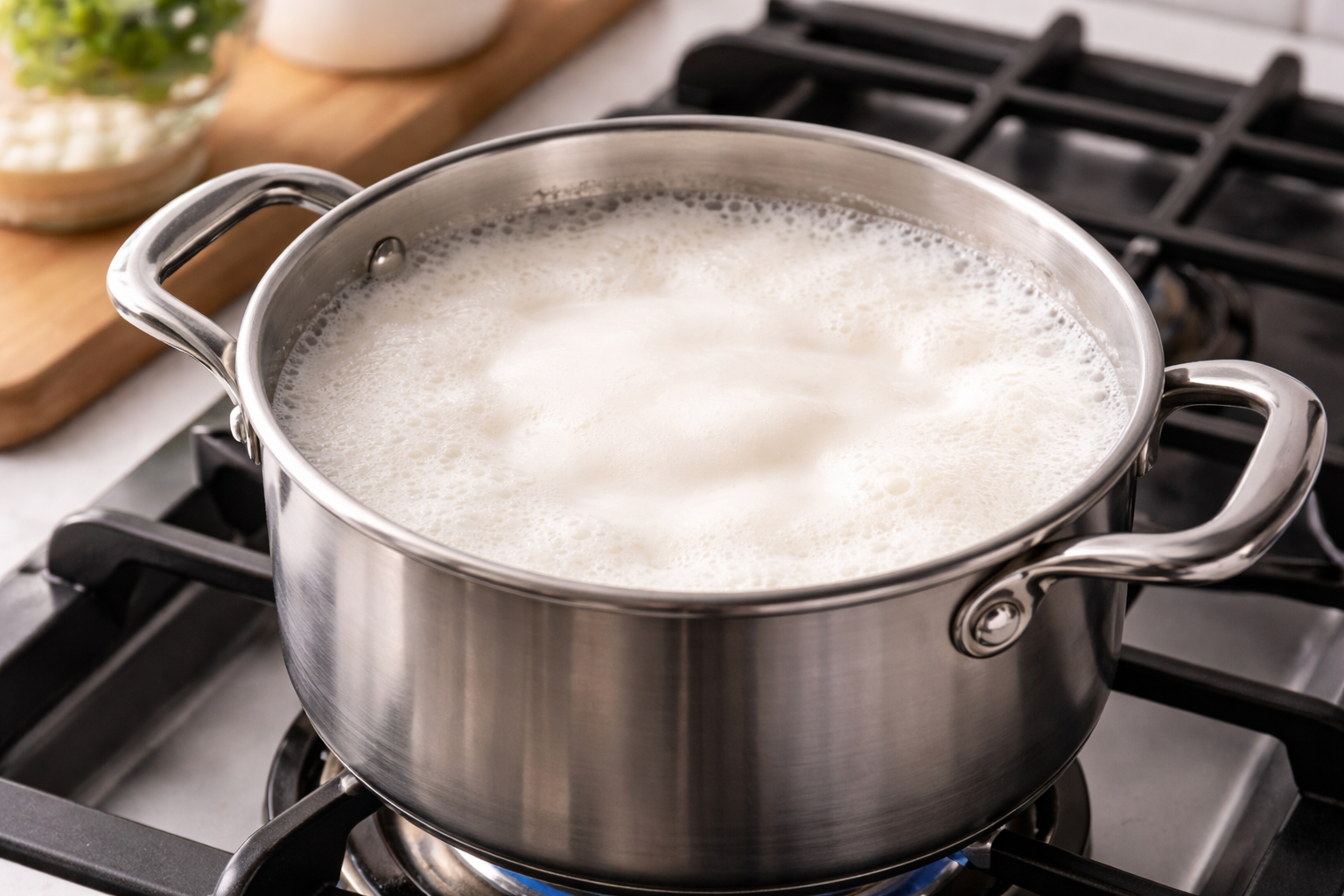
Based on the technical literature on milk flavor chemistry—particularly thermal degradation of milk fat (lactones, methyl ketones), Maillard reaction products, sulfur compounds from whey protein denaturation, and lipid oxidation volatiles—here is the constructed Cooked Milk Flavor Formula.
Unlike fresh milk, cooked milk relies heavily on sulfur compounds (immediate "cooked" hit), lactones/methyl ketones (heated/rich body), and Maillard heterocyclics (caramelized/brown/cereal).
🧪 COOKED MILK FLAVOR FORMULA (Flavor Concentrate Basis)
Total Parts: 100.00 (100%)
Recommended Usage: 0.1 – 0.5% in finished product (bakery, dairy, confectionery)
| Component | CAS / Type | Concentration (%) | Primary Sensory Contribution |
|---|---|---|---|
| δ-Decalactone | 705-86-2 | 12.50 | Creamy, fatty, milky, sweet coconut |
| δ-Dodecalactone | 713-95-1 | 8.00 | Waxy, fatty, creamy, sweet grain |
| γ-Dodecalactone | 2305-05-7 | 5.50 | Sweet grain, waxy, peach-milk nuance |
| 2-Heptanone | 110-43-0 | 7.00 | Cooked milk, blue cheese (at low level), heated fat |
| 2-Nonanone | 821-55-6 | 3.50 | Sweet, flowery, heated cream |
| 2-Tridecanone | 593-08-8 | 2.00 | Fatty, waxy, cooked milk depth |
| Diacetyl | 431-03-8 | 4.00 | Buttery, creamy, intense dairy |
| Acetoin | 513-86-0 | 6.00 | Buttery, creamy, milky (mellow) |
| Butyric Acid | 107-92-6 | 4.50 | Cheesy, animalic, dairy (essential) |
| Hexanoic (Caproic) Acid | 142-62-1 | 2.50 | Fatty, waxy, goat-like, lipolytic |
| Octanoic (Caprylic) Acid | 124-07-2 | 1.50 | Waxy, soapy, fatty |
| Decanoic (Capric) Acid | 334-48-5 | 1.00 | Soapy, cosmetic, background fatty |
| Dimethyl Sulfide | 75-18-3 | 0.15 | Sulfur, cooked, sweet corn, "canned corn" note |
| Dimethyl Trisulfide | 3658-80-8 | 0.03 | Sulfurous, cabbage, cooked egg (trace) |
| Methional | 3268-49-3 | 0.20 | Cooked potato, savory, heated milk sulfur |
| 2-Methylbutanal | 96-17-3 | 0.80 | Cooked, malty, cocoa-note |
| 3-Methylbutanal | 590-86-3 | 0.80 | Cooked, malty, chocolate/cereal |
| Furfural | 98-01-1 | 1.20 | Barny, brothy, brown, caramelized |
| Furaneol | 3658-77-3 | 5.00 | Sweet, caramelized, brown sugar, cooked fruit |
| Maltol | 118-71-8 | 4.00 | Sweet, cereal, cotton candy, jammy-brown |
| Sotolon | 28664-35-9 | 0.50 | Cooked, spicy, fenugreek, curry (at high dilution: caramelized milk) |
| 2-Acetyl-1-pyrroline | 85213-22-5 | 0.15 | Popcorn, cereal, roasted grain |
| 2-Acetylthiazoline | 29926-41-8 | 0.30 | Nutty, roasted, cracker-like |
| Vanillin | 121-33-5 | 3.50 | Sweet, creamy, cake mix, rounding |
| p-Cresol | 106-44-5 | 0.07 | Barnyard, phenolic, animal (trace) |
| Indole | 120-72-9 | 0.05 | Animal, floral (in trace: complexing) |
| Skatole | 83-34-1 | 0.02 | Fecal, foul (ultra-trace for realism) |
| (E)-2-Nonenal | 18829-56-6 | 0.08 | Oily, cardboard, stale/cucumber (oxidized character) |
| (E,E)-2,4-Decadienal | 25152-84-5 | 0.15 | Fatty, deep-fried, oxidized oil |
| Hexanal | 66-25-1 | 0.20 | Green, grass, fresh (trace for "fresh" contrast in cooked matrix) |
| Propylene Glycol / Triacetin | - | 24.30 | Solvent / Carrier |
| TOTAL | 100.00 |
📋 FLAVOR COMPOUNDS BY NOTE (Up to 10 for Key Notes)
🔹 COOKED MILK NOTE (10 Compounds)
The defining character of heated milk: sulfur immediate impact + lactone richness.
- Dimethyl Sulfide – Sulfur, sweet corn, canned vegetable
- Hydrogen Sulfide – Eggy, sulfur (transient)
- Methional – Cooked potato, savory-sulfur
- 2-Methylbutanal – Cooked, malty
- 3-Methylbutanal – Cooked, malty
- 2-Heptanone – Cooked milk, heated fat
- Benzaldehyde – Cooked, nutty, almond-like
- Sotolon – Cooked, spicy, caramelized milk
- Carbon Disulfide – Cooked, sulfur
- Dimethyl Trisulfide – Cabbage, sulfur, cooked egg
🔹 MILKY NOTE (10 Compounds)
The foundational dairy character; less "fatty" than creamy, more aqueous-milk perception.
- δ-Decalactone – Milky, coconut, fatty
- δ-Dodecalactone – Sweet grain, milky
- Acetoin – Sweet, milky, buttermilk
- Diacetyl – Buttery-creamy (supports milky)
- Butyric Acid – Dairy, cheesy (rounds milky)
- 2-Heptanone – Cooked milk
- δ-Octalactone – Bread, sweet, milky
- γ-Dodecalactone – Sweet grain, milky
- Vanillin – Sweet, creamy-milky
- Ethyl Butyrate – Fruity, sweet, fresh milk top-note
🔹 CREAMY NOTE (10 Compounds)
Fatty, mouth-coating, heavy cream character.
- δ-Decalactone – Creamy, coconut
- δ-Dodecalactone – Creamy, waxy
- γ-Dodecalactone – Creamy, peach, fatty
- Butyric Acid – Fatty, dairy
- Octanoic Acid – Waxy, fatty, creamy
- Decanoic Acid – Soapy, creamy (background)
- Diacetyl – Buttery-creamy
- Acetoin – Smooth creamy
- Vanillin – Creamy, rounding
- δ-Undecalactone – Butter sweet, creamy
🔹 BROWN NOTE (10 Compounds)
Maillard-derived, caramelized, scorched sugar, baked notes.
- Furaneol – Caramel, brown sugar, cotton candy
- Maltol – Sweet, caramel, jam-like
- Furfural – Brown, barny, brothy
- Sotolon – Brown, curry, fenugreek (low level = caramelized milk)
- 2-Acetyl-1-pyrroline – Popcorn, brown rice
- Cyclotene – Maple, caramel, brown spice
- Hydroxymethylfurfural (HMF) – Caramelized sugar, scorched
- Methyl pyrazine – Potato, earthy, brown
- 2-Acetylthiazoline – Nutty, roasted brown
- Vanillin – Sweet brown (vanilla-caramel)
🔹 BUTTERY NOTE
- Diacetyl – Intense buttery
- Acetoin – Mild buttery
- Butyric Acid – Supports buttery in dairy context
- δ-Undecalactone – Butter sweet
- Acetyl Propionyl – Buttery (alternative to diacetyl)
🔹 CARAMELIZED NOTE
- Furaneol – Caramelized sugar
- Maltol – Cotton candy, caramel
- Sotolon – Maple, caramelized
- Cyclotene – Maple, caramel
- HMF – Scorched caramel
🔹 LIPOLYTIC NOTE
(Fatty acid liberation, "goaty," "cheesy")
- Butyric Acid – Rancid butter
- Hexanoic Acid – Goat, fatty
- Octanoic Acid – Waxy, goat
- Decanoic Acid – Soapy
- 2-Heptanone – Blue cheese (methyl ketone from lipolysis)
🔹 OXIDIZED NOTE
(Cardboard, tallowy, metallic)
- (E)-2-Nonenal – Cucumber, cardboard, stale
- (E,E)-2,4-Decadienal – Fatty, deep-fried, oxidized oil
- Hexanal – Green, grassy (can oxidize to stale)
- Octanal – Soapy, fatty
- 1-Octen-3-one – Mushroom, metallic
🔹 PHENOLIC NOTE
(Barnyard, medicinal, animal)
- p-Cresol – Barny, Band-Aid
- Indole – Mothball, floral-animal
- Skatole – Fecal, foul
- Guaiacol – Earthy, smoky
- Furfural – Barny, brothy
🔹 CEREAL NOTE
(Grain, popcorn, malt)
- 2-Acetyl-1-pyrroline – Popcorn
- Maltol – Sweet, cereal
- 2-Acetylthiazoline – Nutty, cracker
- 2-Aminoacetophenone – Tortilla, grain
- Methyl pyrazine – Potato, earthy
🔹 ANIMAL NOTE
- p-Cresol – Barnyard
- Indole – Animal, floral
- Skatole – Fecal
- Butyric Acid – Sweaty, cheesy
- Isovaleric Acid – Sweaty, sour
🔹 FATTY NOTE
- δ-Decalactone – Fatty, creamy
- γ-Dodecalactone – Fatty, waxy
- Hexanoic Acid – Fatty, waxy
- (E,E)-2,4-Decadienal – Fatty, fried
- 2-Tridecanone – Fatty, waxy
🔹 WAXY NOTE
- γ-Dodecalactone – Waxy, fatty
- δ-Dodecalactone – Waxy, creamy
- Octanoic Acid – Waxy, soapy
- Decanal – Soapy, waxy
- Nonanoic Acid – Waxy, sweaty
🧠 SUMMARY OF KEY FINDINGS FROM LITERATURE
| Flavor Type | Dominant Chemistry | Key Compounds | Reference |
|---|---|---|---|
| Cooked (Immediate) | Sulfur compounds (whey denaturation) | H₂S, DMS, DMTS, Methional, 2/3-Methylbutanal | |
| Heated/Rich (Aged) | Lactones + Methyl ketones | δ-C10/C12, γ-C12, 2-C7/C9 | |
| Caramelized/Brown | Maillard furanones, pyrazines | Furaneol, Maltol, Sotolon, 2-AP | |
| Animal/Phenolic | Cresol, Indole, Skatole | p-Cresol, Skatole | |
| Oxidized/Stale | Aldehydes from lipid oxidation | (E)-2-Nonenal, 2,4-Decadienal | |
| Lipolytic | Free fatty acids (C4-C10) | Butyric, Caproic, Caprylic |
This formula is technically grounded in dairy flavor science and reflects the complexity of cooked milk—a balance of desirable "heated richness" and controlled "process notes" (sulfur, phenolic, oxidized) that define authenticity.
The following flavor compounds are suggested by Judith Michalski, a well-known flavorist, in the book "Successful Flavors", for making a "Cooked Milk Flavor". To each compound, its FEMA numbers, flavor descriptors, and suggested usage levels are added here for readers' information.
📝 Cooked Milk Flavor Compounds
| Flavor Compound | FEMA Number | Flavor Descriptors | Suggested Usage Levels (in finished product) |
|---|---|---|---|
| 1-octen-3-ol | 2805 | Mushroom, earthy, fungal, grassy, hay-like, with a savory, cooked vegetable nuance. | 0.5–5 ppm. |
| 2-acetyl furan | 3163 | Sweet, almond, nutty, roasted, baked goods, coffee, cocoa, bready. | ~20 mg/kg. |
| 2,4-decadienal | 3135 | Powerful, fatty, waxy, deep-fried, oily, citrus, chicken fat. | Very low (ppb range); 0.02–0.5 ppm. |
| 2,4-nonadienal | 3212 | Fatty, green, cucumber, melon, fried, oily. | Very low (ppb range). |
| 2-decenal | 2366 | Fatty, orange-like, waxy, poultry, earthy, fried. | 0.1–1 ppm. |
| 2-heptanone | 2544 | Cheesy, fruity (banana), ketonic, creamy, waxy, coconut, with a slightly spicy nuance. | 1–25 ppm. |
| 2-nonanone | 2785 | Fruity, sweet, floral, fatty, cheesy, waxy, with a green, weedy note. | 1–10 ppm. |
| 2,3-pentanedione | 2841 | Strong buttery, creamy, sweet, slightly caramel-like, nutty, toasted. | 0.5–5 ppm. |
| 2-tridecanone | 3388 | Waxy, dairy, coconut, fatty, cheesy, earthy. | 1–10 ppm. |
| 2-undecanone | 3093 | Fruity, waxy, creamy, fatty, citrus-like, with a green note. | 1–10 ppm. |
| 3,4-xylenol | — | Phenolic, medicinal, smoky, woody, tarry. | Trace amounts only. |
| 5,6-decenoic acid | 3742 | Waxy, creamy, peach-like, dairy, milky, with a soapy nuance. | 1–5 ppm. |
| 5-methyl furfural | — | Sweet, spicy, caramelic, nutty, bready, maple-like, roasted. | 1–10 ppm. |
| acetoin | 2008 | Creamy, buttery, fatty, milky, yogurt-like. | 10–50 ppm. |
| butyric acid | 2221 | Rancid, cheesy, butter, creamy (in small amounts). | 10–20 ppm (for cooked/cheesy notes). |
| cis-4-heptenal | 3289 | Extremely powerful, creamy, milky, fatty, oily, vegetative, green matcha. | Very low (ppb range); "traces - 0.1%". |
| decanoic acid | 2364 | Fatty, rancid, citrus-like, cheesy, soapy. | 1–10 ppm. |
| δ-decalactone | 2361 | Creamy, coconut, peach, fatty, milky, sweet. | 10–50 ppm. |
| δ-dodecalactone | 2401 | Strong creamy, coconut, fatty, peach, milky, buttery, fruity. | 5–20 ppm. |
| δ-nonalactone | 3356 | Creamy, sweet, coconut, fatty, milky, with an oily and coumarin-like nuance. | 5–30 ppm. |
| δ-tetradecalactone | 3590 | Waxy, fatty, creamy, milky, dairy-like, with a rich mouthfeel. | 5–20 ppm. |
| diacetyl | 2370 | Strong buttery, creamy, pastry, yeast. | 5–10 ppm (for cooked butter notes). |
| furaneol | 3174 | Sweet, caramel, cotton candy, burnt sugar, fruity, strawberry. | 5–20 ppm (for caramelized notes). |
| furfural | 2489 | Sweet, almond, baked potatoes, bread, burnt, caramelic, nutty. | 5–20 ppm. |
| furfuryl alcohol | 2491 | Mild, warm, oily, burnt, smoky, cooked cereal, caramelic. | 5–25 ppm. |
| γ-butyrolactone | 3291 | Creamy, fatty, caramelic, slightly fruity, coconut. | 10–30 ppm. |
| hexanoic acid | 2559 | Fatty, cheesy, sweaty, sour, pungent, waxy, goat-like. | 1–10 ppm. |
| hydrogen sulfide | 3779 | Rotten egg, sulfurous, cooked cabbage, volcanic, powerful. | Extremely low (sub-ppb range). |
| indole | 2593 | Floral (jasmine), animal, fecal (in high dilution), mothball-like. | Trace amounts (ppb range). |
| isovaleraldehyde | 2692 | Pungent, malty, cocoa, chocolate, nutty, cheesy, fatty. | 1–5 ppm. |
| maltol | 2656 | Sweet, caramel-like, fruity, creamy cotton candy nuance. | 5–50 ppm. |
| myristic acid | 2764 | Waxy, fatty, soapy, faintly oily. | 1–10 ppm. |
| nonfat dry milk | — | This is a powdered dairy ingredient, not a flavor chemical. It contributes milky, dairy notes and body. It can undergo Maillard reactions when heated, creating cooked milk notes. | Used as a base at significant levels (e.g., 1–20% in dry mixes, or as a precursor in reaction flavors). |
| octanoic acid | 2799 | Fatty, waxy, rancid, cheesy, sweaty, fruity when diluted. | 1–10 ppm. |
| oleic acid | 2815 | Fatty, oily, slightly lard-like. | 1–10 ppm. |
| p-cresol | 2337 | Phenolic, medicinal, smoky, animal, tar-like. In high dilution, adds complexity. | Trace amounts (ppb range). |
| palmitic acid | 2832 | Odorless or very faintly waxy-fatty. | 1–10 ppm. |
| skatole | 3019 | Fecal, animal, floral (in high dilution), sweet, warm. | Trace amounts (ppb range). |
| stearic acid | 3035 | Odorless or very faintly waxy-oily. | 1–10 ppm. |
| sulfurol/4-methyl-5-thiazoleethanol | —3204 | sweet, nutty, milky, cooked milk | — |
💡 Guidelines for Formulating a Cooked Milk Flavor
Creating a cooked milk flavor requires shifting the balance from "fresh" to "thermally processed." The heat induces Maillard reactions, caramelization, and the degradation of fats and proteins, leading to new aroma compounds. Here's how to achieve the four dominant notes: creamy, milky, brown, and cooked milk.
1. The "Creamy" Note (Richness and Body)
- Primary contributors: The delta-lactones (δ-C10, C12, C14) remain essential for creamy mouthfeel. However, in cooked milk, they should be slightly dialed back compared to fresh milk to make room for the cooked notes. γ-Butyrolactone is useful here for a slightly different, caramelic-creamy nuance .
- Supporting role: Diacetyl and acetoin are still present but at slightly elevated levels (5-10 ppm) to suggest cooked butter rather than fresh cream.
2. The "Milky" Note (The Dairy Base)
- Primary contributors: The fatty acids (C6, C8, C10, C12, C14, C16, C18:1) are crucial. Compared to fresh milk, the shorter-chain acids like butyric, hexanoic, and octanoic acid can be slightly increased to simulate the slight sharpness that develops in heated milk .
- Supporting role: δ-Nonalactone bridges the creamy and milky notes effectively. Trace amounts of skatole, indole, and p-cresol are still important for depth, but their character may be slightly masked or altered by the stronger cooked notes.
3. The "Brown" Note (Caramelized and Maillard)
This is the key differentiator from fresh milk. Heat generates sweet, nutty, and roasted notes.
- Primary contributors: The furan family is essential here. Furaneol (caramel, burnt sugar), furfural (sweet, nutty, bready), 5-methyl furfural (maple, caramelic), and furfuryl alcohol (burnt, cooked cereal) will build the brown, sweet, thermally processed character .
- Supporting role: Maltol enhances the sweet, caramelic brown notes. 2-acetyl furan adds a nutty, roasted dimension. The 2,3-pentanedione level can be increased slightly for a more toasted, butterscotch-like note.
4. The "Cooked Milk" Note (Thermal and Sulfurous)
This is the authentic character of scalded or simmered milk, including the subtle sulfurous notes that develop.
- Primary contributors: The aldehydes from fat oxidation/degradation become more prominent. 2,4-decadienal, 2,4-nonadienal, and 2-decenal add the fatty, fried, and cooked oil notes characteristic of heated dairy .
- Supporting role: Hydrogen sulfide and related sulfur compounds (like sulfurol/2-furanmethanethiol) are formed from sulfur-containing amino acids during heating. At extremely low, sub-threshold levels, they add an authentic "cooked" sulfurous depth that is unmistakable in boiled milk. The 1-octen-3-ol contributes a savory, mushroom-like cooked note that adds complexity .
Formulation Strategy Summary
- Build the Dairy Base: Start with the fatty acids (C4, C6, C8, C10, C12, C14, C16, C18:1) to establish the fatty background of milk. Add delta-lactones (δ-C10, C12, C14) for creamy body.
- Add the Character: Incorporate diacetyl and acetoin for the cooked butter character. Add vanillin and maltol for sweet, smooth notes, but reduce vanillin slightly compared to fresh milk.
- Create the "Cooked" Profile: This is the critical step.
- Introduce the furan family (furaneol, furfural, 5-methyl furfural, 2-acetyl furan, furfuryl alcohol) to build the sweet, nutty, caramelized brown notes from the Maillard reaction .
- Add the unsaturated aldehydes (2,4-decadienal, 2,4-nonadienal, 2-decenal) at very low levels (ppb range) to simulate the fatty, fried notes from heated milk fat .
- Add the Sulfurous Depth: Carefully add extremely low (sub-ppb to ppb) levels of hydrogen sulfide or related sulfur compounds. This is the "secret" to a realistic cooked milk note.
- Balance with Trace Components: Use trace amounts of skatole, indole, and p-cresol to add subtle animalic complexity, which will ground the cooked notes in a realistic dairy context.
- Consider Nonfat Dry Milk: For a truly authentic "cooked milk" flavor, especially in a powder application, using nonfat dry milk as a base and applying heat (e.g., in a reaction flavor process) will naturally generate many of these compounds (Maillard reaction) .
The final profile should be a warm, comforting blend where the sweet caramelized brown notes harmonize with the rich creamy body and the slightly sulfurous, fatty cooked character, all resting on a recognizable milky foundation.
###