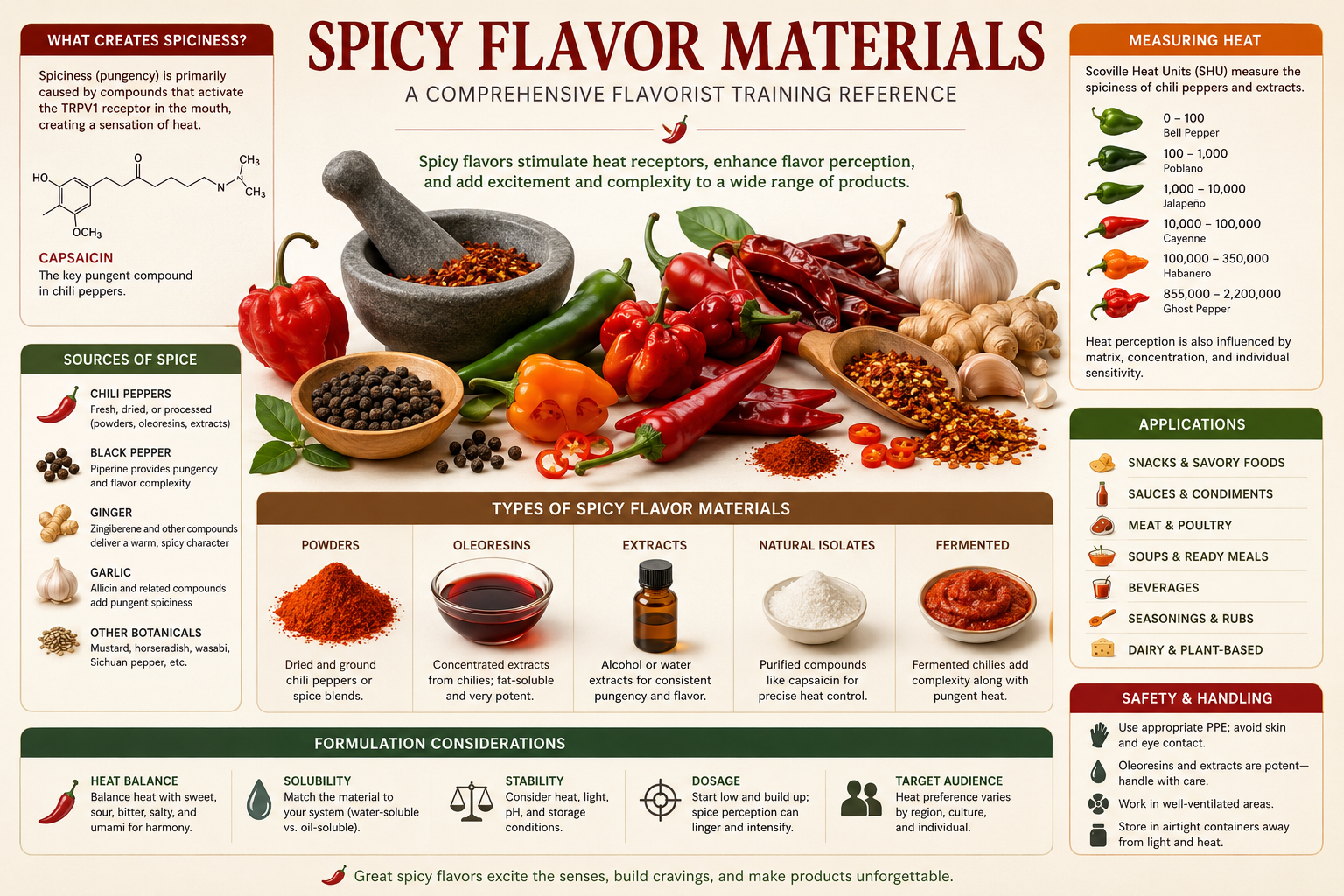
Spicy Flavor Materials: A Comprehensive Flavorist Training Reference
Introduction
"Spicy" is one of the most commercially important and chemically diverse flavor attributes in the global food and beverage industry. Unlike the five basic tastes (sweet, sour, salty, bitter, umami), spiciness is not detected by taste receptors on the tongue in the classical sense. Instead, it is a chemesthetic sensation — a chemical stimulus perceived through the somatosensory system, principally via a family of transient receptor potential (TRP) ion channels distributed throughout the oral cavity, nasal passages, esophagus, and skin.
For the practicing flavorist, mastery of spicy flavor materials requires understanding:
- The underlying neuroscience — which receptors are involved and how they work
- The chemistry — the structural features that confer pungency, and how to manipulate them
- The botany and primary sources of each major class of spicy material
- The specific flavor character and sensory profile of each material — onset, intensity, localization, and duration
- Regulatory status, usage levels, and safety considerations
- Practical formulation strategies — how these materials interact with each other and with the flavor matrix
This document covers all of these areas for each major chemical family contributing to the spicy attribute.
Part I: Mechanism of Action — The Neuroscience of Spice
1.1 Chemesthesis Defined
Chemesthesis refers to the chemical sensitivity of the skin and mucous membranes, mediated by the trigeminal nerve (cranial nerve V) in the oral and nasal cavities and by the vagus nerve and spinal afferents in the throat and gastrointestinal tract. The sensations produced include burning, stinging, tingling, cooling, numbing, and warming. Spicy sensations fall into this system, not the gustatory system.
This distinction has direct practical consequences for flavorists:
- Spicy materials survive cooking conditions that destroy volatile flavor compounds, because the sensory response is not olfactory.
- Spicy sensations can occur in the absence of any odor or flavor, making them useful in low-flavor systems.
- The perception threshold is influenced by temperature (hotter foods enhance TRPV1 activation), pH, and the presence of fats and other matrix components.
1.2 Key Receptors
TRPV1 (Transient Receptor Potential Vanilloid 1) The most important receptor for spicy flavor perception. TRPV1 is a nonselective cation channel (permeable to Na⁺, K⁺, Ca²⁺) expressed on nociceptive neurons. It is the molecular detector for harmful heat (>43°C) and acid (pH < 6), and is activated by capsaicin and all structurally related vanilloids. Activation causes influx of Ca²⁺, depolarization, and firing of sensory neurons, which is perceived as burning heat. Upon repeated exposure, TRPV1 undergoes desensitization (tachyphylaxis) — the basis for "building a tolerance" to spicy food.
TRPA1 (Transient Receptor Potential Ankyrin 1) Activated by many reactive electrophilic molecules including allyl isothiocyanate (the pungent principle of mustard), allicin (garlic), cinnamaldehyde (cinnamon), and acrolein. TRPA1 is also the cold receptor (activated below ~17°C). Importantly, allyl isothiocyanate activates TRPA1 via covalent modification of cysteine residues, while capsaicin does not — explaining why mustard heat feels fundamentally different to capsaicin heat. TRPA1-mediated pungency is typically more nasal, sharper, and shorter-lasting than TRPV1-mediated burning.
KCNK3 / KCNK9 (Two-Pore Domain Potassium Channels) These channels are responsible for the unique tingling, numbing, and "electric" sensation produced by alkylamides from Sichuan pepper (hydroxy-alpha-sanshool) and related compounds. The mechanism is fundamentally different from both TRPV1 and TRPA1: these channels do not produce burning but instead alter the membrane potential in sensory neurons, creating a distinctive tingly-numbing character sometimes described as "mala" (麻辣) in Chinese cuisine.
TRPV3 and TRPV4 Secondary receptors activated by certain spicy-warm materials. Cinnamaldehyde activates TRPV3. These channels have higher thresholds and produce gentler, warmer sensations rather than acute burn.
1.3 Onset, Peak, and Persistence
One of the most important sensory parameters for formulation is the temporal profile of the spicy sensation:
| Parameter | TRPV1 agonists (capsaicin class) | TRPA1 agonists (mustard class) | KCNK3 agonists (Sichuan class) |
|---|---|---|---|
| Onset | Delayed (5–30 sec) | Rapid (<5 sec) | Rapid (<5 sec) |
| Peak intensity | Slow build | Fast peak | Fast peak |
| Duration | Long (5–20 min) | Short to medium (1–5 min) | Medium (2–8 min) |
| Localization | Mouth, throat, GI tract | Nasal cavity, retro-nasal | Lips, anterior tongue |
| Desensitization | Pronounced | Moderate | Mild |
| Volatility | Low (non-volatile) | High (volatile) | Low (non-volatile) |
Part II: Capsaicinoids and Vanillyl Amides
2.1 Botanical Origin and Overview
The most commercially significant spicy flavor materials belong to the capsaicinoid family — alkaloids produced in the placental tissue of Capsicum species (Solanaceae). The genus Capsicum contains five domesticated species:
- Capsicum annuum — jalapeño, serrano, ancho, cayenne, paprika, bell pepper
- Capsicum frutescens — tabasco, Thai bird's eye
- Capsicum chinense — habanero, Scotch bonnet, ghost pepper (bhut jolokia), Carolina Reaper
- Capsicum baccatum — aji amarillo, peppadew
- Capsicum pubescens — rocoto
Capsaicinoids are biosynthesized from phenylalanine (via vanillylamine) and a fatty acid branch chain (branched-chain amino acids → acyl-CoA). The ratio of capsaicin to dihydrocapsaicin is typically ~65:35 in most commercial oleoresins.
2.2 Individual Capsaicinoids
Capsaicin (trans-8-methyl-N-vanillyl-6-nonenamide)
- CAS: 404-86-4
- Molecular formula: C₁₈H₂₇NO₃; MW: 305.41
- Scoville Heat Units (SHU): ~16,000,000 (pure compound); threshold in water ~0.5–1.0 µg/100 mL
- Physical form: white crystalline solid; mp 65°C; practically insoluble in water; freely soluble in ethanol, propylene glycol, vegetable oils
- Flavor character: intense, slow-building burning heat primarily at the throat and back of mouth; extremely long persistence; almost no volatile character
- Usage level in finished product: typically 1–100 ppm for mild-to-hot effects; above 200 ppm is intensely hot for most consumers
- Structure note: the C8 unsaturated acyl chain is critical; saturation (dihydrocapsaicin) retains potency; shorter or longer chains lose TRPV1 affinity
Dihydrocapsaicin
- CAS: 19408-84-5
- SHU: ~15,000,000 (approximately equipotent to capsaicin)
- Flavor character: very similar to capsaicin; some experienced panelists find it slightly "cleaner" and less lingering; generally regarded as indistinguishable from capsaicin at equal concentrations
- Natural proportion: ~35% of total capsaicinoids in most Capsicum annuum cultivars; higher in C. frutescens
Nordihydrocapsaicin
- CAS: 28789-35-7
- SHU: ~9,100,000
- Character: milder, less persistent; about half the potency of capsaicin; "fruity" top note to the burn
- Proportion: minor component (~7%)
Homocapsaicin and Homodihydrocapsaicin
- SHU: ~8,600,000 and ~8,600,000 respectively
- Minor components (collectively ~1–3%)
- Character: milder, with a distinctive irritation of the nasal passages at higher concentrations
Nonivamide (Synthetic Capsaicin; PAVA)
- CAS: 2444-46-4
- FEMA: 3106
- Produced synthetically from vanillylamine and n-nonanoic acid
- SHU: ~9,200,000 — approximately 60–70% as hot as natural capsaicin
- Advantage over natural extract: more cost-effective; consistent composition; no co-extraction of color or other flavor compounds; used extensively in hot sauces and flavor applications
- Character: very similar to capsaicin; slightly cleaner, less complex; faster onset than capsaicin; same long persistence
Resiniferatoxin (RTX)
- From Euphorbia resinifera (the resin spurge plant from Morocco)
- CAS: 57444-62-9
- SHU: ~16,000,000,000 — approximately 1,000× more potent than capsaicin
- Not used in food applications — of toxicological concern and under investigation as an analgesic drug
- Activates TRPV1 with extraordinarily high affinity; included here as a reference for receptor pharmacology
Tinyatoxin
- From Euphorbia poissonii
- SHU: ~5,300,000,000
- Similarly not a food ingredient; discussed for receptor pharmacology completeness
2.3 Capsicum Extracts and Oleoresins
In commercial flavor work, pure capsaicinoids are rarely used alone. The primary commercial forms are:
Capsicum Oleoresin Extracted from dried Capsicum pods with hexane or ethanol; contains capsaicinoids + carotenoids (color) + fixed oils and waxes. Standardized typically to 1–10% capsaicinoids. The non-capsaicinoid fraction contributes a characteristic "pepper" top note that is absent in pure capsaicin solutions. The flavorist should be aware that the olfactory character of capsicum oleoresin — grassy, vegetative, slightly sweet — comes from pyrazines, terpenoids, and carbonyl compounds in the extract, not from capsaicinoids themselves.
Capsicum CO₂ Extract (Supercritical) Higher-quality extract; richer top note; fewer color bodies if extracted below critical point; used in premium applications.
Capsicum Tincture Ethanolic extraction; full aromatic profile; unstandardized; more aromatic than oleoresin; used in beverages and culinary applications.
Spray-Dried Capsicum / Encapsulated Capsaicin Microencapsulation in maltodextrin, modified starch, or cyclodextrins significantly reduces volatility and provides controlled release. Used in dry seasoning blends; reduces dust hazard during manufacturing; can modulate onset time.
2.4 Scoville Scale and HPLC Methodology
The Scoville Heat Unit (SHU) scale was developed by Wilbur Scoville in 1912 as an organoleptic dilution assay (Scoville Organoleptic Test — SOT). The test dilutes an extract in sugar water until heat is imperceptible to a panel of five trained tasters; the result is the dilution factor × 100.
Modern flavorists use HPLC (High-Performance Liquid Chromatography) with UV detection at 280 nm (American Spice Trade Association method ASTA 21.0) to quantify individual capsaicinoids. SHU is calculated:
SHU = ppm capsaicinoids (dry weight) × 15 (for capsaicin and dihydrocapsaicin); × 9.3 for nordihydrocapsaicin; × 8.6 for homocapsaicin/homodihydrocapsaicin
The conversion factor 15 reflects the original correlation between capsaicinoid content and organoleptic SHU. Note that this is an approximation: sensory potency depends on the matrix, form (dissolved, encapsulated, crystalline), and individual variation in TRPV1 expression.
Approximate SHU ranges for commercial Capsicum products:
| Product | Approximate SHU range |
|---|---|
| Bell pepper | 0 |
| Pimento | 100–500 |
| Ancho/poblano | 1,000–2,000 |
| Jalapeño | 2,500–8,000 |
| Cayenne powder | 30,000–50,000 |
| Tabasco pepper | 30,000–50,000 |
| Habanero | 100,000–350,000 |
| Ghost pepper (bhut jolokia) | 855,000–1,041,427 |
| Trinidad Moruga Scorpion | ~1,200,000–2,000,000 |
| Carolina Reaper | 1,400,000–2,200,000 |
| Pure capsaicin | ~16,000,000 |
Part III: Piperine and Related Compounds from Black Pepper
3.1 Botanical Origin
Piper nigrum (Piperaceae), the source of black, white, green, and red peppercorns (all from the same plant, differing in processing stage), contains the alkaloid piperine as its primary pungent principle, along with minor alkaloids and volatile terpenoids responsible for the characteristic pepper aroma.
Other pungent Piper species of relevance to flavorists:
- Piper longum (long pepper) — piperine + piperlonguminine + other amides
- Piper retrofractum (Balinese pepper) — similar profile to long pepper
- Piper cubeba (cubeb pepper) — more aromatic, slightly camphorous character
3.2 Piperine
- CAS: 94-62-2
- FEMA: 2909
- Molecular formula: C₁₇H₁₉NO₃; MW: 285.34
- Physical form: monoclinic prisms; mp 130°C; practically insoluble in water; soluble in ethanol, propylene glycol, DMSO
- Flavor character: sharp, biting pungency with a distinct pepper-aromatic top note; more immediate onset than capsaicin; moderate persistence (3–8 min); the heat is perceived at the tip of the tongue and front of the mouth (vs. capsaicin's throat heat); also has a mild bitter taste via TAS2R bitter receptors
- SHU equivalent: ~100,000 (piperine is approximately 1% as potent as capsaicin on a mass basis)
- Mechanism: TRPV1 agonist, lower potency than capsaicin; also activates TRPA1 at higher concentrations
- Usage level: 1–100 ppm in finished products; black pepper oleoresin at 0.5–10 ppm for flavor building; piperine as isolated compound at 5–50 ppm for heat emphasis
- Stability: thermostable; does not break down at normal cooking temperatures; photosensitive — UV exposure causes isomerization to isochavicine and other geometric isomers, with reduced pungency
Black Pepper Oleoresin: The volatile fraction (obtained by steam distillation or CO₂ extraction) contains primarily monoterpenes (β-pinene ~30%, limonene ~15–20%, sabinene ~15%) and sesquiterpenes (β-caryophyllene ~5–15%) responsible for pepper aroma. The non-volatile fraction contains piperine and related amides. In formulation, the flavorist must decide whether to use the whole oleoresin (aroma + heat), the volatile oil (aroma only), or isolated piperine (heat only).
Piperettine, Piperanine, Piperylin — minor alkaloids in black pepper; lower potency than piperine; contribute to complex pepper heat character.
3.3 Bioavailability Enhancement Note
Piperine has the well-documented property of inhibiting CYP3A4 and P-glycoprotein in the GI tract, thereby significantly enhancing the bioavailability of many drugs and nutraceuticals (most notably curcumin). This is relevant for the flavorist when developing nutraceutical flavor applications.
Part IV: Gingerols, Shogaols, and Related Ginger Compounds
4.1 Botanical Origin
Zingiber officinale (Zingiberaceae) — ginger. The spicy flavor compounds are concentrated in the rhizome and vary significantly with:
- Fresh ginger: dominated by gingerols (highest concentration: 6-gingerol)
- Dried ginger: gingerols dehydrate to shogaols (more potent); also increased paradol content
- Cooked ginger: 6-gingerol cyclizes to zingerone (less hot, more sweet-spicy)
4.2 Individual Ginger Pungents
6-Gingerol (the primary pungent compound of fresh ginger)
- CAS: 23513-14-6
- FEMA: 3124
- Character: warm, gently burning, slightly sweet-spicy onset; moderate intensity; medium persistence (3–6 min); "clean" heat without the throat-catching quality of capsaicin; also has a characteristic ginger-earthy aroma component
- Potency: approximately 1/10th to 1/15th the potency of capsaicin on a molar basis
- Mechanism: TRPV1 agonist
- Structure: vanillyl group + β-hydroxyketone side chain; the "6" refers to the side chain carbon count
8-Gingerol and 10-Gingerol
- Higher homologs with longer acyl side chains; 10-gingerol is found at higher levels in some African ginger varieties
- Slightly higher potency than 6-gingerol; more persistent
- Character: progressively hotter and more persistent with increasing chain length
6-Shogaol (primary pungent of dried ginger)
- CAS: 555-66-8
- FEMA: 3124 (covered by ginger extract; no separate FEMA for isolated compound)
- Character: more intense heat than 6-gingerol; faster onset; lingering; also has a distinctive "hot-earthy" character; stronger TRPV1 agonist than corresponding gingerol due to the enone (α,β-unsaturated ketone) system, which allows Michael addition to TRPV1 cysteine residues (dual covalent and non-covalent activation)
- Potency: approximately 2–3× more potent than the corresponding gingerol
- Stability: shogaols are more thermostable than gingerols; their levels increase significantly during spray drying, extrusion, and baking
Zingerone (Vanillylacetone)
- CAS: 122-48-5
- FEMA: 3124 (ginger); also FEMA 3774 as synthetic zingerone
- Character: gentle warming rather than burning; sweet, spicy, phenolic; weak TRPV1 agonist; contributes primarily to the "warm spice" tonality of cooked ginger rather than heat; widely used in baked goods and beverage flavors at 1–10 ppm for a warm phenolic note
- Threshold: ~10 ppm in water
Paradol
- CAS: 27113-22-0
- Character: similar to gingerols; warm, slightly sharp; pungent; found in grains of paradise (Aframomum melegueta)
4.3 Grains of Paradise (Aframomum melegueta)
A West African spice increasingly used in beverage (especially craft beer), confectionery, and spirits applications. Primary pungent compounds are 6-paradol, 6-gingerol, and 6-shogaol, with a distinctive earthy, warm, slightly citrus-peppery character. Provides a complex "warm spice" profile valued by flavorists for its similarity to the combination of ginger and black pepper.
4.4 Galangal (Alpinia galanga and A. officinarum)
Related to ginger; primary pungent compounds include 1'-acetoxychavicol acetate (ACA) and 1'-acetoxyeugenol acetate — quite different structures from gingerols. The character is sharp, fresh, and camphoraceous-spicy with a eucalyptus-like note. Used in Thai and Indonesian cuisines.
Part V: Isothiocyanates — The Spicy Character of Mustard, Horseradish, and Wasabi
5.1 Chemistry Overview
Isothiocyanates (ITCs) are not present as free compounds in intact plant tissue. They are formed enzymatically by the action of myrosinase (β-thioglucoside glucohydrolase) on glucosinolate substrates when cell structure is disrupted (cutting, crushing, chewing). This two-component system means:
- Dry mustard powder has no pungency until water is added (activating myrosinase)
- Heat inactivates myrosinase — cooked mustard is less pungent than raw
- ITC levels and character depend on the specific glucosinolate precursor, which is species- and variety-specific
5.2 Key Isothiocyanates and Their Sources
Allyl Isothiocyanate (AITC)
- CAS: 57-06-7
- FEMA: 2034
- Glucosinolate precursor: sinigrin (found in Brassica nigra — black mustard; B. juncea — brown/Indian mustard; Armoracia rusticana — horseradish; Wasabia japonica — wasabi)
- Molecular formula: C₄H₅NS; MW: 99.15; bp: 148–150°C at atmospheric pressure
- Physical form: pale yellow liquid; intensely irritating vapor; vapor pressure ~5.8 mmHg at 20°C
- Flavor character: extremely sharp, nasal, lachrymatory (tear-inducing) pungency; hot-mustard character; instant, brutal onset; short to medium duration; the pungency is experienced primarily in the nasal passages and sinuses via retronasal/direct nasal routes; causes lacrimation at high concentrations; described as "sinus-clearing" heat
- Mechanism: highly reactive electrophile; activates TRPA1 via covalent modification of N-terminal cysteine residues (Cys621, Cys641, Cys665); the reaction is partially reversible
- TRPA1 potency: threshold ~0.2–0.5 µM
- Usage level: 0.01–1.0 ppm for pungent note; 1–10 ppm for discernible heat; above 20 ppm is intensely hot for most consumers
- Regulatory status: GRAS (FEMA 2034); listed as flavoring substance in EU (FL 12.002); maximum use levels apply in many applications due to mucosal irritation potential
- Stability: highly reactive; hydrolysis in aqueous systems at neutral to alkaline pH produces allylamine + COS or HSCN; half-life in water at pH 7 and 25°C is approximately 8–16 hours; more stable in alcoholic systems; should be added last in aqueous formulations
- Interaction with other flavor materials: AITC is a strong thiol scavenger and can react with thiol-containing compounds (cysteine, glutathione, thiolcontaining flavor compounds) in a formulation, reducing both AITC potency and the concentration of the reacting compound — an important consideration in complex flavor systems
Benzyl Isothiocyanate
- CAS: 622-78-6
- FEMA: 2112
- From: watercress (Nasturtium officinale); nasturtium (Tropaeolum majus)
- Character: sharp, hot, slightly green; less lachrymatory than AITC; more diffuse pungency; lingering
- Potency: comparable to AITC
Phenethyl Isothiocyanate (PEITC)
- CAS: 2257-09-2
- From: watercress, turnip
- Character: milder than AITC; more complex, slightly rosy-spicy; less nasal; moderate persistence
4-Methylthiobutyl Isothiocyanate (Erucin precursor)
- From: rocket/arugula (Eruca vesicaria); the characteristic spicy bite of arugula
- Character: warm, sulfuraceous, green-hot character; moderate TRPA1 activation; very distinctive "arugula" character
sec-Butyl Isothiocyanate
- CAS: 591-82-2
- FEMA: 3454
- From: white radish (Raphanus sativus); various Brassica seeds
- Character: sharp, pungent, solvent-like; shorter duration than AITC
5.3 Wasabi (Wasabia japonica)
True wasabi is one of the most expensive culinary spices in the world. The fresh rhizome develops its characteristic heat only upon grating (activating myrosinase). The primary pungents are:
- AITC (~80% of volatile ITC fraction)
- 6-methylsulfinylhexyl isothiocyanate (6-MSITC) — characteristic fresh/green note; also a potent bioactive
- 7-methylsulfinylheptyl ITC and 8-methylsulfinyloctyl ITC — longer-chain homologs; more persistence
Most commercial "wasabi" products contain no Wasabia japonica; they are formulated from horseradish (Armoracia rusticana) with AITC, glucosinolate extract, green food coloring, and mustard flour. The flavorist formulating a "wasabi" flavor should note that true wasabi has a more complex, greener, and slightly more floral character than horseradish-based products, with a more rapid fade and less lingering heat.
5.4 Horseradish
The primary ITC in horseradish is AITC (from sinigrin), accompanied by:
- 2-Phenylethyl ITC — rosy-mustard character
- Allyl cyanide — green, onion-like; not a direct TRPA1 agonist but contributes to character
- Sinigrin hydrolysis products including allyl thiocyanate
Fresh horseradish contains 100–250 mg sinigrin per 100 g fresh weight; the pungency upon grating develops within seconds and is maximized within ~3 minutes. Acidification (vinegar) halts myrosinase activity and preserves the developed ITC content — the basis of prepared horseradish stability.
5.5 Mustard
Yellow/White Mustard (Sinapis alba): Glucosinolate is sinalbin → p-hydroxybenzyl ITC. This compound is non-volatile and causes primarily oral heat (not nasal/lachrymatory); character is mild, warm, less sharp than brown mustard.
Brown/Indian Mustard (Brassica juncea): Glucosinolate is sinigrin → AITC. More volatile and nasal; sharp, intense, classic "hot mustard" character.
Black Mustard (Brassica nigra): Also produces AITC; very similar to brown mustard; historically the primary culinary mustard in Europe.
Part VI: Organosulfur Spicy Compounds — Alliums
6.1 Botanical and Chemical Overview
The Allium genus (garlic, onion, leek, chives, scallions, shallots) produces a rich family of organosulfur compounds that contribute both aromatic and pungent/spicy character. As with isothiocyanates, these compounds are absent in intact tissue and generated enzymatically — in this case, by alliinase (C–S lyase) acting on sulfoxide amino acid precursors (alliin and related compounds) upon cell disruption.
6.2 Allicin and Related Thiosulfinates
Allicin (diallyl thiosulfinate)
- CAS: 539-86-6
- Formed from alliin (S-allyl-L-cysteine sulfoxide) by alliinase in garlic; not present in whole, intact cloves
- Molecular formula: C₆H₁₀OS₂; MW: 162.27
- Physical form: pale yellow oil; intensely sulfurous, pungent odor; bp ~80°C (decomposes); vapor pressure moderate
- Flavor character: sharp, raw, intensely pungent; burning quality on tongue and in throat; strong sulfurous, metallic bite; "hot garlic" character; extremely rapid onset; moderate duration; the burning is less diffuse than capsaicin, more localized to the site of contact
- Mechanism: activates TRPA1 via covalent modification of cysteine residues; allicin also reacts directly with biological thiols (including oral cysteine residues)
- Threshold: ~0.01 µg/100 mL in water (extremely low odor threshold also)
- Stability: highly unstable in aqueous media; decomposes within hours at room temperature to diallyl disulfide (DADS), diallyl trisulfide (DATS), ajoene, and other thiosulfinates; must be generated fresh (grated/crushed garlic) for maximum pungency
- Note: the "heat" of raw garlic is largely from allicin; cooked garlic loses pungency because alliinase is heat-inactivated and allicin thermally decomposes
Diallyl Disulfide (DADS)
- CAS: 2179-57-9
- FEMA: 2028
- The major decomposition product of allicin; the primary flavor compound in cooked garlic and garlic powder
- Character: garlic-sulfurous; less sharp and pungent than allicin; warm-sulfurous note; mild TRPA1 activation; contributes "roasted garlic" warmth more than acute heat
- Usage level: 0.1–5 ppm in finished products for garlic character; higher for pungency
Dipropyl Disulfide (onion character)
- From allicin analogs in onion (Allium cepa)
- Character: pungent, sulfurous; contributes to onion bite; less intensely spicy than garlic compounds
Propanethial S-oxide (Onion lachrymatory factor)
- The compound responsible for eye-irritation when cutting onions; volatile; activates TRPA1 in the eyes and nasal passages; contributes to nasal pungency of raw onion
6.3 Practical Formulation Considerations for Allium Pungency
Garlic pungency in formulation is most effectively delivered by:
- Garlic oleoresin (contains DADS, DATS, ajoene, and trace thiosulfinates; standard to specific allicin equivalent is difficult)
- Garlic powder (myrosinase still partially active — adding water regenerates limited allicin)
- Dehydrated minced garlic (cellular disruption fixed; primarily DADS/DATS character)
- Isolated DADS/DATS (chemical precision; note these are primarily aromatic vs. pungent)
For applications requiring the "bite" of raw garlic, encapsulated allicin preparations or allicin-generating systems (freeze-dried garlic + added alliinase) are sometimes employed.
Part VII: Cinnamaldehyde, Eugenol, and Related Warm Spice Pungents
7.1 Cinnamaldehyde
- CAS: 104-55-2 (trans-form); FEMA: 2286
- Source: bark of Cinnamomum verum (Ceylon cinnamon), C. cassia (Chinese cinnamon/cassia), C. loureiroi (Vietnamese cinnamon)
- Content: 55–90% of C. cassia bark oil; ~55–75% of C. verum bark oil
- Physical form: pale yellow oily liquid; bp ~250°C; pleasant spicy-cinnamon odor at low concentrations; intensely irritating to mucous membranes at high concentrations
- Flavor character: warm, spicy-sweet "cinnamon" aroma; at higher concentrations, a distinct burning, tingling sensation in the oral cavity, lips, and tongue; the "hot" character of cinnamon candy (Red Hots, Big Red gum) is largely cinnamaldehyde; the sensation is qualitatively different from capsaicin — more tingly, diffuse, and "sweet-hot" with a much faster fade
- Mechanism: TRPV3 agonist (primary spicy receptor for cinnamaldehyde); also mild TRPA1 agonist; the TRPV3 pathway explains the gentler, warmer character vs. TRPV1-mediated capsaicin heat
- Usage level: 1–100 ppm in flavor applications; above 200–500 ppm causes significant oral irritation in most consumers
- Regulatory: GRAS (FEMA 2286); EU flavoring substance; has well-known potential as a contact allergen (cinnamal) — maximum levels in leave-on cosmetics are restricted under EU cosmetics regulation; food use is generally regarded as safe at typical levels
- Stability: reactive aldehyde; undergoes Schiff base formation with amines (Maillard reaction); avoid formulating with amino acids, proteins, or amines without considering color formation and reactivity; hydrolyzes in strongly alkaline media; slightly photosensitive
7.2 Eugenol
- CAS: 97-53-4; FEMA: 2467
- Source: clove bud oil (Syzygium aromaticum) 70–90%; clove leaf oil 80–95%; bay leaf oil (Pimenta racemosa) 40–55%; basil; nutmeg (trace)
- Molecular formula: C₁₀H₁₂O₂; MW: 164.20
- Flavor character: spicy, clove-like; warm, slightly woody; burning/numbing sensation on tongue and gums (familiar from dental applications — eugenol is the anesthetic component of oil of cloves); the pungency is mild compared to capsaicin but distinct; also has a slight cooling character at certain concentrations
- Mechanism: TRPV1 agonist and TRPV3 agonist; also inhibits TRPA1 at low concentrations (hence the partial anesthetic effect — it activates then desensitizes the receptor); voltage-gated sodium channel blocker (contributes to local anesthetic/numbing character)
- Usage level: 5–50 ppm for spicy-clove character; 100–500 ppm for more pronounced oral sensation
- Related compounds: Isoeugenol (slightly warmer, more floral), Methyleugenol (less spicy, more floral; genotoxicity concern — restricted use levels in EU), Eugenyl acetate (less pungent, more sweet)
7.3 Hydroxy-alpha-Sanshool and Sichuan Pepper
Sichuan pepper (Zanthoxylum bungeanum, Z. piperitum — Japanese sansho) is unique among spicy ingredients in that its primary active compounds do not operate via TRPV1 or TRPA1. The characteristic "mala" sensation (numbing + burning) comes from hydroxy-alpha-sanshool and related alkylamides.
Hydroxy-alpha-Sanshool
- CAS: 73602-02-5
- Character: distinctive tingling-buzzing-electric sensation on the lips and tongue; mild numbness; simultaneously warming; described as "electric" or "sparkling"; the sensation is unique and quite unlike capsaicin burn
- Mechanism: partial agonist/antagonist at KCNK3 (TASK-1) and KCNK9 (TASK-3) two-pore domain potassium channels; these channels normally act as a "leak" current stabilizing membrane potential; sanshool inhibits them, depolarizing sensory neurons and creating the unusual tingling sensation without the burning character of TRPV1 agonism; also has activity at TRPV1 and TRPA1 at higher concentrations
- Threshold: ~1–5 µM in water
- Usage level: 1–50 ppm for detectable effect; 50–200 ppm for pronounced numbness
Sichuan pepper oleoresin is the standard commercial form; it is typically standardized to total alkylamide content. The flavorist should note that the aroma of Sichuan pepper (largely limonene, linalool, and terpenoids) is separate from the sensory active alkylamides — the oleoresin delivers both, while isolated sanshool provides only the chemesthetic effect.
Japanese Sansho (Zanthoxylum piperitum): Higher citrus-linalool aromatic character; similar alkylamide profile; lighter and more delicate than Chinese Sichuan pepper.
Timut Pepper (Zanthoxylum alatum): Nepalese; strong grapefruit aroma; similar alkylamide content; increasingly used in craft food and beverage.
Szechuan Pepper in Formulation: When combining Sichuan pepper with capsaicin in a "mala" flavor system, the formulator should understand that the two sensations are additive but qualitatively distinct — capsaicin provides heat/burn while sanshool provides the numbing/tingling. A ratio of approximately 1:3 to 1:5 (sanshool effect : capsaicin effect, as experienced) approximates authentic mala character.
Part VIII: Additional Spicy/Pungent Flavor Materials
8.1 Spilanthol (Acmella oleracea — Buzz Button / Toothache Plant)
- CAS: 25394-57-4
- Also known as: N-isobutyl-2E,6Z,8E-decatrienamide
- From: Acmella oleracea (paracress, buzz button), A. uliginosa
- Character: initially mild; then pronounced, sustained tingling-electric-salivation-inducing sensation; characteristic "mouth buzz"; heavy salivation; mild numbing; the sensation intensifies over 30–60 seconds and can persist for 10–20 minutes
- Mechanism: TRPV1 agonist (potent); also activates calcium signaling pathways that stimulate salivation
- Potency: approximately comparable to capsaicin on a molar basis
- Usage level: 0.5–5 ppm for noticeable buzz; 5–20 ppm for pronounced effect
- Regulatory: GRAS under 21 CFR § 182.20 (as extract); individual compound status varies by jurisdiction
- Commercial form: Oleoresin of Acmella oleracea; standardized preparations typically quoted as % spilanthol by HPLC
- Application: premium cocktails, confectionery, experimental cuisine; the salivation effect makes it of interest in dry-mouth therapeutic applications and as a salivation enhancer in food; extremely trendy in craft beverage applications
8.2 Grains of Paradise (Aframomum melegueta)
As mentioned in section 4.3, this West African spice deserves fuller treatment:
- Primary pungents: 6-paradol > 6-gingerol > 6-shogaol > 6-gingerdiol
- Additional character compounds: geraniol, bisabolene, β-caryophyllene
- Overall character: complex warm spice; reminiscent of black pepper with ginger notes and a citrusy-floral undertone; less sharp and nasal than black pepper; longer persistence than ginger; excellent complexity modifier
- Usage: craft beer, spirits, confectionery, meat seasonings
8.3 Long Pepper (Piper longum)
- Contains piperine (primary pungent) + piperlonguminine + retrofractamide A and related amides
- Character: more complex than black pepper; earthy, woody, slightly sweet; slower onset than black pepper; longer persistence; distinct "spicy depth" preferred by some culinary traditions
- Particularly valued in Ayurvedic flavor applications and premium spice blends
- The amide alkaloids other than piperine contribute a distinct warming character without the sharpness of piperine alone
8.4 Melegueta Pepper / Cubeb
Cubeb pepper (Piper cubeba):
- Character: similar to black pepper but with a pronounced camphoraceous, piney, slightly cooling character from the high content of cubebene and other sesquiterpenes; the heat is moderate; used in Moroccan and Indonesian cuisines; gin flavoring
- Primary pungents: cubebin, piperine (low level relative to black pepper); the spicy character is more mild and aromatic than pure heat
8.5 Tasmanian Pepper Berry (Tasmannia lanceolata)
- Contains polygodial and related drimane sesquiterpene dialdehydes as primary pungents
- Character: initial fruity berry note; slow-building intense heat; persistent; simultaneously cooling (polygodial activates TRPA1 and inhibits TRPM8); unusual "hot-cool" combined character
- Polygodial is also the primary pungent of water pepper (Persicaria hydropiper)
8.6 Ginger Lily (Hedychium spicatum) and Other Zingiberaceae
Kaempferia galanga (kencur) — contains ethyl cinnamate and ethyl p-methoxycinnamate; contributes mild warmth and distinctive "zesty" character used in Indonesian cuisine.
8.7 Myristicin and Elemicin (Nutmeg)
While not primarily "spicy" flavor materials, nutmeg (Myristica fragrans) contains weak TRPV1 agonists including myristicin and elemicin. These contribute to the gentle warming character of nutmeg in formulation, though the threshold for spicy sensation from these compounds is considerably higher than from capsaicin or piperine at typical usage levels.
Part IX: Formulation Strategies for Spicy Flavors
9.1 Solubility and Carrier Selection
Most spicy flavor materials are poorly water-soluble (capsaicin, piperine, sanshool) or volatile (AITC, cinnamaldehyde, allicin). The following carrier and solvent systems are commonly used:
For non-volatile capsaicinoids and piperine:
- Propylene glycol (PG): good solvent; typical usage 5–20%
- Ethanol: excellent solubility; volatile; suitable for alcoholic beverages and tinctures
- MCT oil (medium-chain triglycerides): excellent solubility in lipid phase; suitable for oil-based seasonings, dressings
- Castor oil: highly polar; good for dense oleo-capsaicin preparations
- Cyclodextrin encapsulation (β-cyclodextrin): improves water dispersibility; modulates onset time; widely used in functional food applications
- Spray drying on maltodextrin/modified starch: water-dispersible powder; masks color and odor; standard for dry seasoning applications
For volatile isothiocyanates (AITC):
- Ethanol solutions (>40% ethanol provides good stability)
- Avoid aqueous systems for storage; add immediately before use or use encapsulated form
- Inclusion complexes with β-cyclodextrin for powder applications
For organosulfur compounds (allicin, DADS):
- Allicin: extremely unstable in any form; use as freshly generated material or stabilized extract
- DADS, DATS: more stable; ethanol or PG solutions; store refrigerated under inert atmosphere
9.2 Temporal Profile Management
A critical skill for the advanced flavorist is engineering the temporal spicy profile — controlling onset, peak, and fade. Key strategies:
Extending onset delay (slower heat):
- Microencapsulation (shell delays access to oral mucosa)
- Incorporation into fat phase (heat perceived after fat-water interface disruption)
- Cyclodextrin complexation (slows release)
- Formulation at high viscosity (diffusion limited)
Accelerating onset:
- Nanosized emulsions (increase contact surface area)
- Dissolve in PG or ethanol carrier (rapid distribution in oral cavity)
- Temperature increase of product (higher temperature enhances TRPV1 activation)
Extending persistence:
- TRPV1 agonists (capsaicin) are inherently persistent; lean on capsaicin/nonivamide for long heat
- High lipid content in product reduces receptor desensitization rate (lipids act as a reservoir, continuously releasing capsaicin)
Shortening persistence:
- TRPA1-based systems (AITC, cinnamaldehyde) fade relatively quickly
- Dairy proteins (casein micelles bind capsaicin) — explains why milk reduces capsaicin perception
- Acidification can reduce TRPV1 co-activation
9.3 Enhancers and Potentiators
Several compounds enhance the perception of spicy materials without being pungent themselves:
Acetic acid (vinegar): Acidic conditions (pH < 6) activate TRPV1 directly and sensitize the receptor to capsaicin — explaining why vinegar-based hot sauces seem hotter than oil-based versions at equal capsaicin content. Acid-sensitization is a powerful formulation tool; pH 4–5 systems can achieve equivalent perceived heat at 30–50% lower capsaicin usage.
Citric acid: Similar to acetic acid; TRPV1 sensitization; adds citrus top note that complements many spicy flavor profiles.
Temperature: As noted, higher product temperature activates TRPV1 at lower capsaicin concentrations. A product consumed at 60°C will be perceived as significantly hotter than the same product at 20°C.
Ethanol: Potentiates mucosal TRPV1 activation; explains why alcoholic beverages enhance spicy food perception.
Polyphosphates and mineral salts: Some evidence that Na⁺ and Ca²⁺ concentrations modulate TRP channel behavior; high-sodium matrices may slightly enhance spicy perception.
Black pepper oleoresin as a synergist: Even at sub-threshold levels, volatile pepper terpenoids (β-pinene, limonene) appear to prime the oral cavity for capsaicin perception — a behavioral priming effect rather than a direct receptor interaction. Low-level black pepper addition (1–5 ppm oleoresin) is a classic "lift" technique in spicy flavor systems.
9.4 Modifiers and Attenuators
Dairy casein / milk proteins: Casein micelles bind capsaicin with high affinity; this is the physiological basis for milk's effectiveness in reducing capsaicin burning. In formulation, the addition of dairy proteins (casein, sodium caseinate, whey protein) can be used to reduce perceived heat in product development.
Cyclodextrins: As described above; also useful to reduce peak heat intensity by controlling release rate.
Sucrose and other carbohydrates: Sweetness reduces perceived spicy intensity psychophysically (cross-modal suppression); the effect is real but moderate. High-sugar matrices are perceived as less hot at equal capsaicin content.
Cooling compounds (WS-3, WS-23, menthol, icilin): Compounds that activate TRPM8 (the cold receptor) can create a contrasting sensation that modulates the spicy experience. Menthol at low levels (below cooling threshold) may slightly sensitize oral mucosa; at higher levels, the cooling character counterbalances heat perceptually. TRPM8 and TRPV1 activation simultaneously creates the "hot-cool" sensation valued in certain flavor categories (some hot sauces, spicy mints, Korean "fire and ice" concepts).
Fats and oils: High fat content in the product matrix creates a lipid reservoir that slows release of lipophilic capsaicinoids to the aqueous oral mucosa — reducing peak intensity while prolonging overall duration. Fat-in-water emulsions (mayonnaise, cream sauces) distribute capsaicin in the fat phase and reduce perceived heat vs. aqueous systems.
9.5 Masking Undesirable Notes
Capsicum color (carotenoids): When using capsicum oleoresin rather than pure capsaicin/nonivamide, the orange-red color from capsanthin and capsorubin may be undesirable in some applications. Use purified capsaicin, synthetic nonivamide, or decolorized capsicum extract to avoid color contribution.
Sulfurous off-notes (garlic/mustard applications): AITC and allium compounds carry strong sulfurous character that may need to be managed. Sweet-fruity masking agents (ethyl butyrate, gamma-undecalactone) can partially obscure sulfur notes. Roasty pyrazine compounds create complementary "roasted allium" profiles that integrate better than raw sulfur top notes.
Bitter note of piperine: Piperine activates both TRPV1 and bitter taste receptors (TAS2R). At higher usage levels (>50 ppm), bitterness becomes apparent. Masking with sweet materials, reduction of pH, or use of bitter masking compounds (acacia gum fractions, hop bitter blockers) may be necessary.
Part X: Regulatory and Safety Considerations
10.1 FEMA GRAS Status
The following spicy flavor materials have FEMA (Flavor and Extract Manufacturers Association) GRAS status:
| Compound | FEMA # |
|---|---|
| Capsicum (oleoresin) | 2900 |
| Capsaicin | — (regulated as part of capsicum extract) |
| Nonivamide | 3106 |
| Piperine | 2909 |
| Allyl isothiocyanate | 2034 |
| Benzyl isothiocyanate | 2112 |
| Cinnamaldehyde | 2286 |
| Eugenol | 2467 |
| Zingerone | 3124 (as ginger extract) |
| Ginger (oleoresin/extract) | 2520 |
Always verify current FEMA GRAS status and usage level recommendations from the current FEMA GRAS list; this document reflects status as of 2025.
10.2 Occupational Safety
Several spicy flavor materials present significant occupational hazards:
- Capsaicin/capsicum oleoresin: respiratory and eye irritant; OSHA exposure limits not specifically established; use respirator and eye protection; avoid aerosol generation; spills should be contained with PPE
- Allyl isothiocyanate: lachrymatory; vapor extremely irritating to eyes and respiratory tract; TLV-TWA not established; work in ventilated fume hood; store in sealed containers at reduced temperature
- Allicin: strong eye and respiratory irritant; unstable; handle fresh preparations with eye protection
- Cinnamaldehyde: potential skin sensitizer with prolonged/repeated dermal exposure; IFRA guidelines apply to cosmetic applications but less stringent for food
10.3 Consumer Safety — Spicy Food and GI Effects
At high consumption levels, spicy materials (especially capsaicin) can cause GI irritation, esophagitis, and gastric acid secretion. At extreme levels, systemic effects (sweating, vasodilation, tachycardia) are well-documented. For commercial food products, typical usage levels are well below thresholds for adverse effects in the general population. Consider labeling for heat-sensitive consumers (those with GERD, irritable bowel syndrome, or capsaicin hypersensitivity).
Part XI: Sensory Evaluation of Spicy Materials
11.1 Panel Development for Spicy Assessment
Evaluating spicy materials requires trained panelists with:
- Documented capsaicin threshold determination (performed at intervals to confirm consistency)
- Training on temporal descriptors (onset time, peak intensity, fade time)
- Training on spatial descriptors (tip of tongue, middle of tongue, throat, nasal, lip)
- Training on qualitative character descriptors (burning, stinging, tingling, warming, numbing, lachrymatory)
- Standardized expectoration protocols (panelists should expectorate between samples)
- Adequate rest periods between capsaicin-class samples (minimum 10–15 minutes; TRPV1 desensitization requires time to reverse)
- Tracking tachyphylaxis across session — perceived intensity of capsaicin decreases within a session; randomized sample order and carry-over controls are essential
11.2 Standard Reference Scale for Spicy Intensity
A common laboratory reference scale uses aqueous capsaicin solutions (in PG:water 5:95) at defined concentrations:
| Rating | Capsaicin concentration | Approximate SHU |
|---|---|---|
| 1 | 0.1 ppm | 1,500 |
| 2 | 0.5 ppm | 7,500 |
| 3 | 1.0 ppm | 15,000 |
| 4 | 2.5 ppm | 37,500 |
| 5 | 5.0 ppm | 75,000 |
| 6 | 10 ppm | 150,000 |
| 7 | 20 ppm | 300,000 |
| 8 | 50 ppm | 750,000 |
| 9 | 100 ppm | 1,500,000 |
| 10 | 200 ppm | 3,000,000 |
Note: these intensity ratings are not cross-applicable to AITC or cinnamaldehyde systems without recalibration — the qualitative character and receptor mechanism differ significantly.
11.3 Descriptive Analysis Vocabulary for Spicy Flavors
Training flavorists to distinguish types of spicy sensation is essential for development work:
Burning — sustained, hot; throat and palate; TRPV1-mediated; capsaicin class
Stinging — sharp, quick, more superficial; TRPA1-mediated; mustard/horseradish class
Tingling — electric, buzzing, diffuse on lips and tongue; KCNK3-mediated; Sichuan pepper
Warming — gentle, diffuse heat without distinct burning; lower-potency TRPV1/V3 agonists; ginger, cinnamon, eugenol
Numbing — local anesthetic character; eugenol; high-dose sanshool
Lachrymatory — eye-tearing, nasal-sinus irritation; volatile TRPA1 agonists; AITC, allicin
Nasal heat — sensation in the posterior nasopharynx; horseradish, wasabi, high-level AITC
Salivation — increased salivation response; spilanthol
Appendix A: Summary Reference Table — Key Spicy Flavor Materials
| Material | Chemical Class | CAS | Receptor | SHU / Potency | Character | Source |
|---|---|---|---|---|---|---|
| Capsaicin | Vanillyl amide | 404-86-4 | TRPV1 | 16,000,000 | Burning, lingering, throat | Capsicum spp. |
| Dihydrocapsaicin | Vanillyl amide | 19408-84-5 | TRPV1 | 15,000,000 | Very similar to capsaicin | Capsicum spp. |
| Nonivamide | Vanillyl amide | 2444-46-4 | TRPV1 | ~9,200,000 | Slightly cleaner capsaicin | Synthetic |
| Piperine | Alkaloid amide | 94-62-2 | TRPV1, TRPA1 | ~100,000 | Sharp, pepper, front-mouth | Piper nigrum |
| 6-Gingerol | Alkylphenol | 23513-14-6 | TRPV1 | ~60,000 | Warm, sweet-spicy, clean | Zingiber officinale (fresh) |
| 6-Shogaol | Alkylphenol enone | 555-66-8 | TRPV1 | ~160,000 | Hotter gingerol; earthy | Zingiber officinale (dried) |
| Zingerone | Alkylphenol ketone | 122-48-5 | TRPV1 (weak) | Low | Warming, sweet-spicy-phenolic | Cooked ginger |
| Allyl ITC (AITC) | Isothiocyanate | 57-06-7 | TRPA1 | N/A (nasal) | Mustard, sharp, nasal, lachrymatory | Brassica/mustard/wasabi/horseradish |
| Cinnamaldehyde | α,β-unsat. aldehyde | 104-55-2 | TRPV3, TRPA1 | N/A | Warm, sweet-hot, cinnamon | Cinnamomum spp. |
| Eugenol | Phenylpropanoid | 97-53-4 | TRPV1, TRPV3 | N/A | Clove, warm, numbing | Syzygium aromaticum |
| Allicin | Thiosulfinate | 539-86-6 | TRPA1 | N/A | Raw garlic, sulfurous, sharp | Allium sativum (fresh) |
| DADS | Organosulfide | 2179-57-9 | TRPA1 (mild) | N/A | Garlic-sulfurous, warm | Allium spp. (cooked) |
| Hydroxy-α-sanshool | Alkylamide | 73602-02-5 | KCNK3/9 | N/A | Tingly, numbing, electric | Zanthoxylum spp. |
| Spilanthol | Alkylamide | 25394-57-4 | TRPV1 | High | Buzzing, salivation, persistent | Acmella oleracea |
| Polygodial | Drimane sesquiterpene | 6754-20-7 | TRPA1 | N/A | Hot, slightly cooling, persistent | Tasmannia lanceolata |
Appendix B: Key Technical Resources for Further Reference
- Caterina MJ et al. (1997). "The capsaicin receptor: a heat-activated ion channel in the pain pathway." Nature 389:816–824. — Foundational paper describing TRPV1 cloning and characterization.
- Jordt SE et al. (2004). "Mustard oils and cannabinoids excite sensory nerve fibres through the TRP channel ANKTM1." Nature 427:260–265. — Foundational TRPA1 paper for mustard/ITC mechanism.
- Bryant BP, Mezine I. (1999). "Alkylamides that produce tingling paresthesia activate tactile and thermal trigeminal neurons." Brain Research 842:452–460. — Mechanistic basis for Sichuan pepper compounds.
- ASTA Analytical Method 21.0 (American Spice Trade Association) — Standard HPLC method for capsaicinoid quantification.
- Todd PH Jr, Bensinger MG, Biftu T. (1977). "Determination of pungency due to capsicum by gas-liquid chromatography." Journal of Food Science 42:660–665. — Classical reference for capsaicin analysis.
- FEMA GRAS flavor ingredient library — www.femaflavor.org — Current GRAS status and usage data for regulated flavor materials.
- European Food Safety Authority (EFSA) Flavor Database — Regulatory status and ADI data for EU-regulated spicy flavor substances.
This document is intended as a living technical reference for flavorist training programs. Regulatory information reflects current status as of 2025 and should be verified against current official sources before formulation decisions. Sensory thresholds and usage levels are provided as general guidance; actual performance is matrix-dependent and should be verified by sensory panel evaluation in the intended application.
###