St. John's Bread (Carob) as a Natural Flavoring: A Comprehensive Technical Guide
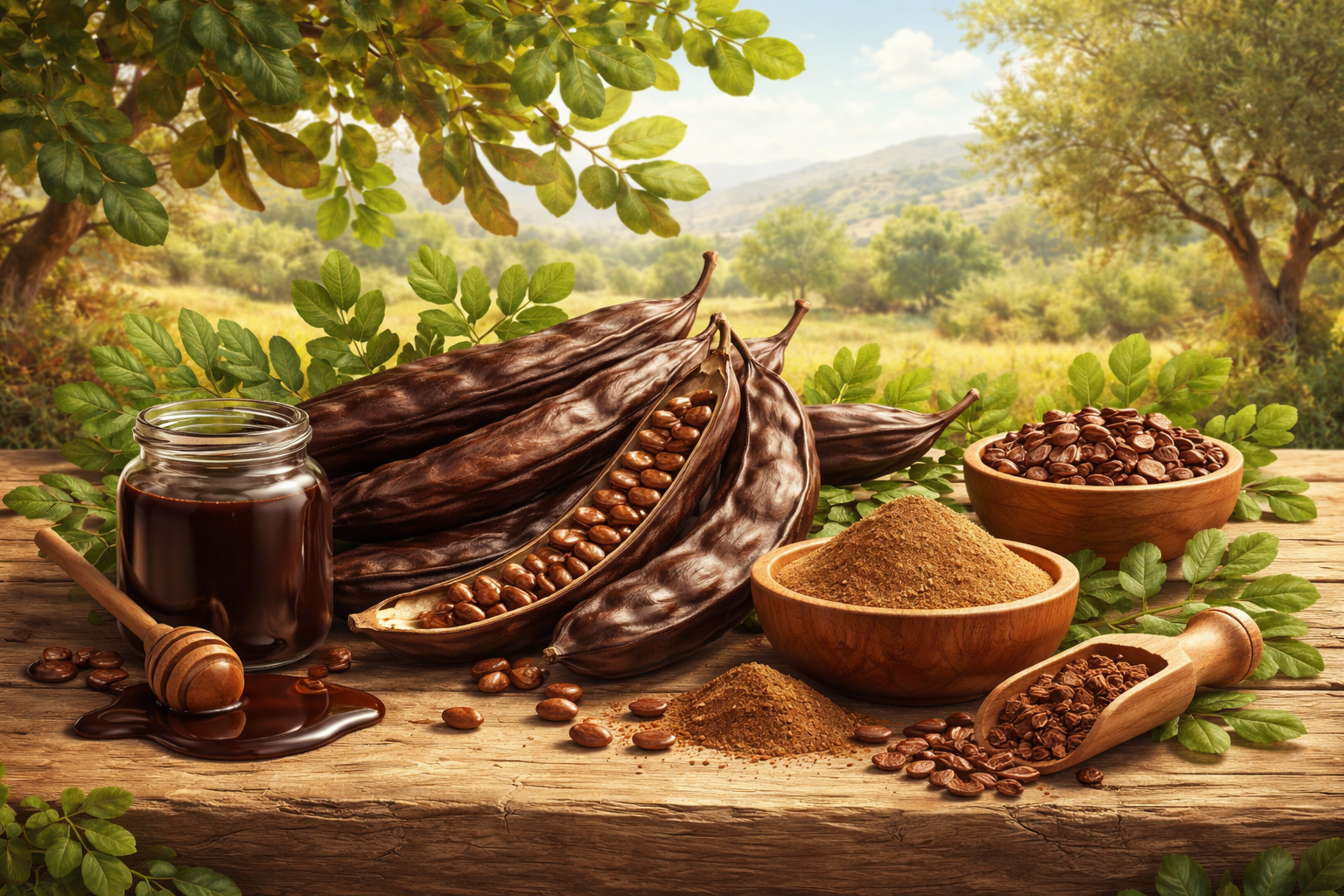
The Society of Flavor Chemists requires certified flavorists to be able to identify the plant part used, derivatives, organoleptic characteristics, and major chemical component(s) characterizing the aroma and flavor of the 80 natural flavorings listed on its syllabus for the qualification test and interview. St. John's Bread is included among these essential items.
Introduction
St. John's Bread, more commonly known as carob (Ceratonia siliqua L.), is the fruit (pod) of an evergreen tree belonging to the Fabaceae (legume) family. Native to the Mediterranean region, the carob tree has been cultivated for over 4,000 years and holds significant historical and cultural importance . The name "St. John's Bread" derives from the tradition that John the Baptist sustained himself on carob pods and wild honey while in the wilderness . The word "carat" (the unit of gemstone weight) originates from the practice of weighing precious stones against carob seeds, which are remarkably consistent in weight .
For flavorists, carob offers a naturally sweet, warm, and roasted profile with distinct notes of caramel, malt, and a subtle cocoa-like character. Its flavor is uniquely its own—often described as a blend of toasted grain, honey, and mild chocolate with a pleasant sweetness that requires no added sugar in many applications . Carob is naturally caffeine-free and contains no theobromine (the stimulant found in chocolate), making it suitable for products targeting health-conscious consumers and even dogs .
The key to carob's flavor is its high natural sugar content (40–60% total sugars, predominantly sucrose) and the development of roasted, caramel, and nutty notes during thermal processing . Roasting is essential for developing the characteristic carob flavor profile, with different roast levels producing distinct sensory characteristics—from sweet and caramel-like at lower temperatures to more astringent and coffee-like at higher temperatures .
Plant Parts Used
The pods (fruits) are the plant part used for flavoring purposes. The following characteristics are notable:
- Source Plant: Ceratonia siliqua L., a member of the Fabaceae (legume) family, native to the Mediterranean region .
- Pod Description: The carob pod is a dark brown, leathery, indehiscent legume, typically 10–25 cm long, containing 10–20 seeds surrounded by a sweet, edible pulp .
- Pod Composition: Ripe carob pods consist of approximately 80–90% pulp (kibbles) and 10–20% seeds (kernels) .
- Seeds: Carob seeds (locust beans) are hard, dark brown, and surrounded by a white, translucent endosperm. The endosperm is processed into locust bean gum (LBG, E410) , a widely used thickening and stabilizing agent .
- Harvesting: Carob pods are harvested in late summer to autumn (August–October) when fully ripe and dark brown .
The pulp (kibbles) is the primary material for flavor applications. The seeds are used for locust bean gum production, with the pulp being a byproduct of this process .
Derivatives
Carob is commercially available in several forms. The following details include technical specifications important for procurement and formulation.
Carob Powder (Roasted)
Production Method: Carob pods are cleaned, the seeds are removed, and the pulp (kibbles) is roasted at various temperatures (typically 110–150°C) and then ground to a fine powder . Roasting is essential for developing the characteristic cocoa-like aroma and caramelized flavor notes .
Description: Light brown to dark brown free-flowing powder with a characteristic sweet, roasted, caramel-like, and mildly cocoa-like aroma. The powder is naturally sweet and contains no caffeine or theobromine .
Technical Notes: The roasting temperature significantly affects the flavor profile. Lower roasting temperatures (110°C) produce sweeter, more caramel-like products; higher temperatures (150°C) produce more astringent, coffee-like, and roasted notes . Total polyphenol content and antioxidant activity increase with roasting temperature .
Carob Syrup (Carob Molasses, "Pekmez")
Production Method: Carob pods are simmered in water, and the liquid is concentrated by evaporation to a thick syrup. Traditionally used in Mediterranean and Middle Eastern cuisines .
Description: Dark brown, thick, viscous liquid with a naturally sweet, caramel-like, slightly metallic, and roasted aroma. Contains high levels of sucrose, glucose, and fructose .
Technical Notes: Carob syrup has a pH around 5 (slightly acidic) and is rich in total phenolics, flavonoids, and condensed tannins . Sensory analysis reveals aromatic notes of caramel and metallic, with sweetness and astringency as dominant taste characteristics .
Carob Extract (Liquid)
Production Method: Water, alcohol, or hydroalcoholic extraction of carob pods. Used in beverage and flavor applications.
Description: Dark brown liquid with characteristic sweet, roasted, carob aroma. Contains the water-soluble sugars, polyphenols, and flavor compounds.
Technical Notes: Hydroalcoholic extraction (e.g., 50% ethanol) is used for carob liqueur production and yields a complex aroma profile dominated by esters (ethyl hexanoate, ethyl octanoate, ethyl butanoate) and alcohols .
Carob Concentrate (Juice)
Production Method: Extraction of carob pods with water, followed by concentration. Used as a natural sweetener and flavor base.
Description: Dark brown viscous liquid with intense sweet, roasted, caramel-like aroma.
Technical Notes: The traditional Middle Eastern beverage "kharoub" is made by simmering carob pods in water, sweetening with sugar or maple syrup, and often adding rose water for fragrance .
Locust Bean Gum (LBG, E410)
Production Method: Milling and purification of the endosperm of carob seeds.
Description: White to off-white powder with neutral flavor and odor. Used as a thickening, stabilizing, and gelling agent in food products.
Technical Notes: LBG is not a flavoring agent but is included here as a major derivative of carob. It has a neutral flavor profile and does not contribute the characteristic carob taste .
Carob-Based Prebiotic Fiber (e.g., CarobBiome)
Production Method: Upcycled carob pulp processed to isolate the prebiotic fiber components .
Description: Neutral-flavored, heat-stable fiber ingredient used in functional foods, meal replacements, and shakes .
Organoleptic Characteristics
Aroma Profile (Roasted Carob Powder)
When evaluated, roasted carob powder reveals a sweet, warm, and complex aromatic profile:
- Primary Note: Sweet, roasted, caramel-like, malt-like
- Caramel: Sweet, burnt-sugar notes (from Maillard reaction products)
- Cocoa-Like: Mild, roasted, chocolate-like aroma (less bitter than cocoa)
- Toasted: Nutty, warm, cereal-like
- Sweet: Pronounced natural sweetness (from sucrose)
- Astringent: Slight drying sensation (more pronounced at higher roast temperatures)
- Coffee-Like: Roasted, bitter notes (at higher roast temperatures)
- Metallic: Slight metallic note (characteristic of carob)
The overall aroma is often described as "sweet, roasted, and caramel-like with a mild cocoa-like character and a pleasant natural sweetness."
Aroma Profile (Carob Syrup)
When evaluated, carob syrup reveals a more concentrated, intense aromatic profile:
- Primary Note: Sweet, caramel, roasted
- Caramel: Pronounced, rich, burnt-sugar
- Metallic: Distinct, characteristic carob note
- Sweet: Intense, honey-like
- Roasted: Warm, toasted
- Astringent: Slight drying sensation
Taste Characteristics
At typical usage levels, carob provides:
- Sweet: Pronounced, pleasant natural sweetness (40–60% total sugars)
- Roasted: Warm, toasted notes (from roasting)
- Caramel: Sweet, burnt-sugar character
- Cocoa-Like: Mild, chocolate-like taste (less bitter)
- Astringent: Slight drying sensation (more pronounced in darker roasts)
- Bitter: Very subtle (much less than cocoa)
- Nutty: Toasted, warm
The Key to Carob's Unique Flavor
Carob's characteristic sweet, roasted, caramel-like flavor comes from a combination of its natural sugar content and Maillard reaction products formed during roasting:
Primary Components (Non-Volatile):
- Sucrose (30–40%): The primary sugar; provides natural sweetness
- Glucose and Fructose (5–15%): Additional simple sugars that participate in Maillard reactions during roasting
- Dietary Fiber (20–40%): Provides body and texture
- Polyphenols (Total phenolic content: 710–843 μg GAE/mL in drinks): Contribute astringency and antioxidant activity
Key Aroma Compounds (Volatile, Formed During Roasting):
- Pyrazines (e.g., 2-methylpyrazine, 2,5-dimethylpyrazine): Contribute roasted, nutty, cocoa-like notes (formed via Maillard reaction)
- Furans (e.g., furfural, 5-methylfurfural): Contribute caramel, sweet, bready notes
- Oxygenated Heterocycles: Formed during roasting; contribute sweet, roasted aroma
- 2-Methylbutanal and 3-Methylbutanal: Key compounds for chocolate-like aroma; produced via enzymatic treatment of proteins
- Esters (in alcoholic macerates): Ethyl hexanoate, ethyl octanoate, ethyl butanoate contribute fruity, sweet notes
Major Chemical Components
Key Compositional Data (Carob Pulp)
| Component | Typical Percentage | Function | Notes |
|---|---|---|---|
| Total Sugars | 40–60% | Sweetness | Primarily sucrose (approx. 30%) |
| Sucrose | 30–40% | Sweetness | Dominant sugar |
| Glucose/Fructose | 5–15% | Sweetness, Maillard precursors | |
| Dietary Fiber | 20–40% | Texture, body | |
| Protein | 3–4% | Low; Maillard reaction precursor | |
| Lipids (Fat) | 0.4–0.8% | Very low | |
| Moisture | 5–15% | Varies with processing | |
| Ash (Minerals) | 1.5–2.0% | Mineral content | Calcium, potassium, magnesium, iron |
Key Aroma Compounds (Roasted Carob)
| Compound Class | Examples | Contribution | Formation |
|---|---|---|---|
| Pyrazines | 2-Methylpyrazine, 2,5-Dimethylpyrazine | Roasted, nutty, cocoa-like | Maillard reaction |
| Furans | Furfural, 5-Methylfurfural | Caramel, sweet, bready | Caramelization, Maillard |
| Aldehydes | 2-Methylbutanal, 3-Methylbutanal | Cocoa-like, roasted | Strecker degradation |
| Oxygenated Heterocycles | Various | Sweet, roasted | Maillard reaction |
| Esters (maceration) | Ethyl hexanoate, ethyl octanoate, ethyl butanoate | Fruity, sweet, brandy-like | Fermentation/maceration |
Comparison: Carob vs. Cocoa
| Characteristic | Carob | Cocoa |
|---|---|---|
| Caffeine | None | Present (2–7 mg/g) |
| Theobromine | None | Present (10–20 mg/g) |
| Fat Content | 0.4–0.8% (very low) | 10–20% (cocoa butter) |
| Natural Sweetness | High (40–60% sugars) | Low |
| Bitterness | Low | High (from alkaloids) |
| Astringency | Moderate (higher with roasting) | High |
| Flavor Profile | Sweet, roasted, caramel, mild cocoa | Bitter, rich, complex chocolate |
| Allergenicity | Low; not a common allergen | Low; but contains stimulants |
Applications in Flavoring
Regulatory Status
Carob and its derivatives are approved as natural flavoring substances and food ingredients:
- United States: Carob powder is generally recognized as safe (GRAS). Locust bean gum (E410) is an approved food additive. Carob has no FEMA number but is widely used as a food ingredient.
- European Union: Permitted for use in food flavorings under Regulation (EC) No 1334/2008. Locust bean gum is authorized as E410.
- China: Approved food ingredient.
Typical Usage Levels (mg/kg or %)
The following usage levels are based on industry standards:
| Application | Carob Powder (%) | Carob Syrup (%) | Carob Extract (mg/kg) |
|---|---|---|---|
| Non-alcoholic beverages | 1–5 | 5–15 | 500–5,000 |
| Alcoholic beverages (liqueurs) | N/A | 10–20 | 10,000–50,000 (maceration) |
| Baked goods | 5–20 | 5–10 | 2,000–10,000 |
| Confectionery (chocolate alternatives) | 10–30 | 5–15 | N/A |
| Frozen dairy | 2–8 | 5–10 | 500–2,000 |
| Sauces and marinades | 1–5 | 5–15 | 500–2,000 |
| Smoothies and shakes | 1–3 | 2–5 | 100–500 |
Note: These ranges represent typical industry usage. Carob is naturally sweet, so less additional sweetener may be required.
Usage & Dosage Best Practices
Flavorists should observe the following guidelines when working with carob:
Select the Correct Form:
- Carob Powder: Use for dry applications (baked goods, confectionery, dry mixes). Roasted powder has a richer flavor than raw .
- Carob Syrup: Use for liquid applications (beverages, sauces, glazes). Provides natural sweetness and caramel notes.
- Carob Extract: Use for concentrated flavor in beverages and confectionery.
Roasting Level Matters: Carob can be roasted to varying degrees. Light roasts produce sweeter, more caramel-like profiles; dark roasts produce more astringent, coffee-like, and roasted notes . Select the appropriate roast level for the target application.
Natural Sweetness: Carob is naturally sweet (40–60% sugars). When using carob in formulations, reduce added sugars accordingly .
Cocoa Substitution: Carob powder can be substituted for cocoa powder at a 1:1 ratio, though the flavor profile will be different (sweeter, less bitter, milder) .
Flavor Synergies: Carob pairs exceptionally well with:
- Vanilla: Enhances sweetness and rounds the profile
- Cinnamon: Adds warmth and complexity
- Nutmeg: Adds depth
- Orange: Citrus brightness (classic pairing in Mediterranean desserts)
- Rose water: Adds floral fragrance (traditional in Middle Eastern carob drinks)
- Coffee: Enhances roasted notes
- Almond: Adds nuttiness
- Coconut: Adds tropical creaminess
- Honey: Enhances natural sweetness
Flavor Applications: Carob serves as a primary flavor or modifier in:
- Chocolate alternatives: Carob bars, carob chips, carob powder as cocoa substitute
- Beverages: Carob juice ("kharoub"), carob smoothies, carob lattes, carob liqueurs
- Baked goods: Carob brownies, muffins, cookies, cakes, breads
- Confectionery: Carob sweets, energy balls, truffles
- Sauces and glazes: Carob fudge sauce, glazes for desserts
- Savory: Carob powder added to tomato-based sauces (adds depth, balances acidity)
- Dairy: Carob ice cream, yogurt, shakes
- Functional foods: Prebiotic fiber, low-glycemic sweeteners
Fragrance Applications
Carob is not commonly used in fine fragrance but may appear in:
- Gourmand fragrances: For sweet, caramel, roasted notes
- Natural perfumery: As a base note in some niche compositions
Example Formula: Carob Beverage (Kharoub)
The following formula demonstrates the use of carob pods in a traditional Middle Eastern beverage.
Carob Beverage Concentrate (Traditional Kharoub)
| Component | Quantity | Function | Technical Note |
|---|---|---|---|
| Dried carob pods (chopped) | 2 cups | Primary flavor | Seeds included |
| Water | 4 cups | Solvent | |
| Maple syrup (or sugar) | 1/4 cup | Sweetener (adjust to taste) | Natural caramel notes |
| Rose water (optional) | 1 tsp | Fragrance | Adds floral note |
| Total | ~4 cups |
Method:
- Chop carob pods into small pieces (seeds included) .
- Combine carob, sweetener, and water in a pot. Bring to a boil.
- Reduce heat, cover, and simmer for 30 minutes .
- Remove from heat. Stir in rose water if using.
- Let cool to room temperature to infuse further.
- Strain through a muslin cloth into a jug.
- Chill and serve over ice .
Alternative: Carob Brownie Flavor
| Component | Percentage (%) | Function |
|---|---|---|
| Carob powder (roasted) | 40.0 | Primary flavor |
| Vanilla flavor | 15.0 | Sweet rounding |
| Cinnamon | 5.0 | Warm spice |
| Walnut flavor | 10.0 | Nutty note |
| Coconut oil flavor | 10.0 | Richness |
| Sweetener (maple or brown sugar) | 20.0 | Sweetness |
| Total | 100.0 |
Usage Instructions: Use at 5–20% in brownie or baked good formulations.
Alternative: Carob Syrup for Beverages
| Component | Percentage (%) | Function |
|---|---|---|
| Carob syrup | 80.0 | Primary sweetener and flavor |
| Vanilla extract | 5.0 | Sweet rounding |
| Cinnamon extract | 2.0 | Warmth |
| Water | 13.0 | Viscosity adjustment |
| Total | 100.0 |
Usage Instructions: Use at 1–2 tablespoons per beverage serving.
Shelf Stability & Storage
Understanding the stability of carob ingredients is critical for maintaining flavor quality.
Carob Powder
Storage Recommendation: Store in airtight containers in a cool, dry place away from light. The powder is hygroscopic .
Stability Notes: Carob powder will last at least one year if kept free of moisture . Roasted powders may have a slightly shorter shelf life due to higher lipid content.
Carob Syrup
Storage Recommendation: Store in airtight containers in a cool, dry place. Refrigeration after opening is recommended.
Stability Notes: Syrup has a long shelf life due to high sugar content (osmotic stability). May crystallize over time; warming will liquefy.
Carob Pods (Whole)
Storage Recommendation: Store in airtight containers in a cool, dry place.
Stability Notes: Whole pods maintain quality for 1–2 years if kept dry.
Stability in Finished Products
- Heat stability: Carob flavor compounds are heat-stable; suitable for baked goods and processed products.
- pH stability: Stable across typical food pH range (3–8).
- Oxidation: Carob contains polyphenols with antioxidant properties; relatively stable.
- Light sensitivity: Protect from light to prevent color degradation.
Safety Considerations
General Safety
Carob and its derivatives are generally recognized as safe (GRAS) for use as flavorings and food ingredients.
Important Considerations
- Caffeine-Free: Carob contains no caffeine or theobromine, making it safe for individuals sensitive to stimulants and safe for dogs .
- Oxalic Acid: Carob does not contain oxalic acid (unlike chocolate), which can inhibit calcium absorption .
- Allergies: Carob is not a common allergen; individuals with legume allergies (peanuts, soy) should exercise caution as carob is in the Fabaceae family.
- Pregnancy: Safe in food amounts.
- Gastrointestinal Effects: High fiber content may cause digestive discomfort in sensitive individuals if consumed in large quantities.
Quality Control & Sourcing
Flavorists should implement the following quality checks when sourcing carob ingredients.
Essential Requirements for Certificates of Analysis (COA)
For Carob Powder:
- Botanical identity: Ceratonia siliqua L.
- Origin: Spain, Morocco, Italy, Portugal, Turkey, Greece
- Roast level: Specify (light, medium, dark)
- Total sugar content: 40–60%
- Moisture content: <5–10%
- Physical appearance: Light to dark brown powder
For Carob Syrup:
- Brix: 70–80°
- pH: 4.5–5.5
- Total phenolics: Specify (typically 700–850 μg GAE/mL)
Common Adulteration Risks
- Carob powder: Adulteration with other flours or fillers; addition of caramel color; use of raw (unroasted) powder sold as roasted
- Carob syrup: Dilution with sugar syrups; addition of caramel color; mislabeling of origin
Sourcing Considerations
| Origin | Characteristics |
|---|---|
| Spain | Largest producer of carob pulp; high quality |
| Morocco | Leading producer of carob seeds; traditional processing |
| Italy, Portugal | Traditional production; good quality |
| Turkey | Significant producer; traditional "pekmez" (carob molasses) production |
Traditional and Culinary Applications
Traditional Uses
- Middle Eastern: Carob juice ("kharoub") is a traditional Ramadan and summer beverage, often flavored with rose water .
- Turkish: Carob molasses ("pekmez") is a traditional sweetener and health food .
- Mediterranean: Carob powder used in baked goods, breads, and as a cocoa substitute.
- Ancient: Carob pods were used as food during times of scarcity; seeds used for weighing gems (origin of "carat") .
Culinary Pairings
Carob pairs well with:
- Spices: Cinnamon, nutmeg, cardamom, ginger
- Florals: Rose water, orange blossom water
- Fruits: Orange, banana, berry, fig, date
- Nuts: Almond, walnut, hazelnut
- Dairy: Yogurt, milk, cream
- Vanilla: Sweet, creamy synergy
Summary
St. John's Bread (Carob, Ceratonia siliqua) is a unique natural flavoring prized for its naturally sweet, roasted, caramel-like, and mildly cocoa-like character. Its essential character comes from its high natural sugar content (40–60%) and Maillard reaction products formed during roasting. Carob is naturally caffeine-free and contains no theobromine, making it an appealing alternative to cocoa for health-conscious applications.
Key characteristics:
- Primary components: Sucrose (30–40%), dietary fiber (20–40%), Maillard reaction products (pyrazines, furans)
- Aroma profile: Sweet, roasted, caramel, malt-like, mild cocoa
- Typical usage: Powder 1–20%; syrup 5–20%; extract 100–50,000 mg/kg
- Primary applications: Cocoa alternative, beverages, baked goods, confectionery, sauces
Critical considerations for flavorists:
- Naturally sweet: Carob contains 40–60% sugar; reduce added sweeteners accordingly.
- Roasting is essential: Raw carob is bland; roasting develops the characteristic flavor profile.
- Roast level affects profile: Light roasts are sweeter and more caramel-like; dark roasts are more astringent and coffee-like .
- Caffeine-free: Carob contains no stimulants, suitable for caffeine-restricted products and dogs .
- Cocoa substitute: Carob powder can replace cocoa 1:1, but flavor profile is sweeter and less bitter.
- Flavor synergies: Pairs with cinnamon, vanilla, orange, rose water, and nuts.
- Sourcing: Mediterranean carob (Spain, Morocco, Italy) is traditionally considered the highest quality.
References and Further Reading
The information presented in this guide is synthesized from:
- Regulatory documents from FDA and international food safety authorities.
- Published scientific literature on Ceratonia siliqua .
- Industry technical data from food science research .
- Traditional culinary knowledge documented in public domain sources .
Key References:
- Elfazazi, K., et al. (2020). Physicochemical criteria, bioactive compounds and sensory quality of Moroccan traditional carob drink. Materials Today: Proceedings .
- Benchikh, Y., et al. (2017). Influence of Roasting on Sensory, Antioxidant, Aromas, and Physicochemical Properties of Carob Pod Powder. Journal of Food Quality .
- National University of Singapore (2025). Novel techniques transform carob pulp into cocoa alternative .
- Hanousek Cica, K., et al. (2020). Physicochemical and aromatic characterization of carob macerates. Food Science & Nutrition .
Disclaimer: This article is for educational and training purposes only. When using carob in commercial products, always verify current regulatory status in your jurisdiction, conduct appropriate safety assessments, and source ingredients from reputable suppliers who can provide documentation of botanical identity, origin, and quality. The formulas and usage levels provided are illustrative examples and may require adjustment based on specific product requirements and regulatory compliance.
###