Sweet Birch (Black Birch) as a Natural Flavoring: A Comprehensive Technical Guide
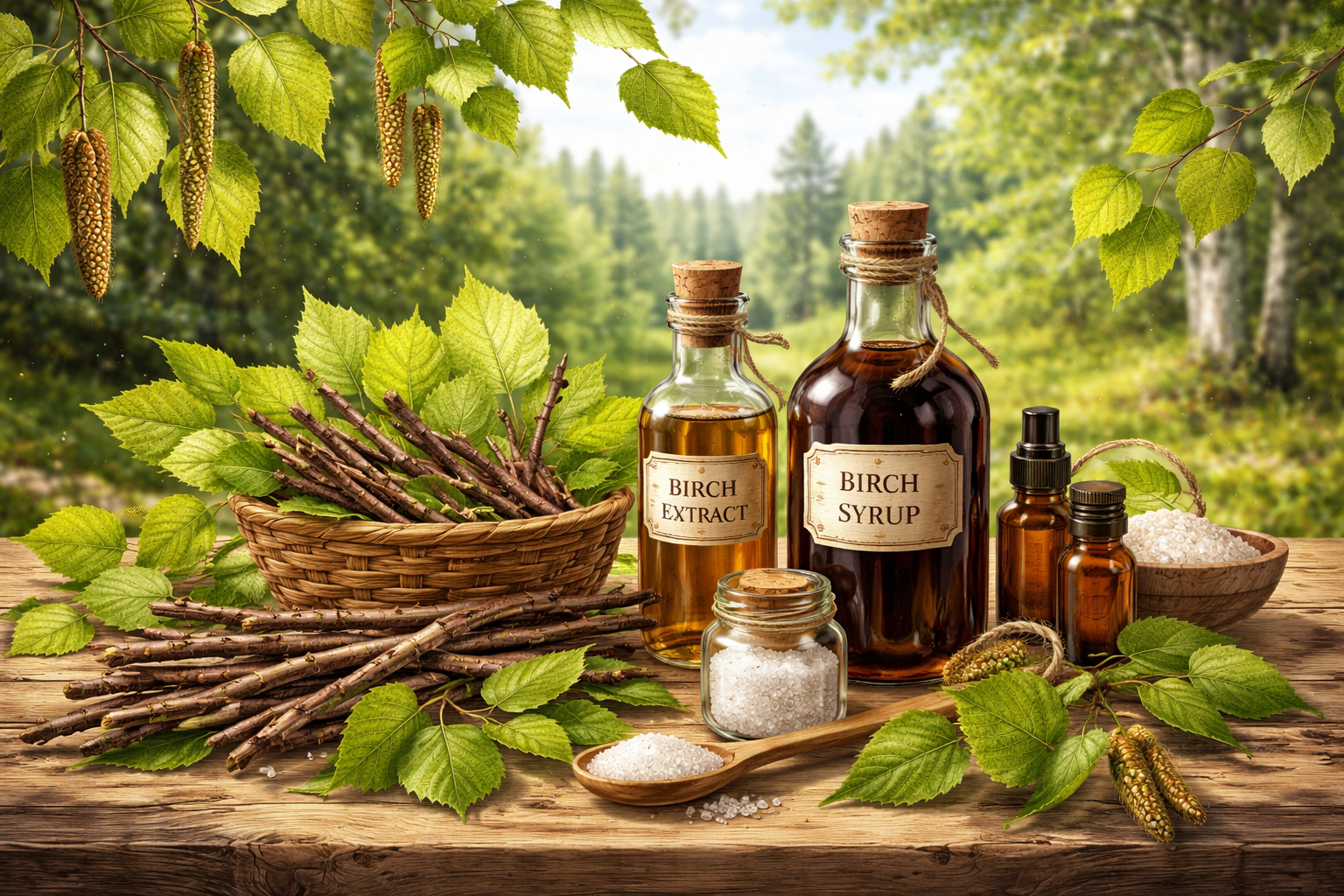
The Society of Flavor Chemists requires certified flavorists to be able to identify the plant part used, derivatives, organoleptic characteristics, and major chemical component(s) characterizing the aroma and flavor of the 80 natural flavorings listed on its syllabus for the qualification test and interview. Sweet Birch is included among these essential items.
Introduction
Sweet Birch (Betula lenta L.), also known as Black Birch, Cherry Birch, or Mahogany Birch, is a deciduous tree native to eastern North America. It is one of the primary natural sources of methyl salicylate (wintergreen oil), a compound that gives the tree its characteristic sweet, minty, wintergreen aroma. The bark, twigs, and leaves of sweet birch contain high concentrations of methyl salicylate, making it a valuable natural flavoring material .
For flavorists, sweet birch oil offers an intensely sweet, minty, and cooling character that is virtually identical to wintergreen oil (derived from Gaultheria procumbens). Both oils are composed almost entirely of methyl salicylate (98–99%), a compound that provides a strong, sweet, wintergreen-mint aroma and a distinctive cooling sensation . Sweet birch oil has been used historically in root beer, birch beer, and other traditional beverages, as well as in oral care products, confectionery, and topical analgesics .
A critical consideration for flavorists is that methyl salicylate is toxic in large quantities, and its use is subject to strict regulatory limits in food products. Additionally, sweet birch oil and wintergreen oil are chemically similar and often used interchangeably, though sweet birch oil may contain trace amounts of other compounds that give it a slightly more complex character .
Plant Parts Used
The bark (inner bark), twigs, and leaves are the plant parts used for flavoring purposes. The following characteristics are notable:
- Source Tree: Betula lenta L., a member of the Betulaceae (birch) family, native to eastern North America .
- Tree Description: A medium-sized deciduous tree, reaching 15–25 meters in height, with dark brown to black bark that has a characteristic wintergreen scent when scratched. The bark is smooth on young trees and becomes scaly with age .
- Bark Description: The inner bark (cambium layer) is the primary source of methyl salicylate. It is white to light brown, with a strong, sweet, wintergreen aroma .
- Leaves: The leaves are ovate, serrated, and also contain methyl salicylate, especially when crushed.
- Harvesting: Sweet birch is typically harvested sustainably by collecting fallen twigs and branches or by carefully harvesting bark without damaging the tree . The bark, twigs, and leaves are macerated in water and then steam-distilled to extract the essential oil .
The essential oil is obtained by steam distillation of macerated bark, twigs, and leaves. The oil is composed almost entirely of methyl salicylate (98–99%) .
Sweet Birch vs. Wintergreen: Critical Distinction
Flavorists must distinguish between sweet birch oil and wintergreen oil, as they are chemically similar but have different botanical origins.
| Characteristic | Sweet Birch Oil | Wintergreen Oil |
|---|---|---|
| Source | Betula lenta (birch tree) | Gaultheria procumbens (wintergreen plant) |
| Primary Component | Methyl salicylate (98–99%) | Methyl salicylate (98–99%) |
| Aroma Profile | Sweet, minty, wintergreen, slightly woody | Sweet, minty, wintergreen, cleaner |
| Flavor Character | Sweet, cooling, wintergreen | Sweet, cooling, wintergreen |
| Trace Components | Trace terpenes (β-caryophyllene, etc.) | Trace components differ |
| FEMA No. | 2154 (sweet birch oil) | 3113 (wintergreen oil) |
Note: Methyl salicylate from sweet birch and wintergreen are chemically identical. The oils can be used interchangeably in many applications, though sweet birch may have a slightly more complex, woody background note due to trace terpenes .
Derivatives
Sweet birch is commercially available primarily as an essential oil. The following details include technical specifications important for procurement and formulation.
Sweet Birch Oil (Methyl Salicylate)
Production Method: Steam distillation of macerated bark, twigs, and leaves of Betula lenta.
Description: Colorless to pale yellow to amber mobile liquid with a characteristic intensely sweet, minty, wintergreen, and cooling aroma. The oil has a strong, penetrating character .
Technical Notes: Yield is relatively low. The oil is composed almost entirely of methyl salicylate (98–99%) . Storage in a cool, dry place away from light is recommended.
Methyl Salicylate (Natural)
Production Method: Isolated from sweet birch oil or wintergreen oil via fractional distillation.
Description: Colorless to pale yellow mobile liquid with an intensely sweet, minty, wintergreen, cooling aroma. Chemically identical to synthetic methyl salicylate.
Technical Notes: Natural methyl salicylate is significantly more expensive than synthetic. It is used in premium natural flavor applications.
Synthetic Methyl Salicylate
Production Method: Chemical synthesis via esterification of salicylic acid with methanol.
Description: Colorless to pale yellow mobile liquid with an intensely sweet, minty, wintergreen, cooling aroma. Chemically identical to natural methyl salicylate.
Technical Notes: Widely used in commercial applications due to lower cost. Must be labeled as "artificial" in many jurisdictions.
Organoleptic Characteristics
Aroma Profile (Sweet Birch Oil)
When evaluated, sweet birch oil reveals an intensely sweet, minty, and cooling aromatic profile:
- Primary Note: Sweet, minty, wintergreen, cooling
- Methyl Salicylate Character: Sweet, minty, wintergreen, penetrating, cooling—the signature note
- Minty: Reminiscent of wintergreen, spearmint, and peppermint
- Sweet: Pronounced, candy-like sweetness
- Cooling: Intense, lingering cooling sensation
- Woody: Slight, dry, balsamic undertones (from trace terpenes)
- Herbaceous: Subtle, green undertones
The overall aroma is often described as "intensely sweet, minty, and wintergreen-like with a powerful cooling sensation and a clean, penetrating character."
Taste Characteristics
At typical usage levels, sweet birch provides:
- Sweet: Pronounced, candy-like sweetness
- Minty: Wintergreen, minty character
- Cooling: Intense, long-lasting cooling sensation
- Bitter: Very subtle, pleasant bitterness
- Astringent: Slight drying sensation
The Key to Sweet Birch's Unique Flavor
Sweet birch's characteristic sweet, minty, cooling flavor comes from methyl salicylate, a benzoate ester:
Primary Component:
- Methyl Salicylate (98–99%): A benzoate ester that provides sweet, minty, wintergreen, and intensely cooling notes—the signature character. Methyl salicylate activates TRPA1 and TRPV1 receptors, producing a cooling sensation similar to but distinct from menthol .
Supporting Components (Trace):
- β-Caryophyllene: Contributes woody, spicy notes
- Linalool: Contributes fresh, floral notes (trace)
- Other Terpenes: Contribute to the subtle background complexity
Major Chemical Components
Key Aroma Compounds (Sweet Birch Oil)
| Component | Typical Percentage | Organoleptic Contribution | CAS No. |
|---|---|---|---|
| Methyl Salicylate | 98–99% | Sweet, minty, wintergreen, intensely cooling; characteristic note | 119-36-8 |
| β-Caryophyllene | trace–0.5% | Woody, spicy | 87-44-5 |
| Linalool | trace | Fresh, floral | 78-70-6 |
| Other Terpenes | trace | Minor background notes | Various |
Comparison: Methyl Salicylate vs. Menthol
| Characteristic | Methyl Salicylate | Menthol |
|---|---|---|
| Source | Sweet birch, wintergreen | Peppermint, cornmint |
| Aroma Profile | Sweet, minty, wintergreen | Cool, minty, fresh |
| Cooling Sensation | Intense, penetrating, minty | Intense, minty, cooling |
| Receptor | TRPA1, TRPV1 | TRPM8 |
| Primary Use | Root beer, oral care, topical analgesics | Oral care, confectionery, cooling |
Applications in Flavoring
Regulatory Status
Sweet birch oil and methyl salicylate are approved as flavoring substances with strict usage limits:
- United States: Sweet birch oil is listed under 21 CFR §172.510 as a natural flavoring substance (FEMA No. 2154). Methyl salicylate is also GRAS (FEMA No. 2745).
- European Union: Permitted for use in food flavorings under Regulation (EC) No 1334/2008, with strict maximum usage levels due to toxicity concerns.
- China: Approved food flavor under GB 2760.
Critical Safety Note: Methyl salicylate is toxic in large quantities. The estimated lethal dose is approximately 10–30 mL in adults, and ingestion of as little as 4 mL has caused poisoning in children . The FEMA Expert Panel has evaluated methyl salicylate and established maximum usage levels for food products.
Typical Usage Levels (mg/kg)
The following usage levels are based on FEMA GRAS determinations and industry standards. These are maximum recommended levels and should not be exceeded.
| Application | Methyl Salicylate (mg/kg) | Sweet Birch Oil (mg/kg) |
|---|---|---|
| Non-alcoholic beverages | 10–60 | 10–60 |
| Alcoholic beverages | 5–40 | 5–40 |
| Baked goods | 10–50 | 10–50 |
| Hard candy | 20–100 | 20–100 |
| Frozen dairy | 10–50 | 10–50 |
| Gelatins and puddings | 10–50 | 10–50 |
| Soft candy | 10–80 | 10–80 |
| Chewing gum | 100–500 | 100–500 |
| Chewing gum (hard-coated) | 100–1,000 | 100–1,000 |
| Root beer / birch beer | 10–100 | 10–100 |
Note: These ranges represent maximum recommended levels. Start at the lower end and adjust upward.
Usage & Dosage Best Practices
Flavorists must observe the following critical guidelines when working with sweet birch:
CRITICAL SAFETY: METHYL SALICYLATE TOXICITY
Methyl salicylate is toxic if ingested in large quantities. The estimated lethal dose is 10–30 mL in adults; ingestion of as little as 4 mL has caused poisoning in children . Use only at approved flavoring levels.
Start Low, Titrate: Sweet birch oil is extremely potent. Begin at the lower end of typical usage ranges (e.g., 10–20 mg/kg in beverages) and adjust upward. Never exceed FEMA maximum levels.
Pre-Dilution: Pre-dilute in ethanol or propylene glycol for easier handling and more even dispersion.
Root Beer and Birch Beer: Sweet birch oil is a classic ingredient in root beer and birch beer formulations, providing the characteristic wintergreen note .
Flavor Synergies: Sweet birch pairs exceptionally well with:
- Root beer: Essential component in root beer and birch beer
- Spearmint: Adds cooling complexity
- Peppermint: Enhances cooling effect
- Vanilla: Adds sweetness and rounds the profile
- Anise: Adds licorice-like depth
- Sassafras: Classic root beer pairing
- Wintergreen: Can be used interchangeably
- Cinnamon: Adds warmth
- Citrus: Adds brightness
Flavor Applications: Sweet birch serves as a primary flavor or modifier in:
- Root beer: Essential in traditional root beer formulations
- Birch beer: Classic beverage, particularly in the northeastern United States
- Oral care: Toothpaste, mouthwash (in small amounts)
- Confectionery: Chewing gum, hard candy
- Pharmaceutical: Topical analgesics (not for ingestion)
- Lozenges: Throat lozenges (limited use)
Example Formula: Root Beer Flavor Concentrate
The following formula demonstrates the use of sweet birch oil in a classic root beer flavor system.
Root Beer Flavor Concentrate (Alcohol-Based)
| Component | Percentage (%) | Function | Technical Note |
|---|---|---|---|
| Sweet birch oil | 25.0 | Primary wintergreen note | Provides characteristic root beer wintergreen character |
| Sassafras oil (or safrole-free substitute) | 20.0 | Primary root beer note | Traditional root beer flavor |
| Vanillin (natural) | 15.0 | Sweet vanilla | Adds creaminess |
| Anise oil | 10.0 | Sweet, licorice note | Adds depth |
| Clove oil | 5.0 | Spicy accent | Adds warmth |
| Cassia oil | 5.0 | Warm spice | Adds complexity |
| Molasses flavor | 10.0 | Sweet, caramel note | Adds depth |
| Ethanol | 10.0 | Solvent | Food grade |
| Total | 100.0 |
Usage Instructions: Use at 0.1–0.3% in finished root beer beverages. Combine with carbonated water and sweetener.
Alternative: Birch Beer Flavor Concentrate
| Component | Percentage (%) | Function |
|---|---|---|
| Sweet birch oil | 60.0 | Primary wintergreen character |
| Vanillin (natural) | 20.0 | Sweet vanilla |
| Anise oil | 10.0 | Sweet, licorice note |
| Cinnamon oil | 5.0 | Warm spice |
| Clove oil | 5.0 | Spicy accent |
| Total | 100.0 |
Usage Instructions: Use at 0.1–0.3% in finished birch beer beverages.
Alternative: Sweet Birch Oil Pre-Dilution for Lab Use
| Component | Percentage (%) | Function |
|---|---|---|
| Ethanol (190 proof) | 90.0 | Solvent |
| Sweet birch oil | 10.0 | Active ingredient |
Method: Mix thoroughly. Store in amber glass bottles in a cool, dark place. Use 0.1–1.0% in flavor formulations for easy handling.
Shelf Stability & Storage
Understanding the stability of sweet birch oil is critical for maintaining flavor quality.
Sweet Birch Oil
Storage Recommendation: Store in a full, airtight container in a cool, dry place away from light. Refrigeration is recommended for long-term storage.
Stability Notes: Methyl salicylate is relatively stable but can hydrolyze in the presence of water, forming salicylic acid and methanol. Hydrolysis is accelerated by heat and alkaline conditions. Shelf life is typically 24–48 months when properly stored.
Stability in Finished Products
- Heat stability: Moderate; methyl salicylate can volatilize during high-temperature processing.
- pH stability: Stable in neutral to slightly acidic conditions; hydrolyzes under strong alkaline conditions.
- Oxidation: Relatively stable.
- Light sensitivity: Protect from light.
Safety Considerations (CRITICAL)
General Safety
Sweet birch oil is generally recognized as safe (GRAS) for use as a flavoring at approved levels (FEMA 2154). However, methyl salicylate is toxic in large quantities and must be used with extreme caution.
Critical Toxicity Information
- Methyl Salicylate Toxicity: Methyl salicylate is a known toxin. The estimated lethal dose is 10–30 mL in adults; ingestion of as little as 4 mL has caused poisoning in children .
- Aspirin Toxicity: Methyl salicylate is metabolized to salicylic acid (aspirin) in the body. Ingestion of large amounts can cause salicylate poisoning, with symptoms including nausea, vomiting, hyperventilation, tinnitus, metabolic acidosis, and potentially death .
- Children: Methyl salicylate is particularly dangerous for children. Products containing significant amounts should be kept out of reach .
- Pregnancy: Use in food amounts only; concentrated oil should be avoided during pregnancy .
- Skin Absorption: Methyl salicylate is absorbed through the skin; topical products should be used with caution, especially in children.
Maximum Usage Levels (FEMA)
The FEMA Expert Panel has established maximum usage levels for methyl salicylate in food products. These levels should not be exceeded .
Protective Measures
- Eye protection: Wear safety goggles when handling concentrated oil.
- Respiratory protection: Use in a well-ventilated area.
- Gloves: Wear chemical-resistant gloves (nitrile or neoprene).
- Protective clothing: Wear a lab coat or apron.
Quality Control & Sourcing
Flavorists should implement the following quality checks when sourcing sweet birch oil.
Essential Requirements for Certificates of Analysis (COA)
For Sweet Birch Oil:
- Botanical identity: Betula lenta L.
- Origin: Eastern North America
- Methyl salicylate content: 98–99% (GC analysis)
- Physical properties: Specific gravity (1.170–1.190), refractive index (1.530–1.540)
Common Adulteration Risks
- Dilution with synthetic methyl salicylate
- Substitution with wintergreen oil (similar but different botanical source)
- Extension with other solvents or carriers
- Mislabeling of origin
Sourcing Considerations
| Source | Characteristics |
|---|---|
| Eastern North America | Traditional origin; high-quality |
| Wild-harvested | Requires sustainable practices |
| Cultivated | Limited cultivation |
Traditional and Historical Applications
Traditional Uses
- Root Beer: Sweet birch oil is a classic ingredient in traditional root beer and birch beer formulations.
- Birch Beer: A popular beverage in the northeastern United States, often made from sweet birch sap or flavored with sweet birch oil .
- Native American: Used medicinally by Native Americans for pain relief and as a fever reducer .
- Topical Analgesics: Methyl salicylate is widely used in over-the-counter topical pain relievers (e.g., Bengay, Icy Hot) .
Historical Significance
Sweet birch was an important tree for Native American and early European settlers. The sap was tapped for syrup and the bark used for medicinal purposes. The tree's wintergreen scent was a reliable identifier for those in the woods.
Summary
Sweet birch (Betula lenta) is a unique natural flavoring prized for its intensely sweet, minty, wintergreen character, derived from methyl salicylate (98–99%) . It is a classic ingredient in root beer and birch beer and is used in oral care, confectionery, and topical analgesics. However, methyl salicylate is toxic in large quantities, and its use is subject to strict regulatory limits.
Key characteristics:
- Primary component: Methyl salicylate (98–99%)
- Aroma profile: Sweet, minty, wintergreen, intensely cooling
- Typical usage: 10–1,000 mg/kg (depending on application)
- Primary applications: Root beer, birch beer, oral care, confectionery
Critical considerations for flavorists:
- CRITICAL SAFETY: Methyl salicylate is toxic in large quantities. Never exceed FEMA maximum usage levels.
- Root beer essential: Sweet birch is a classic ingredient in root beer and birch beer.
- Similar to wintergreen: Sweet birch oil and wintergreen oil are chemically similar and can be used interchangeably.
- Potency: Use at low levels (10–50 mg/kg); start low and titrate.
- Stability: Relatively stable; store properly.
- Sourcing: North American sweet birch is traditionally the highest quality.
References and Further Reading
The information presented in this guide is synthesized from:
- Regulatory documents from FDA, FEMA (No. 2154), and international food safety authorities .
- Published scientific literature on Betula lenta .
- Industry technical data from major suppliers .
- Traditional knowledge documented in public domain sources .
Key References:
- FEMA Flavor Ingredient Library: Sweet Birch Oil (FEMA 2154)
- TGSC Information System: Sweet Birch Oil
- Drugs.com: Methyl Salicylate Information
Disclaimer: This article is for educational and training purposes only. When using sweet birch in commercial products, always verify current regulatory status in your jurisdiction, conduct appropriate safety assessments, and source ingredients from reputable suppliers who can provide documentation of botanical identity, origin, and quality. Methyl salicylate is toxic in large quantities; use only at approved flavoring levels and never exceed FEMA maximum levels. The formulas and usage levels provided are illustrative examples and may require adjustment based on specific product requirements and regulatory compliance. Sweet birch oil should be kept out of reach of children.
###