Noteworthy: Tropical Flavor Creation: The Chemistry of Tropical Notes
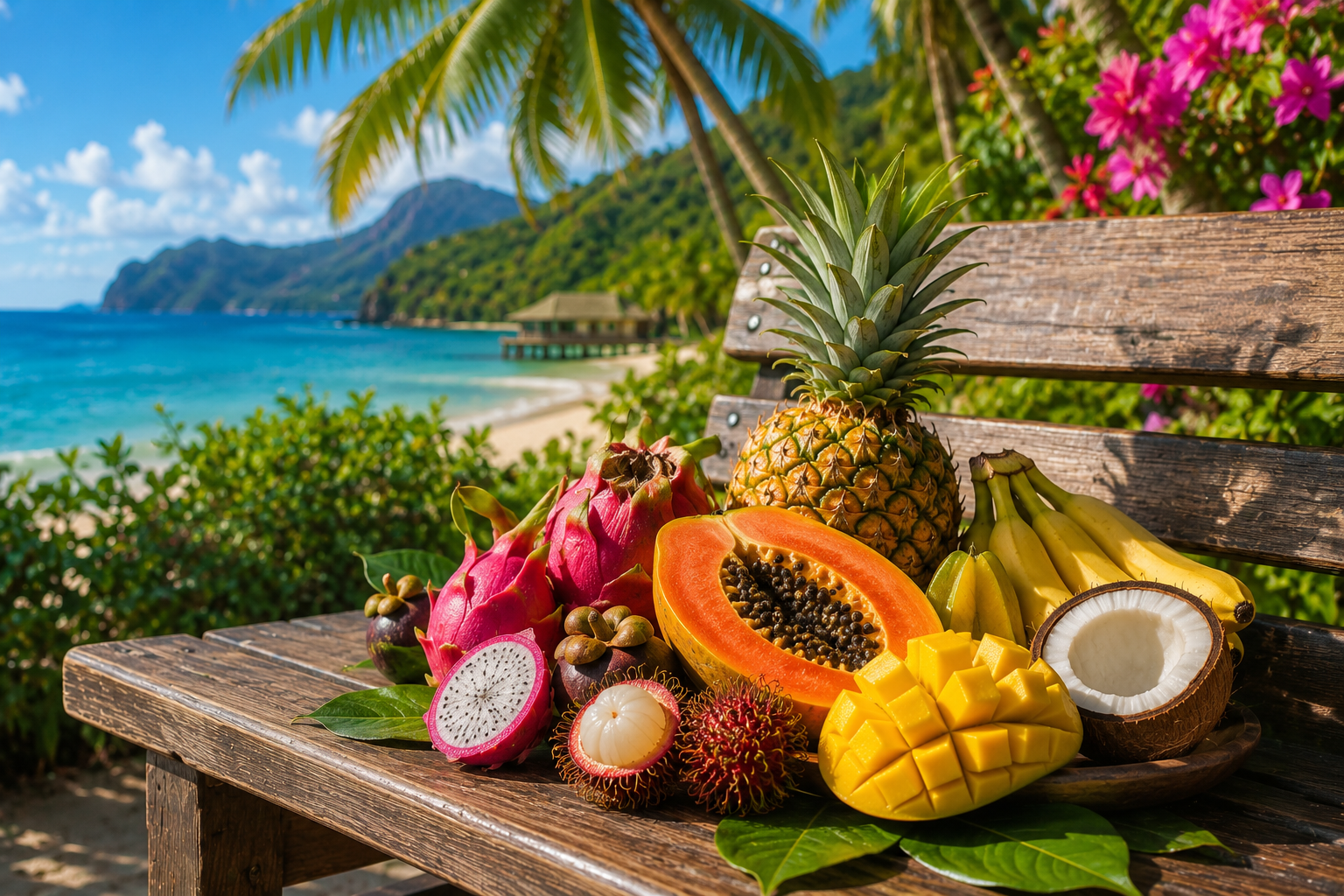
"Tropical" is not a single flavor. It is a sensory family composed of fruits from equatorial and subtropical regions, including mango, pineapple, passion fruit, guava, papaya, lychee, dragon fruit, coconut, banana, acerola, soursop, jackfruit, mangosteen, rambutan, and numerous hybrids.
From a flavorist's perspective, tropical character is primarily created through a combination of:
- Fruity esters
- Sulfur compounds
- Lactones
- Terpenes
- Green compounds
- Floral compounds
- Sweet creamy notes
- Fermentation-derived notes
The art lies in balancing these components.
1. Fruity Esters
The Foundation of Tropical Character
Most tropical fruits derive their juicy fruity impact from esters.
| Compound | Odor Description | Typical Use |
|---|---|---|
| Ethyl Butyrate | Pineapple, juicy fruit | Tropical foundation |
| Methyl Butyrate | Fresh pineapple | Top note |
| Allyl Hexanoate | Pineapple candy | High-impact tropical |
| Ethyl Hexanoate | Pineapple, apple | Body |
| Ethyl 2-Methylbutyrate | Juicy tropical fruit | Lift |
| Isoamyl Acetate | Banana | Banana notes |
| Isoamyl Butyrate | Banana-pineapple | Tropical blends |
| Ethyl Isovalerate | Sweet tropical | Fruit punch |
| Hexyl Acetate | Pear, tropical green | Freshness |
| Benzyl Acetate | Sweet tropical floral | Exotic fruits |
Typical Dosage
5–100 ppm in beverage.
2. Sulfur Compounds
The Secret Behind Real Tropical Fruits
Many authentic tropical fruits are sulfur-driven.
Without sulfur compounds, tropical flavors often taste like generic fruit punch.
Passion Fruit
| Compound | Character |
|---|---|
| 3-Mercaptohexanol | Passion fruit |
| 3-Mercaptohexyl Acetate | Passion fruit, guava |
| 4-Mercapto-4-methylpentan-2-one | Blackcurrant tropical |
| Dimethyl Sulfide | Cooked tropical fruit |
Guava
| Compound | Character |
|---|---|
| 3-Mercaptohexanol | Guava |
| 3-Mercaptohexyl Acetate | Guava flesh |
| Furfuryl Mercaptan | Tropical body |
Mango
| Compound | Character |
|---|---|
| Methional | Ripe mango |
| Dimethyl Sulfide | Mango flesh |
| Dimethyl Trisulfide | Cooked mango |
Typical Dosage
Sulfur compounds:
0.001–1 ppm
Extremely potent.
3. Lactones
Creamy Tropical Flesh Notes
Lactones create juicy ripe fruit flesh.
| Compound | Character |
|---|---|
| γ-Decalactone | Peach, mango |
| γ-Undecalactone | Mango flesh |
| γ-Dodecalactone | Coconut |
| δ-Decalactone | Creamy tropical |
| δ-Dodecalactone | Coconut cream |
| Massoia Lactone | Coconut |
Mango Systems
Often contain:
- γ-Decalactone
- γ-Undecalactone
- δ-Decalactone
These produce the characteristic ripe mango body.
Dosage
0.5–50 ppm
4. Terpenes
Brightness and Freshness
Many tropical fruits contain citrus-like terpenes.
| Compound | Character |
|---|---|
| Limonene | Citrus |
| Valencene | Mango |
| Myrcene | Mango, guava |
| Terpinolene | Tropical freshness |
| α-Pinene | Fresh green |
| β-Pinene | Exotic fruit |
| Ocimene | Tropical floral |
| Linalool | Floral fruit |
Mango Chemistry
Major compounds include:
- Myrcene
- Limonene
- Terpinolene
- Ocimene
Together they create the characteristic fresh-cut mango aroma.
5. Green Compounds
Fresh Fruit Character
Green notes prevent tropical flavors from becoming overly candy-like.
| Compound | Character |
|---|---|
| cis-3-Hexenol | Fresh cut grass |
| cis-3-Hexenyl Acetate | Green fruity |
| Hexanal | Fresh fruit |
| trans-2-Hexenal | Green peel |
| 2-Isobutylthiazole | Green tropical |
Guava
Requires:
- Hexanal
- cis-3-Hexenol
- Sulfur compounds
to recreate fresh-cut fruit.
6. Floral Compounds
Exotic Fruit Nuances
Many tropical fruits have strong floral aspects.
| Compound | Character |
|---|---|
| Linalool | Floral |
| Nerol | Citrus floral |
| Geraniol | Rose tropical |
| Phenethyl Alcohol | Floral |
| β-Ionone | Exotic floral |
| α-Ionone | Violet |
| Damascenone | Tropical richness |
Lychee
Major flavor contributors:
- Rose Oxide
- Geraniol
- Linalool
- Citronellol
7. Coconut Compounds
Key Materials
| Compound | Character |
|---|---|
| Massoia Lactone | Coconut |
| γ-Nonalactone | Coconut cream |
| γ-Octalactone | Coconut |
| δ-Dodecalactone | Creamy coconut |
| Vanillin | Sweet coconut |
| Ethyl Vanillin | Rich coconut |
Coconut Formula Strategy
Lactones + Vanilla + Fatty Notes
creates authentic coconut flesh.
8. Mango Character Building Blocks
A commercial mango flavor often contains:
Top Notes
- Ethyl Butyrate
- Ethyl Hexanoate
- Limonene
- Myrcene
Body
- γ-Decalactone
- γ-Undecalactone
- Linalool
Ripeness
- Methional
- Dimethyl Sulfide
Sweetness
- Maltol
- Ethyl Maltol
9. Passion Fruit Character Building Blocks
Top
- Ethyl Butyrate
- Allyl Hexanoate
Character Impact
- 3-Mercaptohexanol
- 3-Mercaptohexyl Acetate
Body
- Linalool
- β-Ionone
Sweetness
- Ethyl Maltol
10. Guava Character Building Blocks
Top
- Ethyl Butyrate
- Allyl Hexanoate
Tropical Core
- 3-Mercaptohexanol
- Furfuryl Mercaptan
Green
- Hexanal
- cis-3-Hexenol
Body
- γ-Decalactone
11. High-Impact Tropical Ingredients
These materials appear repeatedly across tropical flavors:
| Compound | Importance |
|---|---|
| Ethyl Butyrate | Essential |
| Allyl Hexanoate | Essential |
| Ethyl Hexanoate | Essential |
| Linalool | Essential |
| Myrcene | Essential |
| γ-Decalactone | Essential |
| γ-Undecalactone | Essential |
| Damascenone | High value |
| 3-Mercaptohexanol | Critical |
| 3-Mercaptohexyl Acetate | Critical |
| Methional | Important |
| Dimethyl Sulfide | Important |
| Massoia Lactone | Coconut |
| Rose Oxide | Lychee |
Tropical Flavor Construction Framework
A practical tropical flavor can be built from six modules:
Module 1 – Juicy Esters (30–50%)
- Ethyl Butyrate
- Allyl Hexanoate
- Ethyl Hexanoate
Module 2 – Sulfur Character (0.01–2%)
- 3-Mercaptohexanol
- Methional
- Dimethyl Sulfide
Module 3 – Lactone Flesh (5–20%)
- γ-Decalactone
- γ-Undecalactone
Module 4 – Terpene Freshness (5–20%)
- Myrcene
- Limonene
- Linalool
Module 5 – Green Freshness (1–10%)
- cis-3-Hexenol
- Hexanal
Module 6 – Sweet Floral Finish (1–15%)
- Damascenone
- Geraniol
- Rose Oxide
- Ethyl Maltol
The most successful commercial tropical flavors are rarely built around a single fruit. Instead, they combine pineapple esters, mango lactones, passion-fruit sulfur compounds, guava green notes, and lychee florals into a unified "tropical fantasy" profile. This is why many tropical beverages, candies, RTDs, and flavor systems taste more vibrant and recognizable than any individual tropical fruit alone.