Umami Flavor Enhancer Surges in Search Interest: Why the Food Industry Is Paying Attention
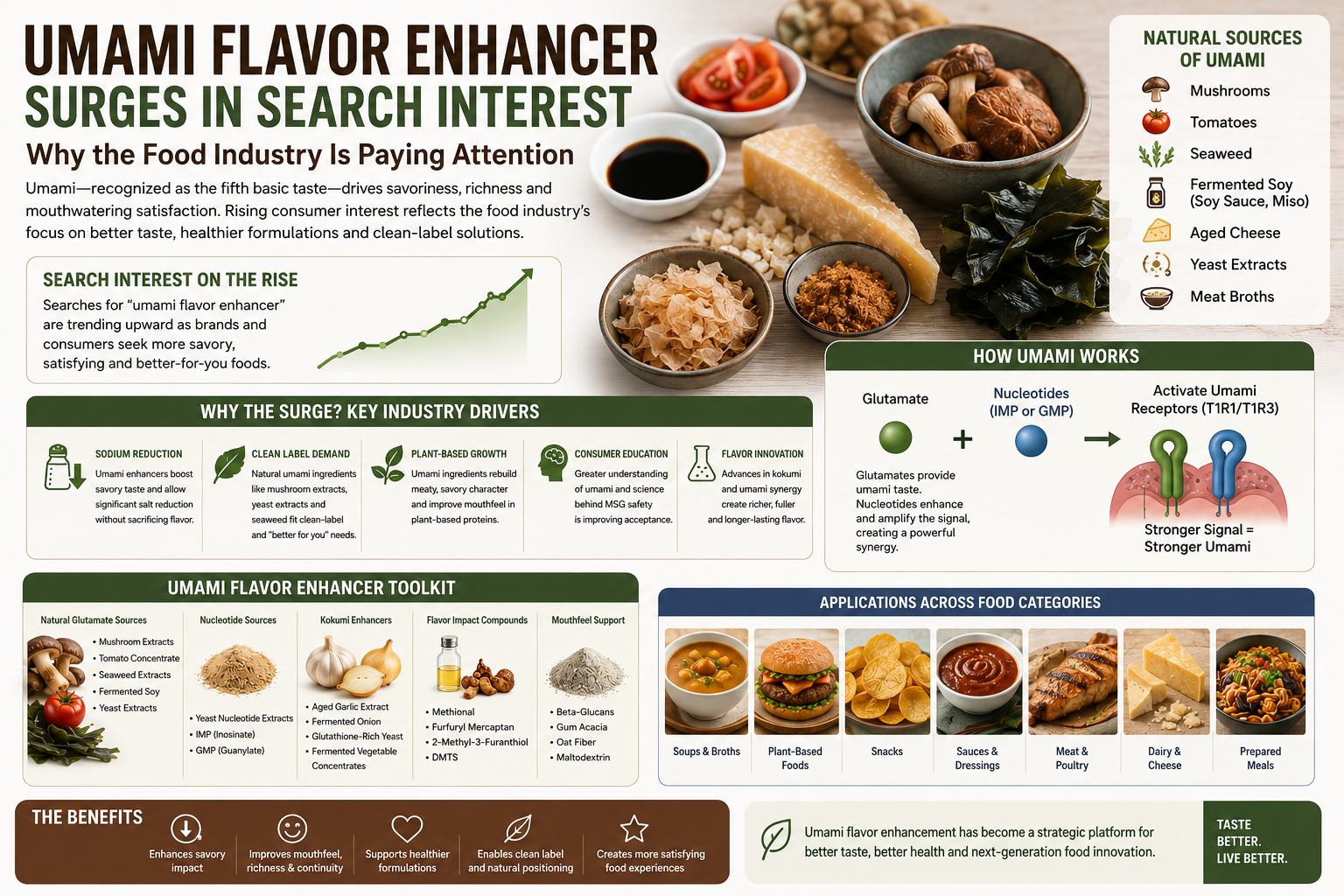
Over the past day, search activity around the term “umami flavor enhancer” has increased significantly, reflecting growing consumer, culinary, and food-industry interest in savory taste optimization. While no single breaking news event appears to be driving the entire surge, recent developments in nutrition, sodium reduction, clean-label formulation, and flavor technology are converging around the concept of umami as a powerful tool for enhancing taste while meeting modern health and formulation goals. (Verywell Health)
What Is an Umami Flavor Enhancer?
Umami is recognized as the fifth basic taste alongside sweet, sour, salty, and bitter. It is primarily associated with glutamate and certain nucleotides such as inosinate (IMP) and guanylate (GMP), which create the characteristic savory, brothy, and mouthwatering sensation found in foods such as mushrooms, tomatoes, aged cheeses, soy sauce, fermented products, meat broths, and seafood. (Wikipedia)
The most widely known umami enhancer is Ajinomoto’s monosodium glutamate (MSG), but modern food formulators increasingly use a broader toolkit that includes yeast extracts, hydrolyzed vegetable proteins, fermented ingredients, mushroom concentrates, seaweed extracts, and nucleotide blends. These materials amplify savory perception and improve overall flavor impact without necessarily adding significant sodium. (Wikipedia)
Health and Nutrition Are Driving the Conversation
One of the most important recent developments is renewed attention to umami's role in sodium reduction. Public health agencies worldwide continue to encourage lower salt consumption because excessive sodium intake is linked to hypertension and cardiovascular disease. Food manufacturers face the challenge of reducing sodium without making products taste bland.
Recent nutrition coverage highlighted how umami compounds can help maintain flavor intensity in reduced-sodium foods. By increasing savory perception and mouthfeel, umami ingredients can compensate for some of the flavor loss that normally occurs when salt levels are lowered. This has made umami enhancers especially attractive for soups, sauces, snacks, plant-based foods, and prepared meals. (Verywell Health)
The latest health reporting also noted that umami may influence appetite regulation and satiety through interactions between taste receptors and the gut-brain signaling system. Researchers continue to investigate how savory taste affects food enjoyment, fullness, and eating behavior. (Verywell Health)
Clean Label Umami Is Becoming a Major Trend
Historically, MSG dominated discussions about umami enhancement. Today, however, food companies increasingly seek "clean-label" solutions that consumers perceive as more natural.
As a result, manufacturers are expanding their use of:
- Yeast extracts
- Fermented vegetable concentrates
- Mushroom extracts
- Tomato concentrates
- Seaweed-derived ingredients
- Fermented soy products
- Natural nucleotide sources
These ingredients naturally contain glutamates or flavor-enhancing compounds that provide savory impact while fitting clean-label positioning strategies. Foods rich in naturally occurring glutamate have become especially important in product reformulation projects. (Wikipedia)
For flavorists, this trend has increased demand for sophisticated umami systems that balance savory, kokumi, mouthfeel, and overall flavor complexity.
The Growing Interest in Kokumi
Another factor behind the surge in interest is the increasing visibility of kokumi, a sensory concept closely related to umami.
Unlike umami, kokumi does not introduce a distinct taste. Instead, kokumi compounds enhance richness, continuity, thickness, and flavor fullness. Scientific research has shown that compounds such as glutathione and certain gamma-glutamyl peptides can strengthen the perception of sweetness, saltiness, and umami. When used alongside MSG or other glutamate sources, they can create a more complete flavor experience. (Wikipedia)
Many flavor houses are actively exploring kokumi technology because it offers a way to improve consumer perception without substantially increasing sodium, sugar, or fat levels.
Plant-Based Foods Need Better Umami
The continued growth of plant-based foods is another major reason behind interest in umami enhancers.
Many plant proteins exhibit earthy, beany, bitter, or astringent notes while lacking the natural savory complexity found in meat. Flavor developers frequently use glutamates, nucleotides, yeast extracts, mushroom concentrates, and fermented ingredients to rebuild the savory character consumers expect from burgers, chicken alternatives, broths, and ready meals. (Wikipedia)
The ability of umami enhancers to improve mouthfeel, perceived richness, and lingering taste makes them indispensable tools in modern plant-based formulation.
Consumer Perception of MSG Continues to Improve
Another notable trend is the gradual rehabilitation of MSG's public image.
Scientific reviews and regulatory evaluations have repeatedly concluded that MSG is safe for the general population when consumed at normal dietary levels. Regulatory authorities in the United States, Europe, and other regions continue to permit its use as a flavor enhancer. Recent educational content has renewed discussion around the fact that glutamate naturally occurs in many everyday foods, including tomatoes, cheese, mushrooms, and fermented products. (Wikipedia)
As consumers become more familiar with the science of taste, some of the historical stigma surrounding MSG appears to be diminishing, contributing to renewed interest in umami enhancement strategies.
What This Means for Flavorists
For flavor professionals, the recent surge in searches for "umami flavor enhancer" reflects several simultaneous industry shifts:
- Demand for sodium reduction.
- Growth of clean-label formulations.
- Expansion of plant-based foods.
- Increased consumer interest in flavor science.
- Development of kokumi-based sensory enhancement technologies.
- Greater acceptance of glutamate-related ingredients. (Verywell Health)
As a result, umami is no longer viewed merely as a seasoning concept. It is increasingly becoming a strategic formulation platform that helps manufacturers improve taste, reduce sodium, enhance mouthfeel, support healthier product profiles, and create more satisfying eating experiences.
The recent spike in search activity suggests that umami flavor enhancement is moving beyond culinary curiosity and becoming a central topic in food innovation, flavor chemistry, and next-generation product development. (Verywell Health)
###