Noteworthy: Understanding Umami in Flavor Creation
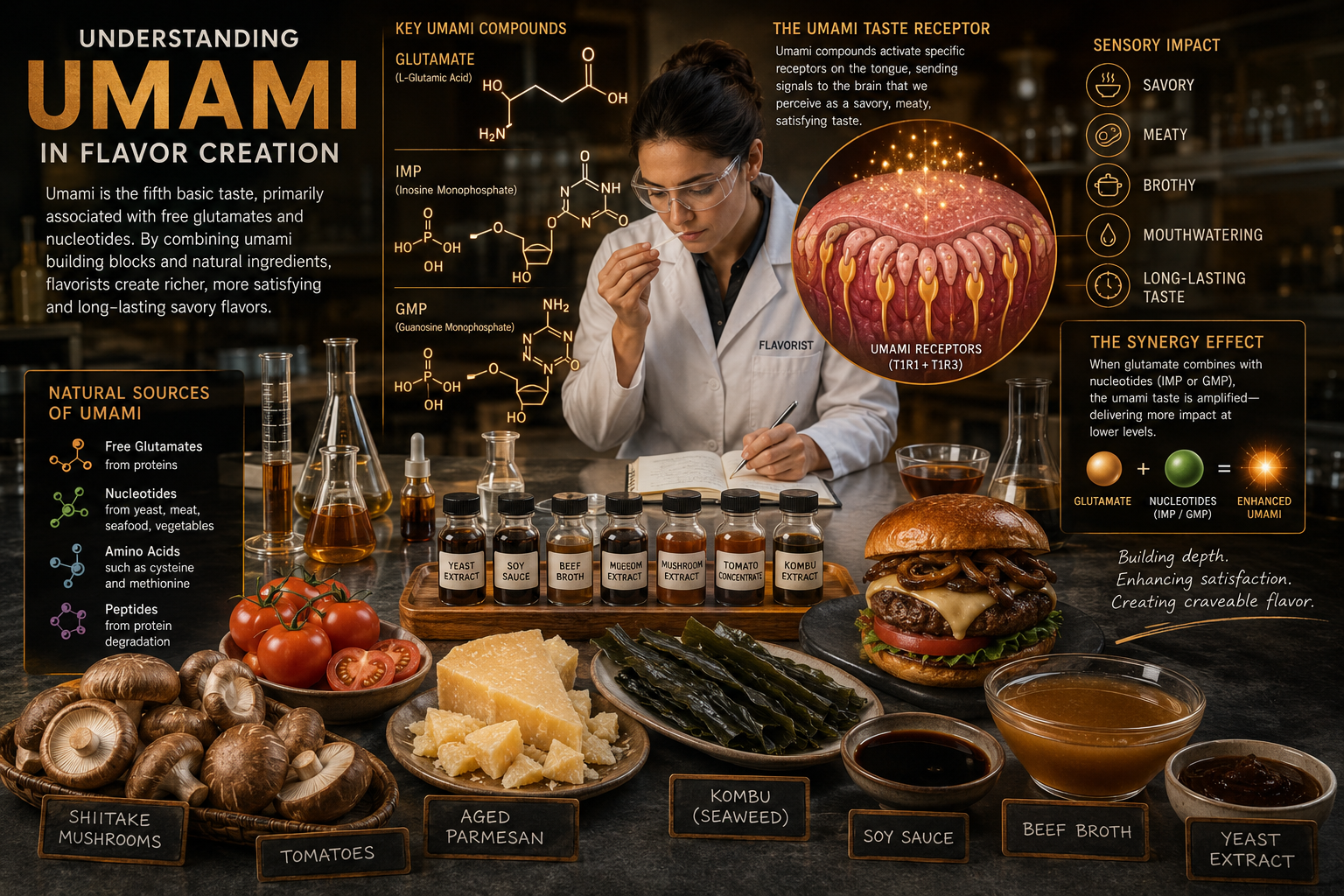
Beyond MSG: The Flavorist’s Guide to Umami, Kokumi, and Savory Synergy
For decades, umami was the forgotten fifth taste. Most people know it as “savory,” but for professional flavorists, understanding umami is far more complex than simply adding monosodium glutamate (MSG). A common mistake is treating umami as a single compound. In reality, umami perception is a multi-layered process involving direct activators, boosters, kokumi compounds, and even volatile aromas that create the illusion of savory depth.
Here is a breakdown of how modern flavor creation unlocks the full potential of umami, from glutamate to grilled-meat mercaptans.
Part I: The Direct Umami Activators (The Foundation)
These compounds directly bind to the T1R1/T1R3 receptor complex on your tongue, producing the true taste of umami.
- Glutamates & MSG: Found naturally in tomatoes, Parmesan cheese, mushrooms, and seaweed. MSG remains the benchmark for a brothy, long-lasting savory taste. However, on its own, it is not exceptionally powerful.
- Potassium Glutamate: A low-sodium alternative that enhances saltiness but may introduce slight bitterness at high levels.
Part II: The Boosters (The Synergists)
This is where umami gets powerful. Nucleotides have little taste alone but dramatically amplify glutamate.
- Disodium Inosinate (IMP): Found in beef, chicken, and fish. It adds a meaty character and can increase perceived umami several-fold.
- Disodium Guanylate (GMP): Found in shiitake mushrooms. It provides deeper, fuller, and more persistent umami.
- The Synergy Effect: When glutamate meets IMP or GMP, the receptor response is amplified exponentially—this is the secret behind why tomato soup tastes so good with beef, or why mushroom broth is so satisfying.
Part III: Natural Umami-Rich Materials (The Flavorist’s Toolkit)
Instead of using pure chemicals, flavorists often turn to natural extracts for complexity.
- Yeast Extracts: One of the most important commercial ingredients. Packed with free amino acids, glutamates, and nucleotides. They boost savory notes, reduce sodium, and add mouthfulness to snacks, soups, and plant-based meats.
- Mushroom Extracts (Shiitake, Porcini): Shiitake offers deep broth character due to natural GMP. Porcini provides a meaty earthiness perfect for beef systems.
- Fermented Soy Products (Soy sauce, Miso, Tamari): Beyond glutamates, they contribute aged peptides and Maillard products that add complexity and realism.
- Seaweed Extracts (Kombu): The original source of umami discovery, offering clean, broth-enhancing notes without heavy fermentation.
Part IV: The Illusion of Umami (Aroma Compounds)
Surprisingly, some materials don’t activate umami receptors at all—but they make foods taste more savory by signaling "cooked food" to the brain.
- Sulfur Compounds (Methional, Furfuryl Mercaptan): Methional smells like cooked potato and broth. Furfuryl mercaptan is found in grilled meat and roasted coffee, creating instant cooked-food realism.
- 2-Methyl-3-Furanthiol: One of the most powerful meat-impact compounds. It makes vegan products taste distinctly beef-like.
- Pyrazines & Thiazoles: Provide roasted, grilled, and browned notes (e.g., 2,5-Dimethylpyrazine). They support umami indirectly by adding savory aroma.
Part V: Kokumi – The Secret to Richness (Not Umami)
Kokumi is often confused with umami, but they are different. Umami is taste; Kokumi is mouthfeel. Kokumi compounds make food taste thicker, more continuous, and longer-lasting.
- Glutathione: Found in garlic, onion, and yeast. It adds thickness and makes existing umami taste stronger.
- γ-Glutamyl Peptides: Found in aged garlic and fermented foods. They increase richness and lingering flavor without having a strong taste themselves.
What Dampens or Destroys Umami?
Flavorists must also avoid “umami killers”:
- Excess Sugar or Sourness: High sweetness (syrups) or high acidity (citric, acetic acid) suppresses receptor response.
- Bitterness & Astringency: Caffeine, quinine, or tannins (polyphenols) compete for attention and dry out the mouth, reducing perceived savoriness.
- Very High Salt: Salt boosts umami up to a point (approx. 0.5–1%), but excessive sodium masks nuanced savory character.
The Perfect Food Environments for Umami
The strongest umami perception occurs in systems with multiple layers:
- Beef Gravy: Glutamates + IMP + Fat + Sulfur compounds.
- Chicken Broth: Nucleotides + Amino acids + Fat.
- Aged Cheese & Soy Sauce: Free glutamate + Peptides + Maillard products.
- Mushroom Broth: Glutamates + GMP.
The Most Powerful Commercial Umami Combination
According to the article, the most potent umami system for flavorists is not one ingredient—it is a combination:
Glutamate Source + GMP + IMP + Kokumi Peptides + Sulfur Meat Notes
A practical example blend:
- Mushroom extract (glutamates + GMP)
- Yeast extract (nucleotides + peptides)
- Glutathione-rich garlic extract (kokumi)
- Methional + Furfuryl mercaptan (savory aroma)
This system simultaneously activates receptors, amplifies signaling, increases mouthfulness, and creates the sensory cues consumers recognize as “deep, rich, savory flavor.” No single ingredient can match this synergy.
Summary & Key Takeaway
For food product developers, chefs, and home cooks:
- Don’t rely on MSG alone. Combine glutamates with nucleotides (IMP/GMP) for synergy.
- Add kokumi via garlic, yeast extract, or aged cheeses for fullness.
- Use aroma – roasted pyrazines and grilled sulfur notes trick the brain into perceiving more umami.
- Watch your balance – a little salt helps; too much sugar or acid hurts.
Whether you are formulating a plant-based burger, a low-sodium soup, or a savory sauce, layering these mechanisms is the professional path to authentic, craveable umami.
Log in to view more.