Vetiver as a Natural Flavoring: A Comprehensive Technical Guide
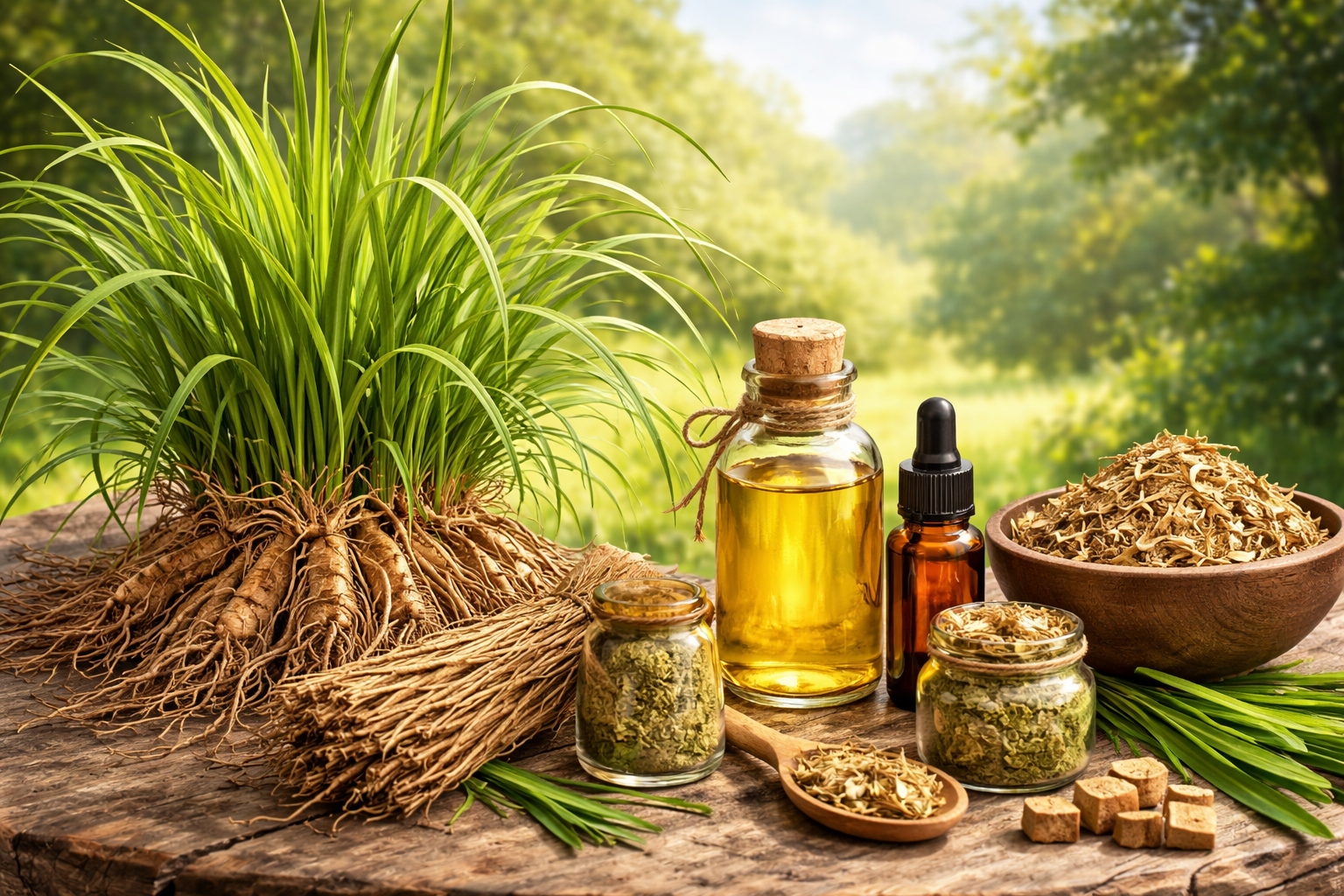
The Society of Flavor Chemists requires certified flavorists to be able to identify the plant part used, derivatives, organoleptic characteristics, and major chemical component(s) characterizing the aroma and flavor of the 80 natural flavorings listed on its syllabus for the qualification test and interview. Vetiver is included among these essential items.
Introduction
Vetiver (Chrysopogon zizanioides (L.) Roberty, formerly Vetiveria zizanioides) is a perennial grass in the Poaceae (grass) family, native to India and Southeast Asia. Its complex, tenacious, and deeply earthy root system produces one of the most prized and sophisticated essential oils in the world. Known as the "oil of tranquility," vetiver has been used for millennia in Indian, Javanese, and Sri Lankan cultures for its calming, grounding, and cooling properties .
For flavorists, vetiver oil offers a remarkably complex and sophisticated profile—earthy, woody, smoky, and balsamic—with distinct notes of damp soil, vetiver root, tobacco, and a subtle citrus undertone. Its aroma is often described as a blend of wet earth, roots, wood, and smoke, with a deep, tenacious character that makes it an invaluable fixative and base note in flavor and fragrance systems . The key aroma compounds are vetiverols, vetiverones, and khusimol, which together create its characteristic earthy-woody profile .
Vetiver oil is obtained by steam distillation of the dried, cleaned, and chopped roots. The oil improves with age, developing a smoother, rounder, and more complex character over time—a phenomenon known as "maturation" . Several commercial types exist, with Haitian vetiver (sweet, delicate) and Java vetiver (earthy, smoky, bold) being the most important for flavorists .
Plant Parts Used
The roots (rhizomes and root system) are the plant part used for flavoring purposes. The following characteristics are notable:
- Source Plant: Chrysopogon zizanioides (L.) Roberty (formerly Vetiveria zizanioides), a member of the Poaceae (grass) family .
- Plant Description: A tall, perennial grass, growing 1.5–2.5 meters in height, with erect, rigid stems and long, narrow leaves. The plant produces a dense, fibrous root system that can penetrate up to 4 meters deep .
- Root Description: The roots are long, thin, fibrous, and highly aromatic when dried. They are pale yellow to light brown, with a characteristic deep, earthy, and woody aroma .
- Harvesting: The roots are harvested from plants that are 12–18 months old (for best oil yield). The plants are dug up, the roots are cleaned, dried, and chopped before steam distillation .
- Essential Oil Content: Dried roots yield 0.5–2.0% essential oil.
The essential oil is obtained by steam distillation of the dried, cleaned, and chopped roots. The oil improves with age (maturation) over months or years, developing a smoother, rounder character.
Commercial Types of Vetiver Oil
Several commercial types of vetiver oil exist, each with distinct characteristics based on origin and processing.
| Type | Origin | Primary Characteristics | Aroma Profile | Flavor Character |
|---|---|---|---|---|
| Haitian Vetiver | Haiti (Caribbean) | Lighter, sweeter, more delicate, less smoky | Sweet, earthy, soft, subtle | Refined, elegant, lighter |
| Java Vetiver | Indonesia (Java) | Deep, earthy, smoky, bold, tenacious | Deep, smoky, earthy, rich | Bold, complex, tenacious |
| Indian Vetiver | India (Ruh Khus) | Traditional origin; varied | Earthy, woody, complex | Traditional |
| Brazilian Vetiver | Brazil | Lighter, sweeter | Clean, soft, sweet | Mild, pleasant |
For flavor applications, Haitian vetiver is often preferred for its lighter, sweeter, more refined character, while Java vetiver is used when a bold, smoky, earthy depth is desired.
Derivatives
Vetiver is commercially available primarily as an essential oil. Various grades, rectifications, and extracts are available.
Vetiver Essential Oil
Production Method: Steam distillation of dried, cleaned, and chopped roots of Chrysopogon zizanioides.
Description: Pale yellow to amber to dark reddish-brown viscous liquid with a characteristic deep, earthy, woody, smoky, and slightly sweet, balsamic, rooty aroma. The oil has a powerful, tenacious, and complex character .
Technical Notes: Yield is typically 0.5–2.0% from dried roots. The oil is composed primarily of vetiverols, vetiverones, khusimol, and other sesquiterpenes . Storage in a cool, dry place away from light is recommended. The oil improves with age (maturation).
Vetiver CO₂ Extract
Production Method: Supercritical carbon dioxide extraction of vetiver roots.
Description: Dark amber to brown viscous liquid with a richer, more complete profile than the essential oil, capturing heavier, less volatile components.
Vetiver Absolute
Production Method: Solvent extraction of vetiver roots.
Description: Dark brown viscous liquid with a very rich, complex, and tenacious aroma. Less common than the essential oil.
Khus Syrup (India)
Production Method: Water extraction of vetiver roots, sweetened with sugar.
Description: Pale green to light brown syrup with a characteristic earthy, woody, cooling vetiver aroma. Traditional Indian beverage.
Organoleptic Characteristics
Aroma Profile (Haitian Vetiver Oil)
When evaluated, Haitian vetiver oil reveals a sweet, earthy, and delicate aromatic profile:
- Primary Note: Sweet, earthy, woody, soft
- Earthy: Damp soil, root-like, vegetal
- Woody: Cedar-like, dry, warm
- Sweet: Subtle, honey-like, balsamic
- Smoky: Very light, delicate
- Floral: Subtle, violet-like undertones
- Green: Fresh, leafy top notes
- Balsamic: Warm, slightly resinous
The overall aroma is often described as "sweet, earthy, and woody with a soft, refined character—the scent of damp earth and roots."
Aroma Profile (Java Vetiver Oil)
When evaluated, Java vetiver oil reveals a deep, smoky, and bold aromatic profile:
- Primary Note: Deep, smoky, earthy, woody
- Smoky: Pronounced, campfire-like, charred wood
- Earthy: Deep, rooty, soil-like
- Woody: Rich, cedar-like, tenacious
- Balsamic: Warm, resinous
- Bitter: Slight, pleasant bitterness
- Tobacco: Leafy, dry, slightly sweet
- Leather: Subtle, warm, animalic
The overall aroma is often described as "deep, smoky, and earthy with a bold, tenacious character—the scent of smoked roots and forest floor."
Taste Characteristics
At typical flavor usage levels, vetiver provides:
- Earthy: Deep, grounding, soil-like character
- Woody: Dry, cedar-like, warm
- Smoky: Subtle, campfire-like (more pronounced in Java)
- Bitter: Pleasant, complex bitterness
- Sweet: Slight, balsamic undertones
- Tenacious: Lingers on the palate
The Key to Vetiver's Unique Flavor
Vetiver's characteristic deep, earthy, woody, smoky flavor comes from a complex mixture of sesquiterpenes and sesquiterpenoids:
Primary Components:
- Vetiverols (5–20%): A group of sesquiterpene alcohols that provide sweet, balsamic, woody, and earthy notes—the signature character
- Vetiverones (5–15%): Sesquiterpene ketones that contribute woody, smoky, and earthy notes
- Khusimol (5–15%): A sesquiterpene alcohol that contributes woody, earthy, and slightly sweet notes
- β-Vetivenene (5–10%): A sesquiterpene hydrocarbon that contributes woody, spicy notes
- α-Vetivenene (5–10%): A sesquiterpene hydrocarbon that contributes woody, earthy notes
Supporting Components:
- Cedrol (trace–1%): Contributes cedar-like, woody notes
- α-Amyrin (trace–1%): Contributes balsamic, sweet notes
- β-Caryophyllene (trace–1%): Contributes woody, spicy notes
The complex mixture of sesquiterpenes gives vetiver its remarkable tenacity and its ability to fix other, more volatile materials. The oil improves with age as oxidative and other reactions convert precursor compounds into desirable components .
Major Chemical Components
Key Aroma Compounds (Vetiver Oil)
| Component | Typical Percentage | Organoleptic Contribution | CAS No. |
|---|---|---|---|
| Vetiverols | 5–20% | Sweet, balsamic, woody, earthy | Various |
| Vetiverones | 5–15% | Woody, smoky, earthy | Various |
| Khusimol | 5–15% | Woody, earthy, slightly sweet | 16223-63-5 |
| β-Vetivenene | 5–10% | Woody, spicy | 18483-92-6 |
| α-Vetivenene | 5–10% | Woody, earthy | 18483-92-6 |
| Cedrol | trace–1% | Cedar-like, woody | 77-53-2 |
| α-Amyrin | trace–1% | Balsamic, sweet | 638-95-9 |
| β-Caryophyllene | trace–1% | Woody, spicy | 87-44-5 |
Comparison: Haitian vs. Java Vetiver
| Characteristic | Haitian Vetiver | Java Vetiver |
|---|---|---|
| Vetiverols | Higher | Moderate |
| Smoky Notes | Low | High |
| Sweetness | Higher | Lower |
| Aroma Profile | Sweet, earthy, delicate | Deep, smoky, bold |
| Flavor Character | Refined, elegant | Bold, complex, tenacious |
| Typical Use | Flavoring, fine fragrances | Perfumery, fixative, bold flavors |
Comparison: Vetiver vs. Patchouli vs. Oakmoss
| Characteristic | Vetiver | Patchouli | Oakmoss |
|---|---|---|---|
| Primary Components | Vetiverols, vetiverones, khusimol | Patchoulol, α-bulnesene, α-guaiene | Evernyl, atranol |
| Aroma Profile | Earthy, woody, smoky, sweet | Earthy, woody, balsamic, sweet | Mossy, earthy, green, woody |
| Flavor Character | Deep, grounding, tenacious | Deep, earthy, woody, tenacious | Earthy, mossy, green |
| Tenacity | Very high | Very high | Very high |
| Typical Use | Flavor modifier, fixative | Flavor modifier, fixative | Perfumery, some flavors |
Applications in Flavoring
Regulatory Status
Vetiver oil is approved as a natural flavoring substance:
- United States: Vetiver oil is listed under 21 CFR §172.510 as a natural flavoring substance (FEMA No. 3096 for vetiver oil; FEMA No. 3095 for vetiver).
- European Union: Permitted for use in food flavorings under Regulation (EC) No 1334/2008.
- China: Approved food flavor under GB 2760.
Typical Usage Levels (mg/kg)
Vetiver oil is used at very low levels due to its high potency and tenacious character. The following usage levels are based on FEMA GRAS determinations and industry standards:
| Application | Typical Concentration Range (mg/kg) |
|---|---|
| Non-alcoholic beverages | 0.1–2 |
| Alcoholic beverages | 0.5–5 |
| Baked goods | 0.5–4 |
| Hard candy | 1–8 |
| Frozen dairy | 0.1–2 |
| Gelatins and puddings | 0.1–2 |
| Soft candy | 0.5–4 |
| Chewing gum | 1–10 |
| Root beer / cola | 0.5–3 |
| Savory systems | 0.2–2 |
Note: These ranges represent typical industry usage. Vetiver oil is extremely potent; begin at the lowest levels.
Usage & Dosage Best Practices
Flavorists should observe the following guidelines when working with vetiver:
Start Extremely Low: Vetiver oil is highly potent and tenacious. Begin at the lower end of typical usage ranges (e.g., 0.1–0.5 mg/kg in beverages) and titrate upward. Overuse can result in a heavy, muddy, or overpowering character.
Use as a Modifier: Vetiver is rarely used as a primary flavor. It is most effective as a modifier to add depth, earthiness, and complexity to woody, balsamic, and root beer flavors.
Select the Correct Type:
- Haitian Vetiver: Use for lighter, sweeter, more refined character. Preferred for flavor applications where a delicate earthy note is desired.
- Java Vetiver: Use for bold, smoky, earthy character. Preferred for applications where a deep, tenacious base note is needed.
Pre-Dilution: Pre-dilute vetiver oil at a ratio of 1:10 or 1:100 in ethanol or propylene glycol for easier handling and more even dispersion.
Fixative Properties: Vetiver oil has excellent fixative properties due to its high sesquiterpene content. It helps to anchor more volatile top notes and extend the overall flavor perception.
Maturation: Vetiver oil improves with age. Freshly distilled oil has a sharper, more aggressive character; aged oil (1–3 years) becomes smoother, rounder, and more complex.
Flavor Synergies: Vetiver pairs exceptionally well with:
- Root beer and cola: Adds earthy depth and fixative properties
- Woody notes: Cedarwood, sandalwood, oak, patchouli
- Citrus: Bergamot, lemon, grapefruit (adds a unique earthy twist)
- Spices: Ginger, black pepper, cardamom
- Balsamic notes: Vanilla, tonka bean, benzoin
- Smoky flavors: Complements and enhances smoke notes
- Tobacco: Adds earthy depth
- Chocolate: Dark chocolate (adds depth and earthiness)
Flavor Applications: Vetiver serves as a flavor modifier in:
- Root beer and cola: Adds earthy depth and fixative properties
- Citrus flavors: Adds a unique, sophisticated earthy note
- Beverages: Some craft sodas, spirits, and liqueurs
- Chocolate: High-end chocolate confections
- Savory: Mushroom dishes, root vegetables, game meats
- Tobacco flavors: Contributes to authentic tobacco profiles
Fragrance Applications
Vetiver is one of the most important materials in perfumery:
- Masculine fragrances: Provides a deep, earthy, woody base
- Chypre and fougère fragrances: Adds complexity and depth
- Oriental fragrances: Adds warmth and earthiness
- Fixative: Extends the longevity of fragrances
- Natural perfumery: Used extensively in high-end natural and niche perfumes
Blends well with: Sandalwood, cedarwood, patchouli, bergamot, lavender, grapefruit, vanilla, tonka bean.
Example Formula: Root Beer Flavor Modifier
The following formula demonstrates the use of vetiver oil as a modifier in a root beer flavor system.
Root Beer Flavor Concentrate (with Vetiver Depth)
| Component | Percentage (%) | Function | Technical Note |
|---|---|---|---|
| Vetiver oil (Haitian) (10% pre-dilution) | 10.0 | Flavor modifier | Adds earthy depth and fixative properties |
| Sassafras oil (or safrole-free substitute) | 25.0 | Primary root beer note | Traditional root beer character |
| Sweet birch oil | 20.0 | Wintergreen note | Adds cooling sweetness |
| Vanillin (natural) | 15.0 | Sweet vanilla | Adds creaminess |
| Anise oil | 10.0 | Sweet, licorice note | Adds depth |
| Clove oil | 5.0 | Spicy accent | Adds warmth |
| Cassia oil | 5.0 | Warm spice | Adds complexity |
| Ethanol | 10.0 | Solvent | Food grade |
| Total | 100.0 |
Usage Instructions: Use at 0.1–0.3% in finished root beer beverages. The vetiver adds a sophisticated, earthy depth and helps fix the overall flavor.
Alternative: Smoky Cola Flavor Modifier
| Component | Percentage (%) | Function |
|---|---|---|
| Vetiver oil (Java) (10% pre-dilution) | 15.0 | Smoky, earthy depth |
| Cola flavor (natural) | 60.0 | Primary cola note |
| Smoked flavor | 10.0 | Smoky enhancement |
| Vanillin (natural) | 10.0 | Sweet rounding |
| Lemon oil | 5.0 | Citrus brightness |
| Total | 100.0 |
Usage Instructions: Use at 0.1–0.2% in finished cola beverages.
Alternative: Vetiver Oil Pre-Dilution for Lab Use
| Component | Percentage (%) | Function |
|---|---|---|
| Ethanol (190 proof) | 90.0 | Solvent |
| Vetiver oil | 10.0 | Active ingredient |
Method: Mix thoroughly. Store in amber glass bottles in a cool, dark place. Use 0.1–1.0% in flavor formulations for easy handling.
Shelf Stability & Storage
Understanding the stability of vetiver oil is critical for maintaining flavor quality.
Vetiver Essential Oil
Storage Recommendation: Store in a full, airtight container in a cool, dry place away from light. Vetiver oil improves with age (maturation); some degree of aging is desirable. Store at moderate temperatures; excessive heat can degrade the oil.
Stability Notes: Vetiver oil is relatively stable due to its high sesquiterpene content. It is known to improve with age, developing a smoother, rounder, and more complex character over months or years. The oil may darken and thicken with age, which is normal and desirable. Shelf life is typically 5–10 years or more when properly stored.
Stability in Finished Products
- Heat stability: High; sesquiterpenes have high boiling points and are relatively heat-stable.
- pH stability: Stable across typical food pH range (3–8).
- Oxidation: Relatively stable; sesquiterpenes are less prone to oxidation than monoterpenes.
- Light sensitivity: Protect from light.
Safety Considerations
General Safety
Vetiver oil is generally recognized as safe (GRAS) for use as a flavoring at approved levels (FEMA 3096). It has a good safety profile.
Important Considerations
- Skin Sensitization: Vetiver oil may cause skin sensitization in sensitive individuals. It is subject to IFRA restrictions for fragrance use.
- Pregnancy: Safe in food amounts; concentrated essential oil should be used with caution during pregnancy.
- Allergies: May cause allergic reactions in sensitive individuals.
- Photosensitivity: Not known to be phototoxic.
- Oral Toxicity: Low acute toxicity; oral-rat LD50 is approximately 5,200 mg/kg .
Maximum Usage Levels (IFRA)
For fragrance applications, vetiver oil is subject to IFRA restrictions. Flavorists developing products for topical applications should consult current IFRA standards.
Skin Safety
- Essential oil: May cause sensitization; dilute properly for topical applications.
- Protective measures: Wear suitable gloves when handling concentrated essential oil.
Quality Control & Sourcing
Flavorists should implement the following quality checks when sourcing vetiver oil.
Essential Requirements for Certificates of Analysis (COA)
For Vetiver Oil:
- Botanical identity: Chrysopogon zizanioides (L.) Roberty
- Origin: Haiti, Indonesia (Java), India, Brazil
- Vetiverol content: 5–20% (GC analysis)
- Vetiverone content: 5–15%
- Khusimol content: 5–15%
- Physical properties: Specific gravity (0.980–1.030), refractive index (1.515–1.530), optical rotation (+15° to +45°)
For Haitian Vetiver:
- Origin: Haiti
- Vetiverol content: Typically higher
- Aroma: Sweet, earthy, delicate
For Java Vetiver:
- Origin: Indonesia (Java)
- Vetiverone content: Typically higher
- Aroma: Deep, smoky, earthy, bold
Common Adulteration Risks
- Dilution with less expensive oils (e.g., cedarwood, patchouli)
- Extension with synthetic vetiverols or vetiverones
- Mislabeling of origin (Java sold as Haitian, etc.)
- Use of lower-quality roots or improper distillation
Sourcing Considerations
| Type | Origin | Characteristics |
|---|---|---|
| Haitian Vetiver | Haiti | Sweet, delicate, refined; preferred for flavor |
| Java Vetiver | Indonesia | Deep, smoky, bold; preferred for perfume and bold flavors |
| Indian Vetiver | India | Traditional; variable quality |
| Brazilian Vetiver | Brazil | Lighter, sweeter; emerging source |
Traditional and Cultural Applications
Traditional Uses
- Indian: Vetiver roots (khus) are used to make cooling summer drinks (khus sharbat), screens (khus tatties) for evaporative cooling, and perfumes. The roots are also used in traditional medicine .
- Javanese: Vetiver is used in traditional ceremonies and for its calming properties .
- Sri Lankan: Vetiver is used for erosion control and as a medicinal plant .
- Perfumery: Vetiver has been used in Western perfumery since the 19th century and remains a classic base note.
Cultural Significance
In India, vetiver (khus) is deeply associated with summer and cooling. Khus sherbet (a sweet, milky drink flavored with vetiver essence) is a traditional summer beverage. Khus tatties (screens made from vetiver roots) are hung in doorways and windows; water is sprinkled on them, and the evaporative cooling combined with the pleasant fragrance provides relief from the heat.
Summary
Vetiver (Chrysopogon zizanioides) is a unique and sophisticated natural flavoring prized for its deep, earthy, woody, and smoky character. Its essential oil is dominated by a complex mixture of sesquiterpenes—vetiverols (5–20%) , vetiverones (5–15%) , and khusimol (5–15%) . Two main commercial types offer distinct profiles: Haitian vetiver (sweet, earthy, delicate) is preferred for flavor applications, while Java vetiver (deep, smoky, bold) is used for bold, tenacious character.
Key characteristics:
- Primary components: Vetiverols (5–20%), vetiverones (5–15%), khusimol (5–15%)
- Aroma profile: Earthy, woody, smoky, sweet, tenacious
- Typical usage: Oil 0.1–10 mg/kg (used at very low levels as a modifier)
- Primary applications: Root beer, cola, citrus modifiers, chocolate, fixative
Critical considerations for flavorists:
- Extreme potency: Use at very low levels (0.1–2 mg/kg); start low and titrate.
- Use as a modifier: Best used to add depth and earthiness, not as a primary flavor.
- Select the correct type: Haitian for delicate, sweet character; Java for bold, smoky character.
- Fixative properties: Excellent for anchoring volatile top notes.
- Maturation: Vetiver oil improves with age; aged oil is smoother and more complex.
- Flavor synergies: Pairs with root beer, cola, citrus, chocolate, and tobacco.
- Stability: Very high; stored oil can last for years.
- Sourcing: Haitian vetiver is preferred for flavor applications.
References and Further Reading
The information presented in this guide is synthesized from:
- Regulatory documents from FDA, FEMA (Nos. 3095, 3096), and international food safety authorities.
- Published scientific literature on Chrysopogon zizanioides.
- Standard textbooks on natural flavoring materials.
- Industry technical data from major suppliers.
- Traditional knowledge documented in public domain sources.
Key References:
- FEMA Flavor Ingredient Library: Vetiver Oil (FEMA 3096), Vetiver (FEMA 3095)
- Journal of Essential Oil Research: Vetiver oil composition studies
- TGSC Information System: Vetiver Oil
Disclaimer: This article is for educational and training purposes only. When using vetiver in commercial products, always verify current regulatory status in your jurisdiction, conduct appropriate safety assessments, and source ingredients from reputable suppliers who can provide documentation of botanical identity, origin, and quality. Vetiver oil is extremely potent; use at very low levels and pre-dilute before incorporating into formulations. The formulas and usage levels provided are illustrative examples and may require adjustment based on specific product requirements and regulatory compliance.
###