White Jello Flavor Draws Attention as Consumers Search for the Story Behind the Elusive Gelatin Variety
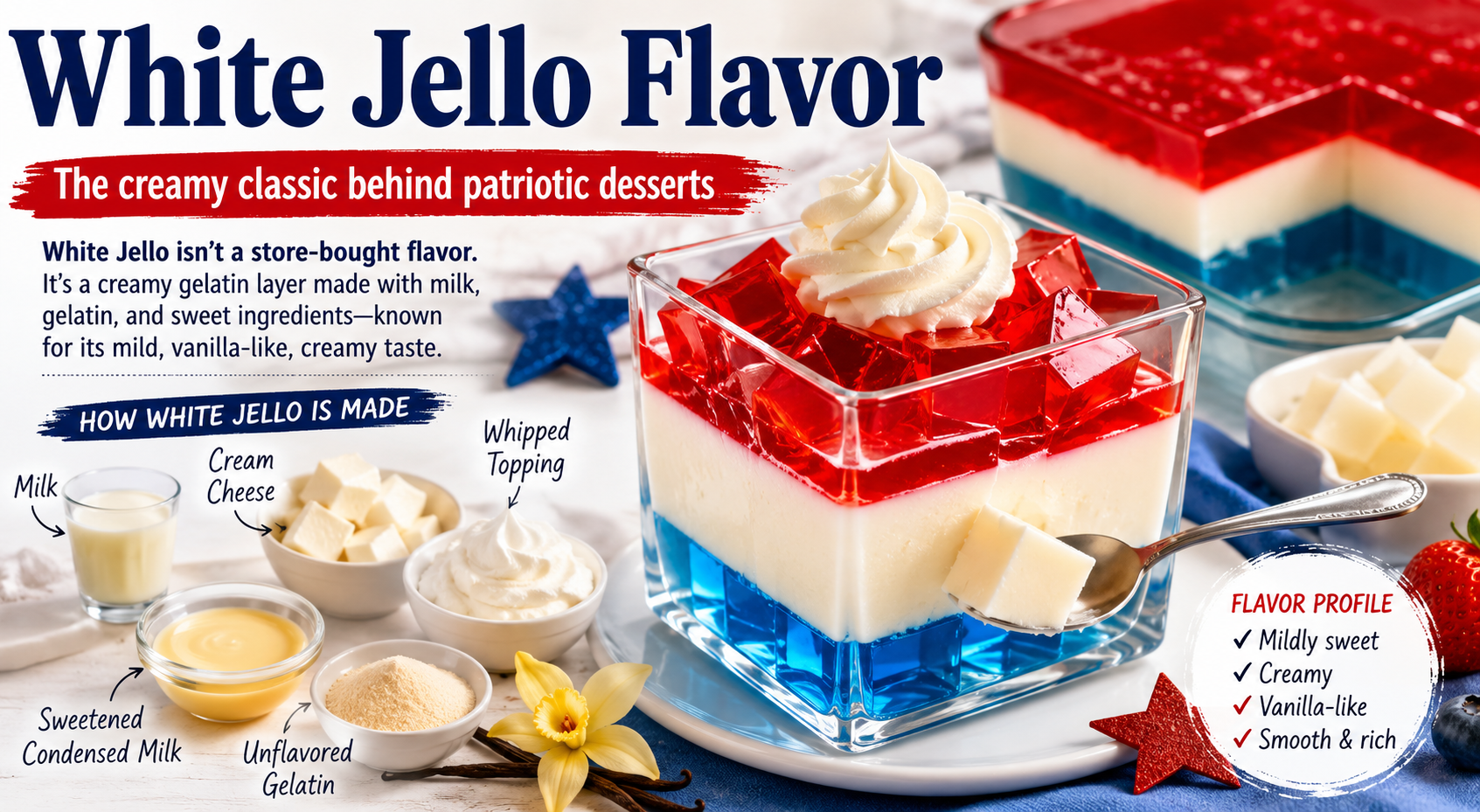
An unexpected food trend has emerged online as searches for "white Jello flavor" have surged, prompting consumers to ask a simple question: What exactly is white Jello, and why isn't it commonly found on supermarket shelves?
Unlike familiar gelatin flavors such as strawberry, raspberry, lime, orange, cherry, and lemon, white Jello has never existed as a mainstream flavor in the traditional Jell-O lineup. Instead, the term has evolved over decades to describe a category of creamy gelatin desserts that achieve their white appearance through dairy-based ingredients rather than fruit flavorings or food coloring. The recent spike in search interest reflects growing curiosity about both its flavor profile and its place in the evolution of gelatin desserts.
The origins of white gelatin can be traced back to mid-20th century American home cooking, when gelatin-based salads and desserts became household staples. During the post-war boom, home economists and cookbook authors experimented with gelatin beyond fruit desserts, incorporating milk, cream cheese, sour cream, evaporated milk, and whipped cream to create richer, creamier textures. These recipes produced an opaque white layer that contrasted sharply with brightly colored fruit gelatin and introduced an entirely different eating experience.
Unlike fruit gelatin, which delivers a bright, refreshing taste, white gelatin developed as a dessert focused on texture and creaminess. Its flavor is subtle rather than bold, often resembling vanilla pudding, lightly sweetened cream, cheesecake filling, or sweet milk depending on the ingredients used. This neutral profile allows it to complement rather than compete with fruit flavors, making it an ideal pairing in layered desserts.
Over time, there was never a universally accepted definition of "white Jello flavor." Instead, multiple variations emerged across regions and generations. Some families preferred vanilla as the dominant flavor, using vanilla extract or instant vanilla pudding to enhance the creamy base. Others incorporated cream cheese to create a cheesecake-like flavor, while coconut milk became popular in tropical-inspired recipes, giving the white layer a subtle coconut aroma. Sweetened condensed milk eventually became one of the most widely used ingredients because it created both the desired white color and a rich, caramelized dairy sweetness.
This flexibility became one of white gelatin's defining characteristics. Rather than representing a single flavor, white Jello evolved into a customizable foundation capable of adapting to different tastes and occasions.
The commercial development of gelatin products followed a different path. Food manufacturers historically focused on brightly colored fruit flavors because consumers associated gelatin with fresh fruit, vibrant colors, and refreshing desserts. Strawberry, cherry, raspberry, lime, orange, lemon, and black cherry consistently dominated retail shelves, while cream-based gelatin remained largely confined to homemade recipes.
Several factors contributed to this decision. Dairy ingredients require different manufacturing processes than traditional fruit gelatin powders and often have shorter shelf lives or more complex formulation requirements. Maintaining the clean, translucent texture consumers expect from classic gelatin also becomes more difficult when milk proteins or fats are introduced. As a result, manufacturers invested primarily in expanding fruit flavor varieties rather than developing shelf-stable creamy gelatin mixes.
Instead of launching a standalone white gelatin flavor, brands gradually expanded into adjacent dessert categories. Vanilla pudding, cheesecake-flavored instant desserts, mousse mixes, and ready-to-eat dairy snacks filled much of the market space that a commercial white gelatin might otherwise have occupied. Consumers looking for creamy desserts increasingly turned to these products, while white gelatin remained a recipe rather than a packaged flavor.
In recent years, however, consumer preferences have begun to shift. Nostalgic desserts have experienced renewed popularity, driven by social media, home baking trends, and renewed interest in vintage American recipes. Food creators have rediscovered layered gelatin desserts, bringing white gelatin back into public conversation. Videos showcasing perfectly defined white layers between brightly colored gelatin have accumulated millions of views, introducing younger audiences to a dessert that many had never encountered before.
At the same time, broader changes within the food industry have also renewed attention on gelatin products. Consumers are increasingly seeking products made with simpler ingredient lists and fewer artificial additives. Kraft Heinz recently introduced its Jell-O Simply line, featuring products made without synthetic FD&C colors or artificial sweeteners. While the new line does not introduce a dedicated white gelatin flavor, it reflects the brand's efforts to modernize one of America's most recognizable dessert products and respond to evolving consumer expectations.
This renewed focus on ingredient quality has encouraged many consumers to make white gelatin from scratch rather than relying on packaged mixes. Homemade recipes provide greater control over sweetness, dairy content, flavor intensity, and ingredient selection, aligning with broader trends toward scratch cooking and personalized desserts.
Flavor innovation may also explain why white gelatin continues to generate curiosity despite its absence from supermarket shelves. Consumers increasingly expect dessert brands to introduce premium flavors such as vanilla bean, coconut cream, cookies and cream, cheesecake, birthday cake, or even specialty seasonal varieties. In that context, a commercially available white gelatin no longer seems out of place. Instead, it represents a product that many consumers assume should already exist.
Industry observers note that if manufacturers were to introduce an official white gelatin flavor today, it would likely move beyond plain sweet cream. Modern consumer preferences favor layered flavor experiences, suggesting potential varieties such as French vanilla, coconut cream, white chocolate, marshmallow vanilla, cheesecake, or vanilla bean. These profiles would appeal to consumers seeking richer dessert experiences while maintaining compatibility with layered recipes.
The recent surge in searches demonstrates that consumer interest extends beyond holiday recipes. People are increasingly curious about why white gelatin has remained largely homemade while fruit flavors have dominated commercial production for generations. In many ways, white Jello represents a gap between culinary tradition and commercial product development—a familiar homemade favorite that never fully transitioned into a standardized retail flavor.
As nostalgia continues to shape food trends and consumers seek desserts that balance simplicity with indulgence, white gelatin may be gaining recognition not merely as a seasonal recipe component but as a flavor concept in its own right. Whether manufacturers eventually transform that concept into a commercially available product remains uncertain, but the growing search interest suggests there is a market eager to learn more about the history, flavor, and future of white Jello.
###