Noteworthy: Candy Note in Flavor: Beginner Flavorist Guide
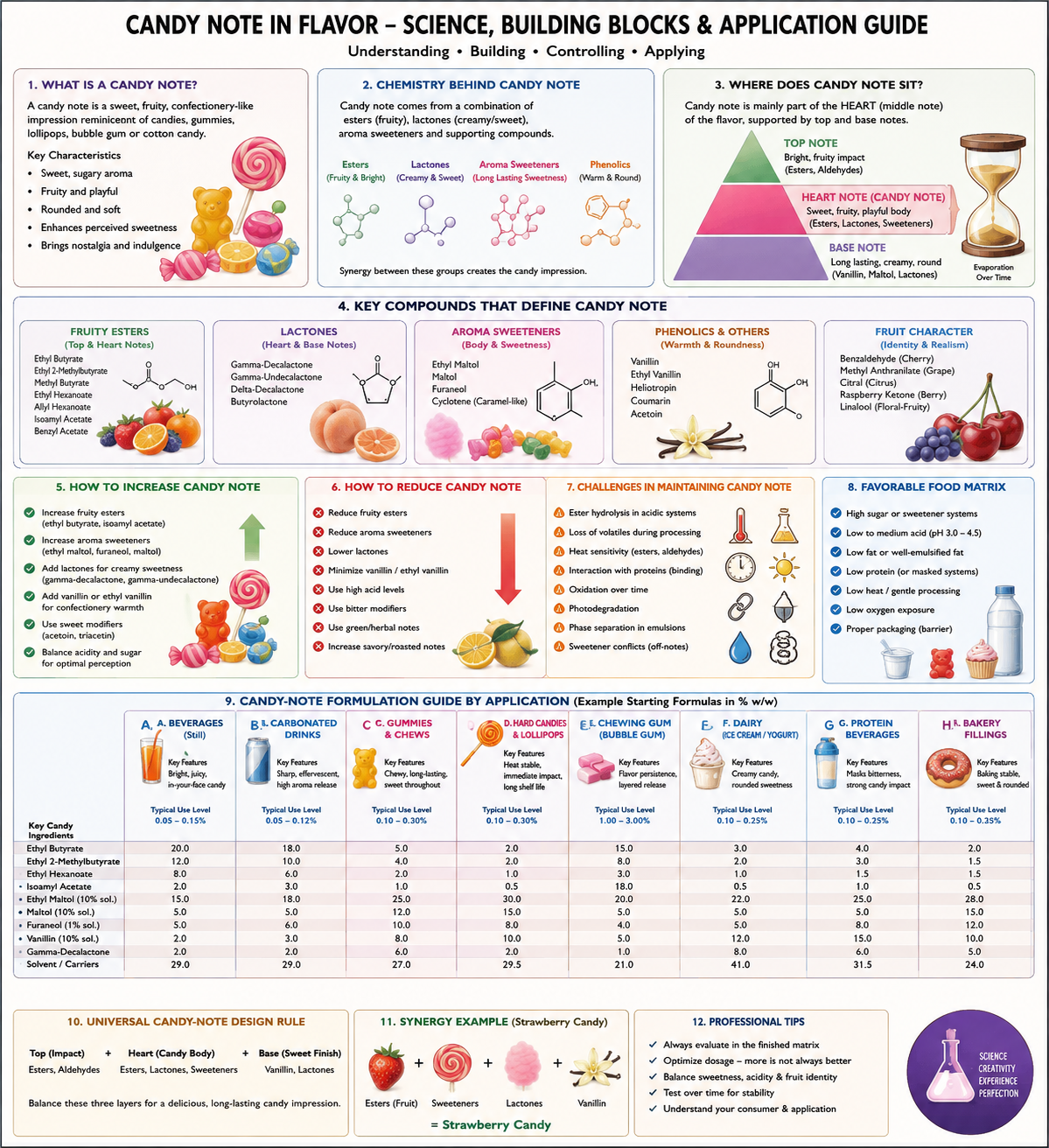
Candy note is among about 20 notes that the Society of Flavor Chemists requires certified flavorists to understand and use when formulating a flavor.
Candy note is the sweet, bright, playful, artificial-fruit-like impression that reminds people of hard candy, gummies, lollipops, jelly beans, fruit chews, bubble gum, powdered drink mixes, and syrupy confectionery flavors.
It is not simply “sweetness.” Sweetness comes mostly from sugar or sweeteners. Candy note is an aroma style created by fruity esters, lactones, aldehydes, ketones, vanillin-type materials, maltol-type materials, and sometimes cooling, acidic, or floral modifiers.
1. What Defines Candy Note?
Candy note is usually defined by these sensory traits:
Bright fruitiness — strawberry candy, banana candy, orange candy, grape candy.
High sweetness impression — even before actual sugar is tasted.
Simple, rounded fruit identity — less realistic than fresh fruit.
Juicy-syrupy body — like fruit syrup or candy filling.
High-impact top aroma — strong smell when opened or eaten.
Low bitterness, low green, low earthy, low fermented notes.
A natural fruit flavor tries to imitate the real fruit. A candy flavor exaggerates the most recognizable, fun, sweet parts of the fruit.
Example:
Fresh strawberry may include green, leafy, seedy, acidic, jammy, creamy, and sulfur traces.
Strawberry candy usually emphasizes ethyl butyrate, ethyl 2-methylbutyrate, methyl cinnamate, ethyl maltol, vanillin, gamma-decalactone, and sweet berry esters.
2. Is Candy Note a Top Note or Heart Note?
Candy note can exist in both the top note and the heart note, but its role depends on the compounds used.
Candy as Top Note
Many candy effects are very volatile and hit the nose quickly. These are usually top-note candy materials:
Ethyl acetate, ethyl butyrate, ethyl 2-methylbutyrate, isoamyl acetate, methyl butyrate, allyl hexanoate, acetaldehyde, fruity aldehydes.
These create the first impression: bright, sweet, fruity, juicy, lollipop-like.
Candy as Heart Note
The lasting candy body usually comes from less volatile sweeteners and body materials:
Ethyl maltol, maltol, vanillin, heliotropin, lactones, benzyl acetate, raspberry ketone, methyl cinnamate, gamma-undecalactone, gamma-decalactone.
These sit in the heart and sometimes extend into the base.
Simple rule
Top note = sparkle and first candy impact.
Heart note = syrupy, chewy, fruity candy body.
Base note = sweetness, creaminess, long-lasting candy memory.
3. Main Compound Families That Create Candy Note
A. Fruity Esters
Esters are the backbone of most candy flavors. They smell fruity, sweet, juicy, and artificial in a pleasant way.
Common candy esters:
Ethyl butyrate — pineapple, orange, tutti-frutti, fruit punch.
Ethyl 2-methylbutyrate — apple, strawberry, tropical candy.
Methyl butyrate — pineapple, apple, high-impact candy top.
Isoamyl acetate — banana candy, pear-drop, bubble gum.
Ethyl acetate — solventy-fruity lift, nail-polish if too high.
Benzyl acetate — floral-fruity, candy jasmine, berry support.
Allyl hexanoate — pineapple candy, tropical, juicy.
Ethyl hexanoate — apple, pineapple, fruity wine-like candy.
Hexyl acetate — pear, apple, fruity green candy.
Amyl butyrate — banana-pineapple candy, fruit chew.
Ethyl isovalerate — berry, grape, tutti-frutti, candy depth.
Esters give candy flavors their recognizable “fun fruit” character.
B. Sweet Brown/Sugar Compounds
These do not smell like fruit, but they make fruit flavors feel candy-like.
Ethyl maltol — cotton candy, caramelized sugar, strawberry candy, grape candy.
Maltol — sweet caramel, cooked sugar, softer than ethyl maltol.
Furaneol — strawberry jam, caramel, pineapple, cooked sugar.
Homofuraneol — caramel, pineapple, brown sugar, tropical candy.
Cyclotene — maple, caramel, burnt sugar, candy base.
Vanillin — vanilla sweetness, soft candy body.
Ethyl vanillin — stronger vanilla candy sweetness.
These compounds help convert a fruit flavor from “fresh fruit” into “candy fruit.”
C. Lactones
Lactones give creamy, peachy, coconut, milky, and rounded sweetness. They make candy flavors feel full and smooth.
Gamma-decalactone — peach, creamy, strawberry candy, apricot.
Gamma-undecalactone — peach candy, creamy fruit chew.
Gamma-nonalactone — coconut, creamy tropical candy.
Delta-decalactone — creamy peach, dairy candy.
Massoia lactone — coconut, creamy, milky, very powerful.
Sotolon — maple/caramel/curry at high levels; can help brown candy carefully.
Lactones are especially useful in peach, strawberry, mango, apricot, coconut, cream soda, bubble gum, and dairy candy profiles.
D. Aldehydes
Aldehydes add lift, brightness, citrus peel, waxy fruit, or sparkling candy impact.
Acetaldehyde — fresh fruity lift, apple, candy beverage sparkle.
Hexanal — green apple freshness, too much reduces candy.
Cinnamic aldehyde — cinnamon candy, red-hot candy.
Benzaldehyde — cherry almond candy.
Citral — lemon candy, citrus hard candy.
Octanal, nonanal, decanal — orange, waxy citrus candy.
C12 MNA / C12 lauric aldehyde — orange-peel candy, citrus body.
Anisaldehyde — sweet floral, licorice, cherry candy nuance.
Aldehydes must be dosed carefully. Too much can become sharp, waxy, soapy, harsh, or perfumey.
E. Ketones and Aromatic Sweet Compounds
These materials give recognizable candy identities.
Raspberry ketone — raspberry candy, berry depth.
Beta-ionone — violet, berry, grape candy.
Alpha-ionone — floral berry, raspberry/violet candy.
Damascones — apple, rose, berry, powerful fruity-floral candy lift.
Acetoin — buttery cream, caramel candy.
Diacetyl — buttery candy, but very restricted in many applications.
Acetyl methyl carbinol — creamy-buttery support.
F. Floral Candy Modifiers
A small floral touch often makes candy flavors more attractive.
Linalool — citrus candy, grape, tropical fruit.
Geraniol — rose, lychee, berry candy.
Nerol — soft floral citrus candy.
Phenethyl alcohol — rose, honey, berry candy body.
Benzyl alcohol — floral-fruity body.
Methyl anthranilate — grape candy, concord grape, bubble gum.
Dimethyl anthranilate — grape, orange blossom candy.
Too much floral material makes the flavor perfumey.
G. Acid and Taste Modifiers
Candy note depends heavily on taste balance.
Common acids:
Citric acid — bright fruit candy.
Malic acid — green apple, sour candy, juicy.
Tartaric acid — grape candy, wine gum.
Lactic acid — creamy candy, yogurt candy, soft acidity.
Fumaric acid — long sour candy effect.
Acid does not create aroma candy note by itself, but it makes candy flavors taste more vivid.