FDA’s New GRAS Rule: What It Means for Food Ingredients, Consumer Safety, and the Future of U.S. Food Regulation
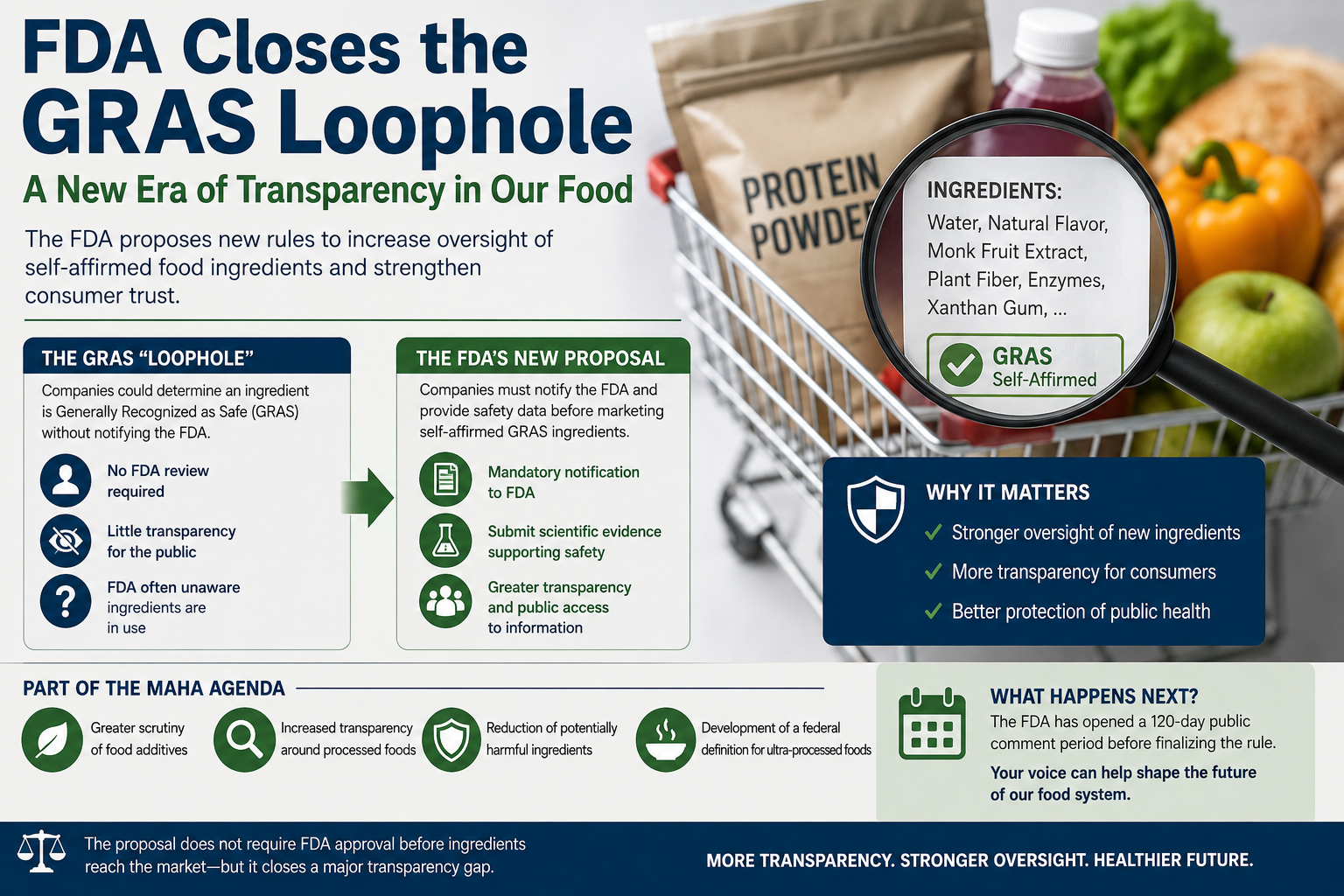
Monday, August 10, 2026 – The U.S. Food and Drug Administration (FDA) has proposed a significant change to the way new food ingredients enter the American food supply. The proposal targets one of the most debated aspects of food regulation—the Generally Recognized as Safe (GRAS) framework—which has long allowed companies to determine that certain ingredients are safe without first obtaining FDA approval. The move represents a major policy shift aligned with the Trump administration's Make America Healthy Again (MAHA) agenda and Health and Human Services Secretary Robert F. Kennedy Jr.'s push for greater transparency in the food system. (Food Dive)
What Is the GRAS Loophole?
The GRAS designation was established under the 1958 Food Additives Amendment to exempt commonly accepted safe ingredients—such as salt, vinegar, and vitamin C—from undergoing extensive FDA premarket approval. Over time, however, the program evolved to allow companies to self-affirm that a new ingredient is safe based on scientific evidence reviewed by qualified experts.
While manufacturers have always had the option to notify the FDA of their GRAS determinations, doing so has largely been voluntary. As a result, companies could legally introduce new food ingredients without the agency ever reviewing the underlying safety data or even knowing the ingredient had entered the marketplace. (Wikipedia)
Critics have referred to this practice as the "GRAS loophole" because it leaves significant responsibility for safety assessments in the hands of manufacturers rather than federal regulators.
What the FDA Is Proposing
The FDA's new proposal would require companies that self-affirm an ingredient as GRAS to submit safety information and supporting scientific evidence to the agency before marketing the ingredient. The proposal does not create a full premarket approval process similar to those used for food additives or pharmaceuticals. Instead, it establishes a mandatory notification system designed to increase transparency and allow the FDA to better monitor new ingredients entering the food supply. (Food Dive)
Under the proposed rule, the FDA would:
- Require companies to notify the agency of self-affirmed GRAS ingredients.
- Collect scientific data supporting the ingredient's safety.
- Expand the public inventory of GRAS notifications.
- Improve federal oversight without requiring Congress to rewrite existing food safety laws. (Reuters)
The agency has opened a 120-day public comment period, during which industry groups, scientists, consumer advocates, and the public can provide feedback before the rule is finalized. (Reuters)
Why the Rule Matters
Supporters argue that mandatory notification closes a longstanding transparency gap. Currently, the FDA cannot accurately determine how many self-affirmed ingredients are being used in processed foods because companies are not obligated to report them.
Greater disclosure could provide several benefits:
- Increased consumer confidence in food safety.
- Better scientific oversight.
- Easier identification of emerging food safety concerns.
- Improved public access to information about food ingredients.
Acting FDA Commissioner Kyle Diamantas said the agency needs complete visibility into ingredients entering the food supply to better protect public health and strengthen consumer trust. (Reuters)
Background: Why GRAS Has Been Controversial
The debate surrounding GRAS has existed for decades.
In 2010, the U.S. Government Accountability Office (GAO) concluded that the FDA lacked sufficient oversight because companies could market ingredients without notifying regulators. The report recommended stronger monitoring and more consistent documentation of safety evidence. Public health organizations, including the Center for Science in the Public Interest (CSPI), have repeatedly argued that voluntary notification leaves regulators unaware of potentially thousands of ingredients already in commerce. (Wikipedia)
Consumer advocates contend that independent FDA review provides an additional safeguard against conflicts of interest that may arise when companies evaluate the safety of their own products.
The food industry, however, has generally maintained that companies already conduct rigorous scientific evaluations before introducing new ingredients and that the GRAS system has supported decades of food innovation.
Will the Proposal Eliminate Self-Affirmation?
No.
This is one of the most important distinctions in the proposal.
Companies would still be able to determine that an ingredient is generally recognized as safe based on scientific evidence. The difference is that they would now have to inform the FDA and provide supporting documentation.
Some public health experts argue this still falls short of requiring the FDA to formally approve every new ingredient before it reaches consumers. Others view it as a meaningful first step that significantly improves transparency while remaining within the FDA's existing legal authority. Broader mandatory premarket approval would likely require congressional action. (The Wall Street Journal)
Part of the MAHA Initiative
The proposed GRAS reform is one component of the broader Make America Healthy Again (MAHA) initiative championed by Secretary Robert F. Kennedy Jr.
The administration has prioritized:
- Greater scrutiny of food additives.
- Increased transparency around processed foods.
- Reduction of potentially harmful ingredients.
- Development of a federal definition for ultra-processed foods.
Although officials indicated that a definition of ultra-processed foods has been developed, it has not yet been publicly released, delaying another major component of the administration's food policy agenda. (AP News)
Potential Impact on the Food Industry
If finalized, the proposal would require food manufacturers and ingredient suppliers to prepare more comprehensive scientific documentation before introducing new ingredients.
Companies may experience:
- Additional regulatory reporting requirements.
- Increased compliance costs.
- Longer timelines for introducing novel ingredients.
- Greater public scrutiny of ingredient safety.
However, the proposal stops short of requiring FDA approval before products reach store shelves, making it less burdensome than some consumer advocacy groups had hoped.
Industry observers expect many companies already following best scientific practices to face relatively modest operational changes because they often prepare similar safety documentation during product development. (Thompson Coburn LLP)
What Consumers Should Expect
For consumers, the proposal is unlikely to change grocery shopping immediately.
Existing products will remain available, and the proposal does not automatically remove ingredients already on the market. Instead, its biggest impact may be greater transparency. As more GRAS determinations become publicly available, researchers, healthcare professionals, journalists, and consumers will have better access to information about the ingredients used in processed foods.
Over time, increased disclosure could also encourage manufacturers to adopt more rigorous safety evaluations and foster greater public confidence in regulatory oversight.
Looking Ahead
The FDA's proposal represents one of the most significant efforts in years to modernize oversight of food ingredients. Rather than eliminating the GRAS framework, the agency is seeking to improve accountability by ensuring regulators are informed whenever companies introduce self-affirmed ingredients into the food supply.
Whether the proposal ultimately satisfies both industry and consumer advocates remains uncertain. Supporters view it as a practical way to close a longstanding transparency gap without requiring new legislation, while critics argue that true reform would require mandatory FDA review before any new ingredient enters the marketplace.
Regardless of the final rule, the proposal signals a broader shift toward stricter oversight of food additives and increased transparency in the U.S. food system. As food safety, ultra-processed foods, and ingredient disclosure continue to gain political and public attention, GRAS reform is likely to remain at the center of the national conversation about how America regulates its food supply. (Food Dive)
###