Flavor Compounds in Herbal Notes: Composition, Note Classification, and Applications
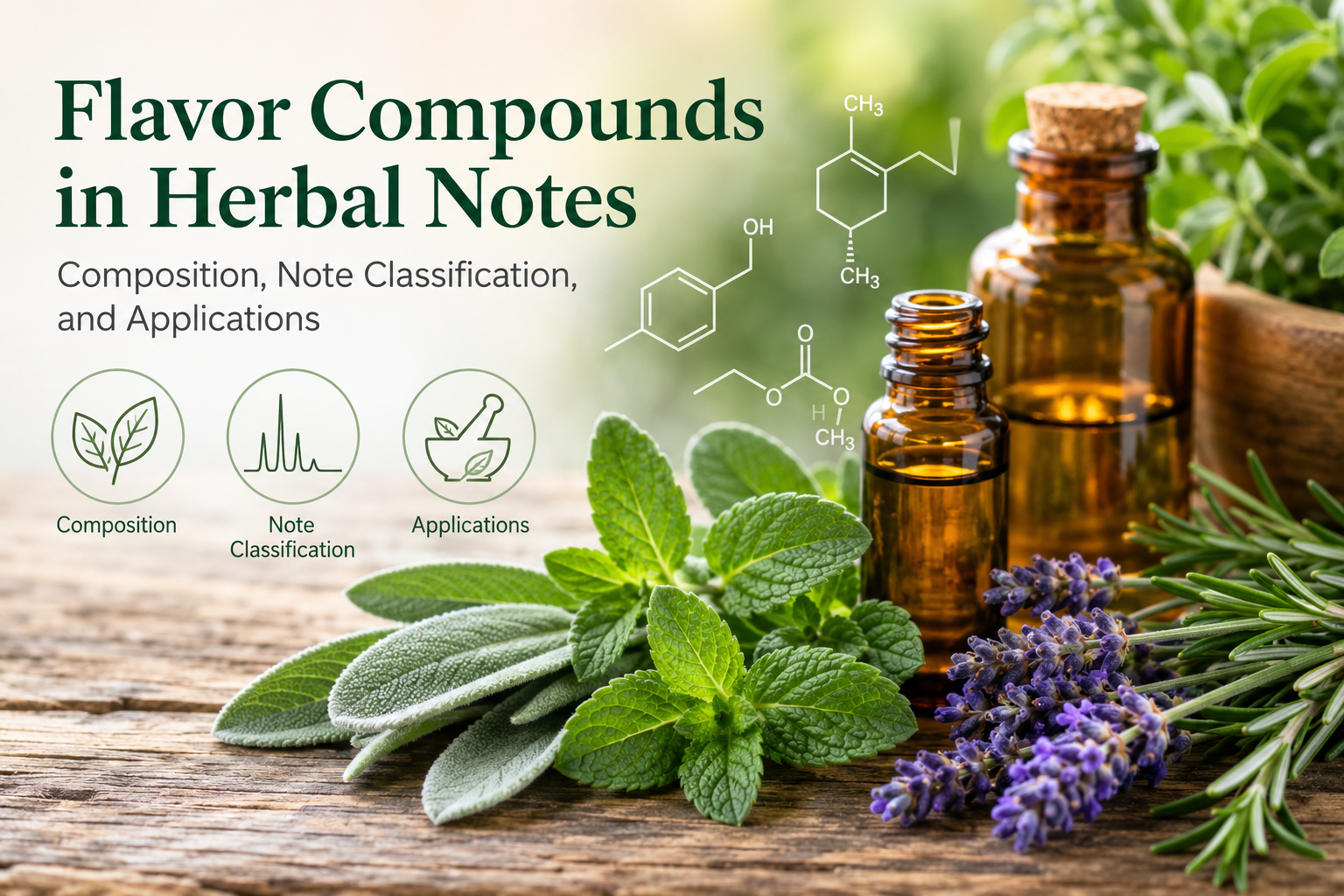
Herbal notes in flavor and fragrance work occupy a middle ground between "green" and "spicy" olfactory families. They're built from volatile compounds that fall into distinct evaporation classes — top (highly volatile, perceived first, fades in minutes), heart/middle (moderate volatility, forms the recognizable herbal character), and base (low volatility, provides depth, fixation, and lingering warmth). Below is a breakdown of the chemistry, followed by a compound-by-compound and herb-by-herb reference.
1. Why Note Classification Matters in Herbal Flavors
In flavor compounding (unlike pure fragrance), notes matter for release profile — how a flavor unfolds on the tongue and in the nose (retronasally) during consumption. A herbal flavor built only from top notes tastes "flashy" but disappears; one built only from base notes tastes flat and waxy. Balanced herbal flavors mimic the real plant's volatility spread.
2. Key Flavor Compounds and Their Note Roles
| Compound | Class | Note Position | Odor/Taste Character | Typical Source Herb |
|---|---|---|---|---|
| Limonene | Monoterpene | Top | Fresh, citrusy-green | Basil, rosemary, dill |
| 1,8-Cineole (eucalyptol) | Monoterpene oxide | Top–Heart | Cooling, camphoraceous, medicinal | Rosemary, eucalyptus, sage, bay leaf |
| α-Pinene / β-Pinene | Monoterpene | Top | Pine-like, sharp green | Rosemary, marjoram, dill |
| Menthone | Monoterpene ketone | Top–Heart | Minty, slightly sweet-cool | Peppermint, pennyroyal |
| Menthol | Monoterpene alcohol | Heart | Cooling, minty, waxy | Peppermint |
| Carvone (L-form) | Monoterpene ketone | Heart | Spearmint-sweet | Spearmint, dill, caraway |
| Linalool | Monoterpene alcohol | Heart | Floral-woody, sweet herbal | Basil, coriander, lavender |
| Estragole (methyl chavicol) | Phenolic ether | Heart | Anise-like, sweet basil | Basil, tarragon, fennel |
| Eugenol | Phenolic | Heart–Base | Warm, clove-spicy | Basil, bay leaf, tarragon |
| Thymol | Phenolic | Heart–Base | Sharp, medicinal, warm-herbal | Thyme, oregano |
| Carvacrol | Phenolic isomer of thymol | Heart–Base | Pungent, peppery-herbal | Oregano, thyme, marjoram |
| Camphor | Bicyclic ketone | Heart | Sharp, cooling, medicinal | Rosemary, sage, lavender |
| Borneol / Bornyl acetate | Terpene alcohol/ester | Heart | Woody-camphoraceous | Rosemary, thyme |
| β-Caryophyllene | Sesquiterpene | Base | Woody, dry-spicy, slightly peppery | Basil, oregano, rosemary |
| α-Bisabolol | Sesquiterpene alcohol | Base | Soft, floral, mildly sweet | Chamomile |
| Chamazulene | Sesquiterpene | Base | Deep, blue-green, waxy | Chamomile (steam-distilled) |
| Anethole | Phenolic ether | Heart–Base | Sweet, licorice-anise | Fennel, anise, tarragon |
| Farnesol | Sesquiterpene alcohol | Base | Soft floral-waxy, fixative | Lavender, chamomile |
| Sclareol | Diterpene alcohol | Base | Ambery, dry, tenacious | Clary sage (fixative) |
| Citral (neral/geranial) | Acyclic monoterpene aldehyde | Top | Lemony-green | Lemongrass, lemon balm |
| Geraniol | Terpene alcohol | Heart | Rosy-green, sweet herbal | Lemongrass, geranium herb |
General pattern: Monoterpene hydrocarbons and small aldehydes (limonene, pinenes, citral) = top; oxygenated monoterpenes (cineole, linalool, menthol, thymol) = heart; phenolics and sesquiterpenes (eugenol, caryophyllene, bisabolol, sclareol) = base/fixative.
3. Herbal Notes: Composition and Food/Beverage Applications
Basil Note
- Top: Limonene, myrcene
- Heart: Linalool, estragole (methyl chavicol) — the dominant sweet-anise-basil character
- Base: Eugenol, β-caryophyllene
- Applications: Tomato-based sauces, pesto flavor bases, Italian/Mediterranean savory seasonings, basil-infused beverages (lemonades, cocktails like basil smash), ice creams and sorbets (basil-strawberry), savory snack seasonings.
Rosemary Note
- Top: α-pinene, camphene, limonene
- Heart: 1,8-cineole, camphor
- Base: Borneol, β-caryophyllene, verbenone
- Applications: Roasted meat seasonings, focaccia/bread flavoring, herbal liqueurs (e.g., in amaro-style bitters), savory snack coatings, natural antioxidant-flavor systems in processed meats, rosemary-infused lemonades and cocktails.
Thyme Note
- Top: p-Cymene, γ-terpinene
- Heart: Thymol
- Base: Carvacrol, borneol
- Applications: Meat and poultry seasoning blends, soups/broths, herbal teas, French herbes de Provence blends, savory crackers, sauces (bordelaise-style), medicinal lozenges/cough drops.
Oregano Note
- Top: p-Cymene
- Heart: Carvacrol
- Base: Thymol, β-caryophyllene
- Applications: Pizza/pasta sauces, Mediterranean and Mexican savory seasoning blends, marinades, pickling brines, savory snack seasoning.
Sage Note
- Top: α- and β-thujone, camphene
- Heart: 1,8-cineole, camphor
- Base: Borneol, viridiflorol
- Applications: Sausage and stuffing seasoning, poultry seasoning blends, brown butter–sage flavor systems, herbal digestifs.
Marjoram Note
- Top: Sabinene, α-terpinene
- Heart: cis-Sabinene hydrate, linalool
- Base: Terpinen-4-ol, carvacrol (trace)
- Applications: Sausages, soups, savory sauces, herbes de Provence-style blends, milder substitute for oregano in Mediterranean dishes.
Peppermint Note
- Top: Menthone, isomenthone
- Heart: Menthol
- Base: Menthyl acetate, pulegone (trace)
- Applications: Confectionery (mints, chewing gum), chocolate-mint products, toothpaste-adjacent flavor systems, herbal/mint teas, mojito and mint julep beverages, ice cream.
Spearmint Note
- Top: L-carvone (dominant), limonene
- Heart: Dihydrocarvone
- Base: Cineole (trace)
- Applications: Chewing gum, candies, mint teas, culinary garnish flavor (lamb dishes, tabbouleh), cocktails (mojitos), toothpaste/mouthwash flavoring.
Fennel/Anise-type Herbal Note
- Top: Limonene, α-pinene
- Heart: Fenchone
- Base: Anethole (dominant, sweet-licorice)
- Applications: Absinthe, sambuca, and anisette liqueurs, fennel seed sausage seasoning, bread (rye/fennel), digestif teas, candies (fennel/anise drops).
Tarragon Note
- Top: Limonene, ocimene
- Heart: Estragole (dominant)
- Base: Eugenol (trace)
- Applications: Béarnaise and other French sauces, mustard flavoring (tarragon mustard), vinegar infusions, chicken and fish seasoning, herbal vinegars.
Dill Note
- Top: α-Phellandrene, limonene
- Heart: Carvone (dominant, dill-characteristic)
- Base: Dill apiole (trace)
- Applications: Pickling brines, dill sauces (gravlax, tzatziki-adjacent), salad dressings, dill-flavored snack seasonings, savory dips.
Bay Leaf Note
- Top: α-Pinene, sabinene
- Heart: 1,8-cineole
- Base: Eugenol, methyl eugenol
- Applications: Braised meats, stocks/broths, marinades, pickling spice blends, some spiced beverages (mulled wine/cider adjuncts).
Eucalyptus/Medicinal-Herbal Note
- Top: α-Pinene
- Heart: 1,8-Cineole (dominant)
- Base: α-Terpineol
- Applications: Cough drops, medicinal lozenges, herbal teas (limited use), some craft cocktail bitters, chewing gum with cooling profiles.
Lavender (Herbal-Floral Crossover) Note
- Top: Linalyl acetate, limonene
- Heart: Linalool
- Base: Coumarin, farnesol
- Applications: Lavender lemonade, herbal teas, baked goods (shortbread, macarons), lavender-honey syrups for cocktails, dairy desserts (ice cream, panna cotta).
Chamomile Note
- Top: Isobutyl/isoamyl angelates (fruity-green lift)
- Heart: α-Bisabolol
- Base: Chamazulene, farnesol
- Applications: Herbal teas, chamomile-infused liqueurs, baked goods, calming beverage blends, honey-chamomile syrups.
Lemongrass/Lemon Balm Herbal-Citrus Note
- Top: Citral (neral + geranial, dominant)
- Heart: Geraniol, nerol
- Base: Farnesol (trace)
- Applications: Southeast Asian broths and curries, herbal iced teas, lemongrass-infused cocktails, kombucha flavoring, soups (tom yum-style).
Clary Sage Note (used mainly as fixative/base contributor)
- Top: Linalyl acetate
- Heart: Linalool
- Base: Sclareol (strong fixative)
- Applications: Muscat-style wine flavor notes, vermouth and aromatized wine formulations, herbal liqueurs.
4. Practical Formulation Notes
- Beverage systems (teas, cocktails, sodas) favor herbal notes with strong top/heart contributions (mint, basil, lemongrass, dill) because aroma delivery on sipping matters more than lingering aftertaste.
- Savory/meat applications favor notes with heavier base/phenolic content (thyme, oregano, sage, bay) since these compounds survive cooking temperatures and provide lasting flavor through heat processing.
- Confectionery relies heavily on single dominant heart-note compounds (menthol, carvone) for clean, recognizable flavor identity.
- Base-note phenolics (thymol, carvacrol, eugenol) also contribute natural antimicrobial/antioxidant functionality, which is part of why herbs like thyme, oregano, and sage are traditional in cured and preserved foods — the flavor role and the preservative role evolved together.
###