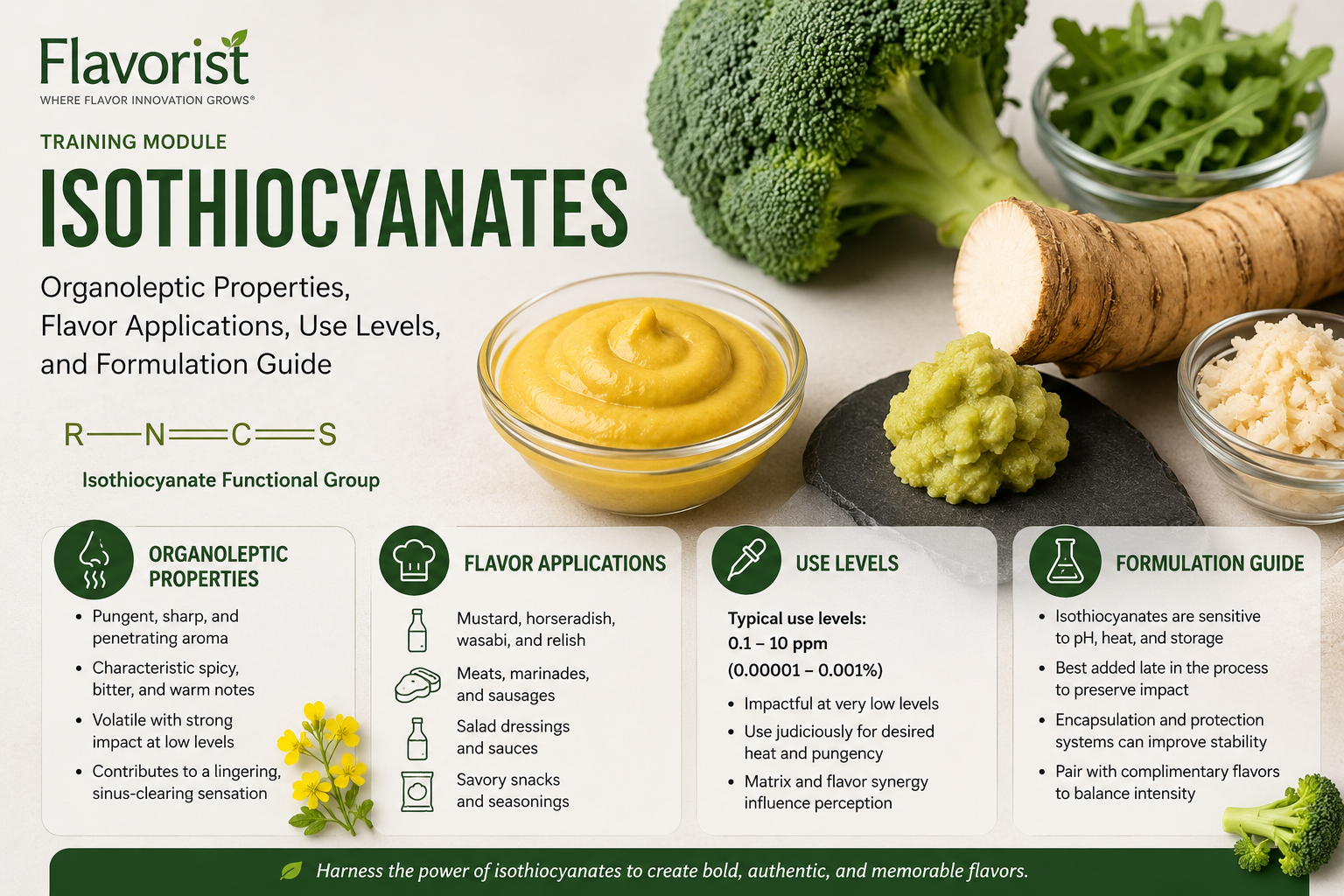
Flavorist Training Module: Isothiocyanates — Organoleptic Properties, Flavor Applications, Use Levels, and Formulation Guide
Also read another post below
 Editor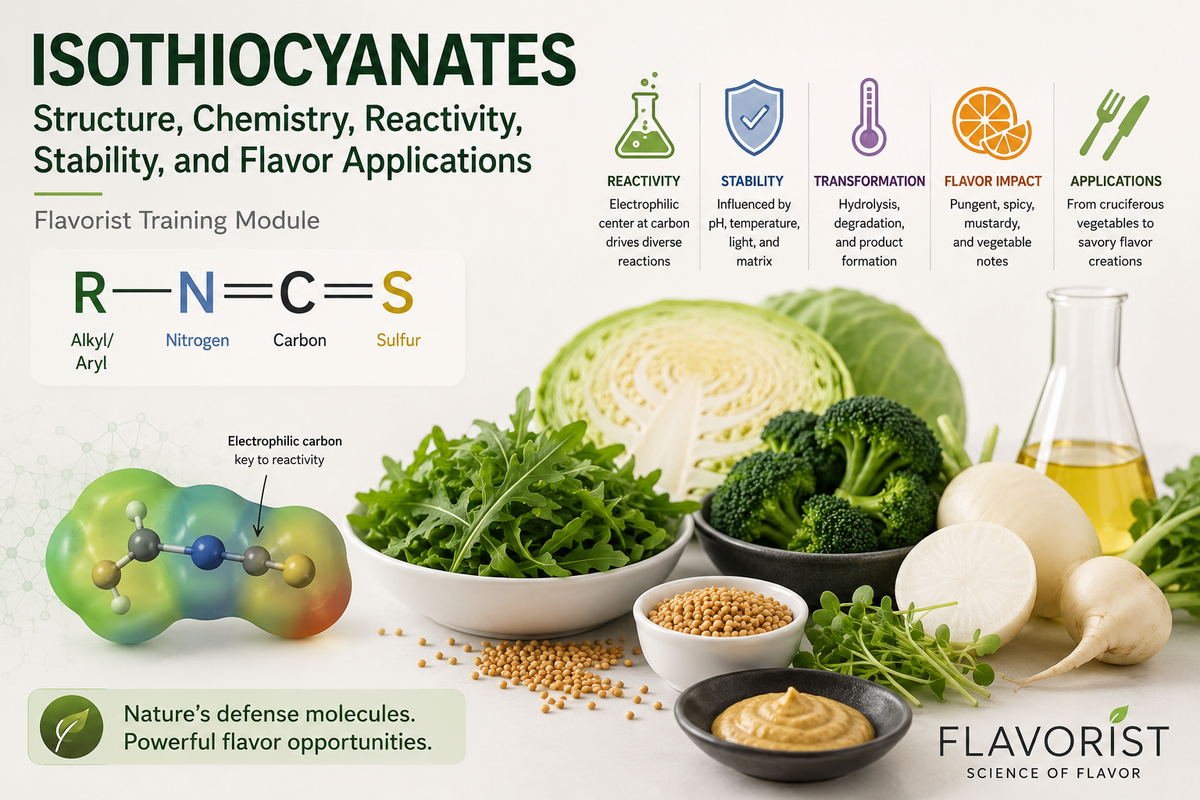
At the bottom of this page, you will find a "Buy Now" button to purchase the digital files on Typical Commercial Applications of Isothiocyanates in Flavors (10 chapters, approximately 50 pages).
Isothiocyanates are among the key groups of aroma compounds that the Society of Flavor Chemists requires certified flavorists to understand, particularly in terms of their organoleptic properties. The following section highlights several important isothiocyanates, offering essential information on their sensory characteristics, practical applications, and other relevant considerations that flavorists may find valuable.
Allyl Isothiocyanate
Synonyms: Mustard oil, 3-Isothiocyanato-1-propene. CAS 57-06-7.
Organoleptic Properties: Extremely powerful, penetrating, volatile, mustard-like, horseradish, wasabi, freshly grated radish, green sulfurous, cabbage-like, slightly garlic-like, sharp, clean, and intensely pungent. The odor develops almost instantaneously with strong nasal pungency, sinus stimulation, and eye-watering effects. The burn is highly volatile and short-lived, producing freshness rather than lingering heat. Odor threshold is exceptionally low (sub-ppb to low ppb depending on matrix).
Role in Flavor Creation: Primarily functions as the characterizing note in mustard, horseradish, and wasabi flavors. In trace amounts it serves as a freshness enhancer, topnote, authenticity modifier, trigeminal stimulant, and "freshly cut vegetable" note. It restores realism to cruciferous vegetable flavors that otherwise taste cooked or flat and increases perceived freshness in savory systems without leaving persistent sulfur aftertaste.
Flavor Types: Mustard (yellow, Dijon, brown, Chinese), horseradish, wasabi, radish, daikon, watercress, arugula, cabbage, broccoli, Brussels sprouts, cauliflower, pickle, relish, kimchi, sauerkraut, Bloody Mary, vegetable juice, tomato juice, roast beef, corned beef, deli meats, sausage, seafood sauces, cocktail sauce, barbecue sauce, mayonnaise, salad dressing, Asian savory seasonings, instant noodles, snack seasonings, roasted nuts, and vegetable concentrates.
Typical Use Levels: Normally 0.02-2 ppm in finished foods for freshness enhancement; 2-10 ppm for noticeable pungency; 10-50 ppm in mustard products; 50-500 ppm or higher in prepared horseradish. Flavor concentrates generally contain 0.001-0.05%, while dedicated mustard bases may contain considerably more. Because of the extremely low threshold, serial dilutions (0.1%, 0.01%, or 0.001%) are strongly recommended during formulation.
Compatible Ingredients: Shows excellent synergy with methional, dimethyl sulfide, dimethyl trisulfide, garlic oil, onion oil, ginger oil, black pepper oleoresin, capsicum, hexanal, (Z)-3-hexenol, cis-3-hexenyl acetate, pyrazines, vinegar, lactic acid, acetic acid, mustard seed extract, horseradish extract, and green vegetable sulfur compounds. Small additions often greatly improve perceived freshness.
Processing Considerations: Highly volatile and susceptible to thermal loss. Extended baking, frying, retorting, or prolonged heating may destroy most of the compound. Best retained by late addition, cold blending, topical seasoning, or encapsulation. Acidic systems improve stability, whereas alkaline conditions accelerate decomposition.
Natural Occurrence: Formed enzymatically from sinigrin by myrosinase when mustard seeds, horseradish, or other cruciferous plants are crushed. Naturally occurs in black mustard, brown mustard, horseradish, wasabi, radish, cabbage, broccoli, Brussels sprouts, cauliflower, turnip, and related Brassicaceae.
Natural Availability: Commercially available as both natural and synthetic material. Natural Allyl Isothiocyanate is produced from mustard seed through enzymatic hydrolysis followed by isolation of the volatile oil. Natural labeling depends on jurisdiction and manufacturing method.
Stability and Storage: Sensitive to heat, oxygen, moisture, and alkaline conditions. Store tightly sealed under refrigeration in full containers protected from light. Significant potency loss occurs after repeated opening because of volatility.
Safety Notes: Powerful lachrymator and respiratory irritant in concentrated form. Avoid inhalation of vapors and skin contact. Work under good ventilation and prepare dilutions before routine use. Minor formulation errors can increase pungency several-fold.
Flavorist's Notes: One of the easiest materials to overdose. When properly used it should create the impression of freshly grated mustard or horseradish rather than obvious chemical heat. Most successful formulations employ Allyl Isothiocyanate as the final adjustment after the remainder of the flavor profile has been completed.
Phenethyl Isothiocyanate
Synonyms: 2-Phenylethyl isothiocyanate (PEITC), β-Phenethyl isothiocyanate. CAS 2257-09-2. Molecular formula C9H9NS. Molecular weight 163.24.
Organoleptic Properties
Phenethyl isothiocyanate possesses a cleaner, greener, and more refined pungency than allyl isothiocyanate. The odor is reminiscent of fresh watercress, arugula (rocket), nasturtium, radish greens, crushed garden cress, young cabbage leaves, and freshly cut cruciferous vegetables. Compared with allyl isothiocyanate, it is less explosive, less mustard-like, less nasal, and more leafy, vegetal, and elegant. The pungency develops rapidly but is smoother, more persistent, and less irritating, producing a peppery, green freshness rather than the aggressive sinus-clearing effect associated with mustard oil. At higher concentrations it develops earthy, woody, slightly floral, and faintly balsamic nuances while retaining its characteristic cruciferous identity.
Odor threshold is extremely low, generally in the low ppb range depending upon the food matrix, although somewhat higher than allyl isothiocyanate. Its lower volatility allows the aroma to persist longer in finished products.
Overall Flavor Profile
Phenethyl isothiocyanate is often described as the "green leafy" member of the isothiocyanate family. Rather than defining mustard or horseradish, it contributes the flavor of fresh garden vegetables and peppery salad greens. It provides realism without excessive heat and is frequently responsible for the characteristic aroma associated with freshly harvested watercress or arugula.
Functional Role in Flavor Creation
Phenethyl isothiocyanate is primarily an authenticity modifier and complexity builder. It recreates the natural peppery freshness found in leafy cruciferous vegetables while adding depth and realism to radish and vegetable flavors. It contributes a living, freshly harvested character that is difficult to reproduce with aldehydes or sulfur compounds alone.
Unlike allyl isothiocyanate, which usually serves as the dominant impact ingredient, phenethyl isothiocyanate is more often employed as a secondary modifier that rounds and naturalizes pungent vegetable profiles. It softens the harshness of allyl isothiocyanate while extending the perception of freshness. In salad and vegetable flavors it often acts as the principal isothiocyanate because its pungency is more elegant and less aggressive.
It also functions as a bridge between green top notes and sulfur-containing vegetable notes, helping integrate hexanal, leaf alcohol, methional, dimethyl sulfide, and pyrazines into a coherent natural profile.
Flavor Types
Particularly useful in watercress, arugula (rocket), garden cress, nasturtium, radish, daikon, turnip, cabbage, broccoli, Brussels sprouts, kale, mustard greens, spinach blends, mixed salad greens, vegetable juice, green smoothies, tomato juice, Bloody Mary, fresh vegetable concentrates, herb seasonings, Asian vegetable flavors, vegetable soups, ramen seasonings, healthy snack seasonings, freeze-dried vegetable products, fresh salsa, gourmet mayonnaise, vinaigrettes, gourmet sandwich spreads, vegetable dips, fermented vegetables, kimchi, sauerkraut, and premium savory flavors.
Although rarely used alone, it significantly improves horseradish and wasabi flavors by contributing leafy complexity that allyl isothiocyanate cannot provide.
Foods in Which It Can Be Used
Applicable to salad dressings, mayonnaise, vegetable beverages, vegetable juices, tomato juice cocktails, Bloody Mary mixes, soups, instant noodles, frozen vegetables, canned vegetables, vegetable dips, pickled vegetables, kimchi, sauerkraut, meat seasonings, roast beef seasonings, sausage seasonings, seafood sauces, cocktail sauces, mustard products, gourmet snack seasonings, potato chips, roasted nuts, crackers, savory biscuits, cheese spreads, processed cheese, vegetarian meat analogues, plant-based burgers, vegan seasonings, and functional food products emphasizing vegetable authenticity.
Typical Use Levels
Because of its low odor threshold, phenethyl isothiocyanate is generally used between 0.02 and 1 ppm in finished foods when serving as a realism enhancer. Levels of 1-5 ppm provide distinct watercress or arugula character. Higher concentrations are seldom required except in concentrated seasoning systems. Flavor concentrates typically contain approximately 0.0005-0.02%, although specialized vegetable bases may employ higher concentrations.
Serial dilution before formulation is strongly recommended because small changes in concentration significantly alter the perceived balance.
Flavor Pairings and Synergies
Phenethyl isothiocyanate exhibits excellent synergy with hexanal, (Z)-3-hexenol, (Z)-3-hexenyl acetate, trans-2-hexenal, methional, dimethyl sulfide, dimethyl trisulfide, garlic oil, onion oil, leek extracts, parsley, celery seed oil, coriander leaf, dill, black pepper, ginger, horseradish extract, mustard seed extract, vinegar, lactic acid, citric acid, pyrazines, geosmin (trace levels), and mushroom flavor compounds.
Combined with allyl isothiocyanate, it produces a more natural horseradish or wasabi profile than allyl alone. When blended with green aldehydes it recreates freshly harvested leafy vegetables with remarkable realism.
Materials Showing Good Compatibility
Particularly compatible with sulfur-containing vegetable compounds, fresh green aldehydes, pyrazines, organic acids, natural vegetable extracts, fermented vegetable flavors, fresh herb oils, meat Maillard reaction flavors, and tomato flavor systems. It also performs well with low levels of mint or cooling agents when creating fresh vegetable beverage profiles.
Off-Notes and Overdose Effects
Excessive concentrations produce harsh mustard, medicinal, sulfurous, rubber-like, cabbage-water, burnt radish, or chemical pungency. High levels suppress delicate green notes and may dominate the entire flavor system. Overdosing frequently results in an artificial vegetable aroma lacking freshness.
Unlike allyl isothiocyanate, overdose generally produces persistent leafy bitterness in addition to excessive pungency.
Processing Considerations
Phenethyl isothiocyanate is somewhat less volatile than allyl isothiocyanate, resulting in improved retention during processing. Nevertheless, substantial losses occur during baking, frying, retorting, spray drying, and prolonged cooking. It performs best in refrigerated products, topical seasonings, salad dressings, dips, sauces, and products receiving minimal thermal treatment.
Encapsulation substantially improves retention in powdered seasonings.
Stability
Stable under refrigerated storage when protected from oxygen, moisture, and light. Hydrolysis is accelerated under alkaline conditions, while acidic systems provide better stability. Oxidizing environments gradually diminish pungency. Long-term exposure to elevated temperatures causes decomposition and loss of freshness.
Solubility
Practically insoluble in water but readily soluble in ethanol, propylene glycol, triacetin, vegetable oils, medium-chain triglycerides, and other food-grade organic solvents. Commercial preparations are frequently supplied diluted for ease of handling and accurate dosing.
Natural Occurrence
Phenethyl isothiocyanate is produced enzymatically from the glucosinolate gluconasturtiin by the action of myrosinase following tissue disruption. It occurs naturally in watercress (Nasturtium officinale), garden cress (Lepidium sativum), arugula (Eruca sativa), certain mustard species, radish, turnip, cabbage, broccoli, kale, and numerous other members of the Brassicaceae family.
Fresh crushing or chopping of these vegetables greatly increases its concentration because enzyme and precursor are brought into contact.
Natural Availability
Commercial natural phenethyl isothiocyanate is available through enzymatic hydrolysis of naturally occurring glucosinolates extracted from Brassicaceae plants. Synthetic material is also commercially available and is chemically identical. Qualification for natural flavor labeling depends upon regional regulations and manufacturing methodology.
Regulatory Status
Phenethyl isothiocyanate is recognized internationally as a flavoring substance and may be used under Good Manufacturing Practice (GMP) where permitted by local regulations. Usage levels are generally self-limiting because of its extremely high sensory potency. Flavorists should always verify current regulatory requirements in the target market.
Safety and Handling
Like other isothiocyanates, phenethyl isothiocyanate is an eye, skin, and respiratory irritant in concentrated form. Vapors may produce tearing, coughing, and nasal irritation. Appropriate laboratory ventilation, gloves, and eye protection should be used during handling. Concentrated material should be diluted before routine weighing to minimize exposure and improve formulation accuracy.
Comparison with Allyl Isothiocyanate
Compared with allyl isothiocyanate, phenethyl isothiocyanate is less volatile, less aggressive, less mustard-like, and more leafy, peppery, and persistent. Allyl isothiocyanate dominates mustard and horseradish flavors through explosive nasal pungency, whereas phenethyl isothiocyanate excels in watercress, arugula, salad greens, and premium vegetable flavors where elegant freshness and natural green complexity are desired. The two compounds are highly complementary and frequently used together to achieve a balanced, authentic cruciferous vegetable profile.
Flavorist's Notes
Phenethyl isothiocyanate is one of the most valuable "hidden" realism materials for premium vegetable flavors. While consumers seldom identify its presence directly, they readily perceive the difference between formulations with and without it. Small additions impart the unmistakable impression of freshly harvested greens, making the flavor appear brighter, more natural, and less processed. For sophisticated cruciferous vegetable profiles, it is often more important than increasing the level of allyl isothiocyanate, as it supplies the nuanced leafy pepperiness that distinguishes fresh vegetables from simple mustard pungency.
Benzyl Isothiocyanate
Synonyms: Benzyl mustard oil, Isothiocyanatomethylbenzene, α-Isothiocyanatotoluene. CAS 622-78-6. Molecular formula C8H7NS. Molecular weight 149.21.
Organoleptic Properties
Benzyl isothiocyanate possesses a sharp, green, peppery, radish-like odor with distinct mustard, watercress, nasturtium, and fresh cruciferous vegetable notes. Compared with allyl isothiocyanate, its pungency is less explosive and less sinus-clearing, while exhibiting greater depth, warmth, and persistence. The aroma is earthier, slightly woody, faintly fruity, and more rounded, often recalling freshly sliced radish, young turnips, papaya seeds, and crushed mustard greens. At low concentrations it contributes fresh green pepperiness; at higher concentrations it becomes intensely pungent, sulfurous, medicinal, and somewhat rubber-like.
The odor threshold is extremely low, generally in the low parts-per-billion range, although somewhat higher than allyl isothiocyanate. Because of its reduced volatility, its aroma persists longer during eating and survives processing better than allyl isothiocyanate.
Overall Flavor Profile
Benzyl isothiocyanate occupies the sensory space between allyl and phenethyl isothiocyanate. It provides more pungency than phenethyl but greater depth and persistence than allyl. It is particularly effective for recreating the characteristic aroma of fresh radish, turnip, mustard greens, and certain tropical plant materials. The material contributes a realistic freshly cut vegetable character while maintaining a clean, peppery finish.
Functional Role in Flavor Creation
Benzyl isothiocyanate functions primarily as an authenticity enhancer, complexity builder, and persistence modifier. It extends the pungency supplied by allyl isothiocyanate while contributing earthy green nuances that prevent mustard and radish flavors from appearing overly sharp or one-dimensional. It is especially useful in premium vegetable flavors where the objective is to reproduce freshly harvested produce rather than simple mustard heat.
The material also serves as an effective bridge between green aldehydes and sulfur-containing vegetable compounds, producing a more natural transition from fresh leafy notes to cooked vegetable notes. In many formulations it acts as the missing component that transforms an acceptable radish flavor into one with convincing botanical realism.
Flavor Types
Particularly valuable in radish, daikon, turnip, mustard greens, watercress, arugula, nasturtium, cabbage, broccoli, kale, kimchi, sauerkraut, pickle, fermented vegetables, gourmet mustard, horseradish, wasabi, vegetable juices, Bloody Mary, salad dressing, vegetable soups, ramen seasonings, Asian vegetable flavors, tropical vegetable flavors, papaya seed flavors, meat seasonings, roast beef seasonings, seafood sauces, cocktail sauces, savory snacks, crackers, potato chips, roasted nuts, vegetarian meat analogues, and premium savory flavor bases.
It is frequently used in combination with allyl and phenethyl isothiocyanates to reproduce the complex isothiocyanate profile naturally present in cruciferous vegetables.
Foods in Which It Can Be Used
Suitable for salad dressings, mayonnaise, mustard, horseradish preparations, wasabi products, pickles, kimchi, sauerkraut, vegetable beverages, tomato juice, vegetable soups, instant noodles, frozen vegetables, canned vegetables, vegetable dips, processed cheese spreads, gourmet crackers, savory biscuits, snack seasonings, roasted seeds, meat rubs, sausage seasonings, plant-based meat products, fermented vegetable products, and functional vegetable beverages.
Typical Use Levels
Normally employed at 0.01-0.5 ppm in finished foods when functioning as a realism enhancer. Levels between 0.5-3 ppm provide distinct radish or mustard-green character. Concentrations above approximately 5 ppm generally become excessively pungent except in concentrated condiments. Flavor concentrates typically contain 0.0005-0.02%, depending upon the intended application. Because the compound is highly potent, dilution to 0.1% or lower is recommended before compounding.
Flavor Pairings and Synergies
Benzyl isothiocyanate combines exceptionally well with allyl isothiocyanate, phenethyl isothiocyanate, methional, dimethyl sulfide, dimethyl trisulfide, garlic oil, onion oil, leek extracts, hexanal, trans-2-hexenal, (Z)-3-hexenol, cis-3-hexenyl acetate, pyrazines, celery seed oil, coriander, dill, parsley, black pepper, ginger, horseradish extract, mustard seed extract, vinegar, lactic acid, citric acid, tomato flavors, mushroom notes, and fermented vegetable flavor systems.
When blended with allyl isothiocyanate, it produces a more realistic freshly grated horseradish profile. Combined with phenethyl isothiocyanate, it creates convincing watercress, arugula, and radish flavors exhibiting both pungency and leafy freshness.
Materials Showing Good Compatibility
Compatible with fresh green aldehydes, sulfur-containing vegetable compounds, Maillard meat flavors, fermented vegetable notes, pyrazines, mushroom flavor compounds, roasted vegetable flavors, herb oils, pepper extracts, citrus acids, and natural vegetable extracts. It integrates especially well into complex savory systems requiring realistic vegetable topnotes.
Off-Notes and Overdose Effects
Excessive use produces harsh mustard oil, medicinal, phenolic, rubber, burnt cabbage, sulfurous, and chemical notes. Overdose frequently masks delicate vegetable aromas, suppresses freshness, and creates an unpleasant lingering bitterness. In beverages it may become aggressively pungent and medicinal, while in snack seasonings excessive levels often produce an artificial radish character.
Processing Considerations
Benzyl isothiocyanate is more thermally stable than allyl isothiocyanate but remains susceptible to volatilization during severe processing. Retention is better in refrigerated foods, topical seasonings, salad dressings, sauces, dips, and minimally processed products. Spray drying and prolonged baking reduce aroma intensity substantially, although encapsulation greatly improves stability in powdered seasonings.
Its lower volatility makes it useful where a more persistent pungency is desired after cooking.
Stability
Reasonably stable under refrigerated storage when protected from light, oxygen, and moisture. Hydrolysis occurs gradually in aqueous systems and more rapidly under alkaline conditions. Acidic formulations improve stability. Long-term storage at elevated temperatures results in progressive loss of pungency and development of less desirable sulfur degradation products.
Solubility
Practically insoluble in water but readily soluble in ethanol, propylene glycol, triacetin, vegetable oils, medium-chain triglycerides, and other common flavor solvents. Commercial products are frequently supplied as diluted solutions to facilitate safe handling and accurate dispensing.
Natural Occurrence
Benzyl isothiocyanate is formed by enzymatic hydrolysis of the glucosinolate glucotropaeolin through the action of myrosinase following tissue disruption. It occurs naturally in papaya seeds (Carica papaya), garden cress (Lepidium sativum), nasturtium (Tropaeolum majus), certain mustard species, and numerous cruciferous vegetables, although concentrations vary considerably among plant species.
Papaya seeds are particularly rich in benzyl isothiocyanate and are largely responsible for their characteristic peppery, mustard-like flavor.
Natural Availability
Commercial natural benzyl isothiocyanate is available through enzymatic production from glucotropaeolin-containing botanical materials, particularly garden cress and related Brassicaceae species. Synthetic material is also widely available and chemically identical. Natural labeling depends upon the production process and applicable regional regulations.
Regulatory Status
Benzyl isothiocyanate is recognized internationally as a flavoring substance for use under Good Manufacturing Practice (GMP) where permitted by local regulations. Practical use levels are generally limited by its very high sensory potency rather than by technological considerations. Regulatory status and permitted applications should always be verified for the intended market.
Safety and Handling
Like all isothiocyanates, benzyl isothiocyanate is a potent irritant to the eyes, skin, and respiratory tract. Concentrated vapors readily cause tearing, coughing, and nasal irritation. Handling should be carried out in a well-ventilated laboratory using appropriate gloves and eye protection. Preparing serial dilutions before weighing minimizes exposure while greatly improving formulation accuracy.
Comparison with Other Commercial Isothiocyanates
Compared with allyl isothiocyanate, benzyl isothiocyanate is less volatile, less explosive, more persistent, and noticeably earthier with stronger radish and turnip character. Compared with phenethyl isothiocyanate, it is more pungent, less leafy, less floral, and exhibits greater mustard character while retaining significant green vegetable freshness. Among the three major commercial isothiocyanates, benzyl isothiocyanate is often the preferred choice when authentic radish, turnip, papaya seed, or mustard-green character is desired without the overwhelming nasal pungency of allyl isothiocyanate.
Flavorist's Notes
Benzyl isothiocyanate is frequently underutilized despite its ability to impart remarkable realism to radish and cruciferous vegetable flavors. It is rarely used as the sole isothiocyanate; instead, it serves as a supporting material that extends pungency, increases botanical authenticity, and supplies the earthy green complexity characteristic of freshly harvested vegetables. In premium horseradish, wasabi, mustard, and radish flavors, small additions often produce a more convincing natural profile than simply increasing allyl isothiocyanate. It is particularly valuable for flavorists seeking to reproduce the aroma released when radishes or turnips are freshly sliced, where its combination of green pepperiness, earthy depth, and persistent pungency closely resembles the natural plant.
Ethyl Isothiocyanate
Synonyms: Ethyl mustard oil, Isothiocyanatoethane. CAS 542-85-8. Molecular formula C3H5NS. Molecular weight 87.14.
Organoleptic Properties
Ethyl isothiocyanate possesses a sharp, penetrating, green, sulfurous odor with distinct mustard, cabbage, turnip, radish, and cooked cruciferous vegetable characteristics. Compared with allyl isothiocyanate, it is less aggressive, less sinus-clearing, and less horseradish-like, exhibiting a softer but distinctly vegetal pungency. The aroma is cleaner, less garlic-like, and more reminiscent of freshly cut cabbage, Brussels sprouts, kale, and young broccoli. At low concentrations it contributes fresh green sulfur notes with moderate pungency; at higher levels it develops stronger mustard, cooked cabbage, onion-like, rubbery, and occasionally slightly solvent-like characteristics.
Its odor threshold is extremely low, typically within the low parts-per-billion range, although generally somewhat higher than allyl isothiocyanate. The compound is highly volatile and produces rapid flavor impact but relatively short persistence.
Overall Flavor Profile
Ethyl isothiocyanate is best regarded as the "cabbage and cruciferous vegetable" member of the commercial isothiocyanate family. It contributes less nasal heat than allyl isothiocyanate and less leafy complexity than phenethyl isothiocyanate, instead emphasizing authentic green cabbage, broccoli, Brussels sprouts, kale, and cooked cruciferous vegetable character. Its pungency is noticeable but restrained, making it particularly valuable where freshness rather than intense mustard heat is desired.
Functional Role in Flavor Creation
Ethyl isothiocyanate functions primarily as a cruciferous vegetable authenticator, freshness enhancer, sulfur bridge, and green topnote modifier. It restores the aroma released when cabbage or broccoli is freshly chopped and helps reproduce the transition between fresh green aldehydes and cooked sulfur compounds. It contributes realism to vegetable flavors that would otherwise appear bland, sweet, or overcooked.
Unlike allyl isothiocyanate, it seldom serves as the defining flavor ingredient. Instead, it provides supporting realism by reinforcing the characteristic pungent notes naturally present in Brassica vegetables. In cabbage and broccoli flavors it often becomes the principal isothiocyanate because it produces authentic vegetable pungency without obvious mustard character.
Flavor Types
Particularly valuable in cabbage, broccoli, Brussels sprouts, cauliflower, kale, collard greens, mustard greens, turnip, rutabaga, radish, daikon, vegetable juice, tomato juice, Bloody Mary, mixed vegetable beverages, vegetable soups, cream soups, instant noodles, ramen seasonings, bouillon, vegetable stock, frozen vegetables, canned vegetables, kimchi, sauerkraut, pickled vegetables, savory snacks, roasted vegetable seasonings, meat seasonings, vegetarian meat analogues, and gourmet vegetable flavor systems.
It is also useful in mustard and horseradish flavors where a softer, more vegetable-like pungency is desired.
Foods in Which It Can Be Used
Suitable for canned vegetables, frozen vegetables, dehydrated vegetables, vegetable powders, soup mixes, bouillon cubes, seasoning blends, vegetable chips, potato chips, crackers, instant noodles, frozen meals, meat rubs, sausage seasonings, deli meat flavors, sauces, gravies, dips, mayonnaise, salad dressings, fermented vegetables, tomato beverages, vegetable cocktails, plant-based meat products, vegetable spreads, and gourmet savory applications.
Typical Use Levels
Normally employed at 0.02-1 ppm in finished foods for authenticity enhancement. Levels of 1-3 ppm provide noticeable cabbage or broccoli pungency, while concentrations above approximately 5 ppm usually become excessively sulfurous and mustard-like. Flavor concentrates generally contain between 0.0005% and 0.02%, depending upon the application. Because of the compound's high potency, preparation of serial dilutions before formulation is recommended.
Flavor Pairings and Synergies
Ethyl isothiocyanate exhibits excellent synergy with methional, dimethyl sulfide, dimethyl disulfide, dimethyl trisulfide, cooked cabbage sulfur compounds, garlic oil, onion oil, leek extracts, hexanal, trans-2-hexenal, (Z)-3-hexenol, pyrazines, celery seed oil, parsley, dill, black pepper, ginger, lactic acid, acetic acid, vinegar, tomato flavors, mushroom flavor compounds, roasted vegetable flavors, Maillard reaction products, and vegetable extracts.
Combined with methional and dimethyl sulfide it creates highly realistic cabbage, broccoli, and Brussels sprout flavors. Small additions of allyl or phenethyl isothiocyanate further improve authenticity by introducing fresh-cut vegetable pungency.
Materials Showing Good Compatibility
Compatible with sulfur-containing vegetable compounds, fresh green aldehydes, pyrazines, roasted vegetable flavors, herb oils, fermented vegetable flavors, meat reaction flavors, mushroom flavors, organic acids, yeast extracts, hydrolyzed vegetable proteins, and umami ingredients. It performs particularly well in savory formulations requiring a balance between fresh and cooked vegetable notes.
Off-Notes and Overdose Effects
Overuse results in harsh mustard, rubber, sulfur, cabbage water, onion skin, burnt vegetable, chemical, and slightly solvent-like notes. Excessive concentrations quickly suppress desirable fresh vegetable characteristics and create an overcooked, processed impression. In beverages, high levels may become medicinal and unpleasantly pungent.
Unlike phenethyl isothiocyanate, overdose seldom produces leafy pepperiness; instead, it shifts toward cooked sulfurous vegetables.
Processing Considerations
Ethyl isothiocyanate is highly volatile and suffers considerable loss during baking, frying, retorting, spray drying, and prolonged heating. Best retention is achieved through post-processing addition, topical seasoning, refrigerated foods, or encapsulated flavor systems. In vegetable soups and sauces, late addition substantially improves freshness.
Its volatility makes it well suited for products intended to deliver an immediate fresh vegetable aroma upon opening.
Stability
Moderately stable during refrigerated storage when protected from oxygen, moisture, and light. Hydrolysis occurs gradually in aqueous systems and is accelerated under alkaline conditions. Acidic products generally provide improved stability. Long-term storage at elevated temperatures results in gradual loss of pungency and formation of secondary sulfur compounds.
Solubility
Practically insoluble in water but readily soluble in ethanol, propylene glycol, triacetin, vegetable oils, medium-chain triglycerides, and other common flavor solvents. Commercial products are often supplied diluted to facilitate accurate dispensing and improve handling safety.
Natural Occurrence
Ethyl isothiocyanate occurs naturally in relatively small quantities in several members of the Brassicaceae family following enzymatic hydrolysis of glucosinolate precursors by myrosinase. It has been identified in cabbage, broccoli, kale, turnip, radish, mustard, and related cruciferous vegetables, where it contributes to their characteristic fresh green pungency. Although usually present at lower concentrations than allyl or phenethyl isothiocyanates, it plays an important role in the overall aroma profile of many Brassica species.
Natural Availability
Natural ethyl isothiocyanate is considerably less common commercially than allyl or phenethyl isothiocyanate. Most commercial material is produced synthetically because naturally occurring concentrations are relatively low and extraction is economically impractical. Natural production through enzymatic conversion of suitable glucosinolate precursors is technically feasible but not widely practiced on a commercial scale.
Regulatory Status
Ethyl isothiocyanate is recognized internationally as a flavoring substance and may be used under Good Manufacturing Practice (GMP) where permitted by applicable regulations. Because of its high sensory potency, normal flavor use levels are typically well below regulatory limits. Flavorists should verify regional regulatory requirements before commercial application.
Safety and Handling
Ethyl isothiocyanate is a strong eye, skin, and respiratory irritant in concentrated form. Vapors readily cause tearing, coughing, and nasal discomfort. Laboratory handling should be performed under adequate ventilation using suitable gloves and eye protection. Serial dilution prior to weighing is recommended to improve formulation precision while minimizing operator exposure.
Comparison with Other Commercial Isothiocyanates
Compared with allyl isothiocyanate, ethyl isothiocyanate is milder, less mustard-like, less horseradish-like, less garlic-like, and more representative of fresh cabbage and broccoli. Compared with phenethyl isothiocyanate, it is less leafy, less peppery, more sulfurous, and more characteristic of cooked cruciferous vegetables. Compared with benzyl isothiocyanate, it is lighter, cleaner, less earthy, and less persistent. It occupies a unique position as the preferred modifier for cabbage and Brassica vegetable flavors where freshness and authenticity are desired without dominant mustard pungency.
Flavorist's Notes
Ethyl isothiocyanate is an excellent realism ingredient for cruciferous vegetable flavors but is often overlooked because it lacks the dramatic impact of allyl isothiocyanate. In practice, it excels at making cabbage, broccoli, Brussels sprouts, and vegetable soups smell freshly prepared rather than processed or overcooked. Used judiciously with methional, dimethyl sulfide, green aldehydes, and trace allyl isothiocyanate, it produces remarkably authentic Brassica profiles. For many vegetable flavors, its greatest value lies not in what it contributes individually, but in its ability to connect fresh green top notes with cooked sulfur notes into a seamless, natural vegetable aroma.
Methyl Isothiocyanate
Synonyms: Isothiocyanatomethane, Methyl mustard oil. CAS 556-61-6. Molecular formula C2H3NS. Molecular weight 73.12.
Organoleptic Properties
Methyl isothiocyanate possesses an extremely sharp, penetrating, volatile, sulfurous odor characterized by mustard, radish, cabbage, onion, garlic, and pungent green vegetable notes. It is one of the smallest and most volatile members of the isothiocyanate family and exhibits an immediate, aggressive nasal pungency with pronounced eye-watering and sinus-clearing effects. Compared with allyl isothiocyanate, its aroma is less complex, less horseradish-like, and distinctly more chemical, acrid, and sulfurous. At very low concentrations it contributes fresh crushed mustard seed and raw cabbage notes; as concentration increases it rapidly becomes harsh, solvent-like, rubbery, onion-like, and irritating.
The odor threshold is extremely low, well into the parts-per-billion range. Because of its exceptional volatility, the aroma appears almost instantaneously but dissipates more rapidly than most other commercially relevant isothiocyanates.
Overall Flavor Profile
Methyl isothiocyanate is the simplest sensory member of the isothiocyanate family. It provides intense pungency but relatively little complexity or botanical character. Unlike allyl, benzyl, or phenethyl isothiocyanates, it lacks the distinctive identity associated with horseradish, radish, or watercress. Instead, it produces a generic mustard-like sulfurous pungency that can easily become harsh if not carefully controlled.
For this reason, methyl isothiocyanate is rarely selected as the principal flavor ingredient and is generally regarded as more useful for analytical studies than for practical flavor formulation.
Functional Role in Flavor Creation
When used experimentally, methyl isothiocyanate functions primarily as a pungency enhancer, sulfur modifier, and freshness contributor. Trace quantities can reinforce the sharpness of mustard, cabbage, and cruciferous vegetable flavors, particularly where an immediate impact is desired. However, because of its relatively one-dimensional odor profile and tendency to produce chemical off-notes, it offers few advantages over allyl or phenethyl isothiocyanate in commercial flavor systems.
Its greatest value lies in understanding the sensory chemistry of glucosinolate-derived flavors rather than serving as a routine formulation ingredient.
Flavor Types
Potentially applicable to mustard, cabbage, broccoli, Brussels sprouts, turnip, radish, vegetable juices, kimchi, sauerkraut, pickled vegetables, soup seasonings, and savory vegetable systems. In practice, however, it is seldom employed directly in commercial flavors because superior alternatives are available.
Most commercial mustard, horseradish, and cruciferous vegetable flavors rely on allyl, benzyl, and phenethyl isothiocyanates rather than methyl isothiocyanate.
Foods in Which It Can Be Used
Although theoretically suitable for cruciferous vegetable products, mustard condiments, pickles, fermented vegetables, vegetable soups, seasonings, snack coatings, and savory sauces, its direct commercial use in foods is uncommon. Where present, it usually occurs naturally as one component of the volatile profile rather than being intentionally added as a flavor ingredient.
Typical Use Levels
Published commercial use levels are scarce because methyl isothiocyanate is rarely employed as a flavoring substance. If evaluated experimentally, concentrations would generally be limited to well below 0.1 ppm in finished foods because higher levels rapidly become harsh and chemically pungent. Its high sensory potency requires extensive serial dilution before sensory evaluation.
Flavor Pairings and Synergies
Methyl isothiocyanate exhibits reasonable compatibility with allyl isothiocyanate, methional, dimethyl sulfide, dimethyl disulfide, dimethyl trisulfide, garlic oil, onion oil, green aldehydes, pyrazines, vinegar, and organic acids. These combinations can increase the perception of freshly crushed cruciferous vegetables.
Nevertheless, most flavorists obtain superior sensory quality by substituting allyl or phenethyl isothiocyanate rather than incorporating methyl isothiocyanate.
Materials Showing Good Compatibility
Compatible with sulfur-containing vegetable compounds, mustard seed extracts, cabbage flavor systems, cooked vegetable sulfur compounds, yeast extracts, Maillard meat flavors, fermented vegetable flavors, and green aldehydes. Because of its aggressive odor, only minute quantities should be employed.
Off-Notes and Overdose Effects
Methyl isothiocyanate is exceptionally unforgiving. Slight overdosing produces harsh chemical, solvent-like, rubbery, burnt sulfur, onion skin, garlic peel, burnt cabbage, pesticide-like, and industrial odors. The material rapidly overwhelms surrounding ingredients and destroys flavor balance. High concentrations also generate excessive nasal irritation that consumers perceive as unpleasant rather than fresh.
Its sensory window between beneficial and objectionable levels is considerably narrower than that of allyl, benzyl, or phenethyl isothiocyanate.
Processing Considerations
Because of its extremely high volatility, methyl isothiocyanate is readily lost during baking, frying, retorting, drying, and prolonged cooking. It survives poorly in high-temperature processing and is better retained in refrigerated products or products receiving minimal heat treatment. Encapsulation can improve retention but does not eliminate volatility losses.
Its rapid evaporation also creates handling challenges during laboratory compounding.
Stability
Methyl isothiocyanate is sensitive to heat, moisture, oxygen, and alkaline conditions. Hydrolysis occurs in aqueous systems, while elevated temperatures accelerate decomposition. Storage in tightly sealed containers under refrigeration minimizes volatilization and degradation. Frequent opening of stock bottles results in measurable potency loss.
Solubility
Practically insoluble in water but readily soluble in ethanol, propylene glycol, triacetin, vegetable oils, and most flavor solvents. Owing to its volatility, concentrated solutions should be prepared immediately before use whenever possible.
Natural Occurrence
Methyl isothiocyanate is formed by enzymatic hydrolysis of the glucosinolate glucocapparin and related glucosinolate precursors through the action of myrosinase after plant tissue disruption. It has been identified in several cruciferous plants and members of the Capparaceae family, including capers (Capparis spinosa), where it contributes to the plant's characteristic pungency. Trace amounts have also been reported in certain mustard species and other glucosinolate-containing vegetables.
Natural concentrations are generally much lower than those of allyl or phenethyl isothiocyanate.
Natural Availability
Natural methyl isothiocyanate exists in plants but is not commonly isolated commercially for flavor use because of its low natural abundance, extreme volatility, and limited sensory advantages. Commercial material is almost exclusively synthesized for industrial or research purposes rather than produced from botanical sources.
Regulatory Status
Although methyl isothiocyanate occurs naturally in foods, it is not an important commercial flavor ingredient. Its industrial use as a soil fumigant and intermediate in agricultural chemistry has greatly overshadowed any potential application as a flavor material. Consequently, it is generally absent from commercial flavor inventories, and flavorists should carefully verify the regulatory status of any intended use before considering it in formulations.
Safety and Handling
Methyl isothiocyanate is a powerful eye, skin, and respiratory irritant. Exposure to concentrated vapors produces intense tearing, coughing, nasal irritation, and respiratory discomfort. Unlike the more commonly used allyl isothiocyanate, methyl isothiocyanate has significant industrial toxicological concerns due to its widespread non-food applications. It should only be handled in properly ventilated laboratories using appropriate personal protective equipment, and direct sensory evaluation of concentrated material is strongly discouraged.
Comparison with Other Commercial Isothiocyanates
Compared with allyl isothiocyanate, methyl isothiocyanate is smaller, more volatile, less complex, less horseradish-like, and significantly more chemical in character. Compared with phenethyl and benzyl isothiocyanates, it lacks leafy, earthy, or botanical nuances and provides little lasting flavor complexity. It is the least desirable of the common isothiocyanates for routine flavor formulation because its sensory profile is comparatively crude and its practical formulation window is extremely narrow.
Flavorist's Notes
From a practical flavorist's perspective, methyl isothiocyanate is primarily of academic rather than commercial interest. Understanding its sensory properties is valuable because it illustrates how shortening the alkyl chain increases volatility while reducing botanical complexity. However, there are very few flavor applications in which methyl isothiocyanate performs better than allyl, benzyl, or phenethyl isothiocyanate. Most experienced flavorists would choose one of the latter materials to obtain cleaner, more natural, and more controllable cruciferous vegetable character. For this reason, methyl isothiocyanate is encountered far more often in analytical studies of plant volatiles than in commercial flavor formulations.
Butyl Isothiocyanate
Synonyms: n-Butyl isothiocyanate, 1-Isothiocyanatobutane, Butyl mustard oil. CAS 592-82-5. Molecular formula C5H9NS. Molecular weight 115.19.
Organoleptic Properties
n-Butyl isothiocyanate possesses a moderately sharp, green, sulfurous, earthy odor with distinct notes of turnip, cabbage, radish, broccoli stem, mustard greens, and freshly cut cruciferous vegetables. Compared with allyl isothiocyanate, its pungency is considerably softer and less explosive, with reduced sinus irritation and a warmer, fuller aroma. It exhibits noticeable earthy, root vegetable, woody, and slightly mushroom-like nuances that become increasingly evident as the initial pungency subsides. At trace levels it contributes realistic fresh vegetable character; at higher concentrations it develops cooked cabbage, rubber, sulfur, onion skin, and faintly medicinal notes.
The odor threshold is extremely low, generally in the low parts-per-billion range, although somewhat higher than allyl and lower than many ordinary sulfur compounds. Its lower volatility provides a more sustained aroma during eating and better persistence in processed foods.
Overall Flavor Profile
n-Butyl isothiocyanate is the "root vegetable" member of the commercially useful alkyl isothiocyanates. It occupies a sensory position between ethyl isothiocyanate and benzyl isothiocyanate, combining moderate pungency with earthy vegetable depth. Rather than producing the sharp nasal attack characteristic of mustard oil, it imparts the impression of freshly peeled turnips, radishes, rutabagas, cabbage stems, and other mature cruciferous vegetables.
Its relatively restrained pungency allows it to increase realism without drawing attention to itself, making it particularly valuable in vegetable flavors where authenticity is more important than heat.
Functional Role in Flavor Creation
n-Butyl isothiocyanate functions primarily as a realism enhancer, body builder, persistence modifier, and bridge between fresh green notes and cooked vegetable sulfur notes. It reinforces the characteristic aroma released when root vegetables are sliced or crushed and helps create the impression of freshly harvested produce.
Unlike allyl isothiocyanate, which dominates a flavor, n-butyl isothiocyanate generally works in the background, extending pungency while supplying earthy complexity. It is particularly useful for preventing cabbage, broccoli, or turnip flavors from tasting overly sweet or one-dimensional.
In savory systems, it contributes natural vegetable depth without excessive mustard character.
Flavor Types
Especially useful in turnip, rutabaga, cabbage, broccoli, kale, Brussels sprouts, cauliflower, mustard greens, radish, daikon, vegetable stock, vegetable soup, bouillon, ramen seasoning, kimchi, sauerkraut, pickled vegetables, vegetable juice, tomato juice, Bloody Mary, roasted vegetables, meat seasonings, roast beef, vegetarian meat analogues, mushroom flavors, root vegetable flavors, and gourmet savory seasoning blends.
It is also valuable as a supporting component in mustard and horseradish flavors where prolonged vegetable pungency is desired.
Foods in Which It Can Be Used
Applicable to canned vegetables, frozen vegetables, dehydrated vegetables, vegetable powders, soup bases, seasoning blends, bouillon cubes, sauces, gravies, meat rubs, sausage seasonings, frozen meals, vegetable beverages, snack seasonings, roasted nuts, crackers, savory biscuits, mayonnaise, salad dressings, fermented vegetables, kimchi, sauerkraut, plant-based meat products, vegetable dips, cheese spreads, and gourmet savory foods.
Typical Use Levels
Typical finished-food usage ranges from 0.02-1 ppm when functioning as a realism enhancer and 1-3 ppm when a more pronounced root vegetable character is desired. Concentrations above approximately 5 ppm generally become excessively sulfurous and earthy. Flavor concentrates commonly contain 0.0005-0.02%, depending upon the intended application. Serial dilution to at least 0.1% is recommended before weighing because of the compound's high potency.
Flavor Pairings and Synergies
n-Butyl isothiocyanate blends particularly well with methional, dimethyl sulfide, dimethyl disulfide, dimethyl trisulfide, allyl isothiocyanate, phenethyl isothiocyanate, benzyl isothiocyanate, hexanal, trans-2-hexenal, (Z)-3-hexenol, pyrazines, mushroom flavor compounds, celery seed oil, parsley, onion oil, garlic oil, leek extracts, yeast extracts, Maillard meat flavors, black pepper, ginger, vinegar, lactic acid, tomato flavors, and roasted vegetable notes.
Together with methional and pyrazines it produces highly realistic cooked cabbage and broccoli profiles. Small additions of allyl isothiocyanate restore the fresh-cut pungency that complements its deeper vegetable character.
Materials Showing Good Compatibility
Compatible with sulfur-containing vegetable compounds, cooked vegetable flavors, green aldehydes, roasted vegetable notes, fermented vegetable flavors, mushroom flavors, hydrolyzed vegetable protein, yeast extracts, meat reaction flavors, umami ingredients, herb oils, and organic acids. It performs especially well in formulations requiring both fresh and cooked vegetable dimensions.
Off-Notes and Overdose Effects
Overdosing produces heavy cooked cabbage, rubber, sulfur, onion peel, burnt broccoli, overripe turnip, earthy, and occasionally damp vegetable notes. Excessive concentrations suppress delicate green aromas and create an overcooked or stale vegetable impression. In beverages it may become muddy and unpleasantly sulfurous.
Compared with allyl isothiocyanate, overdose is less aggressively pungent but considerably heavier and earthier.
Processing Considerations
n-Butyl isothiocyanate is somewhat less volatile than allyl or ethyl isothiocyanate, resulting in improved retention during thermal processing. Nevertheless, prolonged baking, retorting, frying, or spray drying causes gradual losses. It performs well in soups, sauces, seasonings, and frozen foods where moderate heat stability is advantageous. Encapsulation further improves retention in powdered products.
Its relatively low volatility contributes to sustained vegetable aroma during consumption.
Stability
Stable under refrigerated storage when protected from air, moisture, and light. Hydrolysis proceeds slowly in aqueous systems and accelerates under alkaline conditions. Acidic environments improve storage stability. Extended exposure to elevated temperatures gradually reduces pungency while increasing cooked sulfur notes.
Solubility
Practically insoluble in water but readily soluble in ethanol, propylene glycol, triacetin, vegetable oils, medium-chain triglycerides, and other standard flavor solvents. Commercial products are commonly supplied as dilute solutions to facilitate accurate formulation.
Natural Occurrence
n-Butyl isothiocyanate is produced enzymatically from glucosinolate precursors by myrosinase following disruption of plant tissues. It has been identified in several Brassicaceae species, particularly certain turnips, mustards, cabbages, and wild cruciferous plants, where it contributes to their characteristic earthy, peppery aroma. Natural concentrations are generally lower than those of allyl isothiocyanate but are nevertheless important contributors to the overall flavor complexity of mature cruciferous vegetables.
Natural Availability
Natural n-butyl isothiocyanate is commercially uncommon because its concentration in botanical sources is relatively low and extraction is not economically attractive. Most commercial material is produced synthetically. Limited quantities can be obtained through enzymatic conversion of naturally occurring glucosinolate precursors, but such products are rarely encountered in routine flavor manufacture.
Regulatory Status
n-Butyl isothiocyanate is recognized as a naturally occurring flavor constituent and may be used as a flavoring substance where permitted under applicable Good Manufacturing Practice (GMP) regulations. Because commercial use is relatively limited, flavorists should verify current regulatory status and permitted applications within the intended market before commercial formulation.
Safety and Handling
Like all isothiocyanates, n-butyl isothiocyanate is irritating to the eyes, skin, and respiratory tract in concentrated form. Vapors may cause tearing, coughing, and nasal discomfort. Laboratory handling should be carried out under adequate ventilation while wearing suitable gloves and eye protection. Diluting the material before routine use greatly improves formulation accuracy while minimizing operator exposure.
Comparison with Other Commercial Isothiocyanates
Compared with allyl isothiocyanate, n-butyl isothiocyanate is less volatile, considerably less pungent, more earthy, more persistent, and more representative of mature root vegetables. Compared with ethyl isothiocyanate, it exhibits greater depth, warmth, and persistence with less emphasis on fresh cabbage. Compared with benzyl isothiocyanate, it is less radish-like and less woody but more characteristic of cooked Brassica vegetables. Compared with phenethyl isothiocyanate, it is less leafy and peppery while contributing stronger earthy root vegetable notes.
Flavorist's Notes
n-Butyl isothiocyanate is one of the most useful background modifiers for realistic Brassica and root vegetable flavors. Although rarely recognized individually, it provides the mature earthy character found in freshly harvested turnips, rutabagas, cabbage stems, and broccoli stalks. Used at trace levels with methional, dimethyl sulfide, green aldehydes, and small amounts of allyl or phenethyl isothiocyanate, it greatly increases the authenticity of vegetable flavors. It is particularly valuable in premium soup, stock, frozen vegetable, and plant-based savory formulations where subtle botanical realism is preferred over intense mustard pungency.
Isopropyl Isothiocyanate
Synonyms: Isopropyl mustard oil, 2-Isothiocyanatopropane, 1-Methylethyl isothiocyanate. CAS 2253-73-8. Molecular formula C4H7NS. Molecular weight 101.17.
Organoleptic Properties
Isopropyl isothiocyanate possesses a sharp, clean, green, mustard-like odor with characteristic notes of radish, turnip, cabbage, mustard greens, horseradish, and freshly crushed cruciferous vegetables. Compared with allyl isothiocyanate, it is noticeably less aggressive and less sinus-clearing, but more pungent than ethyl isothiocyanate. The aroma is cleaner, drier, and more focused, with less garlic character and fewer earthy undertones than benzyl or n-butyl isothiocyanate. At low concentrations it contributes crisp green vegetable pungency with a pleasant peppery quality; at higher levels it becomes intensely mustard-like, sulfurous, rubbery, and medicinal.
Its odor threshold is extremely low, generally within the low parts-per-billion range. Volatility is high, although slightly lower than methyl and allyl isothiocyanates, resulting in rapid flavor impact with moderate persistence.
Overall Flavor Profile
Isopropyl isothiocyanate occupies an intermediate sensory position between allyl and ethyl isothiocyanates. It delivers an immediate fresh mustard impression without the explosive nasal attack of allyl isothiocyanate while retaining considerably more pungency than ethyl isothiocyanate. The overall profile is crisp, green, peppery, and vegetable-like rather than earthy or woody.
It is especially useful when a clean cruciferous pungency is desired without overwhelming horseradish character.
Functional Role in Flavor Creation
Isopropyl isothiocyanate functions as a freshness enhancer, pungency modifier, authenticity builder, and green topnote. It restores the aroma of freshly sliced radishes, turnips, and mustard greens while increasing the perception of freshness in vegetable and savory systems. Because its pungency is moderate, it can strengthen vegetable flavors without dominating the formulation.
It is particularly useful for adjusting the balance between fresh green aldehydes and sulfur compounds. Small additions increase realism in Brassica vegetable flavors while maintaining a clean finish.
Flavor Types
Useful in radish, daikon, turnip, mustard greens, cabbage, broccoli, Brussels sprouts, kale, watercress, arugula, mustard, horseradish, wasabi, kimchi, sauerkraut, pickled vegetables, vegetable juices, Bloody Mary mixes, vegetable soups, ramen seasonings, bouillon, savory snack seasonings, meat rubs, roast beef seasonings, seafood sauces, cocktail sauces, salad dressings, gourmet mayonnaise, vegetable dips, and premium savory flavor bases.
It is particularly effective in radish and turnip flavors where allyl isothiocyanate alone produces excessive mustard character.
Foods in Which It Can Be Used
Suitable for canned and frozen vegetables, dehydrated vegetables, vegetable powders, seasoning blends, soup mixes, bouillon cubes, sauces, gravies, salad dressings, mayonnaise, fermented vegetables, kimchi, sauerkraut, mustard products, vegetable beverages, tomato juice, snack coatings, crackers, roasted nuts, processed cheese spreads, plant-based meat products, vegetarian seasonings, and gourmet savory applications.
Typical Use Levels
Normally employed at 0.02-1 ppm in finished foods for freshness enhancement and authenticity. Levels of 1-3 ppm provide noticeable mustard-green or radish character, while concentrations above approximately 5 ppm generally become excessively pungent and sulfurous. Flavor concentrates typically contain 0.0005-0.02%, depending upon the intended application. Preparation of 0.1% or lower stock solutions is recommended for accurate dispensing.
Flavor Pairings and Synergies
Isopropyl isothiocyanate blends well with allyl, phenethyl, benzyl, and ethyl isothiocyanates, methional, dimethyl sulfide, dimethyl disulfide, dimethyl trisulfide, garlic oil, onion oil, leek extracts, hexanal, trans-2-hexenal, (Z)-3-hexenol, pyrazines, celery seed oil, parsley, coriander leaf, dill, black pepper, ginger, horseradish extract, mustard seed extract, vinegar, lactic acid, citric acid, tomato flavors, mushroom flavor compounds, roasted vegetable flavors, and Maillard meat reaction products.
In combination with allyl isothiocyanate it softens excessive mustard heat while extending fresh vegetable pungency. Blending with phenethyl isothiocyanate produces realistic salad green and watercress profiles exhibiting both pepperiness and freshness.
Materials Showing Good Compatibility
Compatible with green aldehydes, sulfur-containing vegetable compounds, herb oils, fermented vegetable flavors, roasted vegetable flavors, meat reaction flavors, mushroom notes, yeast extracts, hydrolyzed vegetable protein, umami ingredients, organic acids, and natural vegetable extracts. It integrates particularly well into vegetable beverages and savory seasonings requiring bright topnotes.
Off-Notes and Overdose Effects
Overdosing produces harsh mustard oil, rubber, sulfur, burnt cabbage, medicinal, onion skin, and chemical notes. High concentrations suppress delicate leafy aromas and create an overly processed vegetable impression. In beverages, excessive levels may become aggressively pungent and medicinal.
Compared with allyl isothiocyanate, overdose is slightly less irritating but still readily detectable because of its sharp, clean pungency.
Processing Considerations
Isopropyl isothiocyanate is volatile and experiences appreciable losses during baking, frying, retorting, and prolonged cooking, although retention is somewhat better than methyl isothiocyanate. It performs best in refrigerated foods, salad dressings, sauces, dips, topical seasonings, and products receiving minimal heat treatment. Encapsulation improves stability in powdered seasonings and dry soup mixes.
Its rapid release provides an immediate impression of freshly cut vegetables upon opening the package.
Stability
Stable under refrigerated storage when protected from light, oxygen, and moisture. Hydrolysis proceeds gradually in aqueous systems and more rapidly under alkaline conditions. Acidic formulations improve stability and prolong aroma retention. Elevated temperatures accelerate decomposition and reduce pungency.
Solubility
Practically insoluble in water but readily soluble in ethanol, propylene glycol, triacetin, vegetable oils, medium-chain triglycerides, and standard food-grade flavor solvents. Commercial products are frequently supplied as diluted solutions for improved handling and formulation accuracy.
Natural Occurrence
Isopropyl isothiocyanate occurs naturally in several members of the Brassicaceae following enzymatic hydrolysis of corresponding glucosinolate precursors by myrosinase. Although generally present at relatively low concentrations, it contributes to the complex volatile profile of certain mustards, radishes, turnips, cabbages, and related cruciferous vegetables. It is usually accompanied by allyl, phenethyl, benzyl, and other naturally occurring isothiocyanates.
Natural Availability
Commercial natural isopropyl isothiocyanate is uncommon because of its relatively low abundance in botanical sources. Most commercially available material is synthesized. Natural production through enzymatic hydrolysis of appropriate glucosinolates is technically possible but is rarely practiced on a commercial scale because of limited demand.
Regulatory Status
Isopropyl isothiocyanate is recognized as a naturally occurring flavor constituent but is not widely employed as a commercial flavor ingredient. Where permitted, it may be used in accordance with Good Manufacturing Practice (GMP). Flavorists should verify current regional regulatory requirements before commercial use.
Safety and Handling
Like other members of the isothiocyanate family, isopropyl isothiocyanate is irritating to the eyes, skin, and respiratory tract. Concentrated vapors may cause tearing, coughing, and nasal irritation. Appropriate laboratory ventilation, gloves, and eye protection are recommended during handling. Serial dilution prior to routine weighing minimizes exposure and improves dosing precision.
Comparison with Other Commercial Isothiocyanates
Compared with allyl isothiocyanate, isopropyl isothiocyanate is cleaner, less aggressive, less horseradish-like, and slightly more restrained in nasal pungency. Compared with ethyl isothiocyanate, it is sharper, more mustard-like, and more peppery. Compared with n-butyl isothiocyanate, it is lighter, less earthy, and less persistent. Compared with phenethyl isothiocyanate, it is less leafy and floral but delivers stronger immediate pungency. It serves as an excellent intermediate isothiocyanate when neither the intensity of allyl nor the softness of ethyl provides the desired balance.
Flavorist's Notes
Although considerably less common than allyl, phenethyl, or benzyl isothiocyanate, isopropyl isothiocyanate is a useful fine-tuning ingredient for cruciferous vegetable flavors. It excels at adding clean, fresh mustard-green pungency without introducing excessive horseradish character or earthy background notes. In radish, turnip, cabbage, and mixed vegetable flavors, trace additions often improve realism by filling the sensory gap between allyl isothiocyanate's intense topnote and the broader, more persistent vegetable character supplied by ethyl or n-butyl isothiocyanate. It is best regarded as a precision adjustment material rather than a primary character ingredient.
Below is a practical ranking based on commercial use in the flavor industry, not on natural abundance. This reflects how likely a professional flavorist is to encounter or deliberately use the material.
| Rank | Isothiocyanate | Typical Flavor Applications |
|---|---|---|
| 1 | Allyl isothiocyanate | Mustard, horseradish, wasabi, radish, kimchi, pickles, meat seasonings, sauces, snack seasonings |
| 2 | Benzyl isothiocyanate | Radish, daikon, papaya, watercress, mustard, kimchi, Asian vegetable flavors |
| 3 | Phenethyl isothiocyanate | Watercress, arugula, broccoli, leafy greens, radish, gourmet mustard, savory vegetable flavors |
| 4 | Methyl isothiocyanate | Cabbage, broccoli, Brassica vegetable modifiers, mustard, savory seasonings (rarely used alone) |
| 5 | Ethyl isothiocyanate | Radish, mustard, cabbage, horseradish modifiers, vegetable seasonings |
| 6 | Propyl isothiocyanate | Radish, mustard, cabbage, savory vegetable flavors, soups |
| 7 | n-Butyl isothiocyanate | Daikon, radish, cabbage, horseradish, kimchi, vegetable beverages |
| 8 | Isobutyl isothiocyanate | Fresh radish, mustard greens, cabbage, vegetable flavors, savory blends |
| 9 | Hexyl isothiocyanate | Broccoli, cabbage, rutabaga, turnip, plant-based meats, savory flavors |
| 10 | Isoamyl (3-Methylbutyl) isothiocyanate | Radish, daikon, mustard, horseradish, premium Brassica flavors |
| 11 | Cyclohexyl isothiocyanate | Turnip, rutabaga, horseradish, savory vegetable flavors, meat seasonings |
| 12 | Cyclopentyl isothiocyanate | Radish, mustard, cabbage, broccoli, refrigerated savory flavors |
| 13 | Cyclobutyl isothiocyanate | Broccoli sprouts, mustard greens, radish, watercress, vegetable concentrates |
| 14 | 2-Methylbutyl isothiocyanate | Fresh radish, daikon, mustard greens, cabbage, vegetable beverages |
| 15 | tert-Butyl isothiocyanate | Mustard greens, broccoli sprouts, arugula, watercress, leafy Brassica flavors |
| 16 | 3-Phenylpropyl isothiocyanate | Watercress, arugula, gourmet mustard, radish, peppery leafy vegetables |
Isothiocyanates: Typical Commercial Flavor Applications
A professional reference book
This booklet contains 10 chapters that cover 25 important commercial applications of isothiocyanates in food and flavors including
- Mustard & Horseradish Flavors
- Wasabi Flavors
- Radish, Daikon & Turnip Flavors
- Broccoli, Cabbage, Kale & Cauliflower Flavors
- Watercress, Arugula & Leafy Brassica Flavors
- Kimchi, Sauerkraut & Fermented Vegetable Flavors
- Savory Seasonings, Soups & Bouillons
- Plant-Based Meat & Meat Seasonings
- Dressings, Mayonnaise, Dips & Condiments
- Vegetable Juices & Beverage Applications
Each chapter can contain, for every application:
- Target sensory profile
- Primary isothiocyanates
- Secondary isothiocyanates
- Supporting flavor materials
- Recommended dosage of each isothiocyanate (finished food and concentrate)
- Typical ratio between the isothiocyanates
- Processing considerations
- Stability considerations
- Common formulation mistakes
- Overdose symptoms
- Natural extract options
- Example flavor formula philosophy
- Commercial flavorist tips
This booklet serves as an excellent reference resource for corporate flavor libraries and professional flavorists. The digital files are available for purchase at $49 via the link below.
###