Grupo Bimbo’s U.S. Arm Overhauls Ingredient List: A Deep Dive into the Clean-Label Shift
Introduction: The Clean-Label Revolution Comes to the Bread Aisle
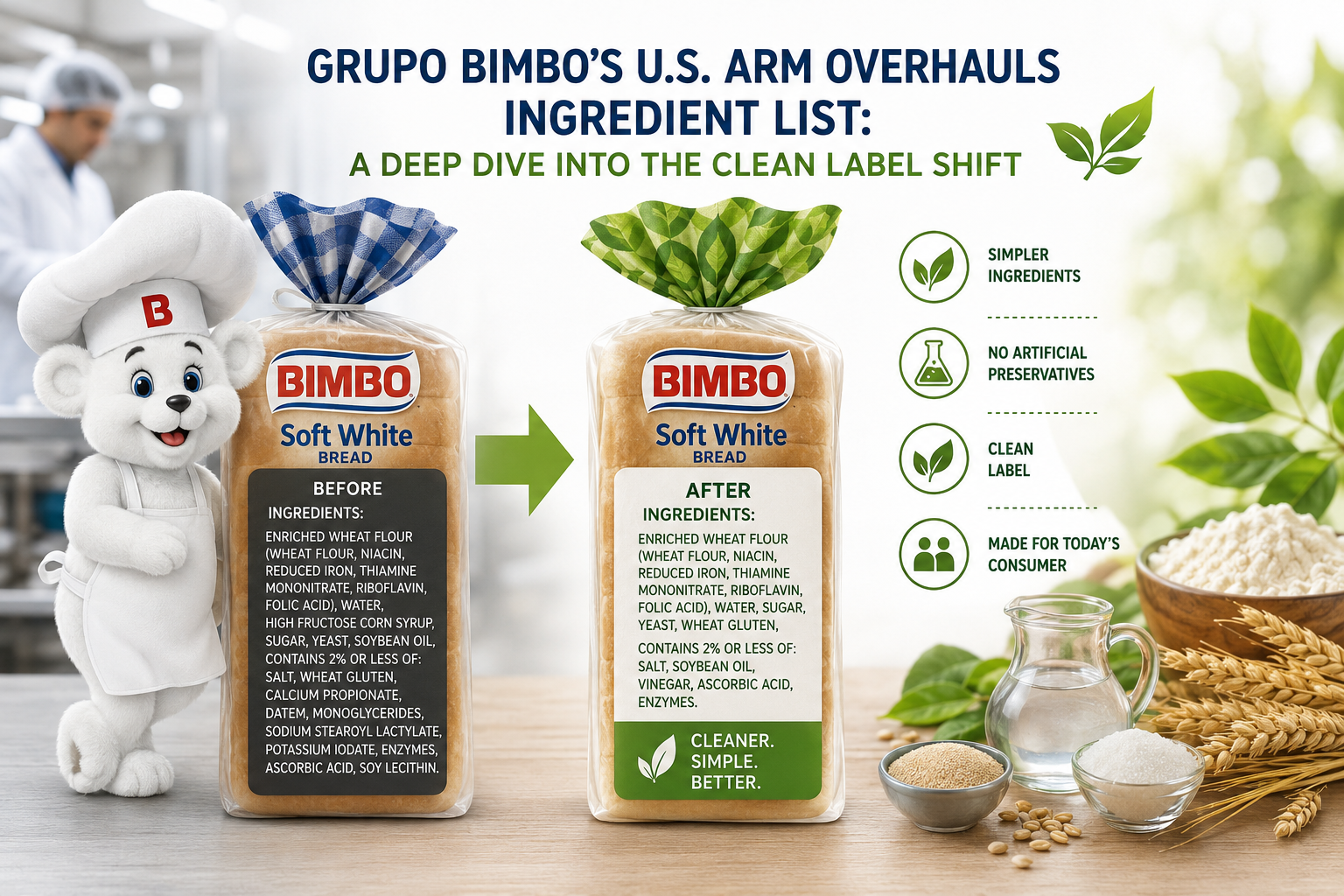
For decades, the average loaf of sliced white bread was a marvel of food science—soft, shelf-stable, and consistently uniform, thanks to a cocktail of synthetic additives. But today, consumer demand is rewriting the recipe. In a landmark move, Bimbo Bakeries USA (BBU)—the North American division of the world’s largest baking company, Grupo Bimbo—has announced a sweeping initiative to remove artificial preservatives, emulsifiers, and synthetic dyes from its product portfolio.
While the company has not issued a single, sudden recall, it is executing a phased, brand-by-brand reformulation that will affect millions of loaves, buns, and pastries sold under household names like Thomas’, Sara Lee, Entenmann’s, Ball Park, Arnold, and Oroweat.
What Is Changing? A Closer Look at the Ingredients Being Removed
The reformulation targets three specific categories of additives:
- Artificial Preservatives: Traditionally used to extend shelf life and prevent mold (e.g., calcium propionate, potassium sorbate), these are being swapped for natural alternatives like cultured wheat flour, vinegar, and fermented extracts.
- Artificial Emulsifiers: Ingredients such as mono- and diglycerides (often derived from partially hydrogenated oils) help blend oil and water for a soft crumb. BBU is transitioning to enzymes, lecithin (from soy or sunflower), and distilled monoglycerides sourced from non-GMO vegetable oils.
- Artificial Colors and Dyes: Common in sweet baked goods and seasonal items, FD&C dyes (Red 40, Yellow 5, Blue 1) are being replaced by fruit- and vegetable-based colorings—think beet juice, turmeric, annatto, and carrot extract.
The Strategic Timeline: Not a One-Day Overhaul
Unlike a sudden ingredient swap that risks altering taste and texture, BBU is pursuing a gradual rollout that began in late 2025 and will continue through 2026. The company is using a “digital twin” formulation approach—testing each recipe multiple times in small-batch production to ensure that flavor, moisture, and baking performance remain consistent. Some products (like Thomas’ English Muffins) have already seen reformulations hit shelves in the Northeastern U.S., with national distribution expected by Q4 2026.
Behind the Decision: Consumer Pressure and Regulatory Winds
This move is not happening in a vacuum. Several forces are converging:
- Clean-Label Shopper Trends: According to a 2025 survey by the International Food Information Council, 63% of American shoppers say they look for “no artificial ingredients” on packaging before buying bread. Younger consumers (Gen Z and Millennials) are driving this demand at an accelerated pace.
- EU vs. US Standards: The European Union has long restricted many emulsifiers and synthetic dyes that remain FDA-approved in the U.S. This creates a “regulatory arbitrage” effect—U.S. brands are voluntarily upgrading to EU-level standards to future-proof their exports and appeal to globally conscious eaters.
- State-Level Action: With California and New York considering stricter labeling laws for synthetic additives, proactive reformulation helps BBU stay ahead of pending legislation rather than scrambling to comply after the fact.
The Technical Challenge: Making Clean Bread That Doesn’t Go Stale Overnight
The biggest hurdle in removing artificial additives is shelf life and texture. Without propionates, a standard loaf might begin to show mold in 4–5 days instead of 10–12. To solve this, BBU is investing in advanced fermentation technologies that produce natural antifungal peptides during the baking process. Additionally, they are redesigning packaging—using micro-perforated films that allow moisture to escape while still retaining freshness—a technique borrowed from artisan sourdough bakeries.
What This Means for Bimbo Bakeries USA: Brand Positioning and Market Impact
- Competitive Edge: By removing these ingredients, BBU positions itself alongside niche “organic” players (like Dave’s Killer Bread) but at a more affordable price point—keeping unit costs stable by leveraging its massive supply chain.
- Sustainability Tie-in: Many of the new natural preservatives (e.g., rosemary extract) are less energy-intensive to produce than synthetic petroleum-based equivalents, subtly aligning with Grupo Bimbo’s long-term goal of 100% renewable energy by 2040.
- Risk Management: While there is a slight risk of shorter product rotation at retail (which could increase food waste), BBU is working directly with grocery chains to adjust ordering patterns—shifting from weekly to bi-weekly deliveries for higher-turnover stores.
Expert Insight: A Bellwether for the Baking Industry?
Food scientists and industry analysts view BBU’s move as a tipping point. “When the world’s largest bakery makes a clean-label pledge, it forces every competitor—from Wonder Bread to Pepperidge Farm—to rethink their own R&D budgets,” says Dr. Elena Martinez, a food chemistry specialist at Cornell University. “We’re likely to see a cascade effect, where smaller regional bakeries either adopt similar ingredients or pivot entirely to fresh, locally baked goods to differentiate.”
What Consumers Should Know Right Now
If you buy any BBU product, check the ingredient panel for the following signs of change:
- The word “cultured” (as in cultured wheat flour) appears near the top.
- “Natural flavors” or “fruit juice for color” replaces a dye name.
- The expiration date may be slightly shorter than before—this is normal, and it confirms the product is truly free of synthetic stabilizers.
Important Note: BBU is not moving to 100% organic or eliminating all processing. Enriched flours (with added B vitamins and iron) and some enzymes remain, as these are considered safe and necessary for mass production.
Conclusion: A New Era for Everyday Bread
Bimbo Bakeries USA’s decision to scrub artificial additives from its top-selling products is more than a marketing gimmick—it is a structural pivot that acknowledges the modern eater’s appetite for transparency. While the transition requires new supply chains and production rhythms, the ultimate payoff is a product that feels less like a chemistry experiment and more like what the label promises: bread, made simply.
As the rollout continues, expect to see a growing “clean shelf” in grocery stores—and a potential new standard for what mass-produced bakery goods can (and should) contain.
###