Nestlé and Danone Baby Food Pouches Under Fire: Microplastics Found at Alarming Levels
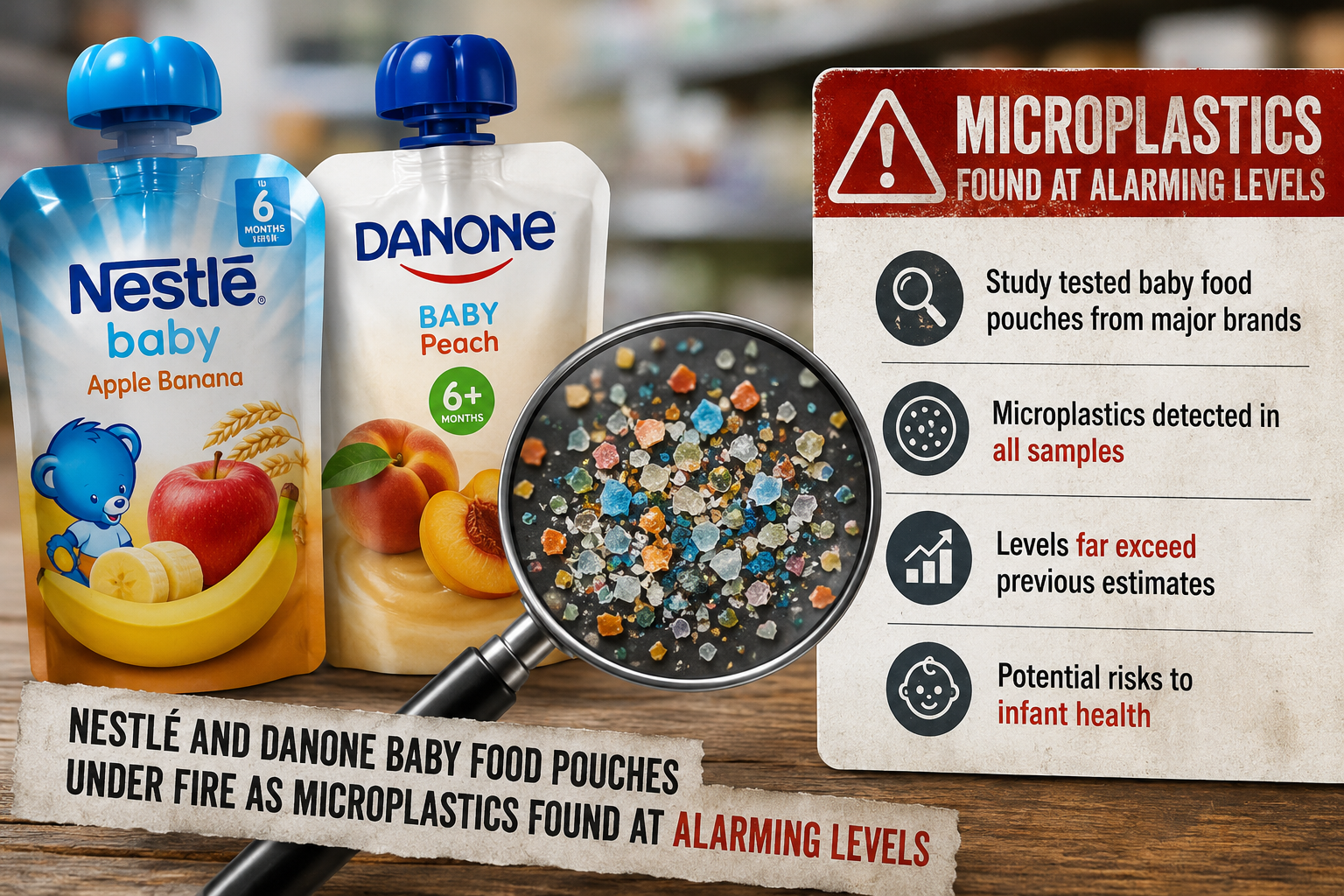
A new Greenpeace investigation has detected thousands of microscopic plastic particles in baby food pouches from Nestlé’s Gerber and Danone’s Happy Baby Organics, raising urgent questions about plastic packaging safety and infant health.
In a development that is sending shockwaves through the infant nutrition industry, two of the world’s largest food corporations—Nestlé and Danone—are facing renewed scrutiny after independent tests revealed significant microplastic contamination in their popular squeeze-pouch baby foods.
The findings, released on May 22, 2026, by environmental group Greenpeace, mark the second major safety controversy for these brands this year, following a global recall over potential toxin contamination in infant formula.
What the Greenpeace Investigation Found
For the study, researchers analyzed samples of Nestlé’s Gerber baby food pouches and Danone’s Happy Baby Organics pouches—both sold in flexible plastic squeeze pouches designed for on-the-go feeding. The results were striking:
- Microplastic concentration: Up to 54 microplastic particles per gram in Gerber products, and as many as 99 particles per gram in Happy Baby Organics pouches.
- Per-spoon estimate: That equates to roughly 270 microplastics in a single teaspoon of Gerber baby food, and nearly 500 in a teaspoon of the Happy Baby Organics product.
- Total per pouch: An estimated total of more than 5,000 particles per Gerber pouch and more than 11,000 particles per Happy Baby Organics pouch.
- Chemical findings: The study also identified a range of plastic-associated chemicals in both the packaging and the food itself. In Gerber samples, researchers flagged the presence of a potential endocrine disruptor—a chemical that can interfere with hormonal systems.
- Likely source: Evidence points to polyethylene, the plastic material used to line the inside of the squeeze pouches, as a primary contributor to the contamination.
“This study is a wake-up call for parents everywhere, who trust these brands to put their kids first,” said Graham Forbes, Global Plastics Campaign Lead at Greenpeace USA. “Plastic-dependent companies like Nestlé and Danone owe families a clear answer.”
Why This Matters for Infant Health
Infants and young children are especially vulnerable to chemical exposures. Their bodies are still developing, and they are smaller in size, meaning that even low doses of contaminants can have a proportionally greater impact. The developing endocrine, immune, and nervous systems can be disrupted by plastic additives and microplastic particles.
Moreover, babies consume more food per kilogram of body weight than adults, potentially amplifying their exposure to any contaminants present in their food. The use of plastic squeeze pouches, while convenient for parents, may be introducing an invisible and cumulative risk with every serving.
Industry Response: Nestlé vs. Danone
The two food giants have responded differently to the allegations.
Nestlé adopted a conciliatory tone, stating: “We understand the concerns raised in this report and take them seriously. We want to reassure all consumers that our products are safe to consume.” The Swiss-based company emphasized its strict manufacturing controls, rigorous packaging material selection, and continuous monitoring of emerging science on microplastics. Nestlé also highlighted the industry-wide reliance on plastic food-grade packaging, which it says plays an “essential role” in preventing food waste.
Danone was more defensive. The French multinational acknowledged the report but questioned its validity, claiming there were “numerous flaws in the methodology” used by Greenpeace. Danone nonetheless insisted that all Happy Baby pouch products are safe and manufactured according to stringent quality and food safety standards.
Both companies have stopped short of committing to phase out plastic pouches or conduct their own microplastic testing on baby food products.
Not an Isolated Incident: The Cereulide Crisis
This microplastics controversy comes hot on the heels of another major safety scare for Nestlé, Danone, and French dairy giant Lactalis. Earlier in 2026, concerns emerged that certain infant formula products contained cereulide—a toxin produced by Bacillus cereus bacteria that can cause severe vomiting and liver damage. That incident triggered a global recall and significantly damaged the reputation of all three multinationals. Investigations into the cereulide contamination are still ongoing.
The back-to-back crises have eroded some of the trust that parents place in established baby food brands and have intensified calls for stricter regulation and greater transparency.
The Packaging Problem: Why Squeeze Pouches Are Under Pressure
Squeeze pouches have exploded in popularity over the past decade. They are lightweight, unbreakable, portable, and easy for toddlers to suck on directly. However, they are also almost entirely plastic-based, often consisting of multiple layers including polyethylene, aluminum foil (for shelf stability), and outer printed layers.
Unlike glass jars or metal cans, plastic pouches are difficult to recycle and can leach chemicals—especially when heated, exposed to UV light, or stored for long periods. The Greenpeace study is one of the first to test real baby food (rather than food simulants or liquids) and found direct evidence of microplastic migration from the packaging into the food.
What This Means for Parents
For caregivers, the news can be alarming. Here are some practical steps to consider while regulators and companies catch up:
- Prioritize glass jars or cardboard cartons over plastic squeeze pouches when available. These materials have lower known risks of microplastic migration.
- Transfer pouch contents to a bowl instead of letting babies suck directly from the spout, which may increase friction and particle release.
- Consider homemade baby food using fresh ingredients. Pureeing steamed vegetables or fruits and storing them in glass containers eliminates packaging-related concerns.
- Watch for brand responses over the coming months. If Nestlé and Danone respond with packaging innovations or third-party testing, that may guide future purchases.
Regulatory Gaps and Future Outlook
Currently, there are no legally enforceable limits for microplastics in food in most major markets, including the United States and the European Union. The European Food Safety Authority (EFSA) and the U.S. Food and Drug Administration (FDA) have both acknowledged microplastics as an emerging concern but have not set specific safety thresholds.
The Greenpeace investigation is likely to accelerate regulatory pressure. Lawmakers may begin demanding standardized testing methods for microplastics in infant food, as well as mandatory disclosure of packaging materials and migration data. In the longer term, the baby food sector could see a shift back to glass, metal, or innovative compostable materials that do not shed microplastics.
Final Takeaway
The discovery of thousands of microplastic particles in Gerber and Happy Baby Organics pouches does not necessarily mean these products are acutely toxic. However, it does highlight a significant gap in safety testing and a blind spot in our food system. For a category built entirely on trust—parents feeding the most vulnerable members of their families—even emerging scientific uncertainty is enough to reshape buying decisions and industry priorities.
As one parent on social media put it: “If I can’t trust Nestlé and Danone to keep plastic out of baby food, who can I trust?”
That question now hangs over the entire infant nutrition sector, and the pressure to find an answer has never been greater.
Keywords: microplastics in baby food, Nestlé Gerber microplastics, Danone Happy Baby Organics microplastics, baby food pouch safety, plastic in infant food, Greenpeace baby food study 2026, safest baby food packaging, endocrine disruptors in baby food, Nestlé Danone controversy
###