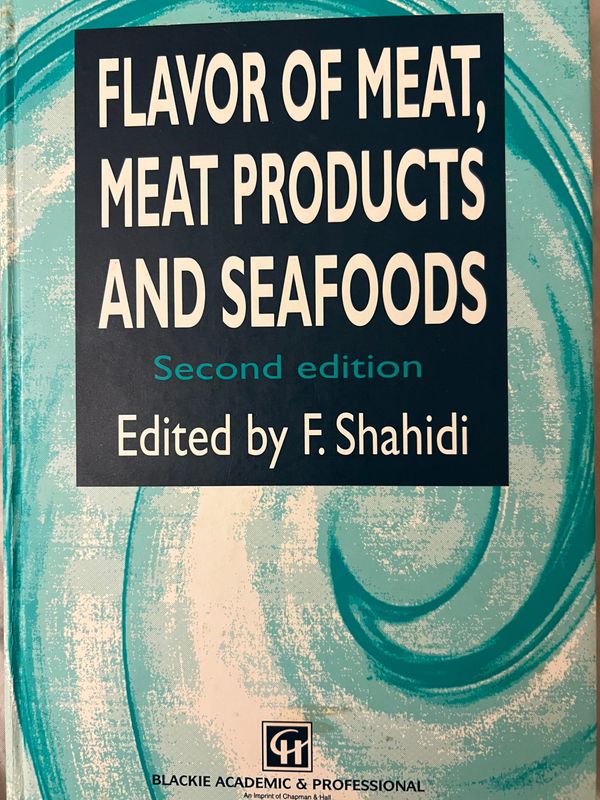

Book Review: "Flavor of Meat, Meat Products, and Seafoods" Second Edition by F. Shahidi Editor's note: highly recommended. In the complex and multifaceted world of food science, few elements are as critical to consumer acceptance as flavor. For professionals in the meat and seafood industries, understanding the intricate chemistry behind flavor is not just an academic exercise—it is a commercial necessity.
Patent Watch: Plant-Based Grilled Beef Flavoring Patent Document: Plant-Based Grilled Beef Flavoring Patent Number: CN 111938122 B Title: A Plant-Based Beef Flavoring and Its Preparation Method and Application Publication Date: 2023.01.10 Applicant: Shenzhen Week零食 Technology Co., Ltd. Inventors: Xie Jianchun, Li Jian, Du Wenbin, Tan Jia, Wang Yutong Examiner: Wang Yan Abstract:
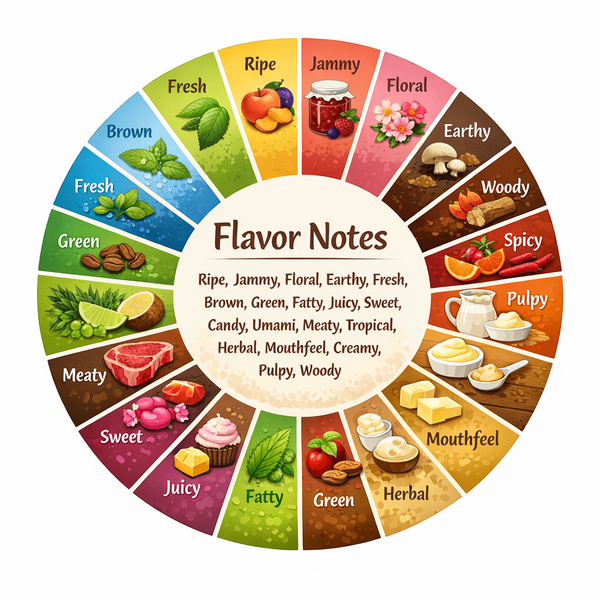
Members only 20 Characteristic Flavor Notes the Society of Flavor Chemists Want Flavorists to Understand Below are 20 characteristic flavor notes that the Society of Flavor Chemists want every flavorist or would-be flavorist to understand. It is likely that questions regarding these notes will be raised during the qualification test/interview. Read the syllabus -the Society of Flavor Chemists. The 20 key flavor notes
Summary: "Using the Categorizing Technique to Make Flavors" by Frank Fischetti, jr This is one of the three articles Mr. Fischetti published about how to make flavors. https://img.perfumerflavorist.com/files/base/allured/all/document/2016/02/pf.9507.pdf Below is a detailed summary of the article “A Novel Approach to Flavor Development: Using the Categorizing Technique to Make Flavors,
Members only Flavor Compounds and Techniques for Crafting Distinct Coffee Flavors Main Aroma Components of Coffee The main components frequently detected in coffee include furfural, 5-methylfurfural, furfuryl alcohol, phenethyl alcohol, furfuryl acetate, hexanal, benzaldehyde, 3,4-dimethylbenzaldehyde, 3,4-dimethylphenylacetaldehyde, 1-phenyl-2-propanone, 3-methyl-2-butanone, 2,3-butanedione, 2-butanone, 4-methyl-2-pentanone, 2-phenyl-3-
Members only How flavorists formulate a food flavor — from concept to finished product The process of formulating a flavor is influenced by several variables: the specific flavor profile required, the customer's needs, the potential revenue, the company's resources, and the individual flavorist's creative approach. Here is an explanation of how flavorists can formulate a food flavor — from
Book Review: The Maillard Reaction: Chemistry, Biochemistry and Implications Book Review The Maillard Reaction: Chemistry, Biochemistry and Implications by H. E. Nursten Introduction The Maillard Reaction: Chemistry, Biochemistry and Implications is a rigorous and comprehensive monograph that examines one of the most significant chemical reactions in food science: the non-enzymatic reaction between reducing sugars and amino compounds that
Patent Document: Method for Producing a Flavor Composition (for Beef, Pork, and Chicken) Here is the English translation of the Japanese patent document (JP5495366B2). Page 1 (19) Japan Patent Office (JP) (12) Patent Publication (B2) (11) Patent Number Patent No. 5495366 (45) Date of Issuance: May 21, 2014 (2014.5.21) (24) Date of Registration: March 14, 2014 (2014.3.14) (51) Int.
Overview of Kokumi Compounds from the Maillard Reaction Overview of Kokumi Compounds from the Maillard Reaction 1. What Is “Kokumi”? “Kokumi” is a Japanese sensory term meaning richness, mouthfulness, continuity, and thickness—without adding a distinct basic taste (sweet, sour, salty, bitter, umami). The concept was scientifically advanced by researchers at Ajinomoto Co., Inc., who demonstrated that certain
A Comprehensive Overview of Toxic Maillard Reaction Products The formation of toxic compounds through the Maillard reaction is a far broader and more complex field than just the well-known examples. While previous discussions often focus on acrylamide or furans, ongoing research continues to identify a wider array of potentially hazardous substances generated during this ubiquitous browning process.
Patent Summary: Flavor compositions containing potassium salts The patent document US20260041113A1 presents a significant innovation in the food science and flavor industry, specifically targeting the production of chocolate and other fat-based confections. The core invention revolves around the use of specific potassium salts to replicate the complex flavor profile of traditionally alkalized, or "Dutch-processed,
Building a chicken flavor system - through compouding or Maillard reaction This is to demonstrate how to build a compound chicken flavor formula. To construct a realistic compound chicken flavor system, we’ll break it into three parts: 1. Key compounds (≤10 per note) + suggested dosage ranges 2. Complete compound formula (with FEMA #, descriptor, usage %) 3. Compounding & reaction instructions (industrial
Chicken Flavor · Complete Compound formulation 🐔 Chicken Flavor · Complete Compound Construction Flavor notes used here include buttery, burnt, rubbery, candy, strawberry, caramel, boiled, bread, creamy, fatty, fried, meaty, coffee, roasted, peanut, popcorn, potato, eggy, asparagus, metallic, putrid, skin & herbs which are mentioned in the book "Flavor Creaction" by Marie Wright, a master flavorist.
Flavor Compounds Commonly Used for Dairy Flavors If you're looking to master dairy flavor formulation, consider our flavorist training module. It lays a solid foundation and equips you to build 78 distinct dairy flavor profiles from just 16 note blocks. Flavor blocks for dairy flavors - a structured flavorist training moduleA structured flavorist training module Dairy
Flavor Book: Flavor Creation 2nd Edition by John Wright In-Depth Review: Flavor Creation, 2nd Edition by John Wright If you have ever marveled at how food scientists can perfectly replicate the taste of a wild strawberry in a gum or create a rich, creamy vanilla note in a dairy-free milk, you have witnessed the work of a
High Impact Flavor Compounds by David Rowe - Part 2 David Rowe authored a chapter on high impact flavor compounds in the book "Flavor Development" published by Alluredbooks. We listed here all compounds that he mentioned and also add some information about these flavor compounds such as their flavor notes and potential applications. (1) Furfuryl mercaptan (2-furylmethanethiol)
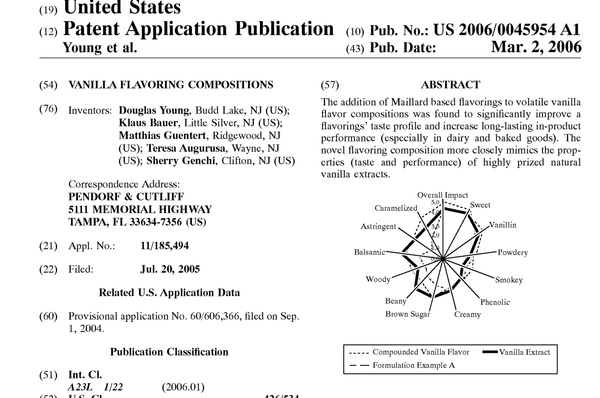
Members only Patent Watch: Vanilla Flavoring Compositions by Douglas Young et al. This is a patent by a flavorist well regarded in the U.S. flavor industry - Douglas Young and his colleagues. The patent application was submitted Jul. 20, 2005 and the patent document was published on March 6, 2006. The patent will expire soon. Those who are interested in process flavors
Members only Patent Watch: A Natural Orange Flavor The patent was granted in China in April, 2013. Below is a translation of the patent summary in Chinese. It is a good read for those who would like to learn how the Chinese formulate orange flavors. Abstract The present invention discloses a natural orange flavor formulation. The orange flavor
Members only Sugars, Amino Acids, Maillard reaction, Flavor Notes/Flavors - a Comprehensive Guide for Flavor Chemists Here is a comprehensive guide to sugar-amino acid reactions or commonly known as Maillard reaction for process flavors (term used more often in UK and EU) or reaction flavors (term more often used in USA and elsewhere). This guide combines foundational food science principles, established industry knowledge, and mechanistic
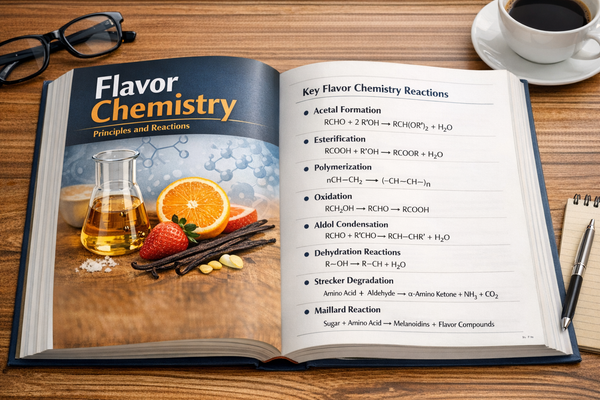
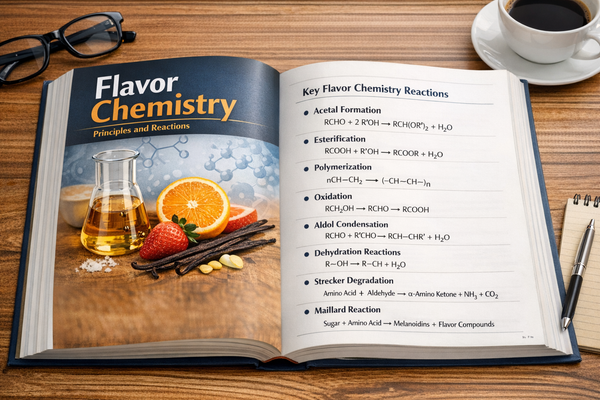
Oxidation Reaction in Flavor Chemistry: A Comprehensive Guide for Flavor Chemists Note: In flavor chemistry, oxidation represents both a synthetic opportunity and a significant stability challenge. Controlled oxidation can be strategically employed to generate specific and desirable flavor attributes. However, the uncontrolled oxidative degradation of susceptible constituents, particularly those present in a chemically reduced form, is a primary cause of quality
Ultimate Guide to Flavor Lab QC Instruments: Names, Functions & Measurement Principles for Technicians Quality control (QC) in a flavor laboratory is critical for ensuring product consistency, safety, and consumer satisfaction. This comprehensive guide details the essential instruments, their functions, and operating principles every QC technician must master. Table of Contents 1. Core Physical & Chemical Analysis Instruments 2. Sensory & Compositional Analysis Instruments
What flavorists/flavor chemists should know, according to IOFI's Code of Practice 5th edition Here’s a comprehensive summary of the key things flavorists/flavor chemists should know from the International Organization of the Flavor Industry (IOFI) Code of Practice — the industry’s best-practice reference for the safe and responsible production, handling, use and labelling of flavourings.(iofi.org) 📘 1. Purpose & Scope
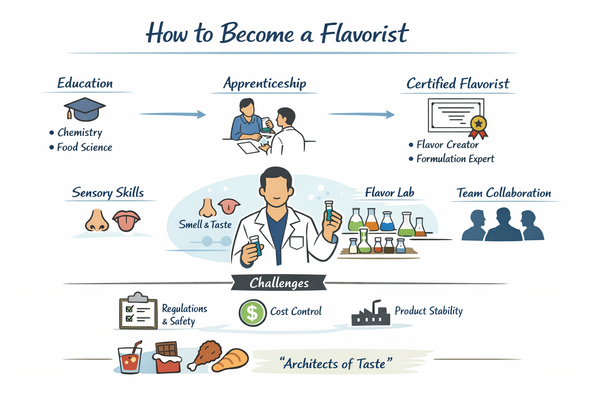
The Ultimate Guide to Becoming a Flavorist: Answers to Every Question You've Ever Asked Do not forget to buy some flavorist training materials at https://flavorist.com/shop/ Favorist.com is building a comprehensive database tailored to the Society of Flavor Chemists’ qualification exam syllabus. If you are serious about becoming a flavorist, subscribe today to receive notification when the database goes live. In
High Impact Aroma Chemicals by David Rowe - a Structured, Section-by-Section Technical Summary-Part 1 Here is a fully structured, section-by-section technical summary of: “More Fizz for Your Buck: High-Impact Aroma Chemicals” David Rowe Perfumer & Flavorist, Vol. 25, Sept/Oct 2000 1️⃣ Introduction — Advances in Aroma Chemistry The article opens by describing how developments in analytical chemistry transformed flavor science: * 19th
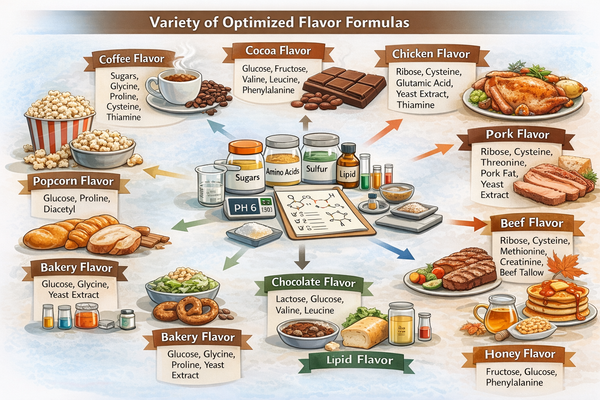
Practical, flavor-industry style optimized Maillard / thermal reaction systems for coffee, cocoa, chicken, pork, bakery, beef flavor, chocolate, cabbage, popcorn, maple flavor and honey Below are optimized reaction systems for coffee flavor, cocoa flavor, chicken flavor, pork flavor, bakery flavor, beef flavor, chocolate flavor, cabbage flavor, popcorn flavor, maple flavor, honey flavor, provided by AI. Note that the reaction systems are incomplete in terms of the ingredients that are needed for a specific flavor.