Resins, Resinoids & Balsams in Flavor Work: What the Society of Flavor Chemists Expects Every Flavorist to Know
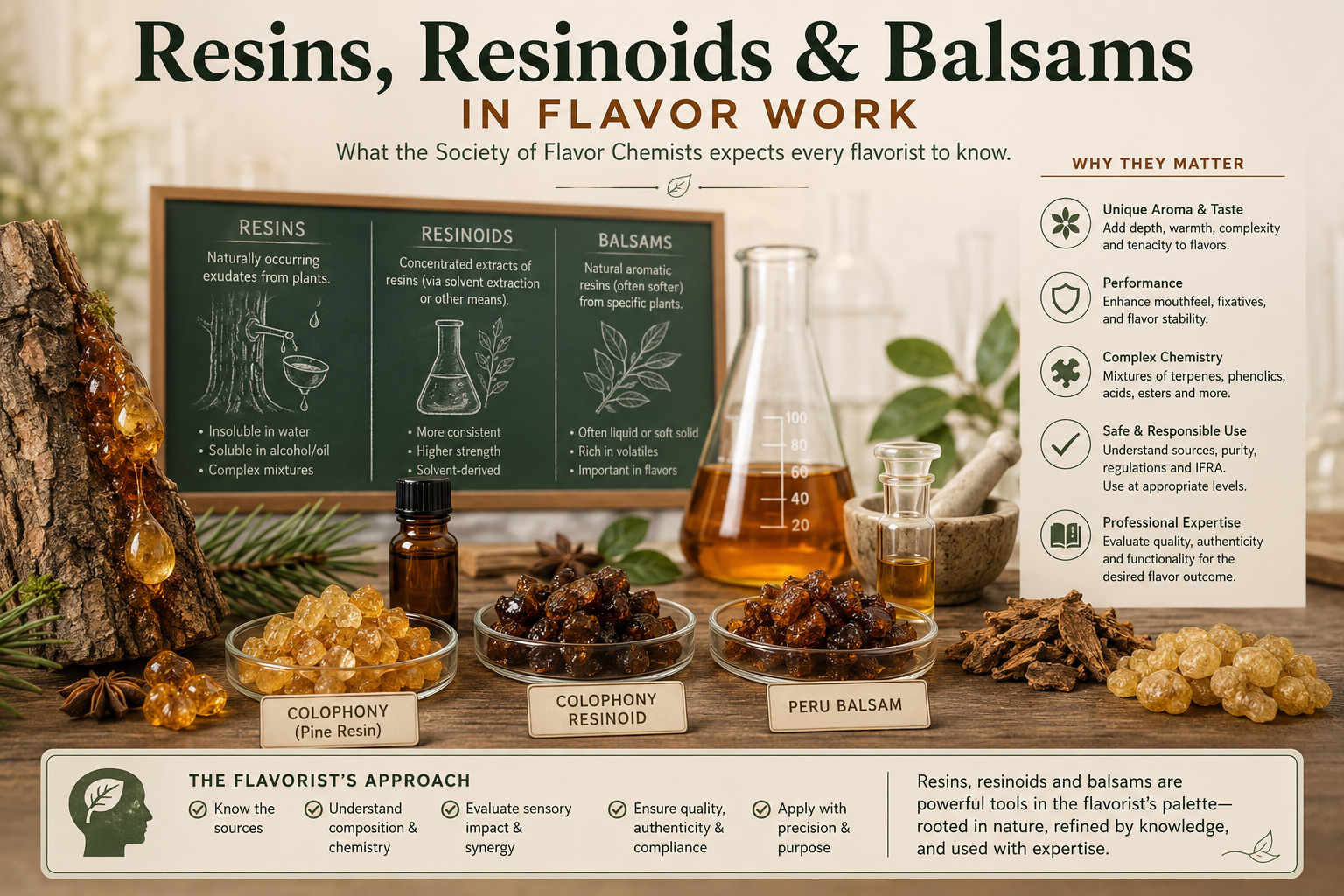
Below is a flavorist training guide for commercially available resins, resinoids, and balsams used in flavors. It is not a substitute for supplier documentation, FEMA/IOFI status, or local regulatory review.
Resins, Resinoids & Balsams in Flavor Work
1. Core definitions
Resin: natural exudate, usually semi-solid to solid, rich in resin acids, esters, terpenes, phenolics, waxes, and nonvolatile matter.
Balsam: resinous exudate naturally rich in benzoic acid, cinnamic acid, benzyl/cinnamyl esters, vanillin-like materials, and sweet balsamic odor.
Resinoid: solvent extract of a resin, gum-resin, balsam, or botanical material. Usually more soluble and easier to dose than the crude resin.
Oleoresin: solvent extract containing volatile oil plus resinous nonvolatile fractions; common in spices.
2. Production methods
| Material type | Typical production |
|---|---|
| Crude resin/balsam | Tapping, incision, natural exudation, collection, cleaning, melting/filtration |
| Resinoid | Extraction with ethanol, acetone, hexane, ethyl acetate, or other approved solvent; solvent removal under vacuum |
| Absolute | Alcohol washing of concrete/resinoid to remove waxes; chilling, filtration, solvent removal |
| Essential oil from resin | Steam or hydrodistillation of resin/gum-resin |
| Oleoresin | Solvent extraction of spice/botanical; standardized for volatile oil, pungency, or marker compounds |
3. Regulatory framework flavorists must know
In the U.S., flavor labeling is governed mainly by 21 CFR 101.22, which defines “natural flavor” and sets how flavoring ingredients may be declared. Natural flavors may be derived from spices, fruits, vegetables, edible yeast, herbs, bark, buds, roots, leaves, meat, seafood, dairy, fermentation products, and similar natural source materials. (eCFR)
FEMA GRAS status is a key U.S. industry safety reference. FEMA notes that its GRAS program evaluates flavor ingredients for their intended use as flavor ingredients, and recent GRAS lists continue to update reviewed substances. (FEMA)
In the EU, Regulation (EC) No 1334/2008 governs flavorings and defines flavoring categories, source materials, and rules for “natural” flavoring claims. The EU Union List covers approved flavoring substances and source materials. (Food Safety)
IOFI’s Global Reference List is a global reference for flavoring materials considered safe for intended flavor use by recognized assessment bodies, and the IOFI Code of Practice is commonly used by flavor houses for compliance screening. (IOFI)
Important: “Natural” is not globally harmonized. A material that is natural under U.S. rules may need different documentation or wording in the EU, Japan, China, GCC, or LATAM.
4. Practical material guide
A. Balsamic sweet resins and balsams
| Material | Physical form | Production | Odor/taste | Solubility | Flavor applications | Typical use level in finished food* |
|---|---|---|---|---|---|---|
| Benzoin gum / benzoin resinoid | Crude tears, lumps, powder; resinoid is viscous dark brown mass | Incision of Styrax trees; solvent extraction for resinoid | Sweet, vanilla, balsamic, powdery, almond/cherry nuance | Poor in water; good in ethanol, PG, triacetin; resinoid may need warming | Vanilla, cream, cherry, cola, root beer, baked goods, tobacco-type flavors | 0.1–10 ppm; higher in chewing gum/confectionery |
| Tolu balsam / extract | Brown semi-solid balsam or viscous extract | Exudate from Myroxylon balsamum; alcohol extraction | Sweet balsamic, vanilla, cinnamon, clove, coumarinic | Insoluble in water; soluble in ethanol, PG, fixed oils with warming | Cola, root beer, vanilla, spice, cherry, cough-drop, brown flavors | 0.1–5 ppm |
| Peru balsam / balsam oil | Dark viscous liquid to semi-solid | Exudate from Myroxylon pereirae; sometimes distilled or extracted | Sweet, balsamic, cinnamon, vanilla, smoky, medicinal | Poor water solubility; soluble in ethanol, PG, oils | Cola, root beer, chocolate, vanilla, cinnamon, spice blends | 0.05–3 ppm |
| Storax / styrax resinoid | Sticky brown balsam/resinoid | Exudate or solvent extract from Liquidambar species | Sweet, leathery, balsamic, cinnamon, styrene-like, smoky | Soluble in ethanol, PG, oils; insoluble in water | Cola, root beer, tobacco, smoky vanilla, spice accords | 0.05–2 ppm |
| Labdanum resinoid / absolute | Very viscous dark brown paste | Solvent extraction of Cistus ladanifer gum or leaves | Amber, leathery, sweet, animalic, dried fruit, tea | Soluble in ethanol with warming; poor in water | Amber, tea, tobacco, honey, dried fruit, brown spirits | 0.05–2 ppm |
*Use levels are training ranges only. Actual legal/safe use depends on FEMA/IOFI/EU status, product category, supplier assay, and local regulations.
Flavorist notes
Benzoin, tolu, Peru balsam, storax, and labdanum are powerful rounding agents. They add body, sweetness, fixation, and aged character. They are rarely used as the main note; they support vanilla, brown, spice, cola, tobacco, and confectionery flavors.
B. Frankincense, myrrh, and related gum-resins
| Material | Physical form | Production | Odor/taste | Solubility | Applications | Typical use |
|---|---|---|---|---|---|---|
| Olibanum / frankincense oil or resinoid | Pale tears; oil; resinoid | Gum-resin tapped from Boswellia; steam distilled or extracted | Lemon, pine, incense, peppery, resinous | Oil soluble; resinoid ethanol soluble; gum fraction water-dispersible but not clear | Citrus, gin, botanical drinks, incense-like accords, spice | Oil: 0.05–2 ppm; resinoid: trace–1 ppm |
| Myrrh resinoid / oil | Brown-red gum-resin; dark extract | Tapped from Commiphora species | Bitter, warm, medicinal, balsamic, dusty, phenolic | Poor water solubility; soluble in ethanol/PG partly; oil soluble | Bitters, herbal liqueur, root beer, medicinal/cough-drop flavors | 0.02–1 ppm |
| Opoponax resinoid | Dark viscous resinoid | Extract of Commiphora gum-resin | Sweet myrrh, balsamic, animalic, warm, spicy | Soluble in ethanol/PG with warming | Amber, spice, tobacco, liqueur, root beer | 0.02–1 ppm |
| Elemi resin/oil/resinoid | Soft pale resin; oil | Exudate from Canarium luzonicum; distillation/extraction | Lemon-pepper, pine, fennel, balsamic | Oil soluble; resinoid ethanol soluble | Citrus peel, pepper, gin, botanical beverage | 0.05–3 ppm |
Flavorist notes
These materials can quickly become medicinal, bitter, dusty, or perfumery-like. Use low. They are best in botanical, bitter, citrus, cola, root beer, and liqueur profiles.
C. Green, sulfurous, savory, and bitter resins
| Material | Physical form | Production | Odor/taste | Solubility | Applications | Typical use |
|---|---|---|---|---|---|---|
| Galbanum resinoid/oil | Green-brown gum-resin; oil/resinoid | Gum-resin from Ferula species | Intensely green, bitter, celery, pea pod, earthy | Oil/resinoid soluble in ethanol/PG/oils; not water soluble | Green vegetable, tomato leaf, cucumber, celery, savory top notes | 0.005–0.5 ppm |
| Asafoetida oleoresin/resinoid | Brown gum-resin; extract | Exudate from Ferula assa-foetida roots | Garlic, onion, sulfurous, savory, animalic | Dispersible in alcohol/PG/oil depending grade; not water clear | Onion, garlic, meat, curry, savory, umami | 0.001–0.2 ppm |
| Ammoniacum gum-resin | Tears/lumps; extract rarely used | Dorema/Ferula gum-resin | Musky, bitter, resinous, herbal | Limited solubility; partly ethanol soluble | Rare; herbal bitters, savory nuance | Trace only |
| Mastic gum/resinoid | Pale tears; powder; resinoid | Resin from Pistacia lentiscus | Pine, cedar, fresh, slightly bitter, chewing-gum-like | Insoluble in water; soluble in ethanol/oils partly | Mastiha, chewing gum, herbal liqueur, citrus | 0.1–10 ppm |
Flavorist notes
Galbanum and asafoetida are impact materials, not body materials. Pre-dilute to 0.1–1% before evaluation.
D. Conifer, pine, and wood resins
| Material | Physical form | Production | Odor/taste | Solubility | Applications | Typical use |
|---|---|---|---|---|---|---|
| Pine resin / rosin / colophony | Brittle amber solid | Distillation residue from pine oleoresin | Piney, resinous, turpentine-like, bitter | Insoluble in water; soluble in ethanol, oils, alkali systems | Rare as flavor; more often chewing gum base/technical | Use only approved food-grade grades |
| Pine oleoresin / turpentine fractions | Viscous oleoresin or distilled oil | Tapping pine; distillation | Pine, terpene, woody, solvent-like if crude | Oil soluble | Gin, spruce/pine, herbal, wintergreen support | Trace–2 ppm for approved flavor fractions |
| Spruce/hemlock/fir balsam extracts | Resin or oleoresin | Needle/resin extraction or distillation | Forest, citrus-pine, green, resinous | Oil/alcohol soluble | Botanical drinks, gin, spruce beer, forest accords | 0.05–3 ppm |
| Copaiba balsam/oil | Pale to golden viscous liquid | Tapped from Copaifera trees; distilled or used as balsam | Mild woody, peppery, balsamic | Oil soluble; limited ethanol solubility depending grade | Woody, pepper, spice, botanical beverage | 0.05–2 ppm |
Flavorist notes
Crude conifer resins may contain high nonvolatile resin acids and can cause haze, bitterness, or instability. Prefer food-grade distilled oils, extracts, or supplier-approved flavor grades.
E. Spiced oleoresins often treated like resinous flavor materials
| Material | Physical form | Production | Odor/taste | Solubility | Applications | Typical use |
|---|---|---|---|---|---|---|
| Capsicum oleoresin | Red viscous liquid | Solvent extract of chili | Heat, chili, fruity/pungent | Oil soluble; dispersible with emulsifier | Sauces, snacks, seasonings, beverages | Based on SHU; often 0.1–20 ppm active oleoresin |
| Paprika oleoresin | Red oil-soluble liquid | Solvent extract of paprika | Mild pepper, red fruit, fatty | Oil soluble; color use may trigger color rules | Seasonings, sauces, meat, snacks | Flavor trace–50 ppm; color separately regulated |
| Ginger oleoresin | Brown viscous liquid | Solvent extract of ginger | Warm, spicy, pungent, citrus | Oil/ethanol/PG soluble | Ginger ale, bakery, sauces, spice blends | 0.5–20 ppm |
| Black pepper oleoresin | Dark green/brown viscous liquid | Solvent extract of pepper | Pepper, woody, pungent | Oil/ethanol soluble | Savory, meat, sauces, snacks | 0.2–10 ppm |
| Nutmeg/mace oleoresin | Brown viscous | Solvent extract | Warm, sweet spice, woody | Oil/ethanol soluble | Bakery, cola, eggnog, spice | 0.1–5 ppm |
| Cinnamon/cassia oleoresin or extract | Brown viscous | Bark extraction | Sweet, hot, cinnamic, woody | Alcohol/PG/oil soluble | Cola, cinnamon, bakery, candy | 0.1–10 ppm, controlled by coumarin/cinnamaldehyde limits |
| Clove oleoresin | Brown viscous | Bud extraction | Eugenol, spicy, medicinal | Alcohol/oil soluble | Spice, cola, dental/cough-drop, meat | 0.05–5 ppm |
| Vanilla oleoresin/resinoid | Dark viscous extract | Bean extraction/concentration | Vanilla, woody, sweet, phenolic | Alcohol/PG soluble; water soluble if formulated | Vanilla, dairy, bakery, chocolate | 10–500 ppm depending strength |
Flavorist notes
Oleoresins deliver true spice body and nonvolatile pungency. They can cause ring formation, sediment, color shift, or haze in beverages. Always test in the finished matrix.
5. Solubility rules of thumb
| System | Best choices | Watch-outs |
|---|---|---|
| Ethanol flavors | Most resinoids, balsams, absolutes | Clouding when diluted below alcohol tolerance |
| Propylene glycol | Many balsams/resinoids with heat | Some resin acids/waxes remain insoluble |
| Triacetin | Good for heavy balsamic materials | Slow dissolution; warming needed |
| Fixed oils/MCT | Good for oleoresins and terpenic resins | Poor for polar gum fractions |
| Water beverages | Use emulsions, cloud systems, or water-soluble extracts | Direct addition usually causes haze/sediment |
| Dry flavors | Spray-dried emulsions, plated powders, encapsulates | Oxidation and loss of top notes |
6. Applications by flavor type
| Flavor type | Useful materials |
|---|---|
| Cola | Tolu, benzoin, Peru balsam, cinnamon/cassia extract, nutmeg, clove, citrus resins |
| Root beer / sarsaparilla | Benzoin, tolu, Peru balsam, myrrh, wintergreen, vanilla |
| Vanilla / cream | Benzoin, tolu, Peru balsam, vanilla oleoresin |
| Cherry / almond | Benzoin, tolu, Peru balsam at trace levels |
| Chocolate / cocoa | Peru balsam, benzoin, vanilla oleoresin, labdanum trace |
| Tobacco / brown notes | Labdanum, storax, benzoin, tolu, myrrh |
| Herbal liqueur / bitters | Myrrh, olibanum, galbanum, mastic, elemi, wormwood-type botanicals where legal |
| Savory / meat | Asafoetida, pepper oleoresin, capsicum, ginger, galbanum trace |
| Citrus botanical | Elemi, olibanum, mastic, pine/fir oils |
7. Dosage training guide
| Intensity class | Examples | Starting dilution | First trial level in finished product |
|---|---|---|---|
| Ultra-impact | Asafoetida, galbanum | 0.1% in ethanol/PG | 0.001–0.05 ppm |
| Strong | Myrrh, opoponax, storax, labdanum | 1% | 0.02–0.5 ppm |
| Medium | Peru balsam, tolu, benzoin, olibanum | 1–10% | 0.1–3 ppm |
| Mild/body | Vanilla oleoresin, copaiba, mastic | 10% or neat if fluid | 1–50 ppm |
8. Labeling and compliance checklist
Before using any resin/resinoid/balsam in a commercial flavor:
- Confirm food-grade status and supplier specification.
- Confirm FEMA GRAS / IOFI GRL / JECFA / EFSA / local positive-list status.
- Confirm whether it is a flavoring substance, flavoring preparation, natural complex substance, processing aid, carrier, color, or additive.
- Check restricted natural constituents: coumarin, safrole, estragole, methyleugenol, thujone, pulegone, eugenol, cinnamaldehyde, allergenic fragrance markers where relevant.
- Check residual solvents and heavy metals.
- Check pesticide, PAH, aflatoxin, and adulteration risk.
- For beverages, perform haze, ring, sediment, light, heat, pH, and alcohol-stability tests.
- For U.S. labels, determine whether the consumer product should say natural flavor, artificial flavor, or natural and artificial flavor under 21 CFR 101.22. (eCFR)
- For EU labels, check Regulation 1334/2008 and Article 16 rules before using “natural [source] flavouring.” (Food Safety)
- Keep documentation: SDS, allergen statement, natural certificate, GMO status, vegan/halal/kosher if needed, country of origin, IFRA only if dual-use fragrance, and flavor-use declaration.
9. What junior flavorists should remember
Resins, resinoids, and balsams are not “just strong essential oils.” They are heavy, complex, matrix-sensitive materials that bring body, warmth, sweetness, age, bitterness, smoke, medicine, wood, and fixation. They are excellent in brown, cola, root beer, spice, vanilla, herbal, tobacco, and savory systems, but they can easily create haze, bitterness, medicinal off-notes, or regulatory complications.
The safest working rule: pre-dilute, dose low, document everything, and never assume crude resin equals approved flavor ingredient.
###