Rose as a Natural Flavoring: A Comprehensive Technical Guide
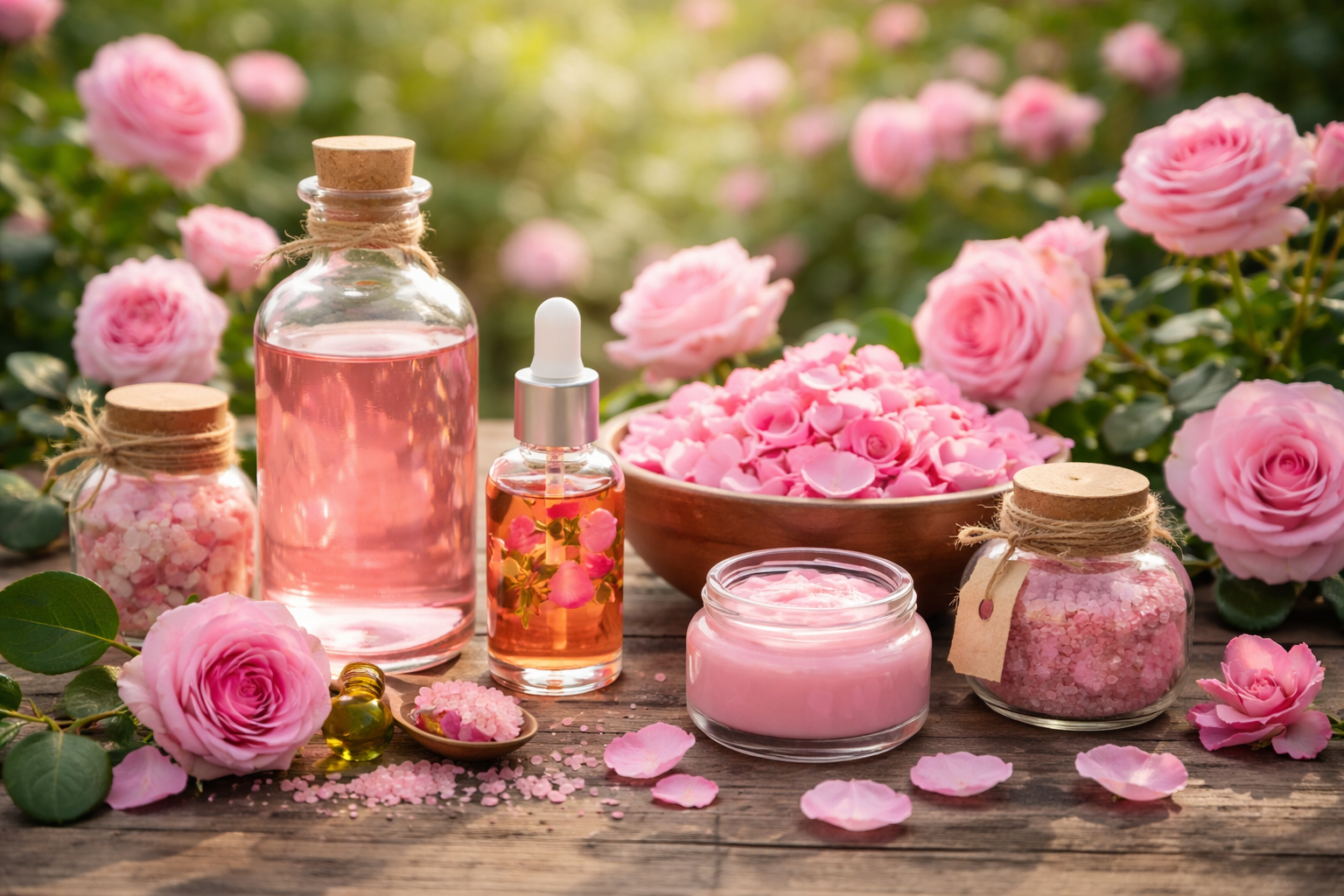
The Society of Flavor Chemists requires certified flavorists to be able to identify the plant part used, derivatives, organoleptic characteristics, and major chemical component(s) characterizing the aroma and flavor of the 80 natural flavorings listed on its syllabus for the qualification test and interview. Rose is included among these essential items.
Introduction
Rose is one of the most ancient, beloved, and culturally significant natural flavoring materials in the world. For millennia, roses have been cultivated for their exquisite fragrance, with evidence of rose cultivation dating back to ancient Persia, Egypt, Greece, and Rome . The name "rose" in flavoring refers primarily to the flowers of Rosa × damascena Mill. (Damask rose) and Rosa centifolia L. (Cabbage rose), both members of the Rosaceae family. Rose is prized for its intensely sweet, floral, and complex aroma, often described as a blend of honey, spice, and fresh petals.
For flavorists, rose offers a uniquely refined, sweet, and multifaceted profile that ranges from the deep, rich, honeyed character of Rose Absolute to the lighter, more delicate, and tea-like character of Rose Otto (Steam-Distilled Oil) . Rose is indispensable in Middle Eastern, Indian, and European cuisines, and it is used extensively in confectionery, beverages, and dairy applications. The key aroma compounds are citronellol, geraniol, and nerol, which together create its characteristic rosy, sweet, and slightly citrusy-floral character .
A critical distinction for flavorists is the difference between Rose Otto (steam-distilled oil) , Rose Absolute (solvent-extracted) , and Rose Water (hydrosol) . Each has a different chemical composition, flavor profile, and application. Additionally, the two main species—Damask Rose (Rosa × damascena) and Cabbage Rose (Rosa centifolia) —have distinct characters, with Damask being more prized for its deep, sweet, honeyed aroma .
Rose Species: Damask vs. Centifolia
Flavorists must distinguish between the two main rose species, as they have different chemical compositions and flavor profiles.
| Characteristic | Damask Rose (Rosa × damascena) | Cabbage Rose (Rosa centifolia) |
|---|---|---|
| Common Names | Bulgarian Rose, Turkish Rose, Otto Rose | Rose de Mai, Provence Rose, May Rose |
| Origin | Bulgaria, Turkey, Iran, India | France (Grasse), Morocco, Egypt |
| Primary Components | Citronellol (30–50%), geraniol (10–25%), nerol (5–15%) | Citronellol (20–40%), geraniol (15–30%), nerol (5–15%) |
| Aroma Profile | Sweet, honeyed, deep, rich, complex | Sweet, fresh, green, lighter, more delicate |
| Flavor Character | Rich, honeyed, deep | Delicate, fresh, green |
| Typical Use | Flavoring, perfumery, rose water | Perfumery, some flavor applications |
| FEMA No. | 2989 (rose absolute), 2988 (rose oil) | 2989 (rose absolute), 2988 (rose oil) |
Plant Parts Used
The petals (flowers) are the plant part used for flavoring purposes. The following characteristics are notable:
- Source Plants:
- Damask Rose (Rosa × damascena Mill.) : A hybrid rose cultivated primarily in Bulgaria, Turkey, Iran, and India. It is the most important species for rose oil production .
- Cabbage Rose (Rosa centifolia L.) : Cultivated primarily in France (Grasse), Morocco, and Egypt. Used extensively in perfumery and for rose absolute .
- Flower Description: Large, fragrant, multi-petaled flowers. Damask roses are typically pink to light red; Centifolia roses are pale pink to deep pink.
- Harvesting: Roses are harvested at dawn when the flowers are at their peak fragrance (typically May–June in the Northern Hemisphere). The flowers are hand-picked and processed immediately to prevent loss of volatile oils .
- Essential Oil Content: Fresh flowers yield 0.01–0.05% essential oil (rose otto); the absolute yield is slightly higher (0.02–0.1%).
The essential oil (Rose Otto) is obtained by steam distillation of fresh petals. Rose Absolute is obtained by solvent extraction of fresh petals, producing a concrete, which is then processed into an absolute. Rose Water is the aqueous distillate from the steam distillation process.
Derivatives
Rose is commercially available in several forms. The following details include technical specifications important for procurement and formulation.
Rose Otto (Rose Oil, Steam-Distilled)
Production Method: Steam distillation of fresh Damask rose petals. The oil is often redistilled (rectified) to remove waxes and improve clarity.
Description: Colorless to pale yellow to pale green mobile liquid (may solidify at cool temperatures due to the presence of stearoptene waxes). The oil has a characteristic sweet, floral, honeyed, and delicate, fresh rose aroma .
Technical Notes: Yield is extremely low (0.01–0.05%). The oil is composed primarily of citronellol, geraniol, and nerol . Storage in a cool, dry place away from light is critical.
Rose Absolute
Production Method: Solvent extraction of fresh rose petals. The flowers are extracted with a non-polar solvent to produce a waxy concrete (yield 0.1–0.2%). The concrete is then washed with alcohol to remove waxes, yielding the absolute (yield 50–70% of the concrete).
Description: Dark orange to reddish-brown viscous liquid with an intensely rich, sweet, honeyed, and deep, complex rose aroma. The absolute has a richer, more tenacious character than the oil .
Technical Notes: The absolute contains a higher concentration of the heavier, more complex aroma compounds, including phenethyl alcohol, which contributes a rose-like note but also a slightly "green" character.
Rose Water (Hydrosol)
Production Method: The aqueous distillate from the steam distillation of rose petals.
Description: Clear, colorless to pale yellow liquid with a characteristic delicate, sweet, floral rose aroma. Contains trace amounts of essential oil.
Technical Notes: Used in culinary applications (Middle Eastern, Indian cuisines), confectionery, and beverages for a mild rose flavor.
Rose Concrete
Production Method: Solvent extraction of rose petals, followed by removal of the solvent.
Description: Pale yellow to light brown waxy solid with a sweet, floral, rose aroma.
Technical Notes: The intermediate product used to produce rose absolute. Contains waxes that make it less soluble than the absolute.
Rose CO₂ Extract
Production Method: Supercritical carbon dioxide extraction of fresh rose petals.
Description: Yields a product with a more complete profile than the essential oil, often closer to the absolute. Less common than the oil or absolute.
Organoleptic Characteristics
Aroma Profile (Rose Otto – Steam-Distilled)
When evaluated, Rose Otto reveals a sweet, delicate, and fresh aromatic profile:
- Primary Note: Sweet, floral, fresh, honeyed
- Citronellol Character: Sweet, rosy, floral, slightly citrusy
- Geraniol Character: Sweet, rose-like, floral
- Nerol Character: Sweet, rose-like, slightly fruity
- Honey: Warm, sweet, nectar-like
- Green: Slightly leafy, tea-like top notes
- Spicy: Subtle, clove-like undertones
- Woody: Slight, dry undertones
The overall aroma is often described as "sweet, floral, and honeyed with a fresh, green top note and a warm, complex, rosy drydown."
Aroma Profile (Rose Absolute)
When evaluated, Rose Absolute reveals a richer, deeper, more tenacious aromatic profile:
- Primary Note: Intensely sweet, floral, honeyed, deep
- Phenethyl Alcohol: Sweet, rose-like, slightly green, honeyed
- Citronellol/Geraniol: Sweet, rosy, floral
- Honey: Pronounced, warm, nectar-like
- Waxy: Slight, fatty, creamy
- Balsamic: Warm, slightly resinous
- Spicy: Subtle, clove-like
- Fruity: Slight, berry-like
Taste Characteristics
At typical flavor usage levels, rose provides:
- Floral: Sweet, delicate rose character
- Sweet: Honey-like, pleasant sweetness
- Honey: Warm, nectar-like
- Green: Slight, tea-like notes
- Bitter: Very subtle, pleasant bitterness
- Spicy: Slight, warm undertones
The Key to Rose's Unique Flavor
Rose's characteristic sweet, floral, honeyed flavor comes from a combination of monoterpenols and other oxygenated compounds:
Primary Components:
- Citronellol (20–50%): A monoterpene alcohol that provides sweet, rosy, floral, and slightly citrusy notes—the signature character
- Geraniol (10–30%): A monoterpene alcohol that provides sweet, rose-like, floral notes
- Nerol (5–15%): A monoterpene alcohol that provides sweet, rose-like, slightly fruity notes
- Phenethyl Alcohol (1–5% in oil; 5–15% in absolute): A phenylpropanoid that provides sweet, rose-like, slightly green, honeyed notes
Supporting Components:
- Linalool (1–3%): Contributes fresh, floral notes
- Citronellyl Acetate (1–3%): Contributes sweet, floral, fruity notes
- Geranyl Acetate (1–3%): Contributes sweet, floral, fruity notes
- Neryl Acetate (1–3%): Contributes sweet, floral, fruity notes
- Farnesol (trace–1%): Contributes sweet, floral, lily-like notes
- β-Damascenone (trace): A carotenoid-derived ketone that contributes sweet, fruity, honeyed notes at extremely low concentrations
Major Chemical Components
Key Aroma Compounds (Rose Otto – Damask)
| Component | Typical Percentage | Organoleptic Contribution | CAS No. |
|---|---|---|---|
| Citronellol | 30–50% | Sweet, rosy, floral, slightly citrusy | 106-22-9 |
| Geraniol | 10–25% | Sweet, rose-like, floral | 106-24-1 |
| Nerol | 5–15% | Sweet, rose-like, slightly fruity | 106-25-2 |
| Linalool | 1–3% | Fresh, floral | 78-70-6 |
| Citronellyl Acetate | 1–3% | Sweet, floral, fruity | 150-84-5 |
| Geranyl Acetate | 1–3% | Sweet, floral, fruity | 105-87-3 |
| Neryl Acetate | 1–3% | Sweet, floral, fruity | 141-12-8 |
| Farnesol | trace–1% | Sweet, floral, lily-like | 4602-84-0 |
| β-Damascenone | trace | Sweet, fruity, honeyed | 23696-85-7 |
Key Aroma Compounds (Rose Absolute)
| Component | Typical Percentage | Organoleptic Contribution |
|---|---|---|
| Citronellol | 20–40% | Sweet, rosy, floral |
| Geraniol | 15–30% | Sweet, rose-like |
| Phenethyl Alcohol | 5–15% | Sweet, rose-like, green, honeyed |
| Nerol | 5–10% | Sweet, rose-like, fruity |
| Eugenol | 1–3% | Spicy, clove-like |
Comparison: Rose Otto vs. Rose Absolute
| Characteristic | Rose Otto | Rose Absolute |
|---|---|---|
| Production | Steam distillation | Solvent extraction |
| Color | Colorless to pale yellow | Dark orange to reddish-brown |
| Primary Components | Citronellol, geraniol, nerol | Citronellol, geraniol, phenethyl alcohol |
| Aroma Profile | Sweet, delicate, fresh, honeyed | Rich, deep, tenacious, honeyed |
| Flavor Character | Light, fresh, delicate | Rich, intense, honeyed |
| Tenacity | Moderate | High |
| Cost | Very high | High |
| Primary Use | Flavoring, fine fragrances | Perfumery, some flavor applications |
Applications in Flavoring
Regulatory Status
Rose and its derivatives are approved as natural flavoring substances:
- United States: Rose is generally recognized as safe (GRAS). Rose oil is listed under 21 CFR §182.20 as a natural flavoring substance (FEMA No. 2988 for rose oil; FEMA No. 2989 for rose absolute; FEMA No. 2990 for rose water).
- European Union: Permitted for use in food flavorings under Regulation (EC) No 1334/2008.
- China: Approved food flavor under GB 2760.
Typical Usage Levels (mg/kg)
The following usage levels are based on FEMA GRAS determinations and industry standards:
| Application | Rose Oil (mg/kg) | Rose Absolute (mg/kg) | Rose Water (%) |
|---|---|---|---|
| Non-alcoholic beverages | 1–20 | 0.5–15 | 0.1–1.0 |
| Alcoholic beverages | 2–40 | 1–30 | 0.2–2.0 |
| Baked goods | 2–30 | 1–25 | 0.1–0.5 |
| Hard candy | 5–50 | 2–40 | N/A |
| Frozen dairy | 1–20 | 0.5–15 | 0.1–0.5 |
| Gelatins and puddings | 1–20 | 0.5–15 | 0.1–0.5 |
| Soft candy | 2–30 | 1–25 | N/A |
| Chewing gum | 2–40 | 1–30 | N/A |
Note: These ranges represent typical industry usage. Rose oil and absolute are extremely potent; begin at the lowest levels.
Usage & Dosage Best Practices
Flavorists should observe the following guidelines when working with rose:
Select the Correct Form:
- Rose Otto: Use for light, delicate, fresh rose character. Preferred for applications where a subtle, elegant rose note is desired.
- Rose Absolute: Use for rich, deep, honeyed, intense rose character. Preferred for applications where a strong, tenacious rose note is desired.
- Rose Water: Use for mild, delicate rose flavor in culinary applications.
Start Extremely Low: Rose oil and absolute are highly potent. Begin at the lower end of typical usage ranges (e.g., 1–5 mg/kg in beverages) and titrate upward.
Pre-Dilution: Pre-dilute rose oil or absolute at a ratio of 1:10 in ethanol for easier handling and more even dispersion.
Flavor Synergies: Rose pairs exceptionally well with:
- Fruits: Raspberry, strawberry, lychee, peach, apricot, apple, citrus (orange, bergamot)
- Florals: Jasmine, violet, orange blossom, lavender
- Spices: Cardamom, cinnamon, vanilla, saffron
- Nuts: Almond, pistachio
- Dairy: Cream, yogurt, milk, ice cream
- Honey: Adds warmth and sweetness
- Tea: Black tea, green tea
- Beverages: Sparkling wines, cocktails, liqueurs
Flavor Applications: Rose serves as a primary flavor or modifier in:
- Middle Eastern cuisine: Rose water in baklava, ma'amoul, Turkish delight (lokum), rice dishes, and beverages
- Indian cuisine: Rose in desserts (gulab jamun, kulfi), beverages (rose lassi), and sweets
- Confectionery: Rose-flavored chocolates, marzipan, fondants, hard candies
- Baked goods: Rose cakes, cookies, pastries
- Dairy: Rose ice cream, rose yogurt, rose panna cotta
- Beverages: Rose sodas, sparkling waters, cocktails (rose martini), rose liqueurs
Example Formula: Rose-Raspberry Beverage Flavor
The following formula demonstrates the use of rose absolute in a sophisticated rose-raspberry beverage flavor system.
Rose-Raspberry Beverage Flavor Concentrate
| Component | Percentage (%) | Function | Technical Note |
|---|---|---|---|
| Rose absolute (1% pre-dilution) | 20.0 | Primary floral | Rich, honeyed rose character |
| Raspberry flavor (natural) | 50.0 | Primary fruit | Sweet, fruity berry character |
| Vanillin (natural) | 10.0 | Sweet rounding | Adds creaminess |
| Bergamot oil | 5.0 | Citrus top note | Adds freshness |
| Lemon oil | 5.0 | Citrus brightness | Adds freshness |
| Ethanol | 10.0 | Solvent | Food grade |
| Total | 100.0 |
Usage Instructions: Use at 0.05–0.2% in finished beverages. Combine with sparkling water for a rose-raspberry soda.
Alternative: Turkish Delight (Lokum) Flavor Concentrate
| Component | Percentage (%) | Function |
|---|---|---|
| Rose absolute (1% pre-dilution) | 25.0 | Primary floral |
| Rose water (natural) | 30.0 | Mild rose base |
| Vanillin (natural) | 15.0 | Sweet rounding |
| Lemon oil | 10.0 | Citrus brightness |
| Powdered sugar flavor | 10.0 | Sweetness |
| Starch flavor | 5.0 | Texture note |
| Ethanol | 5.0 | Solvent |
| Total | 100.0 |
Usage Instructions: Use at 0.1–0.3% in confectionery applications.
Alternative: Rose Otto Pre-Dilution for Lab Use
| Component | Percentage (%) | Function |
|---|---|---|
| Ethanol (190 proof) | 90.0 | Solvent |
| Rose Otto oil | 10.0 | Active ingredient |
Method: Mix thoroughly. Store in amber glass bottles in a cool, dark place. Use 0.1–1.0% in flavor formulations.
Shelf Stability & Storage
Understanding the stability of rose ingredients is critical for maintaining flavor quality.
Rose Otto (Rose Oil)
Storage Recommendation: Store in a full, airtight container in a cool, dry place away from light. Refrigeration is recommended for long-term storage. The oil may solidify at cool temperatures; this is normal and reversible upon warming.
Stability Notes: Rose Otto contains citronellol, geraniol, and nerol, which are susceptible to oxidation. Oxidation produces off-notes and can darken the oil. Shelf life is typically 24–48 months when properly stored.
Rose Absolute
Storage Recommendation: Store in a full, airtight container in a cool, dark place. Refrigeration is recommended.
Stability Notes: Rose absolute is more stable than the oil due to the presence of natural antioxidants. Shelf life is typically 36–60 months.
Rose Water
Storage Recommendation: Store in airtight containers in a cool, dark place. Refrigeration after opening is recommended.
Stability Notes: Rose water may develop microbial growth over time; use within 6–12 months.
Stability in Finished Products
- Heat stability: Moderate; citronellol, geraniol, and nerol are heat-sensitive; may degrade during high-temperature baking.
- pH stability: Stable across typical food pH range (3–8).
- Oxidation: Susceptible to oxidation; use antioxidants for long-shelf-life products.
- Light sensitivity: Protect from light.
Safety Considerations
General Safety
Rose oil and rose absolute are generally recognized as safe (GRAS) for use as flavorings at approved levels (FEMA 2988, 2989, 2990). They have a good safety profile.
Important Considerations
- Skin Sensitization: Rose oil and absolute contain citronellol, geraniol, and nerol, which are known skin sensitizers, particularly when oxidized. They are subject to IFRA restrictions for fragrance use.
- Pregnancy: Safe in food amounts; concentrated essential oil should be used with caution during pregnancy.
- Allergies: May cause allergic reactions in sensitive individuals.
- Photosensitivity: Not known to be phototoxic.
Maximum Usage Levels (IFRA)
For fragrance applications, rose oil and absolute are subject to IFRA restrictions. Flavorists developing products for topical applications should consult current IFRA standards.
Skin Safety
- Essential oil/Absolute: May cause sensitization; dilute properly for topical applications.
- Protective measures: Wear suitable gloves when handling concentrated materials.
Quality Control & Sourcing
Flavorists should implement the following quality checks when sourcing rose ingredients.
Essential Requirements for Certificates of Analysis (COA)
For Rose Otto (Damask):
- Botanical identity: Rosa × damascena Mill.
- Origin: Bulgaria, Turkey, Iran, India
- Citronellol content: 30–50% (GC analysis)
- Geraniol content: 10–25%
- Nerol content: 5–15%
- Physical properties: Specific gravity (0.850–0.870), refractive index (1.460–1.470), optical rotation (-1° to -5°)
For Rose Absolute (Damask or Centifolia):
- Botanical identity: Rosa × damascena or Rosa centifolia
- Origin: Bulgaria, Turkey, Morocco, Egypt, France
- Citronellol content: 20–40%
- Geraniol content: 15–30%
- Phenethyl alcohol content: 5–15%
Common Adulteration Risks
- Rose oil: Dilution with synthetic citronellol or geraniol; extension with palmarosa oil (high geraniol) or citronella oil; mislabeling of origin
- Rose absolute: Substitution with less expensive absolutes; dilution with synthetic compounds
Sourcing Considerations
| Type | Origin | Characteristics |
|---|---|---|
| Damask Rose Otto | Bulgaria | Highest quality; sweet, honeyed, complex |
| Damask Rose Otto | Turkey | High quality; similar to Bulgarian |
| Damask Rose Otto | Iran | Good quality; traditional origin |
| Damask Rose Otto | India | Good quality; more economical |
| Rose Absolute | Morocco, Egypt | Rich, honeyed, intense |
| Rose Absolute | France (Grasse) | Highest quality; delicate, complex |
Traditional and Culinary Applications
Traditional Uses
- Middle Eastern: Rose water is essential in baklava, ma'amoul, Turkish delight (lokum), and other confections; used in rice dishes and beverages.
- Indian: Rose in desserts (gulab jamun, kulfi, barfi), beverages (rose lassi, rose milk), and sweets; rose water in perfumery and cosmetics.
- Persian: Rose water in rice dishes (tahdig), desserts, and beverages.
- European: Rose in confectionery, liqueurs, and perfumery; rose water in some traditional desserts.
- French: Rose used in high-end perfumery and some confectionery.
Culinary Pairings
Rose pairs well with:
- Fruits: Raspberry, strawberry, lychee, peach, apricot, apple, citrus
- Florals: Jasmine, violet, orange blossom
- Spices: Cardamom, cinnamon, vanilla, saffron
- Nuts: Almond, pistachio, walnut
- Dairy: Cream, milk, yogurt, ice cream
- Honey: Warm, sweet synergy
- Chocolate: Dark chocolate, milk chocolate
Sustainability and Sourcing
Cultivation Practices
Roses are cultivated in many regions:
- Bulgaria: The "Rose Valley" (Kazanlak) is famous for Damask rose cultivation. Traditional harvesting methods; high-quality oil.
- Turkey: Isparta region; significant production.
- Iran: Traditional origin; high-quality oil.
- India: Kannauj region; traditional production of rose water and oil.
- Morocco, Egypt: Major producers of rose absolute.
- France (Grasse): Traditional origin for rose absolute; high-quality, high-cost production.
Quality Considerations
When sourcing rose oil or absolute, consider:
- Species: Damask rose is preferred for flavor applications.
- Origin: Bulgarian and Turkish rose oils are traditionally considered the highest quality.
- Harvest timing: Flowers picked at dawn yield the best quality.
- Processing: Immediate distillation or extraction is critical.
- Certifications: Organic, non-GMO, fair trade.
Summary
Rose is one of the most exquisite and treasured natural flavoring materials, prized for its sweet, floral, honeyed, and complex character. The two main forms—Rose Otto (steam-distilled oil) and Rose Absolute (solvent-extracted) —offer distinct profiles: Rose Otto is light, delicate, and fresh; Rose Absolute is rich, deep, honeyed, and tenacious. The key aroma compounds are citronellol, geraniol, and nerol, which together create the characteristic rosy, sweet, and slightly citrusy-floral profile.
Key characteristics:
- Primary components: Citronellol (20–50%), geraniol (10–30%), nerol (5–15%)
- Aroma profile: Sweet, floral, honeyed, fresh (oil); rich, deep, honeyed (absolute)
- Typical usage: Oil 1–50 mg/kg; absolute 0.5–40 mg/kg; rose water 0.1–2%
- Primary applications: Middle Eastern and Indian cuisines, confectionery, beverages, dairy
Critical considerations for flavorists:
- Distinguish oil from absolute: Rose Otto is light and delicate; Rose Absolute is rich and intense.
- Extreme potency: Use at very low levels (1–10 mg/kg); pre-dilute in ethanol.
- Flavor synergies: Pairs with raspberry, lychee, cardamom, and vanilla.
- Stability: Susceptible to oxidation; store properly.
- Sourcing: Bulgarian and Turkish rose oils are traditionally considered the highest quality.
References and Further Reading
The information presented in this guide is synthesized from:
- Regulatory documents from FDA, FEMA (Nos. 2988, 2989, 2990), and international food safety authorities.
- Published scientific literature on Rosa × damascena and Rosa centifolia.
- Standard textbooks on natural flavoring materials.
- Industry technical data from major suppliers.
- Traditional culinary knowledge documented in public domain sources.
Key References:
- FEMA Flavor Ingredient Library: Rose Oil (FEMA 2988), Rose Absolute (FEMA 2989), Rose Water (FEMA 2990)
- Journal of Essential Oil Research: Rose oil composition studies
- TGSC Information System: Rose Oil
Disclaimer: This article is for educational and trainining purposes only. When using rose in commercial products, always verify current regulatory status in your jurisdiction, conduct appropriate safety assessments, and source ingredients from reputable suppliers who can provide documentation of botanical identity, origin, and quality. Rose oil and absolute are extremely potent and expensive; use at very low levels and pre-dilute before incorporating into formulations. The formulas and usage levels provided are illustrative examples and may require adjustment based on specific product requirements and regulatory compliance.
###