Savory Flavor in Kimchi Trends: Why “Umami” Is Suddenly Surging in Search
Search interest for the keyword "savory flavor in kimchi" has spiked over the past day, largely driven by a clue in the June 29, 2026 New York Times Mini Crossword, which asked, "Savory flavor, as in kimchi and soy sauce." The five-letter answer is umami, prompting many users to search for the meaning of the term and its connection to fermented Korean foods. (Word Tips)
What Is the Savory Flavor in Kimchi?
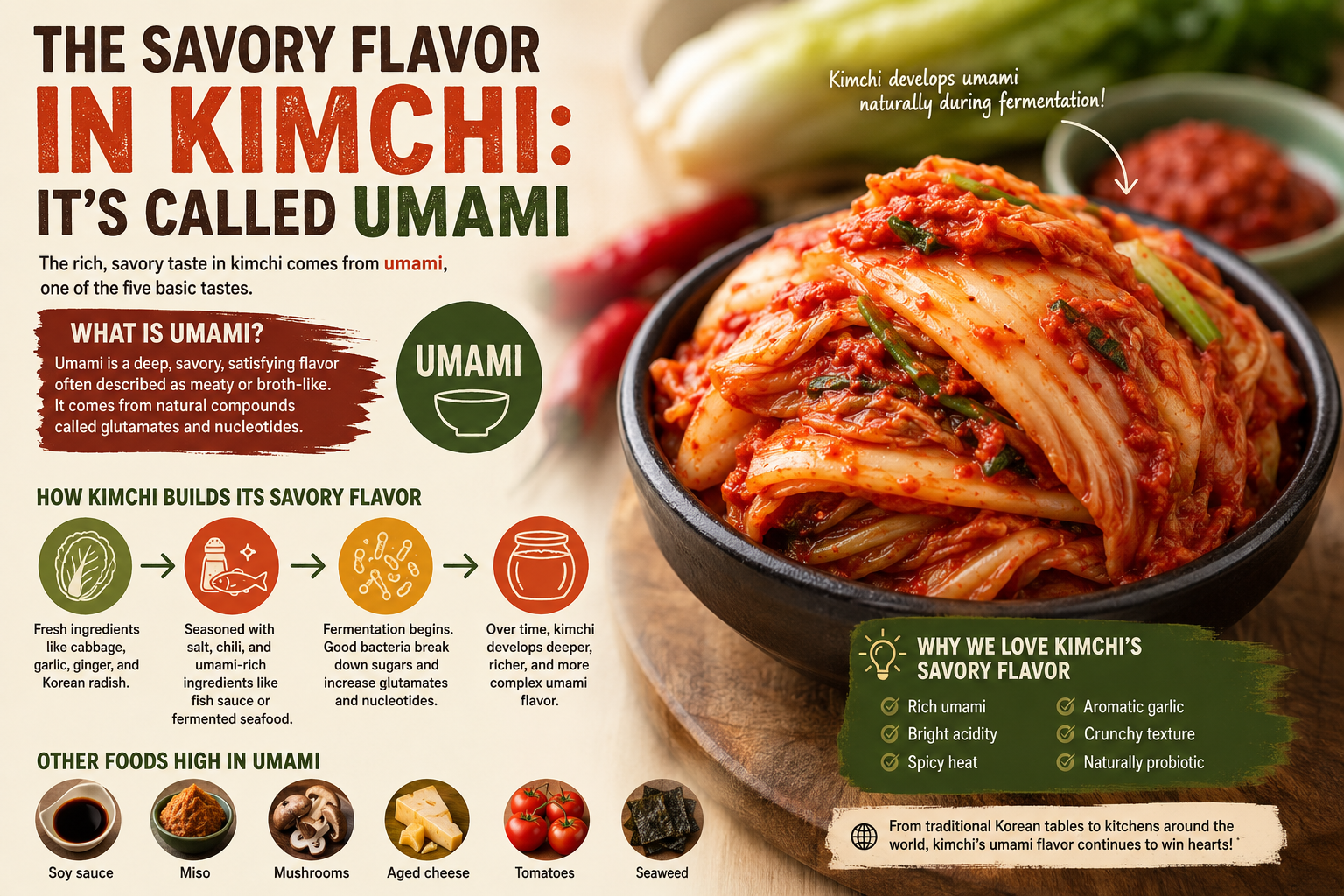
The savory taste commonly associated with kimchi is known as umami, one of the five basic tastes alongside sweet, sour, salty, and bitter. Umami is often described as a rich, deep, meaty, or broth-like flavor that creates a satisfying mouthfeel.
Kimchi naturally develops umami during fermentation. As cabbage, radish, garlic, ginger, fish sauce (or vegan alternatives), and other ingredients ferment, naturally occurring glutamates and nucleotides increase, creating the complex savory taste that makes kimchi so distinctive. Foods such as soy sauce, aged cheese, mushrooms, tomatoes, and miso also contain high levels of umami compounds. (Wikipedia)
Why Is "Savory Flavor in Kimchi" Trending?
The recent surge in searches is primarily linked to today's New York Times Mini Crossword clue asking for the savory flavor found in kimchi and soy sauce. Crossword solvers unfamiliar with the culinary term searched for its meaning, causing a sharp increase in online interest. (Word Tips)
At the same time, growing consumer interest in Korean cuisine continues to expose more people to fermented foods and their unique flavor profiles. Kimchi has become increasingly popular worldwide thanks to its versatility, probiotic reputation, and bold taste.
How Kimchi Develops Its Umami Flavor
Unlike foods that are simply seasoned with salt, kimchi's savory character evolves naturally through fermentation.
During fermentation:
- Beneficial lactic acid bacteria break down sugars in vegetables.
- Amino acids, including glutamate, become more concentrated.
- Fish sauce, salted seafood, or fermented soybean ingredients contribute additional savory compounds.
- Longer fermentation generally produces a stronger, deeper, and more complex umami flavor.
Fresh kimchi tends to taste crisp and mildly spicy, while well-aged kimchi becomes tangier, richer, and noticeably more savory. Food experts often describe this gradual transformation as one of kimchi's defining characteristics. (PMC)
Umami Continues to Shape Global Food Trends
The renewed attention surrounding kimchi also reflects a broader culinary movement. Industry reports indicate that consumers increasingly seek foods with bold umami flavors, especially younger diners interested in international cuisines.
Restaurant menus continue adding ingredients known for their savory depth, including:
- Kimchi
- Miso
- Gochujang
- Black garlic
- Tamari
- Bonito flakes
Food industry analysts project continued growth in umami-inspired menu items over the next several years as chefs incorporate fermented ingredients into both traditional and modern dishes. (Simplot Food)
Food Brands Are Embracing Kimchi Flavor
Consumer demand has also inspired food manufacturers to launch products featuring kimchi-inspired flavors.
One recent example is Kettle Brand, which introduced Spicy Kimchi potato chips. The company describes the chips as delivering the fermented, spicy, and umami-rich characteristics of traditional kimchi while making the flavor accessible in snack form. The product is rolling out nationwide and appears intended as a long-term addition rather than a limited-edition release. (Allrecipes)
This reflects a wider trend of Korean-inspired flavors expanding beyond traditional dishes into chips, sauces, noodles, frozen meals, and convenience foods.
Why Consumers Love Kimchi's Savory Taste
Kimchi's popularity comes from its ability to combine several flavors simultaneously:
- Savory umami
- Bright acidity
- Moderate to intense heat
- Garlic aroma
- Natural sweetness from vegetables
- Refreshing crunch when freshly fermented
This balance allows kimchi to complement grilled meats, rice dishes, noodles, sandwiches, burgers, tacos, soups, and even pizza, making it one of the world's most versatile fermented foods.
SEO Keywords
For readers searching online, the following related keywords are gaining interest:
- savory flavor in kimchi
- umami flavor
- what is umami
- kimchi savory taste
- kimchi fermentation
- why kimchi tastes savory
- fermented Korean food
- umami foods
- kimchi flavor profile
- Korean fermented vegetables
Conclusion
The sudden spike in searches for "savory flavor in kimchi" is largely the result of today's New York Times Mini Crossword, which introduced many people to the culinary term umami. (Word Tips)
Beyond the crossword, the trend reflects the continuing global popularity of Korean cuisine and growing consumer appreciation for fermented foods. Kimchi's naturally developed umami flavor—created through fermentation and rich in glutamates—has become one of the defining characteristics that attracts food lovers around the world. As restaurants, food brands, and home cooks increasingly embrace bold savory flavors, interest in kimchi and the science behind its distinctive taste is expected to continue growing. (PMC)
$$$