Sensient Invests $250M to Expand Natural Food Dye Production
The news
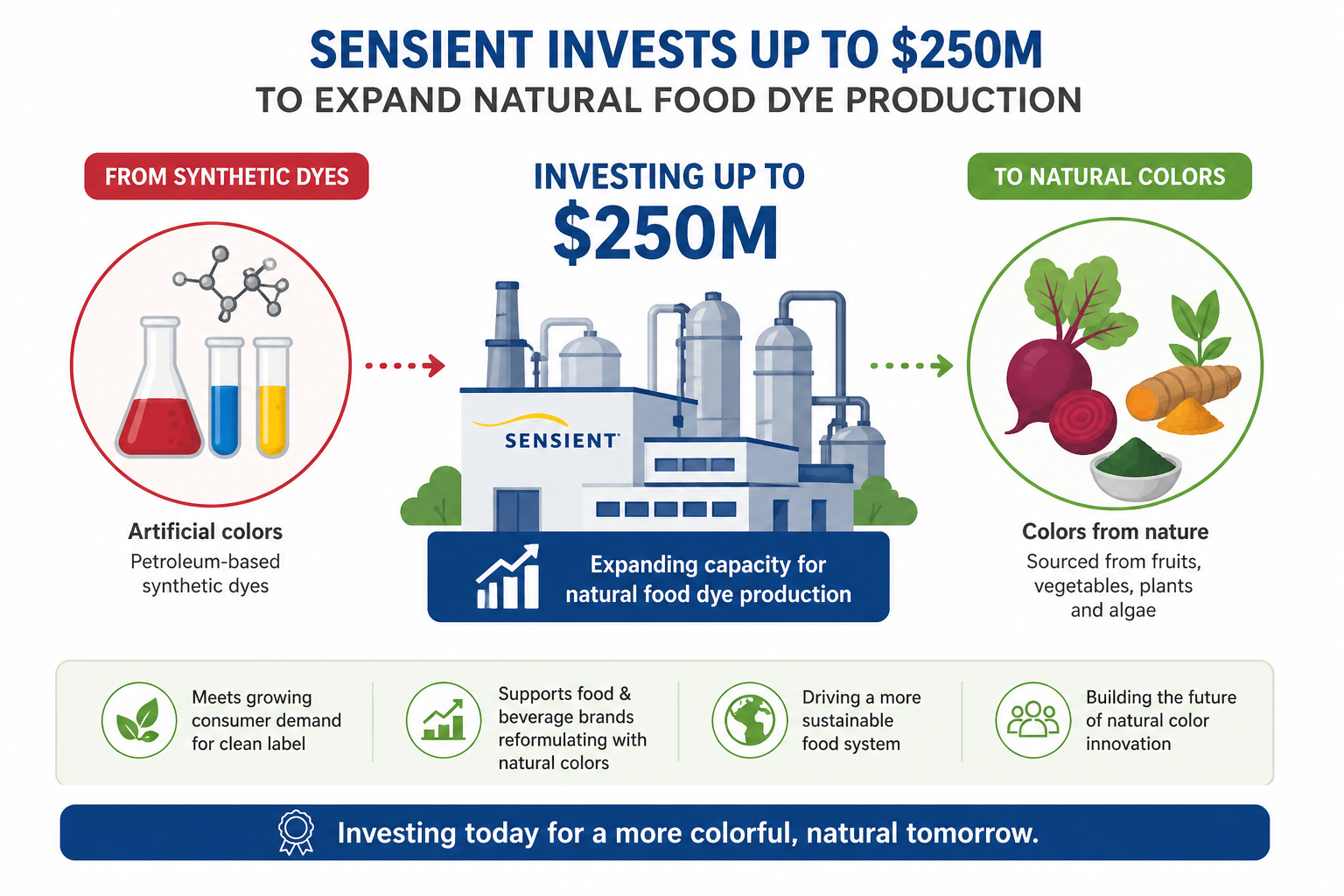
On April 20, 2026, ingredients supplier Sensient Technologies announced a major investment of up to $250 million to significantly expand its production of natural food colors. The company plans to add 28,800 square feet to its largest natural color manufacturing plant in St. Louis, which currently spans 500,000 square feet.
According to Sensient’s CEO, Paul Manning, this expansion is part of a broader strategy to capture what he calls “the single largest opportunity in the company’s history,” as food manufacturers aggressively move away from artificial dyes.
The company aims to reach $1 billion in natural color sales and noted that every dollar of synthetic color revenue converted to natural colors could generate roughly ten times that amount in new revenue, because more natural pigment is needed to achieve the same shade.
Background & Context
This investment arrives amid a powerful shift in the U.S. food industry driven by two main forces:
- Consumer and Regulatory Pressure: Growing skepticism of highly processed foods and artificial ingredients has accelerated “clean label” reformulation. A key catalyst is the influence of U.S. Secretary of Health and Human Services Robert F. Kennedy Jr. and the “Make America Healthy Again” (MAHA) movement, which has pressured food companies to voluntarily eliminate artificial dyes by the end of 2026.
- The Challenge of Natural Colors: Unlike synthetic dyes (e.g., Red 40, Yellow 5), which are stable, cheap, and potent, natural colorants derived from sources like turmeric, beets, spirulina, or purple carrots are often more expensive, less stable under heat or light, and require larger quantities to achieve vibrant hues. This technical challenge is precisely why Sensient’s investment in R&D and expanded capacity is critical—it positions the company to solve these reformulation hurdles for major food brands.
Why It Matters
Sensient’s move is a clear bet that the shift to natural colors is no longer a niche trend but a fundamental industry transformation. With $100 million of its own existing synthetic color revenue at stake and countless more from clients, the company is investing heavily now to ensure it has the production scale and technical expertise ready for a projected surge in conversion activity starting in late 2026.
Sensient’s CEO emphasized, “We are going to invest very, very strongly. We are not going to be late,” underscoring the competitive race among ingredient suppliers to dominate the growing natural colors market.
###