South America Food & Flavor Business Roundup: November 1–15, 2026
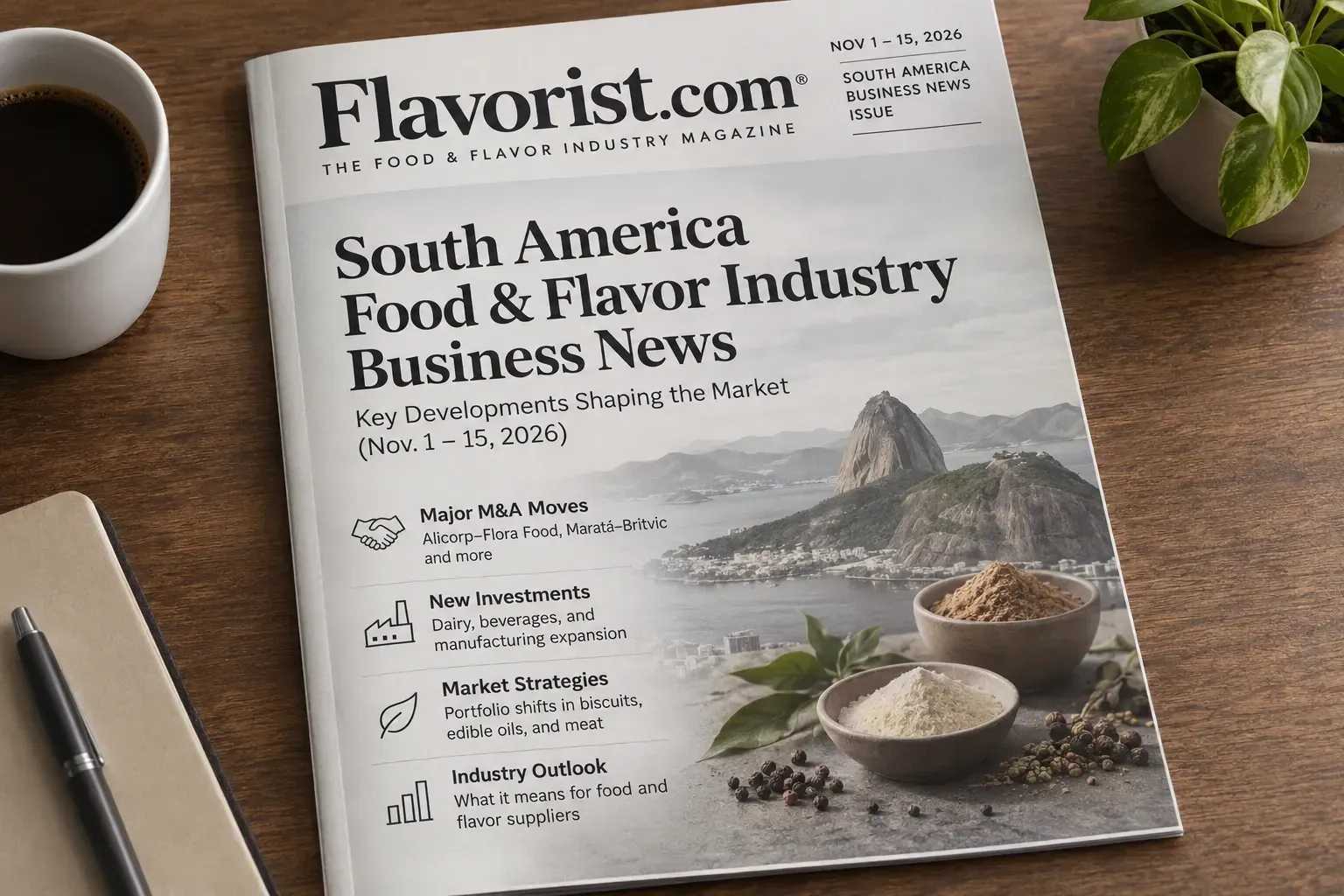
South America Food & Flavor Business Roundup: November 1–15, 2026
Flavorist.com Business Intelligence · South American markets · Updated November 24, 2026
Dealmaking reshaped South American food in the first half of November. Peru's Alicorp completed its US$150.5 million purchase of Flora Food Group's Latin American spreads business, Brazil's Maratá group agreed to buy Britvic Brasil for about R$491 million, and Argentina's Molinos Río de la Plata sold oilseed assets to move into biscuits. In Chile, Agrosuper opened talks to buy Blumar's salmon business for up to US$540 million, while Brazil shipped a record 5.33 million bags of coffee in October.
This roundup covers 31 business developments published between November 1 and November 15, 2026, across Brazil, Argentina, Chile, Colombia, Peru, Ecuador and Uruguay. It includes acquisitions, investments, earnings, ingredient launches, commodity trade and industrial policy.
Pending deals, negotiations and proposed investments are labeled as such throughout.
Contents
- Mergers, acquisitions and ownership changes
- 1. Alicorp completes its US$150.5 million purchase of Flora Food's Latin American business
- 2. Maratá's owner agrees to buy Britvic Brasil for about R$491 million
- 3. Agrosuper negotiates to buy Blumar's salmon business for up to US$540 million
- 4. Grupo Nutresa buys Ecuadorian chocolate maker La Universal
- 5. Molinos sells Rosario oilseed assets to Grupo Elementa
- 6. Molinos enters biscuits with a Tucumán plant purchase
- 7. Molinos agrees to buy the Tía Maruca biscuit brand
- 8. Anasac buys Chilean premium pet-food brand Patagon Raw
- Investments and capacity expansion
- Financial results
- 12. JBS misses forecasts as US beef stays tight
- 13. MBRF more than doubles its profit after the Marfrig–BRF merger
- 14. Minerva grows exports but carries heavy financing costs
- 15. M. Dias Branco's profit falls 27%
- 16. Ambev's premium beer volumes rise 19% in Brazil
- 17. Monster's Latin American sales jump 49%, led by Brazil
- 18. SLC Agrícola returns to profit on a strong soybean crop
- 19. International Meal Company grows Brazilian earnings 21%
- Ingredient innovation and product launches
- Trade and commodity markets
- 23. Brazil exports a record 5.33 million bags of coffee in October
- 24. Rabobank forecasts 14% more Brazilian sugar in 2027/28
- 25. Argentina's agro-export earnings jump 157% in October
- 26. Argentina sets wheat and sunflower-oil export records as soy crushing slows
- 27. Argentina's agro-exports pass 100 million tonnes in ten months
- 28. Uruguay's exports rise 12% under the Mercosur–EU interim agreement
- 29. Uruguay's October exports edge up 1%
- Industry policy and labor
- What to watch
Mergers, acquisitions and ownership changes
1. Alicorp completes its US$150.5 million purchase of Flora Food's Latin American business
November 2 · Peru, Colombia, Ecuador, Chile and the region · Completed acquisition · Spreads and margarines
Peruvian food maker Alicorp has completed its acquisition of Flora Food Group's Latin American business, excluding Brazil and Mexico, for about US$150.5 million. The deal covers operations in seven countries, sales in about 30 Latin American and Caribbean territories, and 19 transferred or exclusively licensed brands, including Rama, Dorina, Bonella and La Danesa. It also includes a factory in Cali, Colombia.
Why it matters: Alicorp becomes a major regional player in margarines and spreads. Suppliers of butter and dairy-style flavors, emulsifiers, fats and oils should watch for procurement integration and brand renovation.
Sources: Alicorp; Flora Food Group; Dentons Cárdenas & Cárdenas
2. Maratá's owner agrees to buy Britvic Brasil for about R$491 million
November 9 · Brazil · Agreed acquisition · Juices and soft drinks
Grupo JAV, owner of the Maratá brand, has agreed to buy Britvic Brasil from Carlsberg for a reported R$491 million. The deal includes Maguary, Dafruta, Bela Ischia and Flying Horse and would create one of Brazil's largest ready-to-drink juice businesses. Carlsberg is selling after reviewing the Brazilian operations it gained when it bought Britvic. The deal has not yet closed.
Maratá is also expanding elsewhere, with a planned R$400 million flour mill in Alagoas and infrastructure plans tied to the Port of Ilhéus.
Why it matters: Combining these juice brands could reshape demand for fruit flavors, juice concentrates, sweeteners, acidulants and stabilizers in Brazil, with possible repositioning and consolidated sourcing.
Sources: InvestNews; JC/UOL; Indústria News
3. Agrosuper negotiates to buy Blumar's salmon business for up to US$540 million
November 5 · Chile · Negotiation · Salmon
Chilean food group Agrosuper, which already controls AquaChile, has signed a memorandum of understanding to negotiate the purchase of Salmones Blumar, Blumar's salmon farming, processing and sales arm, in a deal worth up to US$540 million. The talks are not a completed acquisition, and commercial and regulatory questions remain.
Why it matters: The deal would further concentrate Chilean salmon production, with implications for buyers of seafood and for suppliers of marinades, smoke flavors, sauces and value-added seafood products.
Sources: La Tercera; Diario Financiero
4. Grupo Nutresa buys Ecuadorian chocolate maker La Universal
November 3–12 · Colombia, Ecuador · Acquisition · Confectionery
Colombia's Grupo Nutresa has completed its purchase of La Universal (Universal Sweet Industries), an Ecuadorian maker of chocolates, confectionery and biscuits. Nutresa's leadership said it aims for about US$200 million in Ecuadorian revenue across its businesses in 2027. Ecuador's competition authority announced its approval on November 16, just after this period.
Why it matters: A bigger Nutresa presence in Ecuador could bring new work in cocoa ingredients, chocolate flavors, inclusions and biscuit systems, along with sourcing consolidation.
Sources: InfoNegocios Colombia; La República; Perú Retail
5. Molinos sells Rosario oilseed assets to Grupo Elementa
November 2 · Argentina · Completed asset sale · Sunflower oil
Molinos Río de la Plata has completed the sale of grain storage, oilseed crushing and refining assets at its Santa Clara complex in Rosario to Grupo Elementa, keeping its edible-oil packaging operations on site. Elementa plans to invest about US$100 million, announced in September, to modernize the plant and restart sunflower processing, idle there since 2015.
Why it matters: Restarted sunflower crushing could add edible-oil supply for snack, bakery, confectionery and prepared-food makers. Stories 6 and 7 cover Molinos' move into biscuits.
Sources: La Nación; Molinos financial filing
6. Molinos enters biscuits with a Tucumán plant purchase
November 2–3 · Argentina · Completed acquisition · Biscuits
Molinos Río de la Plata has bought the Complejo Alimenticio San Salvador plant in Tucumán, which makes crackers, sweet and filled biscuits and other baked snacks. The deal, disclosed alongside the Rosario sale (story 5), marks Molinos' entry into biscuits using its brands and distribution.
Why it matters: A large new biscuit maker will need vanilla, chocolate, caramel, fruit and savory flavors, plus fillings, coatings and inclusions.
Sources: El Tucumano; Devengado
7. Molinos agrees to buy the Tía Maruca biscuit brand
November 13–14 · Argentina · Agreed acquisition · Biscuits
Molinos has agreed to acquire Tía Maruca, a well-known Argentine biscuit brand, including brand rights in its existing markets. Paired with the Tucumán plant (story 6), it gives Molinos both a brand and production capacity. The deal had not closed when announced.
Why it matters: Expect product renovation and new launches, with opportunities in biscuit flavors, sweet fillings, chocolate coatings and bakery fats.
Source: iProfesional
8. Anasac buys Chilean premium pet-food brand Patagon Raw
November 6 · Chile · Acquisition · Pet food
Chilean company Anasac has acquired Patagon Raw, a Viña del Mar maker of premium pet food and treats sold through specialist retailers such as Petco Chile. Terms were not disclosed.
Why it matters: Pet food depends on palatability. The deal could create demand for pet-food flavors, digests, animal-protein ingredients and functional inclusions.
Source: Diario Financiero
Investments and capacity expansion
9. Leche Gloria expands its project pipeline to S/226 million as sales grow
November 11 · Peru · Capital projects · Dairy
Peruvian dairy company Leche Gloria had S/226 million in projects under construction or installation at September 30, 2026, up 84.6% from S/122.4 million at the end of 2025. This is the value of work in progress, not cash spent in the quarter. Third-quarter net sales rose 15.2% to S/1.37 billion on higher sales of evaporated milk, dairy products and beverages, and gross margin improved from 22.2% to 24.2%.
Why it matters: Capacity and modernization at Peru's leading dairy maker could create demand for dairy flavors, stabilizers, emulsifiers and beverage ingredients.
Source: Gestión
10. Coca-Cola FEMSA Brasil invests R$75 million in a Limeira distribution center
November 5 · Brazil · Logistics investment · Beverages
Coca-Cola FEMSA Brasil is building a R$75 million distribution center in Limeira, São Paulo state. Its Brazilian beverage volume rose 3.9% in the third quarter. Separately, reports on November 11 named Caçapava as a leading candidate for a proposed R$1 billion factory with capacity of 400 million liters a year; the company had not confirmed the location or the investment.
Why it matters: Stronger distribution, and possibly a new plant, could support more launches and higher demand for beverage concentrates and fruit flavors.
Sources: Mercado & Consumo; Portal 6; Vale 360 News
11. Frigosorno opens a northern terminal and signs a cattle genetics deal
November 4 · Chile · Distribution investment · Meat
Chilean meat company Frigosorno plans a new terminal in Antofagasta, costing about US$950,000, to serve Antofagasta, Calama and nearby areas. It has also signed a genetic-improvement agreement with Montana.
Why it matters: Better meat distribution in northern Chile supports growth in foodservice and prepared foods, and in demand for marinades, seasonings and sauces.
Source: Diario Financiero
Financial results
Protein producers reported mixed results, while premium beer and energy drinks grew strongly in Brazil.
| Company | Period | Headline figure | What stood out |
|---|---|---|---|
| JBS | Q3 2026 | Adjusted EBITDA down 36% to US$1.18 billion | Below forecasts |
| MBRF | Q3 2026 | Net profit up 123.5% to R$210 million | Strong US unit |
| Minerva Foods | Q3 2026 | Gross revenue down 3.1% to R$15.8 billion | Net loss of about R$717 million |
| M. Dias Branco | Q3 2026 | Net profit down 27% to R$157.7 million | Pressure in biscuits and pasta |
| Ambev (Brazil beer) | Q3 2026 | Revenue up 4.8% to R$10.14 billion | Premium volumes up 19% |
| Monster (Latin America) | Q3 2026 | Sales up about 49% | Brazil up about 70% |
| SLC Agrícola | Q3 2026 | Net profit of R$192.4 million | Up from a loss |
| International Meal Company | Q3 2026 | Brazil EBITDA up 21% | Cash flow more than tripled |
12. JBS misses forecasts as US beef stays tight
November 9 · Brazil · Quarterly results · Meat
JBS's third-quarter adjusted EBITDA fell about 36% to US$1.18 billion, below the roughly US$1.32 billion analysts expected. US beef remains squeezed by high cattle costs and tight supply, though management expects improvement in 2027 as cattle imports from Mexico recover.
Why it matters: Margin pressure at the world's largest meat company may increase demand for cost-effective savory systems and value-added protein products.
Source: Reuters
13. MBRF more than doubles its profit after the Marfrig–BRF merger
November 12 · Brazil · Quarterly results · Meat and processed foods
MBRF, formed by combining Marfrig and BRF, reported third-quarter net profit of R$210 million, up 123.5%, helped by strong US results.
Why it matters: As integration continues, suppliers of poultry seasonings, meat marinades, coatings and prepared-food ingredients may face new procurement standards and opportunities.
Sources: MBRF; Folha de S.Paulo
14. Minerva grows exports but carries heavy financing costs
November 11–12 · Brazil · Quarterly results · Beef
Minerva Foods' third-quarter gross revenue was R$15.8 billion, up 4.7% from the previous quarter but down 3.1% year on year. Exports made up about 54.8% of revenue. According to BTG Pactual, the company posted a net loss of about R$717 million, with net debt of about R$15.2 billion.
Why it matters: Minerva's mix of export growth and financial pressure could affect its purchasing of beef-processing ingredients and product mix.
Sources: Minerva Foods; BTG Pactual
15. M. Dias Branco's profit falls 27%
November 12–13 · Brazil · Quarterly results · Biscuits and pasta
Biscuit and pasta maker M. Dias Branco reported third-quarter net profit of about R$157.7 million, down 27% from R$216.1 million.
Why it matters: A major buyer of flour, fats, sweeteners and seasonings is under margin pressure, so suppliers should expect requests for cost-optimized reformulation that keeps taste and texture intact.
Sources: M. Dias Branco; ADVFN
16. Ambev's premium beer volumes rise 19% in Brazil
November 9 · Brazil · Quarterly results · Beer
Ambev acknowledged it had underestimated premium beer but has since strengthened its position: premium volumes in Brazil rose about 19% in the third quarter, and Brazilian beer revenue grew 4.8% to about R$10.14 billion.
Why it matters: Shoppers are still paying more for differentiated drinks, supporting demand for distinctive flavor profiles in alcoholic and non-alcoholic beverages.
Source: Exame
17. Monster's Latin American sales jump 49%, led by Brazil
November 2026 · Brazil, Latin America · Quarterly results · Energy drinks
Monster Beverage's Latin American sales rose about 49% in the third quarter, with Brazil up about 70%, making the region one of its fastest-growing.
Why it matters: Energy-drink growth supports demand for tropical, citrus and berry flavors, reduced-sugar systems and flavors tailored to Brazilian tastes.
Source: Food Business News
18. SLC Agrícola returns to profit on a strong soybean crop
November 11–12 · Brazil · Quarterly results · Agriculture
SLC Agrícola posted third-quarter net profit of about R$192.4 million, reversing a R$14.5 million loss. Soybean revenue rose about 83.6% to R$606 million on higher volumes and yields. The company also grows corn and cotton and is expanding into livestock.
Why it matters: Soybeans underpin vegetable oils, lecithin and plant proteins, so Brazilian supply conditions affect ingredient costs across the region.
Sources: Money Times; Revista Cultivar
19. International Meal Company grows Brazilian earnings 21%
November 12 · Brazil · Quarterly results · Foodservice
Multibrand restaurant operator International Meal Company (IMC) reported 21% growth in Brazilian EBITDA, excluding IFRS 16 effects, and said cash flow after capital spending more than tripled over the first nine months.
Why it matters: Healthier foodservice operators have more room for menu innovation, supporting demand for sauces, seasonings and beverage concentrates that deliver consistent results.
Source: International Meal Company
Ingredient innovation and product launches
20. DR Aromas & Ingredientes launches products in four categories
November 10 · Brazil · Product launches · Flavors and ingredients
Brazilian ingredient company DR Aromas & Ingredientes, active in more than 70 countries, has launched new products in natural colors, dehydrated ingredients, mocktail solutions and fillings.
Why it matters: The launches, including mocktail bases for complex non-alcoholic drinks, point to growing demand for natural colors and ready-made solutions. Competitors should watch its expanding range.
Source: DR Aromas & Ingredientes
21. Mix Plena launches natural water-soluble colors for confectionery
November 3–4 · Brazil · Product launch · Natural colors
Mix Plena, a DR Aromas & Ingredientes brand, has launched what it calls Brazil's first natural, water-soluble color line for confectionery and desserts.
Why it matters: Natural colors must hold up across recipes, temperatures and storage. Suppliers can offer combined color, flavor and application support to confectioners and dessert makers.
Sources: Mix Plena; DR Aromas & Ingredientes
22. Chilean startup AustralBites turns mussels into nuggets and meatballs
November 10 · Chile · Product development · Seafood
AustralBites is making nuggets and meatballs from Chilean mussels, known locally as choritos, to make marine protein more approachable. It distributes through Global Frozen, mainly to foodservice.
Why it matters: Seafood nuggets and meatballs need seasonings, coatings and solutions that soften strong marine notes, an opening for flavor companies working with regional proteins.
Source: Diario Empresas
Trade and commodity markets
23. Brazil exports a record 5.33 million bags of coffee in October
November 11 · Brazil · Trade data · Coffee
Brazil exported about 5.327 million 60-kilogram bags of coffee in October 2026, the highest monthly volume since the Brazilian Coffee Exporters Council (Cecafé) began its records in 1990, and up 28.4% from October 2025. Cecafé cited new-crop availability and recovering trade with the United States after extra tariffs were removed. Exports to the US rose about 119%.
Why it matters: Strong export flows affect green-coffee availability and pricing for makers of extracts, soluble coffee and ready-to-drink coffee.
24. Rabobank forecasts 14% more Brazilian sugar in 2027/28
November 4–5 · Brazil · Forecast · Sugar
Rabobank expects Center-South Brazil's sugar output to rise about 14% in the 2027/28 harvest, from 37.4 million to 42.6 million tonnes, with cane crushing up from about 630 million to 655 million tonnes as mills favor sugar over ethanol. It warned the increase may not prevent a global sugar deficit.
Why it matters: Sugar prices will stay volatile, which keeps sugar-reduction technologies relevant for confectionery, bakery and beverages.
Sources: Campo em Pauta; Visão Agro
25. Argentina's agro-export earnings jump 157% in October
November 2 · Argentina · Trade data · Grains and oilseeds
Argentine grain processors and exporters (CIARA-CEC) earned about US$2.88 billion in foreign currency in October 2026, up 157% from a year earlier and, according to Reuters, the highest October figure in 25 years.
Why it matters: Argentina is a leading supplier of soybean oil, meal, corn and wheat, so its exports affect global prices for oils, emulsifiers and bakery ingredients.
Source: Reuters via Yahoo Finance
26. Argentina sets wheat and sunflower-oil export records as soy crushing slows
November 8 · Argentina · Trade data · Edible oils
Industry data from the Argentine Oilseed Industry Chamber and Grain Exporters Center showed record wheat and sunflower-oil exports in September, while soybean crushing weakened.
Why it matters: Sunflower oil is widely used in snacks, bakery and prepared foods. Buyers should track supply and consider how oil choice affects flavor and shelf life.
Source: TN Campo
27. Argentina's agro-exports pass 100 million tonnes in ten months
November 15 · Argentina · Trade data · Grains
Argentina exported more than 101 million tonnes of grains and byproducts from January to October 2026, a record for the period, according to the Rosario Board of Trade, led by corn and sunflower products, with strong wheat demand. Domestic grain sales passed 110 million tonnes by early November, about 14% above a year earlier.
Why it matters: Ample supply affects prices and availability of vegetable oils, starches, cereal ingredients and plant proteins.
28. Uruguay's exports rise 12% under the Mercosur–EU interim agreement
November 2 · Uruguay · Trade data · Food exports
Uruguay's Ministry of Economy and Finance reported a 12% increase in exports during the first five months of the Mercosur–European Union interim trade agreement. Chilled and frozen beef, rice and honey made up more than half the value under the relevant market-access arrangements.
Why it matters: Better access to Europe may encourage investment in Uruguayan meat, dairy and value-added foods for export.
Source: Subrayado
29. Uruguay's October exports edge up 1%
November 4 · Uruguay · Trade data · Exports
Uruguay's merchandise exports rose about 1% in October. Leading products included cellulose, beef, dairy, beverage concentrates and wood, with performance varying widely by category.
Why it matters: Beverage concentrates are a notable Uruguayan export, relevant to flavor manufacturers sourcing or supplying in the region.
Source: ICI Forestal
Industry policy and labor
30. Nestlé Colombia agrees to reinstate 86 workers at Bugalagrande
November 10 · Colombia · Labor agreement · Food manufacturing
Nestlé Colombia and the Sinaltrainal union agreed on November 6, after mediation by the Ministry of Labor, to reinstate 86 workers at the Bugalagrande plant in Valle del Cauca following weeks of dispute over suspended contracts. Seventeen workers were due back by November 17, 60 by November 30 and the remaining nine from December 1.
Why it matters: The deal provides a path back to full operations at a major Colombian plant, giving suppliers more certainty on production schedules.
Source: IBTimes Colombia
31. Uruguay reaffirms meat processing as a priority industry
November 6 · Uruguay · Industrial policy · Meat
Uruguay's Ministry of Industry, Energy and Mining reaffirmed meat processing as one of eight priority sectors in its existing industrial strategy. Officials said the meat chain contributes nearly nine percentage points of GDP and over 70,000 jobs, but noted heavy concentration: eight plants owned by two groups handle about half of meat exports, and ten plants about 90%.
Why it matters: A push for productivity and export diversification could bring investment in higher-value meat products and processing, creating demand for marinades and seasonings.
Source: Uruguay Ministry of Industry, Energy and Mining
What to watch
| Timing | What to expect | Story |
|---|---|---|
| November 30 and December 1, 2026 | Remaining Nestlé Colombia workers return | 30 |
| Pending | Agrosuper–Blumar negotiations | 3 |
| Pending | Britvic Brasil and Tía Maruca deals close | 2, 7 |
| Pending | Coca-Cola FEMSA decision on a R$1 billion São Paulo factory | 10 |
| 2027 | Nutresa's US$200 million Ecuador revenue target | 4 |
| 2027/28 harvest | Brazilian sugar output forecast to rise 14% | 24 |
- Consolidation is accelerating. Alicorp, Maratá, Nutresa, Molinos and Agrosuper are all reshaping categories from spreads and juices to biscuits and salmon, with knock-on effects for supplier relationships.
- Argentina's Molinos is reinventing itself. It is selling oilseed crushing and buying into biscuits, while Elementa plans to restart sunflower processing.
- Protein is under pressure. JBS and Minerva face cost and debt challenges even as MBRF recovers, so value-added and cost-efficient savory systems matter.
- Natural colors are gaining ground. DR Aromas & Ingredientes and Mix Plena are building natural color ranges for Brazilian food makers.
- Commodities are abundant but volatile. Record Brazilian coffee exports, a larger sugar crop and record Argentine shipments shape ingredient costs across the region.