No Toxics in Food Packaging Act 2026: A Major Push to Remove Harmful Chemicals from Food Packaging
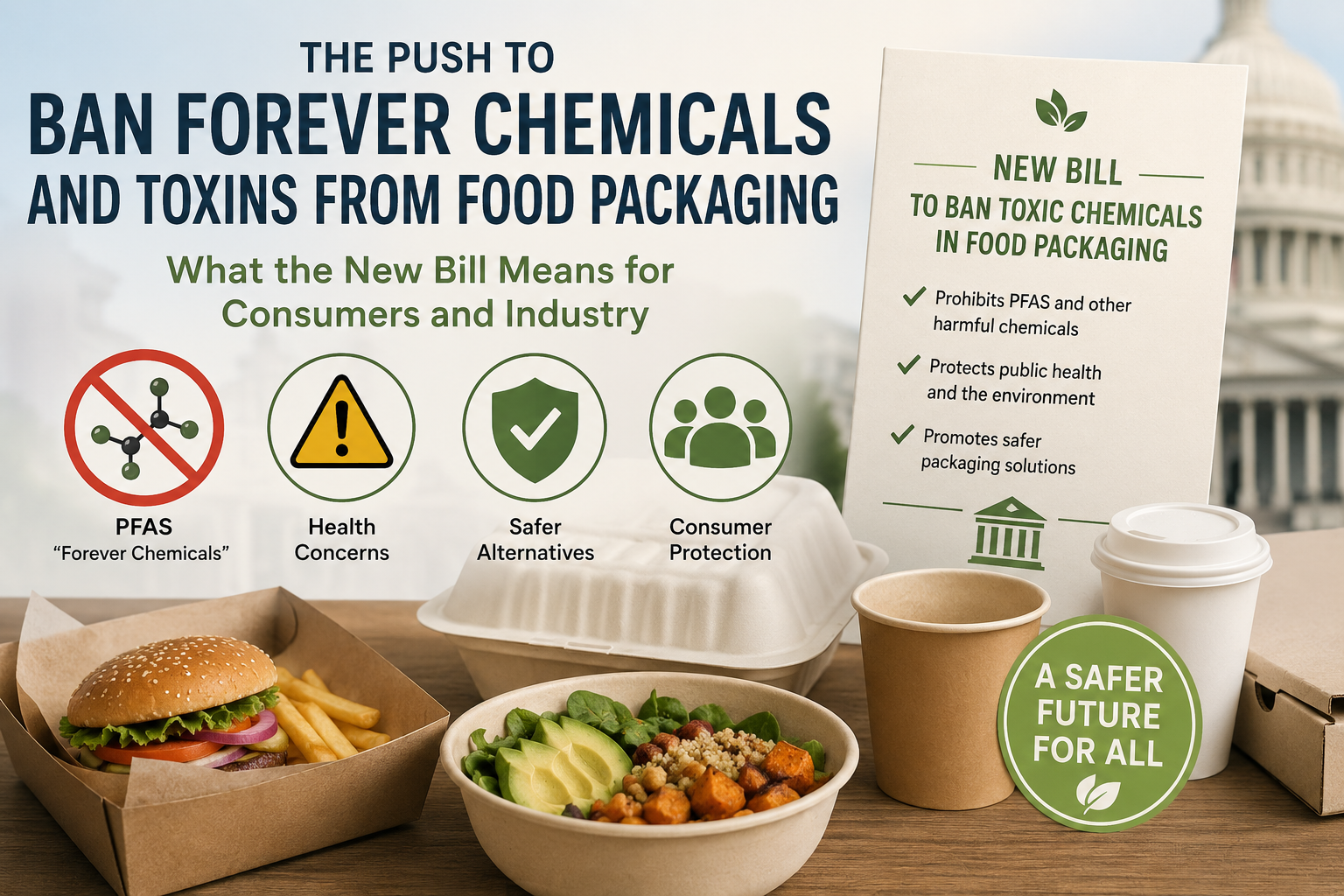
Food packaging plays a crucial role in protecting products, extending shelf life, and ensuring food safety. However, growing scientific evidence has raised concerns about chemicals used in packaging materials that can migrate into food and potentially affect human health. In response to these concerns, lawmakers in the United States have introduced the No Toxics in Food Packaging Act of 2026, a proposed federal law aimed at eliminating a range of hazardous substances from food packaging and food processing materials. (Food Dive)
If enacted, the legislation would represent one of the most significant federal efforts to regulate toxic chemicals in food-contact materials and could reshape the food packaging industry for years to come.
What Is the No Toxics in Food Packaging Act?
The No Toxics in Food Packaging Act was introduced by Senator Richard Blumenthal of Connecticut and Representatives Jan Schakowsky of Illinois and Rosa DeLauro of Connecticut. The bill seeks to prohibit the use of several chemical classes and individual substances that have been associated with cancer, hormone disruption, reproductive harm, and other health concerns. (Packaging Dive)
The proposed legislation targets chemicals commonly found in food packaging, food processing equipment, and other materials that come into contact with food during production, transportation, storage, and sale. Supporters argue that consumers should not be exposed to potentially harmful chemicals simply through everyday food purchases. (Packaging Dive)
Chemicals Targeted by the Legislation
The bill focuses on three major classes of chemicals that have drawn increasing scrutiny from researchers and regulators:
PFAS (Per- and Polyfluoroalkyl Substances)
Often called “forever chemicals,” PFAS are widely used because they resist grease, water, and stains. They have been used in fast-food wrappers, microwave popcorn bags, pizza boxes, and other food packaging products.
The concern is that PFAS break down extremely slowly in the environment and can accumulate in the human body over time. Studies have linked certain PFAS compounds to health issues including immune system effects, hormone disruption, developmental problems, and increased risks of certain cancers. (Packaging Dive)
Phthalates
Phthalates are chemicals commonly used to make plastics more flexible. Research has associated some phthalates with endocrine disruption, reproductive health concerns, and developmental issues. These substances can migrate from packaging materials into food products, particularly fatty foods. (Packaging Dive)
Bisphenols
The legislation would also address bisphenols, including BPA and related compounds. BPA has been the subject of extensive scientific and public debate for years due to concerns about its potential impact on hormone function and human development. Many manufacturers have already moved away from BPA, but critics note that replacement chemicals may pose similar risks. (Packaging Dive)
In addition to these chemical groups, the bill identifies several individual substances that lawmakers and health advocates consider particularly concerning, including formaldehyde, benzene, chloroform, acrylamide, methylene chloride, asbestos, and styrene polymers. (Packaging Dive)
Why Food Packaging Chemicals Matter
Food packaging is often viewed primarily as a protective barrier. Yet many consumers are unaware that packaging materials contain a variety of chemical additives designed to improve durability, flexibility, heat resistance, moisture control, or grease resistance.
Scientists have increasingly studied how these substances can migrate from packaging into food. This process can occur during manufacturing, transportation, storage, or cooking. Heat, fat content, and storage duration can all influence the amount of chemical migration that occurs. (Breast Cancer Prevention Partners (BCPP))
Public health advocates argue that even low levels of repeated exposure may be significant over a lifetime, particularly for vulnerable populations such as infants, children, pregnant women, and individuals with existing health conditions. The proposed legislation specifically emphasizes the need to consider these populations when evaluating chemical safety. (Packaging Dive)
Growing Concerns About Regulatory Gaps
One reason the legislation has gained attention is criticism of the current regulatory framework governing food-contact materials in the United States.
Under existing law, the Food and Drug Administration regulates substances used in food packaging and other food-contact materials. However, many chemicals were approved decades ago, and critics argue that scientific understanding of chemical risks has evolved significantly since those approvals were granted. (Breast Cancer Prevention Partners (BCPP))
Advocacy organizations and some researchers contend that the FDA does not consistently re-evaluate older approvals in light of new scientific findings. As a result, chemicals that may present health concerns today can remain authorized for use because they were approved under earlier standards. (Breast Cancer Prevention Partners (BCPP))
The No Toxics in Food Packaging Act seeks to address these concerns by explicitly designating certain substances as unsafe for food-contact applications.
State Governments Have Already Started Taking Action
While federal action has been limited, many states have moved ahead with their own restrictions on toxic chemicals in food packaging.
Several states have already enacted laws targeting PFAS in food packaging, reflecting growing concern about environmental contamination and human exposure. According to supporters of the federal bill, the new legislation would complement state efforts rather than override them. (Packaging Dive)
This trend mirrors broader environmental and consumer safety movements across the country. State lawmakers have increasingly focused on chemical transparency, product safety, and environmental health, particularly where federal regulation is perceived as lagging behind scientific evidence.
International Momentum Is Building
The United States is not alone in addressing food packaging chemicals.
The European Union has adopted increasingly strict rules regarding PFAS and other potentially harmful substances in food-contact materials. New EU regulations will significantly limit PFAS in food-contact packaging beginning in August 2026, making Europe one of the most aggressive regulatory jurisdictions in this area. (Certivo)
These developments suggest a broader global shift toward safer food packaging materials. Manufacturers that operate internationally may find themselves adapting to stricter requirements regardless of whether similar federal regulations are adopted in the United States.
Potential Impact on the Food Packaging Industry
If passed, the No Toxics in Food Packaging Act could have substantial implications for packaging manufacturers, food producers, retailers, and suppliers.
Companies may need to:
- Reformulate packaging materials.
- Identify safer chemical alternatives.
- Conduct additional testing and compliance assessments.
- Update supply chain documentation.
- Invest in new packaging technologies.
While these changes could increase short-term costs, many industry observers believe the legislation may also accelerate innovation in sustainable and safer packaging solutions. Alternative coatings, fiber-based packaging, water-based barriers, and other emerging technologies are already gaining traction as companies prepare for tighter regulations worldwide. (Blockchain for Food)
Consumer Demand Is Driving Change
Regulatory pressure is only part of the story. Consumer awareness of chemical exposure has grown substantially over the past decade.
Many shoppers now seek products marketed as BPA-free, PFAS-free, or free from other potentially harmful substances. Food brands increasingly recognize that packaging safety can influence purchasing decisions and brand trust.
As transparency becomes a larger priority, companies may face market pressure to move beyond minimum legal requirements and proactively adopt safer materials.
What Happens Next?
The No Toxics in Food Packaging Act remains a proposed piece of legislation and must still move through the congressional process before becoming law. However, its introduction highlights a growing national debate about chemical safety, food packaging standards, and public health protections. (Food Dive)
Supporters argue that eliminating hazardous chemicals from food-contact materials is a necessary step toward reducing preventable health risks and modernizing outdated regulations. Opponents and industry groups may raise concerns about implementation costs, technical feasibility, and the availability of alternative materials.
Regardless of the bill's ultimate fate, the direction of policy appears increasingly clear. Across the United States and around the world, regulators, consumers, and manufacturers are paying closer attention to the chemicals that come into contact with food. The No Toxics in Food Packaging Act is likely to remain part of a broader movement toward safer, more transparent, and more sustainable food packaging systems. (Packaging Dive)
###