BBQ Food Safety: How to Enjoy Grilled Foods While Reducing the Risk of Harmful Toxicants
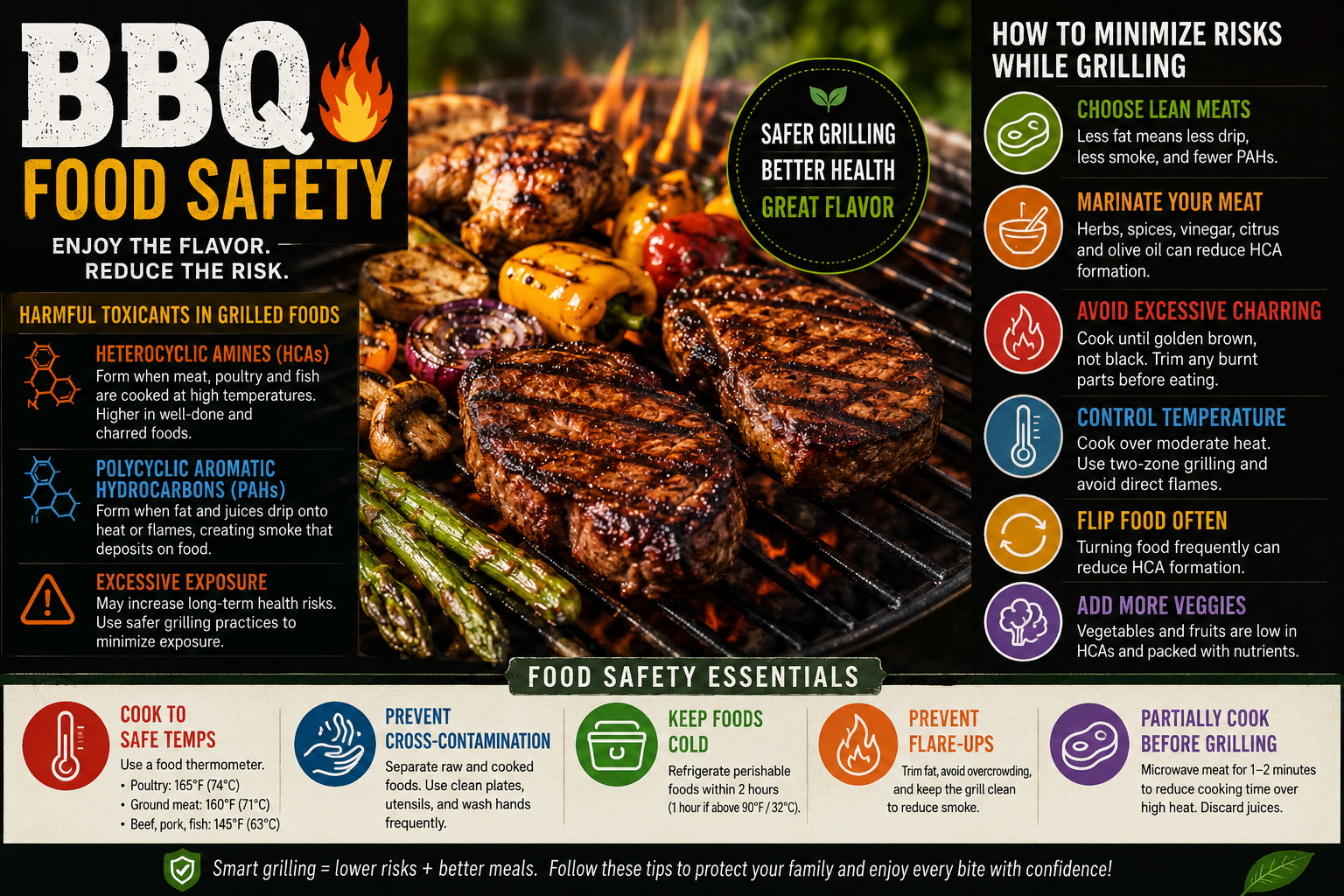
Nothing says summer like the aroma of food sizzling over an open flame. Backyard barbecues bring family and friends together to enjoy burgers, steaks, chicken, seafood, and grilled vegetables. While grilling is one of the world's favorite cooking methods, food safety experts remind consumers that how food is grilled matters just as much as what is grilled.
Improper grilling can increase the risk of foodborne illness and produce potentially harmful compounds known as food toxicants. Fortunately, a few simple cooking practices can significantly reduce these risks without sacrificing flavor.
Why Grilling Creates Food Toxicants
Grilling exposes food to very high temperatures, often exceeding 300°C (570°F). These intense temperatures trigger complex chemical reactions that create the characteristic smoky aroma, crispy crust, and rich flavors people love. However, they can also generate undesirable compounds.
The two food toxicants that receive the greatest attention from researchers are:
Heterocyclic Amines (HCAs)
HCAs form when amino acids, natural sugars, and creatine in meat react at high cooking temperatures. They are most commonly produced in beef, pork, poultry, and fish when cooked over intense heat.
The darker and more charred the meat becomes, the greater the concentration of HCAs tends to be.
Polycyclic Aromatic Hydrocarbons (PAHs)
PAHs are produced when fat and meat juices drip onto hot charcoal, wood, or gas burners. The resulting smoke contains PAHs, which rise and deposit onto the surface of food.
Foods cooked directly over flames or exposed to heavy smoke generally accumulate higher levels of these compounds.
Both HCAs and PAHs have been shown to cause cancer in laboratory animals exposed to high doses over long periods. While the amounts consumed during normal diets are much lower, many public health organizations recommend minimizing unnecessary exposure whenever possible.
Food Safety Goes Beyond Toxicants
Chemical contaminants are only part of the picture. Barbecues also present classic food safety challenges.
Raw meat can carry harmful bacteria such as Salmonella, Campylobacter, Escherichia coli (E. coli), and Listeria. Cross-contamination between raw and cooked foods, inadequate refrigeration, and undercooking remain among the leading causes of foodborne illness during outdoor cooking.
Safe grilling requires controlling both biological hazards and chemical risks.
Choose Leaner Cuts of Meat
Fat dripping onto flames produces more smoke, which increases PAH formation.
Selecting lean cuts of beef, pork, or poultry helps reduce flare-ups while producing a cleaner-burning fire. Trimming visible fat before cooking also minimizes smoke generation.
Plant-based proteins, seafood, and vegetables naturally produce lower levels of HCAs because they contain little or no creatine.
Marinate Before Grilling
One of the simplest ways to reduce HCA formation is marinating meat.
Studies have shown that marinades containing herbs, spices, citrus juice, vinegar, garlic, onion, rosemary, thyme, oregano, or olive oil can substantially reduce HCA production. Many of these ingredients contain natural antioxidants that slow the chemical reactions responsible for toxicant formation.
Even a 30-minute marinade can make a meaningful difference.
Avoid Excessive Charring
Many people associate black grill marks with authentic barbecue flavor, but heavily charred meat contains the highest concentrations of HCAs and PAHs.
Instead of cooking until meat becomes blackened, aim for a deep golden-brown exterior.
If portions become burned, simply trim away the blackened sections before serving.
Control Grill Temperature
Cooking over moderate heat is generally safer than exposing food to constant high flames.
Rather than placing meat directly over the hottest part of the grill, create two cooking zones:
- A high-heat zone for searing.
- A lower-temperature zone for finishing the cooking process.
This approach reduces burning while allowing food to reach a safe internal temperature.
Flip Food Frequently
Contrary to traditional grilling advice, frequent turning may actually reduce toxicant formation.
Flipping burgers, steaks, or chicken every minute or two prevents one side from becoming excessively hot, lowering HCA production while promoting even cooking.
Prevent Flare-Ups
Large flames dramatically increase smoke exposure.
To minimize flare-ups:
- Trim excess fat.
- Avoid overcrowding the grill.
- Keep grease from accumulating.
- Move food away from direct flames when flare-ups occur.
Using drip pans can also help reduce smoke production.
Partially Cook Foods Before Grilling
Microwaving meat for one to two minutes before placing it on the grill shortens cooking time over direct heat.
Less exposure to intense temperatures generally means fewer HCAs are formed.
Discard any juices released during pre-cooking rather than using them in sauces or gravies.
Add More Vegetables
Grilling vegetables is an excellent way to balance a barbecue meal.
Bell peppers, zucchini, mushrooms, onions, asparagus, corn, eggplant, and tomatoes generally produce little or no HCAs because they lack the compounds involved in HCA formation.
Fruit such as pineapple, peaches, watermelon, and mango also grill beautifully while adding natural sweetness.
Use a Food Thermometer
Color alone cannot determine whether meat is safely cooked.
A digital food thermometer remains the most reliable method for ensuring food reaches safe internal temperatures:
- Beef, pork, lamb, and fish: 145°F (63°C) followed by an appropriate resting time.
- Ground meats: 160°F (71°C).
- Poultry: 165°F (74°C).
Proper cooking destroys harmful bacteria while avoiding unnecessary overcooking.
Prevent Cross-Contamination
Outdoor cooking often involves multiple serving platters and utensils.
Never place cooked food back onto a plate that previously held raw meat.
Use separate cutting boards, tongs, and serving utensils for raw and cooked foods, and wash hands thoroughly after handling uncooked meat.
Refrigerate Foods Promptly
Summer temperatures create ideal conditions for bacterial growth.
Perishable foods should not remain at room temperature for more than two hours—or one hour if outdoor temperatures exceed 90°F (32°C).
Store meats, salads, dairy products, and leftovers in coolers or refrigerators until needed.
Healthier BBQ Doesn't Mean Less Flavor
Reducing food toxicants does not require giving up grilled foods. In fact, many of the same practices that improve safety also enhance flavor.
Marinating meat, controlling heat, avoiding flare-ups, and incorporating more vegetables create meals that are both delicious and nutritionally balanced.
Modern barbecue is evolving beyond simply cooking over fire. Consumers increasingly value high-quality ingredients, cleaner cooking methods, and food safety alongside bold flavors and memorable outdoor experiences.
The Bottom Line
Grilling remains one of the healthiest cooking methods when practiced properly. By controlling cooking temperatures, preventing excessive charring, marinating meats, practicing good hygiene, and using a food thermometer, barbecue lovers can significantly reduce exposure to harmful food toxicants while protecting against foodborne illness.
A few thoughtful grilling habits can help ensure that every barbecue delivers great flavor, safer meals, and peace of mind for family and friends throughout the grilling season.
###