Nestlé Takes Full Ownership of Ready-to-Drink Nutrition Brand, Cementing Focus on Functional Wellness
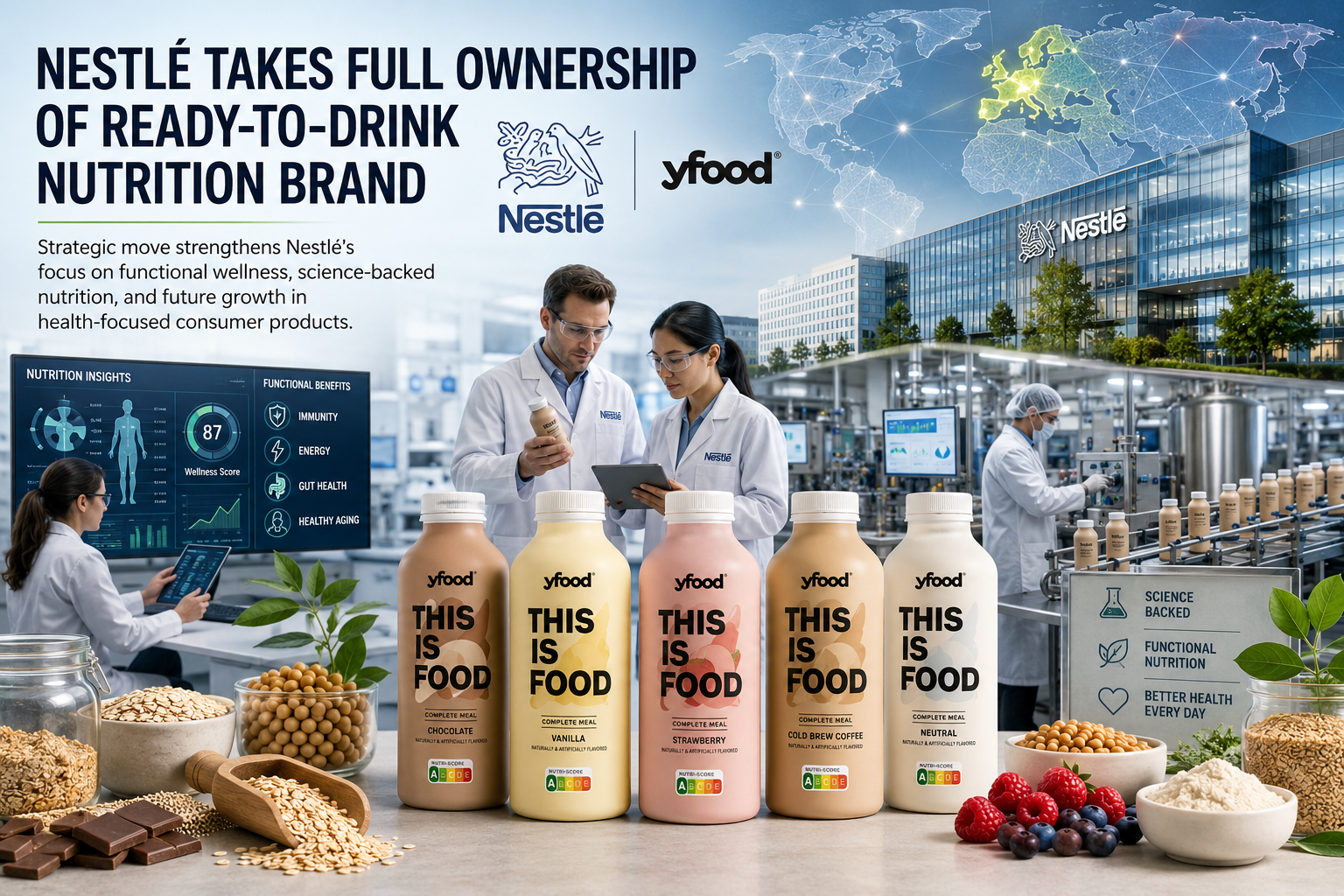
Wed. June 3, 2026 – In a strategic move that underscores the shifting landscape of consumer health, global food and beverage giant Nestlé has acquired full ownership of a prominent ready-to-drink (RTD) meals and nutrition brand. The deal signals a deepening commitment to the booming market for convenient, science-backed functional beverages.
The brand, previously a joint venture, specializes in high-protein, low-sugar meal replacement shakes designed for consumers seeking balanced nutrition on the go. By moving from a majority stakeholder to sole proprietor, Nestlé is streamlining its portfolio to double down on categories that bridge the gap between food and medicine.
A Strategic Buyout in the Age of GLP-1 Drugs
While financial terms of the deal were not disclosed, the timing is critical. The acquisition arrives as the food industry adapts to the widespread adoption of GLP-1 weight-loss medications. As these appetite-suppressing drugs reshape dietary habits, users often require nutrient-dense, smaller meals that support muscle mass retention. The RTD shakes, known for their satiating macronutrient profile and vitamin fortification, are ideally positioned to serve this growing demographic.
This isn't just about weight management, though. The buyout reflects a broader industry pivot toward “lifespan health,” where companies are looking beyond simple calorie reduction to offer holistic, long-term metabolic support.
Unifying the Brand Experience
Historically, this RTD brand operated largely through a direct-to-consumer e-commerce model, a structure that allowed for rapid innovation and targeted online marketing. Full integration into Nestlé’s ecosystem is expected to unlock significant operational synergies. The brand will benefit from Nestlé’s massive global manufacturing footprint, R&D capabilities, and established retail relationships, potentially bringing the product from the niche wellness space to mainstream grocery aisles worldwide.
For Nestlé, absorbing the business fully removes operational friction and allows the brand to sit seamlessly alongside its other premium nutrition offerings in the Nestlé Health Science division, a unit that has consistently outperformed the company’s traditional confectionery and frozen food segments.
The Competition for Functional Food Heats Up
The move intensifies the competition in the functional nutrition race. Rivals like Unilever, with its recent acquisitions in the wellness space, and specialized brands like Huel and Soylent are all vying for the loyalties of time-pressed, health-conscious consumers.
Industry analysts note that post-pandemic, consumer priorities have permanently shifted toward immunity, vitality, and clean ingredient labels. By taking complete control, Nestlé is not just buying the remaining equity in a brand—it is investing in a future where a bottled meal is more than just sustenance; it’s a targeted health intervention.
Key Takeaways:
- Total Integration: Nestlé converts its existing majority stake into 100% ownership, dissolving the prior joint venture structure.
- GLP-1 Tailwinds: The protein-rich shakes align with dietary needs arising from the weight-loss drug revolution.
- Omnichannel Potential: The acquisition paves the way for the digitally native brand to expand into physical retail via Nestlé’s distribution network.
- Health Science Priority: The deal reaffirms Nestlé’s long-term strategy to pivot away from indulgence categories toward science-based nutrition solutions.
###