Pennyroyal as a Natural Flavoring: A Comprehensive Technical Guide
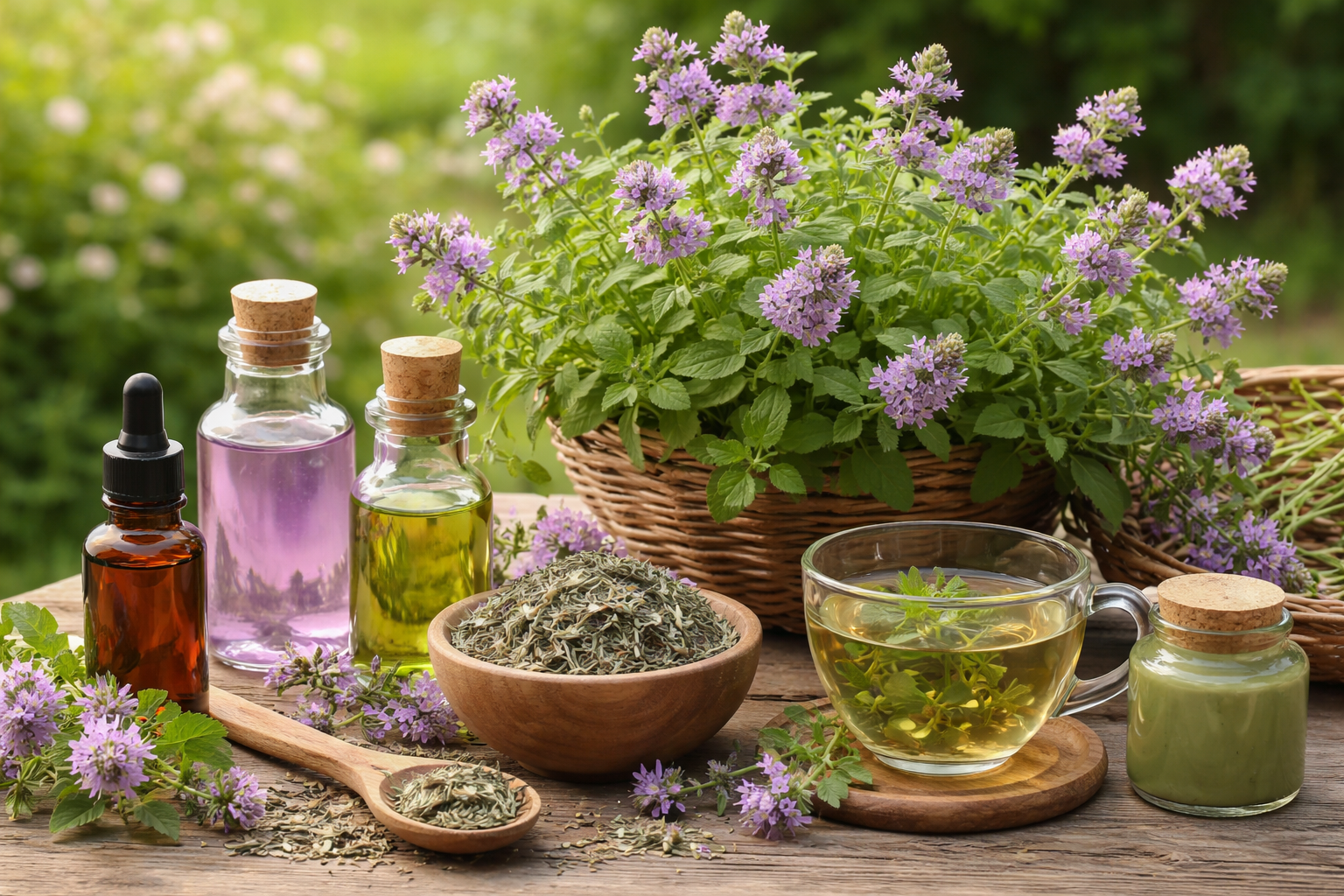
The Society of Flavor Chemists requires certified flavorists to be able to identify the plant part used, derivatives, organoleptic characteristics, and major chemical component(s) characterizing the aroma and flavor of the 80 natural flavorings listed on its syllabus for the qualification test and interview. Pennyroyal is included among these essential items.
Introduction
Pennyroyal is a fragrant herb in the Lamiaceae (mint) family, historically valued for its potent, minty, and medicinal aroma. The name "pennyroyal" refers to two distinct species: European Pennyroyal (Mentha pulegium L.) and American Pennyroyal (Hedeoma pulegioides (L.) Pers.). Both have been used for centuries in traditional medicine, as insect repellents, and as flavoring agents. However, pennyroyal is unique among natural flavorings due to its significant toxicity, primarily from the high concentration of pulegone, a monoterpene ketone that can cause severe liver and kidney damage and is potentially fatal if ingested in sufficient quantities .
For flavorists, pennyroyal presents a paradox: it has a distinct, powerful, minty-herbal aroma that is valuable in certain applications, but its use is heavily restricted due to safety concerns. The essential oil is approved for use as a flavoring agent by the FDA (21 CFR §172.510) and has FEMA GRAS status (FEMA 2839) , but usage levels are strictly limited, and there are significant regulatory and safety considerations. The key component pulegone is also found in other mint oils (peppermint contains approximately 4% pulegone), but in pennyroyal, its concentration can reach 85% or more in some chemotypes .
A critical distinction for flavorists is the difference between European Pennyroyal (Mentha pulegium) and American Pennyroyal (Hedeoma pulegioides), which have different chemical compositions. Additionally, significant chemotypic variation exists within M. pulegium, with some varieties containing high pulegone (up to 85%) and others containing primarily piperitone/piperitenone (up to 70%) with much lower pulegone content . Low-pulegone varieties are of particular interest for flavor applications.
Plant Parts Used
The leaves and flowering tops are the plant parts used for flavoring purposes. The following characteristics are notable:
- Source Plants:
- European Pennyroyal (Mentha pulegium L.): Native to Europe, North Africa, and Asia Minor. A creeping perennial with small, oval, aromatic leaves and whorls of lilac flowers .
- American Pennyroyal (Hedeoma pulegioides (L.) Pers.): Native to eastern North America. An annual herb with a more pungent, bitter character compared to its European counterpart .
- Leaf Description: Small, oval to lanceolate leaves with a strong, minty, and medicinal aroma. The plant has a distinctive scent often described as a blend of peppermint, rosemary, and a bitter-herbal note .
- Harvesting: The leaves and flowering tops are harvested when the plant is in full bloom (typically mid to late summer) when the essential oil content is highest.
- Essential Oil Content: Dried leaves yield 0.5–2.0% essential oil, depending on species, chemotype, and growing conditions .
The essential oil is obtained by steam distillation of the fresh or partially dried leaves and flowering tops. The oil composition varies significantly by species, chemotype, and geographic origin.
Pennyroyal Species and Chemotypes
Flavorists must distinguish between the two main species and understand the chemotypic variation, as these determine both the flavor profile and the safety profile.
Species Comparison: European vs. American Pennyroyal
| Characteristic | European Pennyroyal (Mentha pulegium) | American Pennyroyal (Hedeoma pulegioides) |
|---|---|---|
| Family | Lamiaceae (mint family) | Lamiaceae (mint family) |
| Origin | Europe, North Africa, Asia Minor | Eastern North America |
| Primary Components | Varies by chemotype (pulegone 2–85%, piperitone, piperitenone) | Pulegone (typically >70%), isomenthone |
| Aroma Profile | Minty, herbal, slightly sweet, bitter | Pungent, minty, bitter, medicinal, rosemary-like |
| Flavor Character | Minty, cooling, bitter | Strong, bitter, medicinal, less sweet |
| Pulegone Content | Highly variable (2–85%) | Typically high (70–85%) |
| Typical Use | Flavoring (low-pulegone varieties), traditional medicine | Insect repellent, limited flavor use |
| FEMA No. | 2839 (both covered under same FEMA number) | 2839 (both covered under same FEMA number) |
Chemotypes of Mentha pulegium (European Pennyroyal)
Research has identified several chemotypes of M. pulegium based on geographic origin and major oil components :
| Chemotype | Origin | Primary Components | Pulegone Content | Aroma Profile |
|---|---|---|---|---|
| Pulegone-Rich | Bulgaria, Uruguay, Egypt, Tunisia | Pulegone (40–73%), isomenthone | 40–73% | Strong, minty, pungent, medicinal |
| Piperitone/Piperitenone-Rich | Iran, some Mediterranean regions | Piperitone (38%), piperitenone (33%) | 2–3% | Herbal, minty, less pungent, more delicate |
| Isomenthone/Neoisomenthol-Rich | Some European regions | Isomenthone, neoisomenthol | Moderate | Minty, cooling, fresh |
The piperitone/piperitenone chemotype is of particular interest for flavorists because it offers a minty-herbal character with significantly lower pulegone content . One commercial supplier offers a pennyroyal essential oil with only 1.6% pulegone, noting that this is less than the pulegone content of peppermint oil (approximately 4%) .
Derivatives
Pennyroyal is commercially available primarily as an essential oil. Due to safety concerns, availability may be limited, and flavorists should source from reputable suppliers who can provide detailed analytical data.
Pennyroyal Essential Oil (European)
Production Method: Steam distillation of fresh or partially dried leaves and flowering tops of Mentha pulegium.
Description: Pale yellow to yellow-green to amber mobile liquid with a characteristic minty, herbaceous, and slightly bitter, medicinal, rosemary-like aroma. The oil has a medium odor strength and is highly tenacious (substantivity of 168 hours) .
Technical Notes: Yield is typically 0.5–2.0% from dried leaves. The oil composition varies significantly by chemotype. Low-pulegone varieties (piperitone/piperitenone chemotype) are preferred for flavor applications. Storage in a cool, dry place away from light is critical. Shelf life is approximately 24 months when properly stored .
Pennyroyal Essential Oil (American)
Production Method: Steam distillation of Hedeoma pulegioides leaves.
Description: Pale yellow to amber mobile liquid with a stronger, more pungent, bitter, and rosemary-like character. Contains high levels of pulegone (typically >70%). Limited use in flavor applications due to safety concerns .
Dried Pennyroyal Leaves
Production Method: Harvesting and air-drying of pennyroyal leaves.
Description: Dried leaves with a characteristic minty, medicinal aroma (milder than the oil).
Technical Notes: Dried leaves are less concentrated than the oil but still contain pulegone. Use with caution.
Organoleptic Characteristics
Aroma Profile (European Pennyroyal Oil – Low Pulegone Chemotype)
When evaluated, low-pulegone pennyroyal oil reveals a minty, herbaceous, and complex aromatic profile:
- Primary Note: Minty, herbal, fresh
- Minty: Peppermint-like, mentholic, cooling
- Herbal: Rosemary-like, tea-like, slightly woody
- Bitter: Distinct, pleasant bitterness that adds complexity
- Camphoraceous: Fresh, slightly medicinal top notes
- Cooling: Mild, refreshing sensation
- Spicy: Subtle, peppery undertones
- Earthy: Slight, root-like base notes
The overall aroma is often described as "minty and herbaceous with a distinct bitter-herbal character reminiscent of rosemary, and a cooling, peppermint-like top note."
Aroma Profile (Pulegone-Rich Chemotype)
When evaluated, pulegone-rich pennyroyal oil reveals a more pungent, medicinal profile:
- Primary Note: Strong, minty, pungent, medicinal
- Pulegone Character: Sharp, minty, slightly camphoraceous, penetrating
- Bitter: Pronounced, sharp bitterness
- Medicinal: Strong, camphoraceous, reminiscent of antiseptic
Taste Characteristics
At typical flavor usage levels (low ppm range), pennyroyal provides:
- Minty: Cooling, peppermint-like freshness
- Herbal: Rosemary-like, tea-like notes
- Bitter: Distinct, pleasant bitterness that adds depth
- Cooling: Mild, refreshing sensation
- Camphoraceous: Slight, medicinal top notes
The Key to Pennyroyal's Unique Flavor
Pennyroyal's characteristic minty, herbaceous, and bitter flavor comes from a combination of monoterpenes and monoterpenoids, with the specific profile depending on the chemotype:
Primary Components (Pulegone-Rich Chemotype):
- Pulegone (40–85%): A monoterpene ketone that provides sharp, minty, penetrating, and slightly camphoraceous notes—the signature character. Pulegone is also responsible for the toxicity concerns .
Primary Components (Piperitone/Piperitenone Chemotype):
- Piperitone (up to 38%): A monoterpene ketone that contributes fresh, herbaceous, minty, and slightly woody notes .
- Piperitenone (up to 33%): A monoterpene ketone that contributes minty, slightly spicy, and cooling notes .
Supporting Components:
- Isomenthone (10–15%): Contributes minty, cooling notes
- α-Terpineol (up to 5%): Contributes floral, lilac notes
- 1,8-Cineole (up to 4%): Contributes fresh, eucalyptus-like notes
- Menthone (up to 3%): Contributes minty, cooling notes
The balance of pulegone (or piperitone/piperitenone) with supporting terpenes creates the distinctive pennyroyal profile that is both minty and herbaceous, cooling and bitter.
Major Chemical Components
Key Aroma Compounds (Pulegone-Rich Pennyroyal Oil)
| Component | Typical Percentage | Organoleptic Contribution | CAS No. |
|---|---|---|---|
| Pulegone | 40–85% | Sharp, minty, penetrating, camphoraceous, medicinal | 89-82-7 |
| Isomenthone | 5–15% | Minty, cooling | 491-07-6 |
| Menthone | 1–5% | Minty, cooling | 10458-14-7 |
| Limonene | 1–3% | Fresh, citrus | 138-86-3 |
| 1,8-Cineole | trace–1% | Fresh, eucalyptus-like | 470-82-6 |
Key Aroma Compounds (Piperitone/Piperitenone Chemotype)
| Component | Typical Percentage | Organoleptic Contribution | CAS No. |
|---|---|---|---|
| Piperitone | 30–45% | Fresh, herbaceous, minty, woody | 89-81-6 |
| Piperitenone | 25–35% | Minty, spicy, cooling | 491-09-8 |
| α-Terpineol | 3–5% | Floral, lilac | 98-55-5 |
| 1,8-Cineole | 2–4% | Fresh, eucalyptus-like | 470-82-6 |
| Menthone | 2–3% | Minty, cooling | 10458-14-7 |
| Pulegone | 1–3% | Minty, medicinal (low) | 89-82-7 |
Comparison: Pennyroyal vs. Peppermint vs. Cornmint
| Characteristic | Pennyroyal (Low-Pulegone) | Peppermint (M. × piperita) | Cornmint (M. arvensis) |
|---|---|---|---|
| Primary Components | Piperitone, piperitenone | Menthol (30–50%), menthone (15–30%) | Menthol (70–85%) |
| Pulegone Content | 1–5% | ~4% | Trace |
| Aroma Profile | Minty, herbal, bitter, rosemary-like | Sweet, minty, complex, cooling | Strong, sharp, cooling, camphoraceous |
| Flavor Character | Herbaceous, cooling, bitter | Sweet, cooling, balanced | Bold, intense, cooling |
| Safety Profile | Low pulegone preferred | Safe at normal levels | Safe at normal levels |
Applications in Flavoring
Regulatory Status
Pennyroyal oil is approved as a natural flavoring substance with significant restrictions:
- United States: Pennyroyal oil is listed under 21 CFR §172.510 as a natural flavoring substance (FEMA No. 2839). The FEMA Expert Panel has affirmed its GRAS status for use as a flavor ingredient .
- European Union: Permitted for use in food flavorings under Regulation (EC) No 1334/2008, with restrictions on pulegone levels.
- Important Safety Note: While pennyroyal oil is FEMA GRAS, its use is subject to strict limitations. The FEMA Expert Panel's GRAS assessment includes a thorough evaluation of the constituent-based safety, considering the presence of pulegone . Flavorists must adhere to recommended usage levels and source low-pulegone oils where possible.
Typical Usage Levels (mg/kg)
The following usage levels are based on FEMA GRAS determinations and industry standards. These levels are maximum recommended levels and should not be exceeded .
| Application | Average Usual (mg/kg) | Average Maximum (mg/kg) |
|---|---|---|
| Non-alcoholic beverages | 1.50 | 5.00 |
| Frozen dairy | - | 3.70 |
| Fruit ices | - | 3.70 |
| Hard candy | - | 14.00 |
| Baked goods | 20.00 | 24.00 |
Note: These are the only applications with established FEMA levels. For other applications, flavorists should use extreme caution and start at even lower levels (0.1–1.0 mg/kg).
Usage & Dosage Best Practices
Flavorists must observe the following critical guidelines when working with pennyroyal:
CRITICAL SAFETY: PULEGONE TOXICITY
Pennyroyal oil contains pulegone, a monoterpene ketone that is hepatotoxic (liver-damaging) and can be fatal if ingested in sufficient quantities . High doses can cause liver and kidney damage, seizures, and death. Pennyroyal is considered likely unsafe during pregnancy and can cause abortion; it is also unsafe for children . Repeated use over a period of 2 weeks has been linked to death .
Select Low-Pulegone Varieties: For any flavor application, flavorists must source pennyroyal oil from chemotypes with very low pulegone content (preferably <5%). The piperitone/piperitenone chemotype from Iran and other regions has been shown to contain only 2–3% pulegone . One commercial supplier offers a pennyroyal oil with only 1.6% pulegone—less than peppermint oil .
Start Extremely Low: Pennyroyal oil is potent and toxic. Begin at the lowest possible usage levels (0.1–0.5 mg/kg in beverages) and titrate upward only if absolutely necessary. NEVER exceed FEMA maximum levels.
Pre-Dilution: Pre-dilute pennyroyal oil at a ratio of 1:100 in ethanol or propylene glycol for safer handling and more precise dosing.
Avoid in Certain Products: Pennyroyal should not be used in products intended for children, pregnant women, or individuals with liver or kidney conditions.
Flavor Synergies: When used at safe, low levels, pennyroyal can add a unique minty-herbal complexity to:
- Mint blends: Peppermint, spearmint, cornmint (adds herbal depth)
- Herbal blends: Rosemary, thyme, sage, lavender
- Tea blends: Herbal teas, mint teas
- Beverages: Some traditional liqueurs and herbal preparations
- Confectionery: Very low levels in mint candies
Flavor Applications: Due to safety concerns, pennyroyal is rarely used as a primary flavor. It may be used as a subtle modifier in:
- Herbal tea blends: Traditional applications at very low levels
- Mint flavor systems: Adds a unique bitter-herbal note
- Traditional liqueurs: Some historical recipes
- Insect repellent products: Non-flavor applications
Example Formula: Herbal Mint Tea Modifier
The following formula demonstrates the use of low-pulegone pennyroyal oil as a subtle modifier in an herbal mint tea system.
Herbal Mint Tea Flavor Concentrate
| Component | Percentage (%) | Function | Technical Note |
|---|---|---|---|
| Pennyroyal oil (low-pulegone, 1% pre-dilution) | 5.0 | Flavor modifier | Adds unique herbal-minty depth |
| Peppermint oil | 40.0 | Primary mint | Sweet, cooling mint character |
| Spearmint oil | 20.0 | Sweet mint | Adds sweetness |
| Rosemary oil | 10.0 | Herbal note | Adds Mediterranean character |
| Chamomile oil | 10.0 | Floral, apple-like | Adds complexity |
| Lemon oil | 5.0 | Citrus brightness | Adds freshness |
| Ethanol | 10.0 | Solvent | Food grade |
| Total | 100.0 |
Usage Instructions: Use at 0.05–0.1% in finished herbal tea blends. This is a maximum usage; start at 0.025% and adjust carefully.
Shelf Stability & Storage
Understanding the stability of pennyroyal oil is critical for maintaining flavor quality.
Pennyroyal Essential Oil
Storage Recommendation: Store in a full, airtight container in a cool, dry place away from light. Refrigeration is recommended for long-term storage.
Stability Notes: Pennyroyal oil contains pulegone and other monoterpenes that are susceptible to oxidation. Pulegone can oxidize to other compounds, potentially altering the safety profile. Shelf life is approximately 24 months when properly stored .
Dried Pennyroyal Leaves
Storage Recommendation: Store in airtight containers in a cool, dry, dark place.
Stability Notes: Dried leaves maintain potency for 12–18 months.
Stability in Finished Products
- Heat stability: Moderate; pulegone is relatively heat-stable but can volatilize.
- pH stability: Stable across typical food pH range (3–8).
- Oxidation: Susceptible to oxidation; use antioxidants for long-shelf-life products.
- Light sensitivity: Protect from light.
Safety Considerations (CRITICAL)
General Safety
Pennyroyal oil is approved for use as a flavoring at very low levels (FEMA 2839), but it has significant and potentially fatal toxicity if misused .
Critical Toxicity Information
- Pulegone Toxicity: Pulegone is the primary toxic component. It is hepatotoxic (causes liver damage) and can cause kidney damage, seizures, and death. The mechanism involves metabolism of pulegone to menthofuran and other reactive intermediates that deplete glutathione and cause liver necrosis .
- Abortifacient: Pennyroyal has been used historically as an abortifacient. It is likely unsafe during pregnancy and can cause abortion, as well as severe liver and kidney damage to the mother .
- Fatal Dose: Pennyroyal oil is toxic at doses as low as 5–10 mL in adults. Repeated use over a period of 2 weeks has been linked to death .
- Children: Pennyroyal is especially unsafe for children and can cause liver or nervous system damage and even death .
Important Safety Considerations
- Contraindications: Do not use in products intended for children, pregnant women, or individuals with liver or kidney conditions.
- Drug Interactions: May interact with medications for high blood pressure and iron supplements .
- Skin Irritation: May cause skin irritation and sensitization in sensitive individuals.
- Inhalation: Inhalation of concentrated oil may cause respiratory irritation.
Maximum Usage Levels (IFRA)
For fragrance applications, pennyroyal oil is subject to IFRA restrictions. Flavorists developing products for topical applications should consult current IFRA standards.
Protective Measures
- Eye protection: Wear safety goggles when handling concentrated oil.
- Respiratory protection: Use in a well-ventilated area.
- Gloves: Wear chemical-resistant gloves (nitrile or neoprene).
- Protective clothing: Wear a lab coat or apron.
Quality Control & Sourcing
Flavorists must implement rigorous quality control when sourcing pennyroyal oil.
Essential Requirements for Certificates of Analysis (COA)
For Pennyroyal Oil:
- Botanical identity: Mentha pulegium L. or Hedeoma pulegioides (specify)
- Origin: Specify country of origin and chemotype
- Pulegone content: CRITICAL – must be specified. Low-pulegone varieties (<5%) are strongly preferred .
- Piperitone/piperitenone content: For low-pulegone varieties, specify
- Physical properties: Specific gravity (0.930–0.944), refractive index (1.480–1.490)
- GC-FID or GC-MS analysis: Full compositional analysis
Sourcing Recommendations
| Source | Characteristics | Pulegone Content |
|---|---|---|
| Iran (Kazeron region) | Piperitone/piperitenone chemotype | 2–3% |
| Low-pulegone commercial source | Specialized low-pulegone oil | 1.6% |
| Bulgaria, Uruguay, Egypt, Tunisia | Traditional high-pulegone chemotype | 40–85% |
| American Pennyroyal | Hedeoma pulegioides | Typically >70% |
Flavorists should only source low-pulegone pennyroyal oil (<5% pulegone) for flavor applications.
Traditional and Historical Applications
Traditional Uses
- Medicinal: Historically used as a digestive aid, carminative, emmenagogue (menstrual stimulant), and abortifacient. Also used for colds, sinusitis, bronchitis, and tuberculosis .
- Insect Repellent: Crushed leaves were used to repel fleas, mosquitoes, and other insects. The Latin name pulegium is derived from pulex, meaning "flea" .
- Culinary: Traditionally used in some European and Middle Eastern cuisines at very low levels.
Cultural Significance
Pennyroyal has been used since ancient Greek and Roman times. Its use as an insect repellent gave it the common name "flea mint." It has also been associated with folk medicine and, controversially, with abortifacient practices.
Summary
Pennyroyal is a potent, minty-herbal natural flavoring with a complex safety profile. Its essential oil is dominated by pulegone (in traditional varieties) or piperitone/piperitenone (in low-pulegone chemotypes). Due to the significant toxicity of pulegone, flavorists must source low-pulegone varieties (<5% pulegone) and adhere to strict usage limits.
Key characteristics:
- Primary components (low-pulegone): Piperitone (30–45%), piperitenone (25–35%)
- Primary components (traditional): Pulegone (40–85%)
- Aroma profile: Minty, herbaceous, cooling, bitter, rosemary-like
- Typical usage: 0.1–24 mg/kg (extremely low levels)
- Primary applications: Herbal tea blends, mint modifiers (at very low levels)
Critical considerations for flavorists:
- CRITICAL SAFETY: Pennyroyal oil contains pulegone, which is hepatotoxic and potentially fatal. Source only low-pulegone varieties (<5% pulegone).
- Usage levels: Start at the lowest possible levels (0.1–0.5 mg/kg) and NEVER exceed FEMA maximum levels.
- Contraindications: Do not use in products intended for children, pregnant women, or individuals with liver or kidney conditions.
- Flavor synergies: Pairs with peppermint, spearmint, rosemary, chamomile, and lemon.
- Stability: Store properly; shelf life approximately 24 months.
- Sourcing: Iranian piperitone/piperitenone chemotype and specialized low-pulegone oils are preferred.
References and Further Reading
The information presented in this guide is synthesized from:
- Regulatory documents from FDA, FEMA (No. 2839), and international food safety authorities .
- Published scientific literature on Mentha pulegium and Hedeoma pulegioides .
- Industry technical data from The Good Scents Company and other suppliers .
- Safety information from Drugs.com and other sources .
Key References:
- FEMA Flavor Ingredient Library: Pennyroyal Oil (FEMA 2839)
- Journal of Ethnopharmacology: Antimicrobial activity and chemical composition of Mentha pulegium L. essential oil
- TGSC Information System: Pennyroyal Oil
- Drugs.com: Pennyroyal Uses, Side Effects & Warnings
Disclaimer: This article is for educational and training purposes only. When using pennyroyal in commercial products, always verify current regulatory status in your jurisdiction, conduct appropriate safety assessments, and source ingredients from reputable suppliers who can provide documentation of botanical identity, chemotype, pulegone content, and quality. Pennyroyal oil is toxic if misused; only low-pulegone varieties (<5% pulegone) should be used for flavor applications. The formulas and usage levels provided are illustrative examples and may require adjustment based on specific product requirements and regulatory compliance. Pennyroyal should not be used in products intended for children, pregnant women, or individuals with liver or kidney conditions.
###