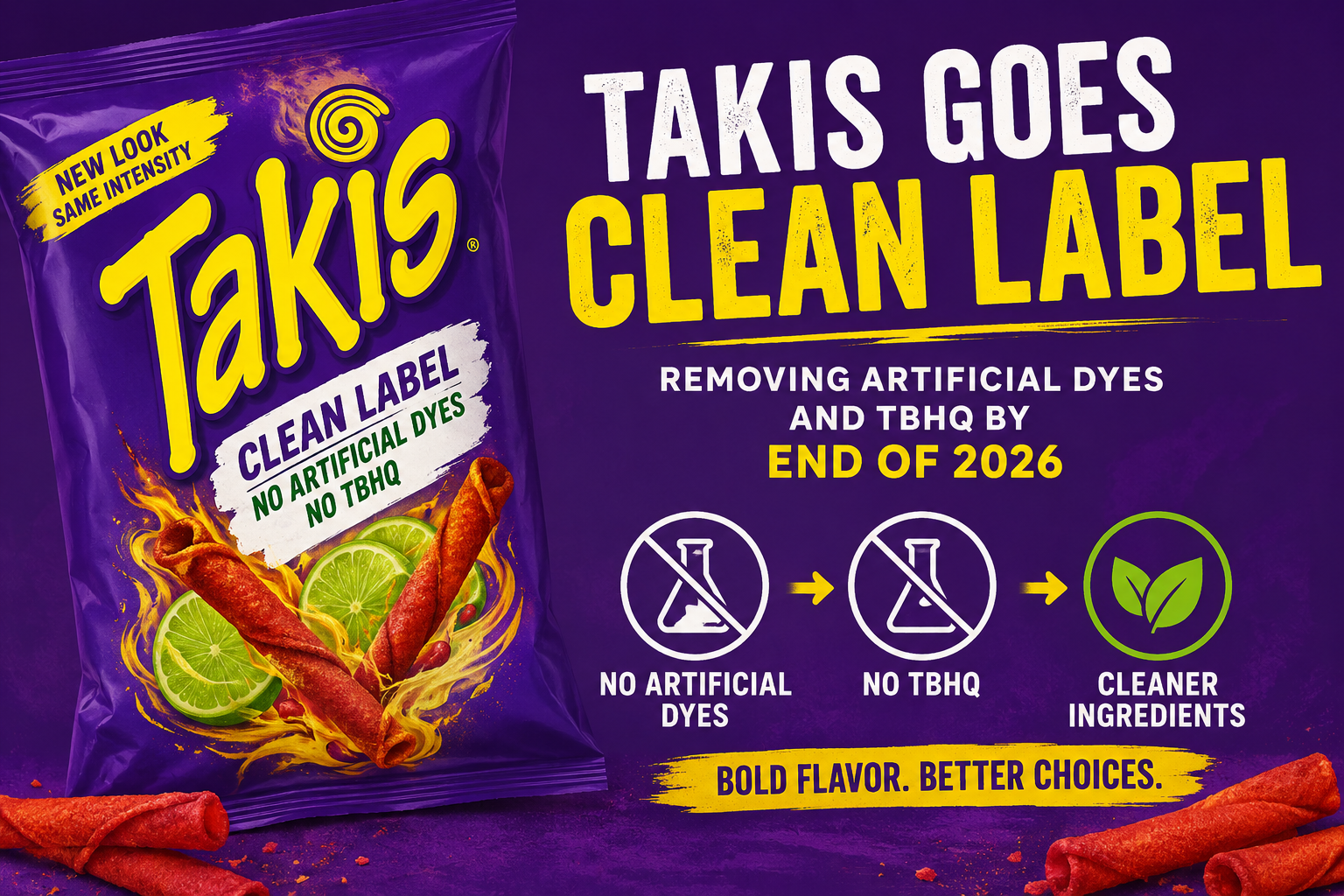
Takis Goes Clean Label: Removing Artificial Dyes and TBHQ by End of 2026
Takis Ditches Artificial Dyes and TBHQ: What It Means for the Snack Aisle
Takis, the fiery rolled tortilla chip that's become a lunchbox staple for kids and teens, is getting a formula makeover. Owner Grupo Bimbo announced that its full Takis lineup — including fan favorites like Fuego and the electric-blue Blue Heat — will drop synthetic dyes and the preservative TBHQ by the end of 2026.
Why Takis Is Reformulating Now
Barcel USA, the Grupo Bimbo snacking division behind Takis, says the change is about keeping pace with what shoppers want without losing the intense flavor the brand is known for. Newer varieties, such as Takis Pix, Xtreme Lime, and Jalapeño, were already built without artificial colors from day one. The bigger lift is reformulating legacy flavors that rely on synthetic pigments for their signature look.
That challenge is especially real for Blue Heat, which gets its color from the synthetic dye Brilliant Blue FCF (also known as Blue 1). Blue shades are notoriously hard to replicate with plant-based ingredients — few natural pigments hold up in processed, shelf-stable snacks the way synthetic dyes do. Mars has run into the same wall with its natural-color M&M's, reportedly opting to launch without a blue variant at first because scaling up the algae-derived pigment spirulina has proven difficult and costly.
TBHQ: A Step Beyond What Regulators Require
Removing synthetic dyes puts Takis in line with a broader industry shift, but pulling TBHQ (tertiary butylhydroquinone) is a step further than most competitors have taken. TBHQ is a petroleum-derived preservative widely used to keep oily, processed snacks from turning stale. Both U.S. and European food safety regulators currently classify it as safe at approved usage levels, but advocacy groups have flagged laboratory research suggesting that high doses could potentially stress the immune system or damage DNA — concerns that have made TBHQ a target for "clean label" reformulation even though it isn't part of the FDA's current dye-related initiative.
The Regulatory Backdrop: FDA's Dye Phase-Out Push
Takis' move lands amid a larger federal push to get synthetic, petroleum-based dyes out of the American food supply. In 2025, the FDA and the Department of Health and Human Services set a voluntary target for manufacturers to eliminate remaining certified synthetic dyes — including Red 40, Yellow 5, Yellow 6, Green 3, Blue 1, and Blue 2 — with a deadline that has since been extended to the end of 2027. The agency has also moved to revoke authorization for two lesser-used dyes, Citrus Red 2 and Orange B, and separately banned Red Dye No. 3 in 2025, giving manufacturers until 2027 to reformulate. Because the FDA's plan relies on industry cooperation rather than an outright ban, most of the momentum so far has come from company-level pledges rather than new regulation.
Takis Isn't Alone — Other Brands Making the Switch
Consumer pressure and state-level dye restrictions have pushed a growing list of household food brands to announce their own color overhauls:
- PepsiCo has rolled out dye-free versions of Cheetos and Doritos under its Simply NKD line, while keeping the original artificially colored versions on shelves for now.
- General Mills has pledged to remove certified color additives from its U.S. cereal lineup and school-food products.
- Kraft Heinz, Nestlé, and Campbell's have all publicly committed to phasing out synthetic dyes from their U.S. portfolios, with most targeting full transitions by 2027.
- Mars has said it will begin offering dye-free versions of some products in 2026, though a full switch — especially for colors like blue — remains technically difficult.
It's worth noting that several of these companies, including General Mills, Kellogg's, and Mars, made similar promises roughly a decade ago and later walked them back after facing consumer pushback over taste, appearance, or cost. That history has made some advocacy groups cautious about taking new pledges at face value, and organizations like the Center for Science in the Public Interest continue to track which companies follow through.
What This Means for Shoppers
Reformulated Takis products are already showing up at Walmart and other major retailers. For parents and shoppers who've been steering away from synthetic dyes, the update gives one of the most recognizable — and most kid-popular — spicy snack brands a cleaner ingredient label. Whether the new versions deliver the same intense color and flavor loyal fans expect will likely determine how smoothly the transition goes, particularly for a color as distinctive as Blue Heat's signature blue.
As more snack brands navigate the same shift, expect continued experimentation with natural pigments like spirulina, beet extract, turmeric, and butterfly pea flower — each with its own tradeoffs in cost, stability, and shelf appeal — as the industry works toward the 2027 deadline.
Sources
- Takis to remove artificial colors — Food Dive
- Tracking Food Industry Pledges to Remove Petroleum-Based Food Dyes — FDA
- Color Additives – Information for Consumers — FDA
- One Year Later: Are Synthetic Dyes Still in Our Food? — Consumer Reports
- More Food Companies Plan to Phase Out Harmful Dyes — EWG
- Synthetic Dyes Corporate Commitment Tracker — CSPI
- The FDA wants to replace artificial food dyes, but natural alternatives may have drawbacks too — ABC News