Yerba Mate as a Natural Flavoring: A Comprehensive Technical Guide
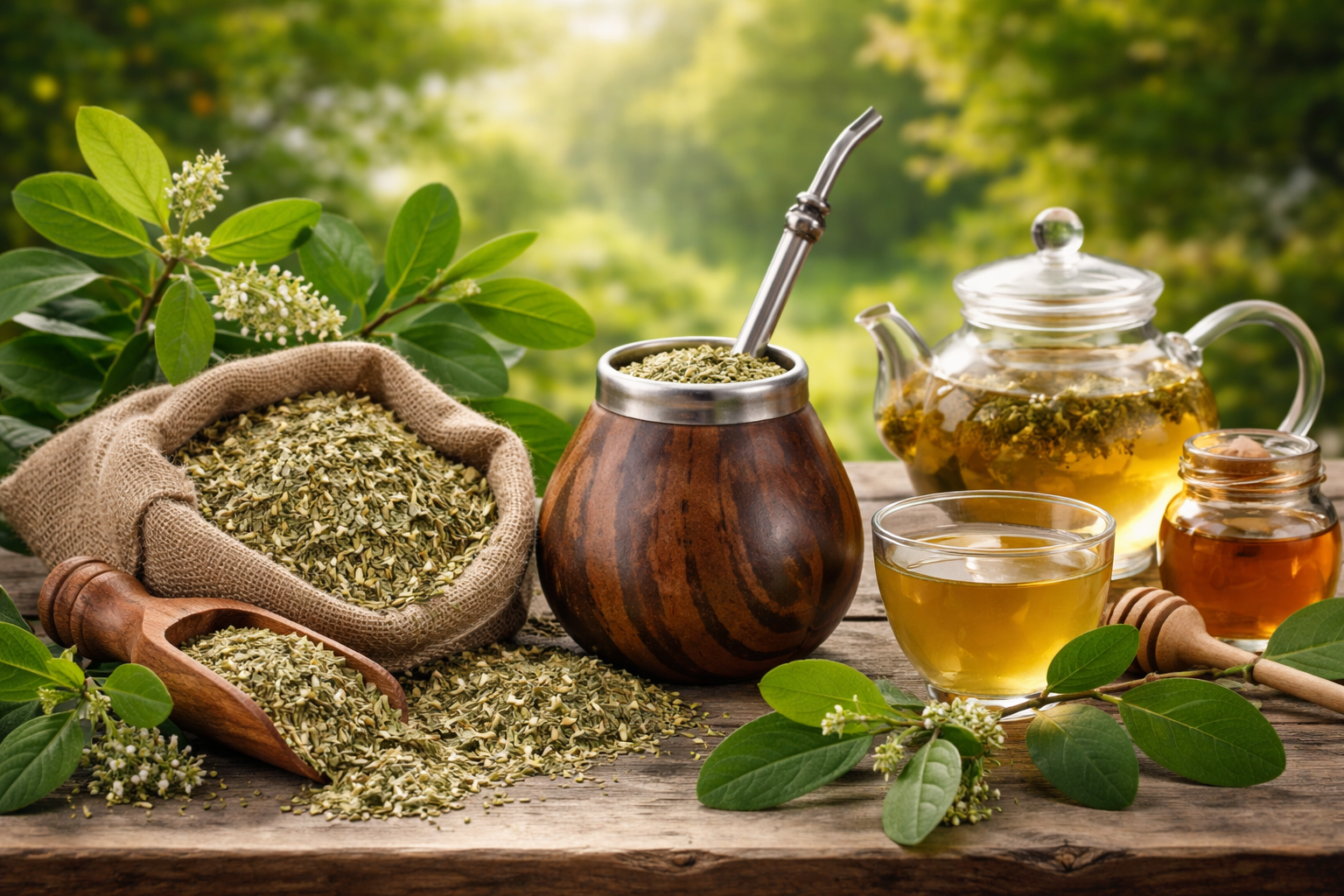
The Society of Flavor Chemists requires certified flavorists to be able to identify the plant part used, derivatives, organoleptic characteristics, and major chemical component(s) characterizing the aroma and flavor of the 80 natural flavorings listed on its syllabus for the qualification test and interview. Yerba Mate is not included among these essential items. But that does not mean this natural flavoring is useless.
Introduction
Yerba Mate (Ilex paraguariensis A. St.-Hil.) is a species of holly native to subtropical South America, where it has been cultivated and consumed for centuries. A member of the Aquifoliaceae (holly) family, yerba mate is a dioecious evergreen tree or shrub that grows wild in Argentina, Brazil, Paraguay, and Uruguay. The name "yerba mate" refers to both the plant itself and the traditional beverage prepared from its dried leaves, which holds deep cultural significance across the region.
For flavorists, yerba mate offers a uniquely complex and distinctive profile—earthy, herbaceous, grassy, and slightly smoky—with distinct notes of green tea, tobacco, roasted grain, and a characteristic bitter undertone. Unlike tea (Camellia sinensis) or coffee, yerba mate occupies a unique sensory space, often described as a bridge between green tea and roasted barley, with a subtle smokiness that sets it apart.
The flavor profile varies significantly based on processing: green yerba mate (used for traditional hot mate and tereré) has a fresh, grassy, slightly bitter character, while roasted yerba mate (used for mate tea) develops warm, nutty, caramel-like, and slightly burnt notes. The key aroma compounds include linalool, α-terpineol, and trans-linalool oxide in green mate, and (E,Z)-2,4-heptadienal isomers and 5-methylfurfural in roasted mate.
Yerba mate is also notable for its functional properties, containing a complex mixture of methylxanthines (caffeine, theobromine, theophylline), polyphenols (chlorogenic acids, flavonoids), and saponins. These contribute not only to its stimulating effects but also to its sensory characteristics—bitterness, astringency, and mouthfeel.
Plant Parts Used
The leaves (and sometimes stems) are the plant part used for flavoring purposes. The following characteristics are notable:
- Source Plant: Ilex paraguariensis A. St.-Hil., a member of the Aquifoliaceae (holly) family.
- Plant Description: A dioecious evergreen tree or shrub, reaching 8–15 meters in height in the wild (cultivated plants are typically kept shorter for harvest). Native to the subtropical regions of Argentina, Brazil, Paraguay, and Uruguay.
- Leaf Description: Leathery, elliptical to obovate, serrated leaves, 5–15 cm long, dark green to yellow-green depending on processing. The leaves have a characteristic herbaceous, slightly bitter aroma when dried.
- Harvesting: Leaves are harvested from November to March (the growing season in South America). Only the leaves (and sometimes tender stems) are collected; the plant is selectively hand-harvested to preserve future growth.
- Processing (Industrial): Freshly harvested leaves undergo a four-step process:
- Sapeco (Flash drying): Leaves are rapidly exposed to heat (often using wood-fired heat or gas) for a few seconds to inactivate enzymes and fix the green color.
- Secagem (Drying): Leaves are dried to reduce moisture content, often using wood-fired heat, which contributes a subtle smoky note.
- Cancheamento (Coarse grinding): Dried leaves are coarsely ground to a particle size of 2–5 mm.
- Estacionamento (Aging): Ground yerba mate is aged for 6–24 months (sometimes longer) to develop the characteristic smooth, mellow flavor and reduce bitterness.
- Essential Oil Content: Dried yerba mate leaves yield 0.3–1.0% essential oil (primarily volatile terpenes).
The extract is obtained by water extraction (for traditional infusions) or hydroalcoholic extraction (for commercial extracts). The roasted product is obtained by toasting the dried leaves at approximately 120°C for 15 minutes.
Derivatives
Yerba mate is commercially available in several forms. The following details include technical specifications important for procurement and formulation.
Yerba Mate Extract (Green)
Production Method: Water or hydroalcoholic extraction of dried green yerba mate leaves, followed by concentration and often spray-drying.
Description: Fine powder from yellowish-brown to brown, or liquid extract with a characteristic fresh, herbaceous, grassy, and slightly bitter, tea-like aroma. The extract is rich in methylxanthines (caffeine, theobromine) and polyphenols.
Technical Notes: Typical extraction ratio is 4–6:1. The extract contains 2.0–7.0% methylxanthines (as caffeine). pH in 10% distilled water solution is 4.5–6.5. Spray-dried powder is highly soluble and dispersible in water.
Roasted Yerba Mate Extract (Toasted)
Production Method: Yerba mate leaves are toasted at approximately 120°C for 15 minutes, then extracted with water or hydroalcoholic solvent, followed by concentration and spray-drying.
Description: Fine powder from yellowish-brown to brown, or liquid extract with a characteristic warm, nutty, caramel-like, slightly burnt, and smooth aroma. The roasting process develops Maillard reaction products and reduces bitterness.
Technical Notes: Similar technical specifications to green extract, but with a different volatile profile. Often preferred for applications requiring a milder, sweeter mate character.
Dried Yerba Mate Leaves (Traditional, Green)
Production Method: Fresh leaves are flash-dried, dried (often with wood smoke), coarsely ground, and aged 6–24 months.
Description: Coarse-ground powder (2–5 mm particle size) of dark green to yellow-green color, with a characteristic herbaceous, earthy, slightly smoky, and bitter aroma. Contains a balance of powder, leaf fragments, and small stems.
Technical Notes: A high-quality yerba mate should have a yellowish-green color, a dry texture with a slight crunch, a fresh and slightly toasted aroma, and a flavor with a hint of bitterness. Aging (estacionamento) develops smoothness and reduces astringency.
Yerba Mate Leaves (Unprocessed)
Production Method: Leaves are dried without the industrial grinding and aging process.
Description: Whole or fragmented dried leaves with a stronger, more vegetal, and more bitter character than processed yerba mate. Used primarily for specialized applications.
Yerba Mate Tincture
Production Method: Alcohol extraction of yerba mate leaves (typically 20–40% leaf in 40–70% ethanol).
Description: Amber to dark brown liquid with characteristic herbaceous, bitter, mate aroma. Common form for traditional preparations and bitters.
Organoleptic Characteristics
Aroma Profile (Green Yerba Mate)
When evaluated, green yerba mate reveals a fresh, herbaceous, and complex aromatic profile:
- Primary Note: Herbaceous, grassy, earthy, slightly bitter
- Linalool Character: Fresh, floral, lavender-like—contributes to the sweet, pleasant top notes
- α-Terpineol Character: Floral, lilac, slightly sweet
- trans-Linalool Oxide: Sweet, floral, slightly woody
- Grassy: Fresh-cut grass, green tea-like (from hexanal, leaf alcohols)
- Smoky: Subtle, from the wood-fired drying process
- Bitter: Distinct, pleasant bitterness from methylxanthines and polyphenols
- Earthy: Root-like, soil undertones
- Tobacco-like: Slightly smoky, leathery, dry
The overall aroma is often described as "fresh, herbaceous, and grassy with sweet floral top notes and a distinctive bitter-woody undertone, reminiscent of green tea but earthier and slightly smoky."
Aroma Profile (Roasted Yerba Mate)
When evaluated, roasted yerba mate reveals a warm, nutty, and caramel-like aromatic profile:
- Primary Note: Warm, nutty, caramel-like, slightly burnt
- (E,Z)-2,4-Heptadienal Isomers: Fatty, green, slightly fruity, with roasted undertones
- 5-Methylfurfural: Sweet, caramel, bready, nutty—characteristic of Maillard reaction
- β-Cyclocitral: Fresh, sweet, floral, slightly woody
- Nerol: Sweet, rose-like, slightly fruity
- Roasted: Warm, toasted grain, coffee-like
- Smoky: Milder than green mate; more integrated
- Sweet: Caramel, honey-like
- Smooth: Less bitter and astringent than green mate
The overall aroma is often described as "warm, nutty, and caramel-like with a smooth, slightly burnt character and a sweet, balsamic finish."
Taste Characteristics
At typical usage levels, yerba mate provides:
- Bitter: Distinct, pleasant, tea-like bitterness (from methylxanthines and polyphenols)
- Herbaceous: Fresh, grassy, tea-like character
- Earthy: Woody, root-like, grounding
- Astringent: Slight drying sensation (from polyphenols)
- Sweet: Subtle, underlying sweetness (more pronounced in roasted mate)
- Smoky: Slight, wood-smoke note (from processing)
- Savory: Slight, brothy, umami undertone
- Smooth: Round, balanced (in aged and roasted products)
The Key to Yerba Mate's Unique Flavor
Yerba mate's characteristic herbaceous, bitter, and complex flavor comes from a combination of volatile aroma compounds (terpenes, aldehydes, furans) and non-volatile taste-active compounds (methylxanthines, polyphenols, saponins):
Volatile Aroma Compounds (Green Yerba Mate):
- Linalool (0.1–2% of volatiles): A monoterpene alcohol that provides fresh, floral, lavender-like notes—contributes to the sweet top note
- α-Terpineol (0.1–1% of volatiles): A monoterpene alcohol that contributes floral, lilac notes
- trans-Linalool Oxide (0.1–1% of volatiles): A monoterpene ether that provides sweet, floral, slightly woody notes
- β-Ionone (trace–0.5%): A norisoprenoid that contributes sweet, floral, violet-like, woody notes—derived from carotenoid degradation
Volatile Aroma Compounds (Roasted Yerba Mate):
- (E,Z)-2,4-Heptadienal (1–5% of volatiles): An unsaturated aldehyde that provides fatty, green, slightly fruity, and roasted notes—characteristic of roasted mate
- 5-Methylfurfural (1–5% of volatiles): A furan that provides sweet, caramel, bready, nutty notes—formed via Maillard reaction during roasting
- β-Cyclocitral (0.5–2% of volatiles): A norisoprenoid that provides fresh, sweet, floral, slightly woody notes
Non-Volatile Taste-Active Compounds:
- Methylxanthines (2–7%): Caffeine, theobromine, and theophylline. Contribute to bitterness, stimulation, and mouthfeel
- Polyphenols (10–15%): Chlorogenic acids (5-O-caffeoylquinic acid, 3-O-caffeoylquinic acid, 1-O-caffeoylquinic acid), dicaffeoylquinic acids (3,5-di-O-caffeoylquinic acid, 4,5-di-O-caffeoylquinic acid), flavonoids (rutin). Contribute to bitterness, astringency, and antioxidant activity
- Saponins (3–8%): Triterpenoid saponins that contribute to foam formation (espumosidade) and add to the bitter, astringent character
The combination of terpenes (fresh, floral) with aldehydes and furans (roasted, caramel) and methylxanthines/polyphenols (bitter, astringent) creates the characteristic yerba mate profile that is both fresh and warm, bitter and sweet, herbaceous and smoky.
Major Chemical Components
Key Aroma Compounds (Green Yerba Mate)
| Component | Typical Relative Abundance | Organoleptic Contribution | CAS No. |
|---|---|---|---|
| Linalool | 0.5–2% | Fresh, floral, lavender-like | 78-70-6 |
| α-Terpineol | 0.2–1% | Floral, lilac | 98-55-5 |
| trans-Linalool Oxide | 0.1–1% | Sweet, floral, woody | 34995-77-2 |
| β-Ionone | 0.05–0.5% | Sweet, floral, violet-like | 79-77-6 |
| α-Ionone | 0.02–0.2% | Sweet, floral, woody | 127-41-3 |
| Geraniol | trace–0.2% | Sweet, rose-like | 106-24-1 |
| Nerol | trace–0.2% | Sweet, rose-like | 106-25-2 |
| Hexanal | trace–0.5% | Fresh, green, grassy | 66-25-1 |
Key Aroma Compounds (Roasted Yerba Mate)
| Component | Typical Relative Abundance | Organoleptic Contribution | CAS No. |
|---|---|---|---|
| (E,Z)-2,4-Heptadienal | 1–5% | Fatty, green, fruity, roasted | 4313-03-5 |
| 5-Methylfurfural | 1–5% | Sweet, caramel, bready, nutty | 620-02-0 |
| β-Cyclocitral | 0.5–2% | Fresh, sweet, floral, woody | 432-25-7 |
| Furfural | 0.5–2% | Sweet, caramel, bready | 98-01-1 |
| 2,4-Heptadienal (E,E) | 0.5–2% | Fatty, green, roasted | 5910-85-0 |
| Linalool | 0.2–1% | Fresh, floral (reduced compared to green) | 78-70-6 |
Key Non-Volatile Components
| Component | Typical Percentage | Organoleptic Contribution | CAS No. |
|---|---|---|---|
| Caffeine | 1.0–2.5% | Bitter, stimulating | 58-08-2 |
| Theobromine | 0.2–0.5% | Mild bitter, smooth stimulation | 83-67-0 |
| Theophylline | trace–0.1% | Bitter, respiratory stimulation | 58-55-9 |
| Chlorogenic Acid (5-O-caffeoylquinic) | 1–5% | Bitter, astringent, antioxidant | 327-97-9 |
| 3,5-Di-O-caffeoylquinic Acid | 0.5–2% | Bitter, astringent, antioxidant | 2450-53-5 |
| Rutin | 0.2–1% | Bitter, astringent | 153-18-4 |
| Saponins | 3–8% | Bitter, astringent, foaming | Various |
Comparison: Green vs. Roasted Yerba Mate
| Characteristic | Green Yerba Mate | Roasted Yerba Mate (Mate Tea) |
|---|---|---|
| Primary Volatiles | Linalool, α-terpineol, linalool oxides | (E,Z)-2,4-Heptadienal, 5-methylfurfural |
| Aroma Profile | Fresh, grassy, floral, bitter | Nutty, caramel, roasted, sweet |
| Flavor Character | Herbaceous, bitter, astringent | Smooth, sweet, caramel-like |
| Methylxanthine Content | Higher (2–7%) | Slightly reduced (2–6%) |
| Polyphenol Content | Higher (10–15%) | Reduced (5–10%) |
| Processing | Sapeco + drying + aging | Sapeco + drying + toasting (120°C/15 min) |
Comparison: Yerba Mate vs. Green Tea vs. Roasted Barley
| Characteristic | Yerba Mate (Green) | Green Tea | Roasted Barley (Barley Tea) |
|---|---|---|---|
| Primary Volatiles | Linalool, α-terpineol, linalool oxides | Linalool, hexenal, jasmonates | Pyrazines, furans, maltol |
| Aroma Profile | Grassy, floral, earthy, smoky | Grassy, vegetal, seaweed-like | Roasted, nutty, bready |
| Flavor Character | Herbaceous, bitter, astringent | Vegetal, umami, bitter | Sweet, roasted, toasty |
| Methylxanthines | High (caffeine + theobromine) | Moderate (caffeine) | None |
| Polyphenols | High (chlorogenic acids) | High (catechins) | Low |
Applications in Flavoring
Regulatory Status
Yerba mate and its derivatives are approved as natural flavoring substances and food ingredients:
- United States: Yerba mate is generally recognized as safe (GRAS) for use as a flavoring. Yerba mate extract is widely used as a food ingredient (FEMA No. 3217 for yerba mate extract).
- European Union: Permitted for use in food flavorings under Regulation (EC) No 1334/2008.
- China: Approved food ingredient.
Typical Usage Levels (mg/kg or %)
The following usage levels are based on industry standards and supplier recommendations:
| Application | Green Yerba Mate Extract (mg/kg) | Roasted Yerba Mate Extract (mg/kg) | Ground Yerba Mate (%) |
|---|---|---|---|
| Non-alcoholic beverages | 200–2,000 | 200–2,000 | 1–5 (infusion) |
| Alcoholic beverages | 500–5,000 | 500–5,000 | 2–10 (infusion) |
| Baked goods | 200–1,000 | 200–1,000 | 1–5 |
| Hard candy | 500–2,000 | 500–2,000 | N/A |
| Frozen dairy | 100–1,000 | 100–1,000 | 0.5–2 |
| Soft candy | 200–1,000 | 200–1,000 | N/A |
| Chewing gum | 200–1,000 | 200–1,000 | N/A |
| Energy drinks | 500–3,000 | 500–3,000 | N/A |
| Water (flavored) | 100–200 | 100–200 | N/A |
| Yogurt/Yogurt Drinks | 200–1,200 | 200–1,200 | N/A |
Note: These ranges represent typical industry usage. Givaudan-Naturex recommends use levels of 0.12% in flavored alcoholic beverages, 0.12% in carbonated soft drinks, 0.1–0.2% in water, and 0.12% in yogurt/yogurt drinks.
Usage & Dosage Best Practices
Flavorists should observe the following guidelines when working with yerba mate:
Select the Correct Form:
- Green Yerba Mate Extract: Use for fresh, grassy, herbaceous, and bitter mate character. Preferred for traditional mate and tereré profiles.
- Roasted Yerba Mate Extract: Use for warm, nutty, caramel-like, and smooth mate character. Preferred for mate tea and applications where a milder, sweeter profile is desired.
- Ground Yerba Mate: Use for traditional beverage preparation and dry blends.
Start Low, Titrate: Yerba mate extract is potent in terms of bitterness and flavor impact. Begin at the lower end of typical usage ranges (e.g., 200–500 mg/kg in beverages) and adjust upward.
Bitterness Management: Yerba mate's bitterness comes from methylxanthines and polyphenols. To reduce perceived bitterness in applications:
- Use roasted yerba mate (lower polyphenol content, sweeter profile)
- Balance with sweeteners (sugar, honey, stevia, monk fruit)
- Adjust pH to 4.5–6.5 (the natural pH range of yerba mate extracts)
- Use at lower concentrations
Water Temperature for Infusion: For traditional mate preparation, water temperature should be 70–80°C (160–175°F). Boiling water will over-extract tannins and methylxanthines, resulting in excessive bitterness and astringency.
Pre-Dilution: Yerba mate extract powder is highly soluble in water. For liquid applications, dissolve in warm water (40–50°C) before incorporating.
Flavor Synergies: Yerba mate pairs exceptionally well with:
- Citrus: Lemon, orange, lime (adds brightness and balances bitterness)
- Herbs: Mint, lemongrass, verbena (adds freshness)
- Spices: Cinnamon, ginger, cardamom (adds warmth)
- Fruits: Berry, tropical fruits, apple, pear
- Honey: Adds sweetness and floral notes
- Vanilla: Rounds and smooths the profile
- Smoky notes: Complements the wood-fired processing character
- Cocoa/Chocolate: Adds richness and depth
- Milk/Cream: Used in mate lattes (café con leche-style)
Flavor Applications: Yerba mate serves as a primary flavor or modifier in:
- Beverages: Traditional mate (hot), tereré (cold), mate tea, energy drinks, ready-to-drink teas, kombucha
- Alcoholic beverages: Mate-infused spirits, cocktails, beer (cerveza de mate)
- Dairy: Mate lattes, ice cream, yogurt, smoothies
- Baked goods: Mate-infused cakes, cookies, breads
- Confectionery: Mate chocolates, hard candies, energy bars
- Nutraceuticals: Functional beverages, dietary supplements
Fragrance Applications
Yerba mate is used in perfumery for:
- Herbal and green fragrances: Adds a fresh, earthy, tea-like character
- Masculine fragrances: Adds a dry, herbal, slightly smoky note
- Aromatherapy: Used for its energizing, clarifying properties
Blends well with: Bergamot, lemon, mint, tobacco, vetiver, cedarwood, tea notes.
Example Formula: Yerba Mate Energy Beverage
The following formula demonstrates the use of yerba mate extract in an energy beverage flavor system.
Yerba Mate Energy Beverage Concentrate (Water-Based)
| Component | Percentage (%) | Function | Technical Note |
|---|---|---|---|
| Yerba mate extract (green, 4:1 extract ratio) | 2.0 | Primary flavor & functional | Provides mate character and methylxanthines |
| Natural flavor (citrus-mint blend) | 0.5 | Flavor enhancement | Adds brightness |
| Citric acid | 0.3 | Acidity regulator | Adjust pH to 4.5–5.0 |
| Sugar (or natural sweetener) | 5.0 | Sweetener | Balances bitterness |
| Natural preservative (optional) | 0.1 | Shelf stability | Potassium sorbate |
| Water | 92.1 | Carrier | Deionized |
| Total | 100.0 |
Usage Instructions: Dilute as needed for finished beverage. Serve chilled.
Alternative: Roasted Yerba Mate Tea Flavor
| Component | Percentage (%) | Function |
|---|---|---|
| Roasted yerba mate extract (toasted) | 3.0 | Primary mate flavor |
| Natural caramel flavor | 0.5 | Sweet, roasted enhancement |
| Cinnamon extract | 0.2 | Warm spice |
| Vanillin (natural) | 0.2 | Sweet rounding |
| Water | 96.1 | Carrier |
| Total | 100.0 |
Usage Instructions: Use at 0.5–2.0% in finished mate tea beverages.
Alternative: Traditional Mate Preparation (Reference)
| Component | Quantity | Function |
|---|---|---|
| Yerba mate (green, ground) | 50–60 g (fills 3/4 of mate gourd) | Primary flavor |
| Hot water (70–80°C/160–175°F) | 0.5–1 L | Extraction solvent |
Method: Fill the mate gourd three-quarters full with yerba mate. Shake to distribute evenly. Moisten one side with warm water. Insert bombilla into the moistened area. Pour hot water (70–80°C) slowly into the same area. Serve and refill multiple times.
Shelf Stability & Storage
Understanding the stability of yerba mate ingredients is critical for maintaining flavor quality.
Yerba Mate Extract Powder
Storage Recommendation: Store in airtight containers in a cool, dry place away from light. Ambient storage 10–30°C (50–85°F) is acceptable. Protect against light and moisture.
Stability Notes: Yerba mate extract powder is stable for 728 days (approximately 24 months) when stored properly. The powder is hygroscopic; protect from moisture to prevent clumping. Methylxanthine content remains stable under proper storage.
Dried Yerba Mate Leaves
Storage Recommendation: Store in airtight containers in a cool, dry, dark place. A properly cured mate gourd can be stored with used yerba overnight but should be cleaned regularly.
Stability Notes: Dried leaves maintain potency for 12–24 months when properly stored. Aging (estacionamento) is part of the traditional processing and develops smoothness.
Yerba Mate Liquid Extract
Storage Recommendation: Store in airtight containers in a cool, dry place. Refrigeration after opening is recommended for long-term storage.
Stability Notes: Liquid extracts may develop microbial growth over time; use appropriate preservatives.
Stability in Finished Products
- Heat stability: Methylxanthines and polyphenols are relatively heat-stable; volatile terpenes may degrade during high-temperature processing.
- pH stability: Yerba mate extracts are stable at pH 4.5–6.5. Strongly acidic conditions (pH <3) may cause precipitation of polyphenols.
- Oxidation: Polyphenols are susceptible to oxidation, which can cause browning and loss of antioxidant activity.
- Light sensitivity: Protect from light to prevent degradation of sensitive compounds.
Safety Considerations
General Safety
Yerba mate is generally recognized as safe (GRAS) for use as a flavoring and food ingredient at approved levels.
Important Considerations
- Caffeine Content: Yerba mate contains caffeine (1.0–2.5%) along with theobromine and theophylline. Individuals sensitive to stimulants should moderate consumption. Typical use levels provide a caffeine dose similar to green tea.
- Pregnancy: Safe in food amounts; high-dose supplements should be avoided during pregnancy.
- PAH Concern: Traditionally processed yerba mate (wood-fired drying) may contain trace levels of polycyclic aromatic hydrocarbons (PAHs). Modern industrial processing often employs gas-fired drying to minimize this.
- Iron Absorption: The polyphenols in yerba mate may inhibit iron absorption; consume at separate times from iron supplements.
- Drug Interactions: May interact with certain medications (anticoagulants, MAOIs, stimulants).
Quality Control & Sourcing
Flavorists should implement the following quality checks when sourcing yerba mate ingredients.
Essential Requirements for Certificates of Analysis (COA)
For Yerba Mate Extract Powder:
- Botanical identity: Ilex paraguariensis A. St.-Hil.
- Origin: Argentina, Brazil, Paraguay, Uruguay
- Extraction ratio: 4–6:1 (specify)
- Methylxanthine content (as caffeine): 2.0–7.0%
- Loss on drying: max. 6.0%
- pH (10% distilled water): 4.5–6.5
- Bulk density: 0.26–0.46 g/ml
- Microbiological: Total plate count max 3,000/g; Yeasts & molds max 100/g; Enterobacteriaceae max 10/g; Salmonella negative per 25g
For Dried Yerba Mate Leaves:
- Botanical identity: Ilex paraguariensis
- Origin: Argentina, Brazil, Paraguay, Uruguay
- Appearance: Yellowish-green to green, balance of powder, leaf, and stem
- Aroma: Fresh, slightly toasted, herbaceous
- Moisture content: <8%
Common Adulteration Risks
- Yerba mate powder: Adulteration with other plant materials (e.g., other Ilex species); addition of maltodextrin as a carrier; use of low-quality or over-aged leaves
- Yerba mate extract: Dilution with maltodextrin; mislabeling of extraction ratio; inaccurate methylxanthine content
Sourcing Considerations
| Origin | Characteristics |
|---|---|
| Argentina | Largest producer; well-balanced flavor; traditional production methods |
| Brazil | Chimarrão style; finer grind; strong, bold flavor |
| Paraguay | Traditional origin; often used for tereré (cold mate); distinct profile |
| Uruguay | Simple, functional gourds; emphasis on ritual; well-aged product |
Certifications & Compliance
Look for suppliers offering:
- FALCPA compliance (allergen-free labeling)
- Non-GMO verified
- Organic certification
- Kosher certification
- Halal certification
- Heavy metals testing (conform to regulatory requirements)
Traditional and Culinary Applications
Traditional Uses
- Argentina, Uruguay, Paraguay, Brazil: Traditional mate (hot) is a social ritual where the beverage is shared from a single gourd (mate) passed among participants. The server (cebador) prepares and drinks the first round to ensure proper strength.
- Paraguay: Tereré is a cold-brewed version of mate, often infused with citrus peels, mint, or other herbs. Served over ice, it is ideal for hot climates.
- Brazil: Chimarrão is a strong, finely-ground yerba mate served in larger gourds; mate tea (chá-mate) is made from roasted leaves.
- Syrian and Lebanese: Yerba mate is also consumed in parts of the Middle East, having been introduced by immigrants returning from South America.
Culinary Pairings
Yerba mate pairs well with:
- Citrus: Lemon, orange, lime, grapefruit
- Herbs: Mint, lemongrass, verbena, chamomile
- Spices: Cinnamon, ginger, cardamom, cloves
- Sweeteners: Honey, sugar, stevia, monk fruit
- Fruits: Berry, apple, pear, peach
- Dairy: Milk, cream, yogurt
- Cocoa: Chocolate, cocoa nibs
Sustainability and Sourcing
Cultivation Practices
Yerba mate is cultivated in subtropical regions of South America:
- Argentina: Largest producer; well-established cultivation in Misiones and Corrientes provinces.
- Brazil: Major producer; cultivated in Rio Grande do Sul, Paraná, and Santa Catarina.
- Paraguay: Traditional origin; significant wild and cultivated production.
- Uruguay: Smaller production; high-quality product.
Quality Considerations
When sourcing yerba mate, consider:
- Origin: Argentine and Brazilian yerba mate are the most common commercial sources.
- Processing: Wood-fired drying contributes to smoky notes; gas-fired drying produces a cleaner profile.
- Aging (Estacionamento): Aged product has smoother, less bitter character.
- Certifications: Organic, Non-GMO, Fair Trade, Rainforest Alliance.
Sustainability Challenges
- Wild harvesting: Some yerba mate is still wild-harvested from native forests; sustainable management is important.
- Deforestation: Expansion of cultivated areas can impact native forests.
- Climate vulnerability: Yerba mate is sensitive to frost and drought.
Summary
Yerba Mate (Ilex paraguariensis) is a unique and versatile natural flavoring prized for its herbaceous, grassy, bitter, and earthy character, with distinctive differences between green and roasted forms. Green yerba mate is dominated by linalool, α-terpineol, and trans-linalool oxide, providing fresh, floral top notes; roasted yerba mate is dominated by (E,Z)-2,4-heptadienal and 5-methylfurfural, providing warm, nutty, caramel-like notes. The non-volatile components—methylxanthines (caffeine, theobromine) and polyphenols—contribute bitterness, astringency, and functional properties.
Key characteristics:
- Primary volatiles (green): Linalool, α-terpineol, linalool oxides
- Primary volatiles (roasted): (E,Z)-2,4-Heptadienal, 5-methylfurfural, β-cyclocitral
- Primary non-volatiles: Caffeine (1.0–2.5%), chlorogenic acids (1–5%), saponins (3–8%)
- Aroma profile (green): Fresh, grassy, floral, bitter, earthy
- Aroma profile (roasted): Nutty, caramel, smooth, sweet
- Typical usage: Extract 100–5,000 mg/kg; ground leaves 1–10%
- Primary applications: Beverages (mate, tereré, tea), energy drinks, dairy, baked goods, confectionery
Critical considerations for flavorists:
- Distinguish green from roasted: Green mate is fresh, grassy, bitter; roasted mate is nutty, caramel, smooth—they are not interchangeable.
- Methylxanthine content: Provides both bitterness and functional stimulation; content ranges from 2–7% in extracts.
- Bitterness management: Balance with sweeteners, use roasted mate for milder profile, or use at lower concentrations.
- Water temperature: For traditional applications, use 70–80°C (160–175°F) to avoid excessive bitterness.
- Flavor synergies: Pairs with citrus, mint, honey, and spices.
- Stability: Extract powder is stable for up to 24 months; protect from moisture and light.
- Sourcing: Argentine and Brazilian yerba mate are the most common commercial sources.
References and Further Reading
The information presented in this guide is synthesized from:
- Regulatory documents from FDA and international food safety authorities.
- Published scientific literature on Ilex paraguariensis volatile compounds and
###