
A Comprehensive Guide to Karl Fischer Titration and Moisture Analyzers Here is a comprehensive, detailed guide to Karl Fischer Titration and Moisture Analyzers. The Society of Flavor Chemists requires flavorists to know the basics about this analytical method/instrument. In the realm of analytical chemistry and industrial quality control, accurate moisture analysis is not merely a specification—it is a
Members only Strecker Degradation: What Flavorists Need to Know, According to the SFC Strecker degradation is one of the most important secondary pathways within Maillard chemistry, especially for flavor generation and long-term flavor evolution. The Society of Flavor Chemists requires all certified flavorists to understand the basics about this reaction and its applications or implications in flavors. The Strecker degradation is a
Important Synthetic Flavor Compounds - Part 13 (2-methoxy 3-isobutyl pyrazine, 2-isopropyl 4-methyl thiazole, 2-isobutyl thiazole, pyridine 2-acetyl pyridine, 2,4,5-trimethyl oxazole, trithioacetone) Part 13 (2-methoxy 3-isobutyl pyrazine 2-isopropyl 4-methyl thiazole 2-isobutyl thiazole pyridine 2-acetyl pyridine 2,4,5-trimethyl oxazole trithioacetone.) These are among the 128 synthetic flavor compounds that John Wright, in his book Flavor Creation, suggests every flavorist should know and work with. Part
Important Synthetic Flavor Compounds - Part 12 (difurfuryl sulfide, maltol, ethyl maltol, indole, 2,3-dimethyl pyrazine, trimethyl pyrazine, tetramethyl pyrazine, 2-acetyl pyrazine, 2-methoxy-3-methyl pyrazine, 2-methoxy 3-ethyl pyrazine) Part 12 (difurfuryl sulfide maltol ethyl maltol indole 2,3-dimethyl pyrazine trimethyl pyrazine tetramethyl pyrazine 2-acetyl pyrazine 2-methoxy-3-methyl pyrazine 2-methoxy 3-ethyl pyrazine) These are among the 128 synthetic flavor compounds that John Wright, in his book Flavor Creation, suggests every flavorist should know
A Detailed Review of Henry B. Heath's Book "Flavor Technology: Profiles, Products, Applications" For professionals in the food and flavor industry, certain texts stand as milestones that define a field. Henry B. Heath's Flavor Technology: Profiles, Products, Applications is one such seminal work. Published in 1978 by AVI Publishing Company , this book has served as a critical reference for flavorists, food
Members only Patent Summary: Method for Judgment of Cheddar Grade Based on Identification Characteristic Flavor Composition - US Patent 11,293,906 B2 Summary Here's a detailed summary of US Patent 11,293,906 B2, titled "Method for Judgment of Cheddar Grade Based on Identification Characteristic Flavor Composition." What the Patent Is About This patent presents a scientific, instrument-based method for determining the quality grade of cheddar cheese
Buchu as a Natural Flavoring: A Comprehensive Guide The Society of Flavor Chemists requires certified flavorists to be able to identify the plant part used, derivatives, organoleptic characteristics, and major chemical component(s) characterizing the aroma and flavor of the 80 natural flavorings listed on its syllabus for the qualification test and interview. Buchu is included among these
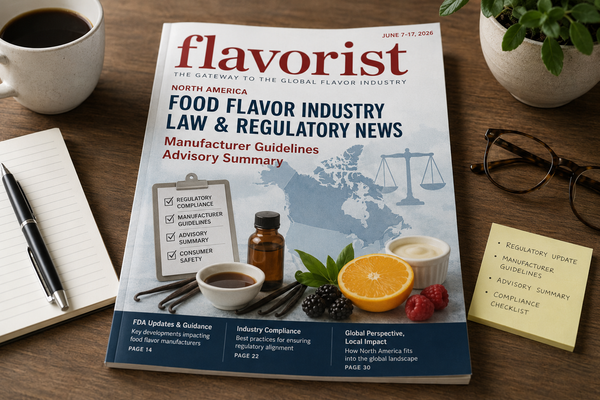
Weekly Law and Regulation News Digest for Global Food and Flavor Industry: March 15-16, 2026 Major Law & Regulation News for the Food & Flavor Industry in North America: March 15–20, 2026 Between March 15 and March 20, 2026, the North American food regulatory landscape saw significant developments across federal and state levels—from a groundbreaking Texas food additive warning label law to USDA
Members only Weekly Product News Digest for Global Food and Flavor Industry: March 15–20, 2026 Major Product News in the North American Food & Flavor Industry: March 15–20, 2026 Between March 15 and March 20, 2026, the North American food and flavor industry saw significant activity—from prestigious awards recognizing innovative products to major new launches and a significant recall. Below is a roundup
Members only How to formulate a taro flavor using the note method Based on the document Preparation and simulation of a taro flavor by Zhu et al., here is a detailed summary of the methodology and insights, followed by the formula. 1) The Note Method The "note method" is a foundational approach in flavor creation, treating a flavor as a
Members only The Chemistry of Schiff Base Formation: Impact on Flavor, Aging, and Shelf Life Schiff base formation is one of about 20 chemical reactions/physical processes that the Society of Flavor Chemists requires certified flavorists to know and consider when formulating flavors. Schiff base formation is a fundamental chemical reaction with profound implications in food science, particularly in the world of flavors. Understanding this
A Comprehensive Guide to Flash Point Testing: Theory, Applications in Flavor, and Method Evaluation The Society of Flavor Chemists requires certified flavorists to understand and operate more than a dozen instruments used for testing food and flavor products. These instruments are listed on the syllabus for the Society's qualification exam. The flash point tester is one of these required instruments. Introduction In
Important Synthetic Flavor Chemists - Part 11 (γ-decalactone,γ-dodecalactone, exaltolide, ambrettolide, 5-methylfurfural, 2-acetylfurfural, theaspirane, 2-methyl tetrahydro furan-3-one, furfuryl mercaptan, 2-methyl 3-tetrahydrofuran thiol) Part 11 (γ-decalactone, γ-dodecalactone, 1,15-pentadecalactone or exaltolide, ambrettolide, 5-methylfurfural, 2-acetylfurfural, theaspirane, 2-methyl tetrahydro furan-3-one, 2-furan methane thiol or furfuryl mercaptan, 2-methyl 3-tetrahydrofuran thiol) These are among the 128 synthetic flavor compounds that John Wright, in his book Flavor
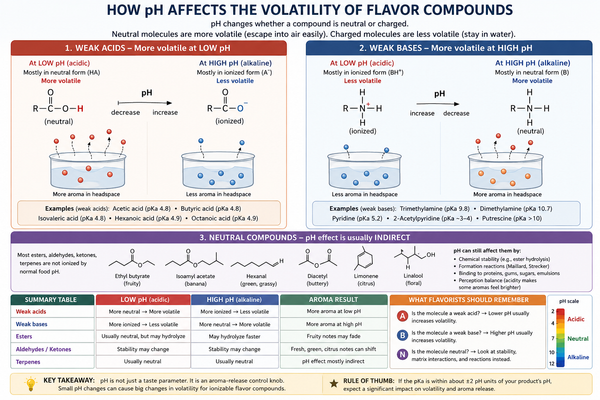
The Ultimate Guide to pH Meters: Theory, Function, and Industrial Applications The Society of Flavor Chemists requires certified flavorists to understand and operate more than a dozen instruments used for testing food and flavor products. These instruments are listed on the syllabus for the Society's qualification exam. The pH meter is one of these required instruments. Meta Description: Discover
Job openings: Dsm-fermenich flavorist school looking to hire flavorist trainees Job Description: Global Flavorist Trainee Program at dsm-fermenich flavorist school Job Title: Global Flavorist Trainee Location: Princeton, NJ (with 10-month rotation in Geneva, Switzerland) Your Future as a Flavorist Starts Here. Imagine crafting the signature taste in a world-class beverage, the perfect savory note in a plant-
Density Meter in the Flavor Industry: Complete Guide to Theory, Applications, and Benefits A density meter (densitometer) is a precision analytical instrument that measures the density of liquids with exceptional accuracy. In the flavor and fragrance industry, these devices are essential for quality assurance, raw material verification, and process control.
Members only Boronia: What the SFC Expects Every Flavorist to Know The Society of Flavor Chemists requires certified flavorists to be able to identify the plant part used, derivatives, organoleptic characteristics, and major chemical component(s) characterizing the aroma and flavor of the 80 natural flavorings listed on its syllabus for the qualification test and interview. Boronia is included among these
Bois de rose: What the SFC Wants Flavorists to Know Content of the Page * Basics of Bois de Rose; * Construct a bois de rose base, and how to use the base; * Applications of bois de rose in flavor formulation * Examples formula for each application; * Substitutes for bois de rose.
Aroma chemicals found in meat flavors A research paper provides the important aroma compounds that may be used to create meat flavors including beef flavor and chicken flavor. Based on the report "Aroma Chemicals in Meat Flavors" by Yunus Shaikh et al., here is some information on flavor compounds, including their chemical names, FEMA
Job Opening: Application Scientist Wanted Job Title: Scientist, Applications Location: Illinois About the Company This role is with a dynamic, high-growth food and beverage development company based in Illinois. The company specializes in developing, creating, and manufacturing beverage flavors, ingredient systems, and finished food and beverage products. Its mission is to design ingredients with
Patent Summary: Meat Flavor Compositions - US Patent 3,519,437 Here is a summary of US Patent 3,519,437. Patent Basics * Title: Meat Flavor Compositions * Patent Number: US 3,519,437 * Publication Date: July 7, 1970 * Inventor: Christopher Giacino * Assignee: International Flavors & Fragrances Inc., New York, N.Y., a corporation of New York Core Idea of the Patent
Refractometers: What flavorists need to know This article is intended for flavorist trainees or QC technicians who have not taken college courses such as Analytical Chemistry or Food Analysis, and who lack formal training in these areas. The Society of Flavor Chemists requires certified flavorists to understand refractometers, including:their theory, function, and proper reporting;their
Important Synthetic Flavor Compounds - Part 10 (ethyl vanillin, anethole, anisaldehyde, heliotropine, γ-hexalactone, γ-nonalactone, γ-decalactone, γ-undecalactone, γ-octalactone, γ-dodecalactone) Part 10 (ethyl vanillin, anethole, anisaldehyde, heliotropine, γ-hexalactone, γ-nonalactone, γ-decalactone, γ-undecalactone, γ-octalactone, γ-dodecalactone) These are among the 128 synthetic flavor compounds that John Wright, in his book Flavor Creation, suggests every flavorist should know and work with Here's the revised content with
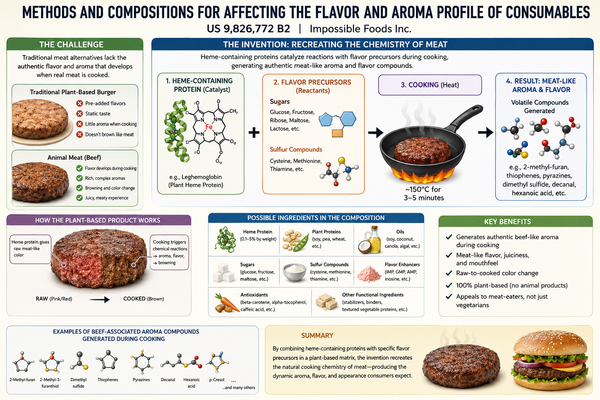
Patent Summary: Methods and Compositions for Affecting the Flavor and Aroma of Consumables (beef flavor) The basics for patent US9826772B2: METHODS AND COMPOSITIONS FOR AFFECTING THE FLAVOR AND AROMA PROFILE OF CONSUMABLES Field Information Patent Number US 9,826,772 B2 Title METHODS AND COMPOSITIONS FOR AFFECTING THE FLAVOR AND AROMA PROFILE OF CONSUMABLES Inventors Rachel Fraser, Patrick O'Reilly Brown, Jessica Karr, Celeste
Black pepper: What the SFC wants Flavorists to Know The Society of Flavor Chemists requires certified flavorists to be able to identify the plant part used, derivatives, organoleptic characteristics, and major chemical component(s) characterizing the aroma and flavor of the 80 natural flavorings listed on its syllabus for the qualification test and interview. Black pepper is included among