Editor

Salt Analysis in the Flavor Industry: Theory, Function, Reporting, Relevance, Advantages, and Limitations of Major Salt Analysis Methods
Analytic

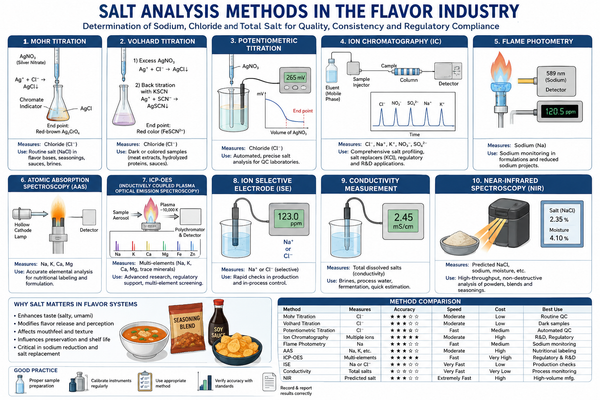
Salt Analysis in the Flavor Industry: Theory, Function, Reporting, Relevance, Advantages, and Limitations of Major Salt Analysis Methods

Salt analysis is an important part of flavor development, food formulation, quality control, regulatory compliance, nutritional labeling, and shelf-life studies. In flavor manufacturing, salt affects not only taste but also flavor release, mouthfeel, preservation, and interactions with flavor compounds. The term "salt analysis" generally refers to determination
4 min read
FTIR Spectroscopy in Flavor Chemistry: Theory, Instrumentation, Industry Applications, and Analytical Capabilities
Analytic

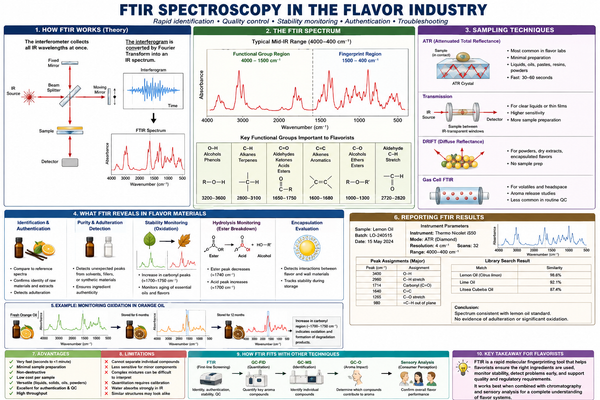
FTIR Spectroscopy in Flavor Chemistry: Theory, Instrumentation, Industry Applications, and Analytical Capabilities

FTIR spectroscopy is one of the more than twenty analytical techniques that the Society of Flavor Chemists requires certified flavorists to understand. Here is a complete reference on FTIR spectroscopy structured across all four dimensions mandated by the Society — theory, flavor industry relevance, and advantages and limitations. Theory, function, and
4 min read
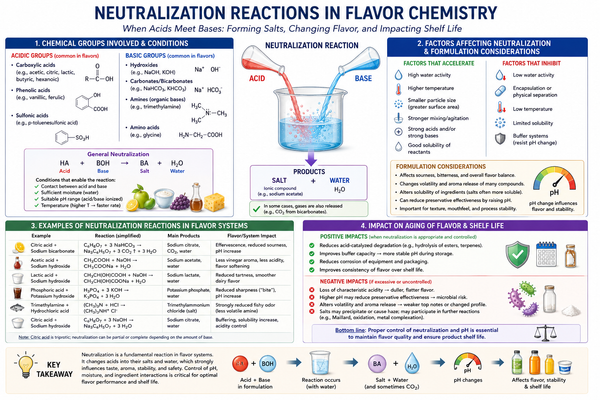
Neutralization Reactions in Flavor Chemistry Chemical basis, formulation factors, practical examples, and shelf-life impact for flavorists and flavor trainees
Reactions

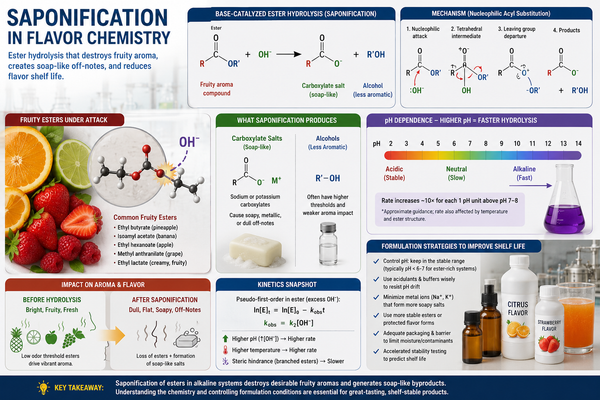
Neutralization Reactions in Flavor Chemistry Chemical basis, formulation factors, practical examples, and shelf-life impact for flavorists and flavor trainees

Neutralization Reactions in Flavor Chemistry Chemical basis, formulation factors, practical examples, and shelf-life impact for flavorists and flavor trainees. Contents 1. Chemical groups involved and conditions required 2. Factors accelerating or inhibiting the reaction and formulation considerations 3. Examples of neutralization reactions in flavor chemistry 4. Impact on flavor
4 min read
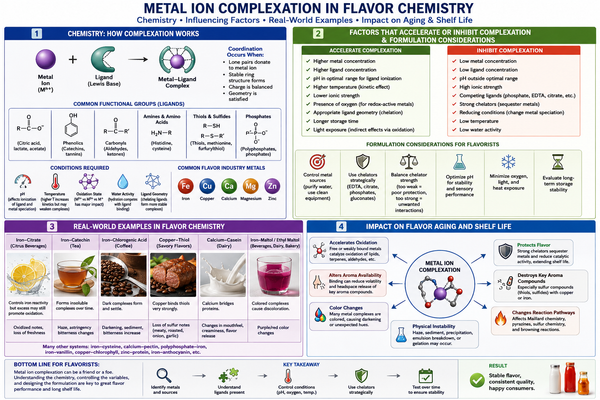
Metal Ion Complexation in the Flavor Industry: Fundamental Theory, Mechanisms, Formulation Challenges, Industrial Examples, and Critical Effects on Flavor Stability, Aging, and Shelf Life
Processes

Metal Ion Complexation in the Flavor Industry: Fundamental Theory, Mechanisms, Formulation Challenges, Industrial Examples, and Critical Effects on Flavor Stability, Aging, and Shelf Life

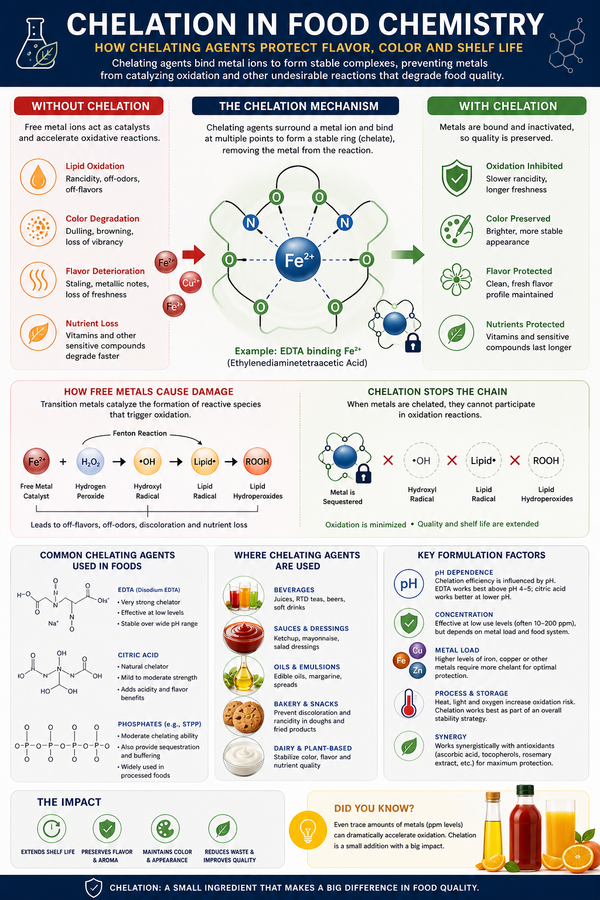
Metal Ion Complexation in Flavor Chemistry Chemical principles, accelerating and inhibiting factors, real-world flavor examples, and the impact of metal complexation on flavor aging, stability, and shelf life. Table of Contents 1. Chemical Groups Involved and Conditions Required 2. Factors Accelerating or Inhibiting the Process and Formulation Considerations 3.
10 min read
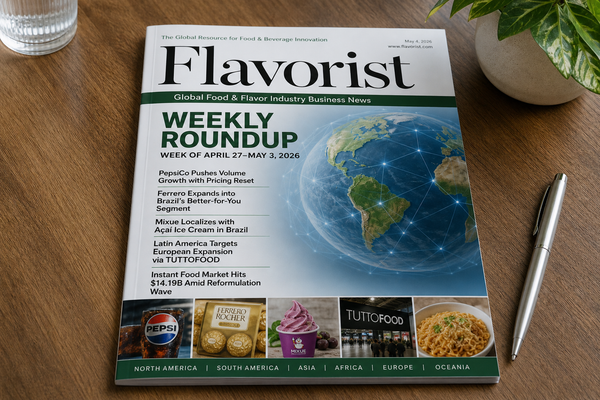
Global Food Law & Regulatory Intelligence Report: Weekly Digest of Food Safety, Labeling, and Compliance Developments Across North America, South America, Europe, Asia, Africa, and Oceania (April 27 – May 3, 2026)
News

Global Food Law & Regulatory Intelligence Report: Weekly Digest of Food Safety, Labeling, and Compliance Developments Across North America, South America, Europe, Asia, Africa, and Oceania (April 27 – May 3, 2026)

Below is a curated, source-linked regulatory & legal news digest for North America (April 27 – May 3, 2026), focused on food law, safety, labeling, and regulatory enforcement. Each item includes an active link for deeper reading. 🇺🇸 United States — Federal Food Law & Regulatory Developments 1. FDA Expands Import Enforcement
15 min read
Polarimetry in the Flavor Industry: Fundamental Theory, Analytical Function, Reporting Standards, Industrial Relevance, and Critical Advantages & Limitations
Analytic

Polarimetry in the Flavor Industry: Fundamental Theory, Analytical Function, Reporting Standards, Industrial Relevance, and Critical Advantages & Limitations

Polarimeter Theory · Optical function · Standardized reporting for optically active substances 1. Theory of the Polarimeter The polarimeter is a precision instrument designed to measure the optical rotation exerted by chiral (optically active) substances. Its operation relies on the properties of plane-polarized light and molecular chirality. Fundamental principles Natural light
13 min read