Training

A collection of 221 posts
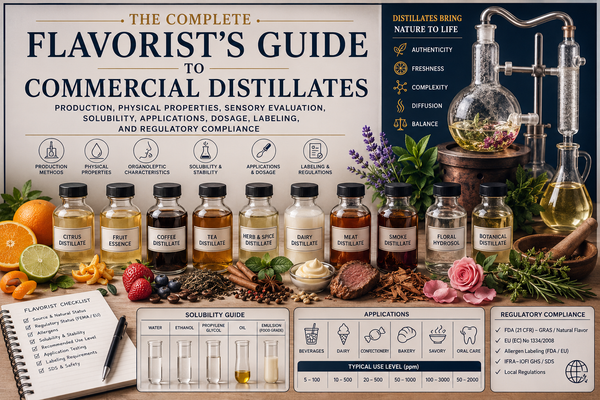
The Complete Flavorist's Guide to Commercial Distillates: Production, Physical Properties, Sensory Evaluation, Solubility, Applications, Dosage, Labeling, and Regulatory Compliance
Training

The Complete Flavorist's Guide to Commercial Distillates: Production, Physical Properties, Sensory Evaluation, Solubility, Applications, Dosage, Labeling, and Regulatory Compliance

Below is a practical flavorist training guide to commercial “distillates”. It covers the commercial families flavorists actually encounter, how to use them, and what to check before formula release. 1. What “distillate” means in flavor work A distillate is a volatile flavor fraction obtained by vaporizing aroma compounds from a
8 min read
Recrystallization in Flavor Systems: Training Material for Flavorist Trainees
Processes

Recrystallization in Flavor Systems: Training Material for Flavorist Trainees

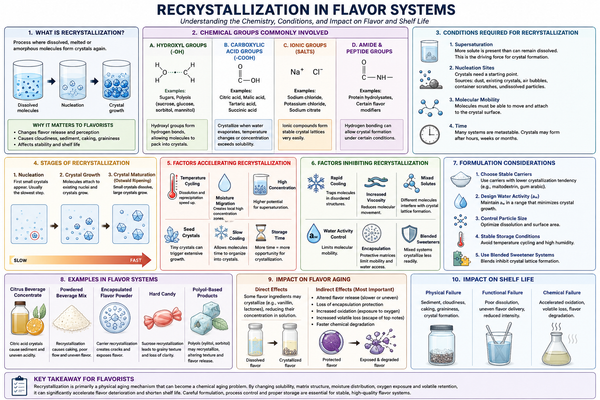
1. Introduction: What is Recrystallization? Recrystallization is the process by which a substance that was previously dissolved, melted, or present in an amorphous (non-crystalline) state forms crystals again. In flavor products, recrystallization most commonly involves: * Sugars * Polyols (sugar alcohols) * Organic acids * Salts * Encapsulating materials * Occasionally flavor ingredients themselves Although
5 min read
Adsorption and Absorption of Flavor Compounds by Proteins, Carbohydrates, and Fats - A Flavorist Training Guide
Members only
Processes

Adsorption and Absorption of Flavor Compounds by Proteins, Carbohydrates, and Fats - A Flavorist Training Guide

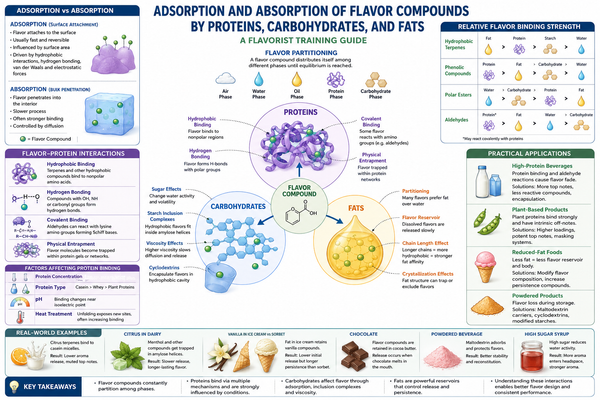
Adsorption and absorption of flavor compounds are critical factors that determine flavor intensity, release, stability, and perception in food systems. Adsorption refers to flavor molecules attaching to the surface of food components, while absorption involves their penetration into the interior of a material. In practice, both processes often occur simultaneously.
6 min read
Flavor Materials That Contribute to Mouthfeel: What the Society of Flavor Chemists Wants you to Know
Members only
Formulation

Flavor Materials That Contribute to Mouthfeel: What the Society of Flavor Chemists Wants you to Know

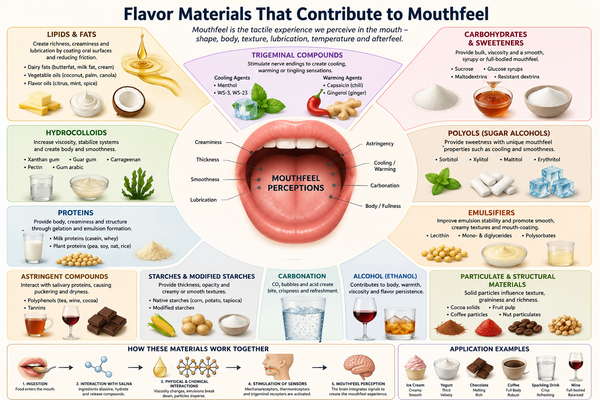
Mouthfeel is one of several dozen flavor attributes that the Society of Flavor Chemists expects certified flavorists to understand and effectively manipulate during flavor formulation. Candidates may also encounter questions related to flavor materials that influence mouthfeel during the qualification examination or interview. Introduction Mouthfeel is one of the most
10 min read
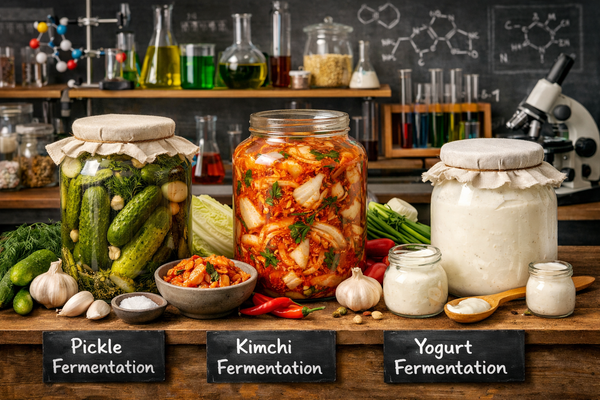
Fermentation in Flavor Formulation: Chemistry, Process Control, and Shelf-Life Impact
Processes

Fermentation in Flavor Formulation: Chemistry, Process Control, and Shelf-Life Impact

Fermentation is a microbial or microbiological transformation process in which microorganisms such as yeast strain Saccharomyces Cerevisias, which is typically used to make beer, convert substrates (primarily sugars, amino acids, and lipids) into chemical compounds (considered natural) including flavor-active compounds such as alcohols, acids, esters, aldehydes, and sulfur compounds.
8 min read
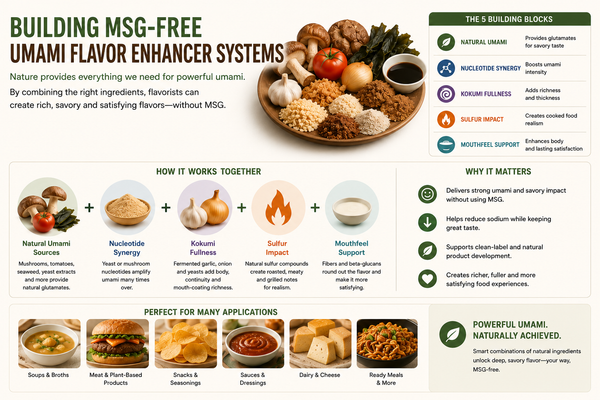
Technical Guide: Building MSG-Free Umami Flavor Enhancer Systems
Members only
Formulation

Technical Guide: Building MSG-Free Umami Flavor Enhancer Systems

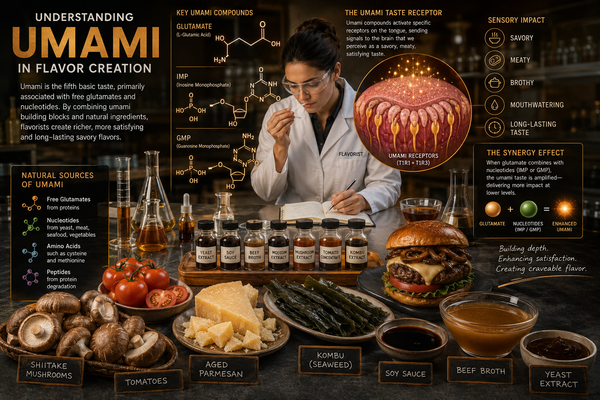
For a flavorist, an umami flavor enhancer is not a single ingredient. It is a system that increases: * Savory depth * Mouthfulness * Brothy character * Lingering flavor * Protein perception * Salt enhancement * Fat enhancement * Flavor continuity Without MSG, the challenge becomes creating umami through natural glutamate sources, nucleotides, kokumi materials, sulfur chemistry, fermentation
3 min read
United States Pharmacopeia (USP) — What it is and why it matters in the flavor industry
Members only
Organizations

United States Pharmacopeia (USP) — What it is and why it matters in the flavor industry

1) What USP stands for (and what it actually is) The United States Pharmacopeia (USP) is a nonprofit scientific organization that sets public quality standards for: * Pharmaceuticals (drug substances & products) * Food ingredients * Dietary supplements * Excipients (functional materials used in formulations) These standards are compiled in two core publications: * USP–
4 min read